
Bwindi Impenetrable Forest National Park: The Complete Uganda Gorilla Trekking Guide.
Few places on Earth reward effort the way Bwindi Impenetrable Forest National Park does. Tucked into the far southwestern corner of Uganda, on the jagged eastern wall of the Albertine Rift, this 321-square-kilometer tangle of ancient rainforest holds close to half of the world’s remaining mountain gorillas, and it is, without serious rival, the single best place on the continent to sit within a few meters of a wild silverback and watch him watch you back.
We’ve been building tailor-made luxury safaris across East Africa for over 12 years, and in that time gorilla trekking in Bwindi has become one of the most requested extensions to our Tanzania itineraries paired with the Great Wildebeest Migration, stacked onto a Kilimanjaro trek, or bookended with a few slow days on Zanzibar’s beaches. Over 10,000 travelers have trusted our team to plan their African journeys, and this guide distills everything we tell our guests before they fly into Uganda: where the gorillas actually are, what a trek really costs and feels like, which sector and lodge suit your pace and budget, and how to fold Bwindi into a wider, tailor-made private safari.
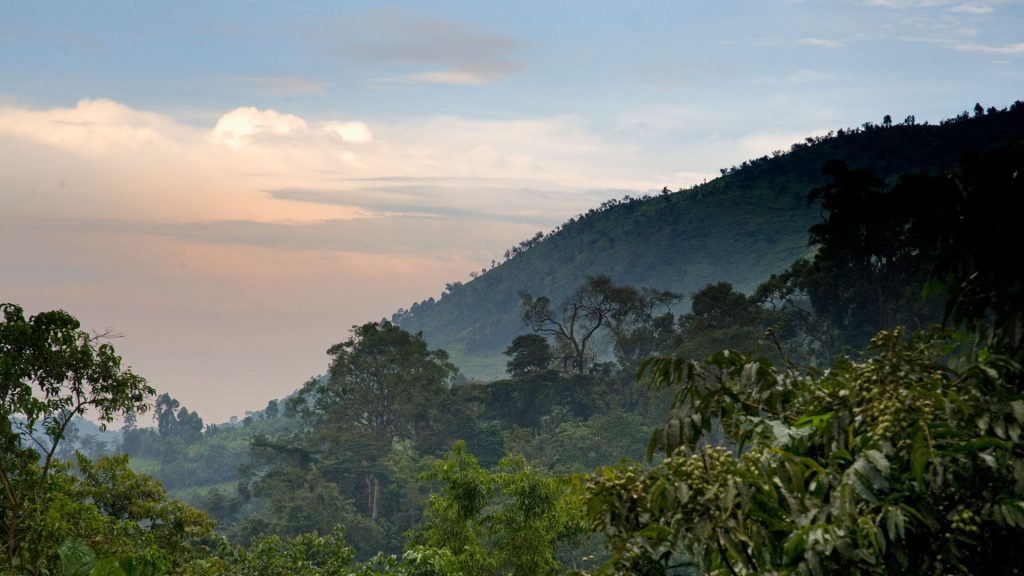
Bwindi Impenetrable Forest
What is Bwindi Impenetrable Forest National Park?
Bwindi Impenetrable Forest National Park is a 321-square-kilometre UNESCO World Heritage rainforest in southwestern Uganda’s Kanungu District, on the edge of the Albertine Rift Valley near the border with the Democratic Republic of Congo. Gazetted in 1991 and inscribed by UNESCO in 1994, it protects roughly 459 mountain gorillas nearly half the world’s total population spread across more than 20 habituated family groups. Gorilla trekking, done on foot with armed rangers and trackers, is the park’s headline activity, alongside birding, forest walks, and Batwa cultural encounters.
Bwindi Impenetrable Forest National Park: Quick Facts
| At a Glance | Details |
| Location | Kanungu District, southwestern Uganda, on the eastern edge of the Albertine Rift Valley, bordering the Democratic Republic of Congo |
| Size | Approximately 321 sq km (124 sq miles) of montane and lowland rainforest |
| Established | Gazetted as a national park in 1991; UNESCO World Heritage Site since 1994 |
| Altitude | 1,160m to 2,607m above sea level |
| Mountain gorilla population | Approximately 459 individuals, nearly half the world’s mountain gorillas in more than 20 habituated family groups |
| Trekking sectors | Buhoma, Ruhija, Rushaga, and Nkuringo |
| Standard gorilla permit (2026) | USD $800 per person (foreign non-resident); reduced-rate permits in April, May, and November |
| Minimum trekking age | 15 years |
| Nearest airstrips | Kihihi and Kisoro (fly-in from Entebbe, roughly 1.5 hours) |
| Distance from Kampala | Approximately 540 km (335 miles); an 8–10 hour road transfer |
| Best time to visit | June to September and December to February (the two dry seasons) |
Where Is Bwindi Impenetrable Forest National Park?
Bwindi Impenetrable Forest National Park sits in Uganda’s Kanungu District, in the far southwest of the country, directly on the border with the Democratic Republic of Congo and roughly a two-hour drive from Rwanda’s northern border crossing. The park forms the northern tip of the Albertine Rift’s forested highlands, adjoining DRC’s Virunga National Park, and lies about 540 km (335 miles) away, an 8- to 10-hour drive, or a 1.5-hour scenic flight from Kampala and Entebbe International Airport.
Geographically, Bwindi is a hinge point. It sits at the junction of the lowland forests that once stretched across the Congo Basin and the montane forests of the Albertine Rift, which is why its plant and animal life is so unusually layered, with lowland species and highland species overlapping in the same 321 square kilometers. The terrain is genuinely dramatic: a corrugated landscape of steep ridges, narrow valleys, and hidden waterfalls, with altitude ranging from 1,160m in the river valleys to 2,607m at the park’s highest point, Rwamunyonyi Peak. That elevation swing is part of why Bwindi feels cooler and mistier than most people expect from an equatorial forest, and it’s the reason we always tell guests to pack a proper fleece alongside their safari khakis.
Because of its position, Bwindi is the natural hinge for a multi-country primate safari. It sits within a few hours of Rwanda’s Volcanoes National Park, and our team regularly builds itineraries that combine gorilla treks in both countries or link Bwindi with a wider Rwanda safari through Akagera National Park and Kigali. For travelers based on a Tanzania itinerary, Bwindi is typically added as a fly-in extension either before or after the main safari we cover. We cover exactly how that works later in this guide.
Why Is Bwindi Called “Impenetrable”?
Bwindi earns its name honestly. The forest floor is choked with dense stands of bamboo, tangled vines, ferns, and thick understorey growth that make off-trail movement genuinely difficult, while the terrain itself, a maze of steep, muddy ridges cut by streams, compounds the challenge. Early European visitors in the late 19th and early 20th centuries found the forest so dense and disorienting that “impenetrable” stuck as both a nickname and, eventually, the park’s official name.
That density is precisely what has protected Bwindi’s biodiversity for so long. Unlike much of the surrounding landscape, which has been cleared for the small farms that support one of Uganda’s highest rural population densities, Bwindi’s forest has survived largely intact since the Pleistocene. Scientists believe it may be one of a handful of forest refuges that persisted through Africa’s last major ice age. That deep continuity is precisely why UNESCO’s World Heritage Committee inscribed Bwindi in 1994, citing it as a biodiversity hotspot with possibly the highest number of tree species for its altitude anywhere in East Africa.
Bwindi’s Mountain Gorillas: The Numbers Behind the Experience.
How many gorillas live in Bwindi?
The most recent official census places Bwindi’s mountain gorilla population at approximately 459 individuals, organized into more than 20 habituated family groups spread across the park’s four trekking sectors. Combined with the Virunga Massif population shared by Rwanda, Uganda, and DRC, the global mountain gorilla count stands at roughly 1,063, meaning Bwindi alone shelters nearly half of every mountain gorilla left on Earth.
The recovery those numbers represent is one of conservation’s genuine good-news stories. A 1981 census counted only 254 mountain gorillas surviving in the wild; today’s combined population of over 1,000 makes the mountain gorilla the only great ape subspecies with a confirmed growing population, largely thanks to intensive anti-poaching patrols, veterinary monitoring, and the direct funding link between gorilla permit fees and community conservation programs. As guides like to point out on the trail, every permit you buy is, quite literally, underwriting the ranger who’s protecting that family the other 364 days of the year.
Mountain gorillas share roughly 98% of their genetic code with humans, and it shows in the small, intensely social details: a juvenile pestering an indifferent older sibling, a silverback breaking up a squabble with a single look, and a mother grooming an infant with the unmistakable patience of any parent. Despite their imposing size (a dominant silverback can weigh over 200 kg), mountain gorillas are overwhelmingly gentle, shy, and vegetarian, spending most of their day foraging for stems, shoots, and fruit. Trekkers are required to stay at least 7 meters away and keep voices low, both to protect the gorillas from human disease transmission and to avoid provoking defensive behavior. Serious incidents are exceptionally rare precisely because the rules exist and are enforced.
Ready to See Them for Yourself?
Our safari specialists can build a private, tailor-made Bwindi gorilla trekking itinerary around your dates, fitness level, and the rest of your African journey.
Gorilla Trekking in Bwindi: The Complete Guide
How does gorilla trekking in Bwindi work?
Trekkers gather at their sector’s ranger station for a 7am briefing, are assigned to a specific habituated gorilla family based on fitness level, and then hike accompanied by armed rangers, a guide, and trackers who left before dawn to locate the group through forest trails until the family is found. Once located, visitors spend exactly one hour observing and photographing the gorillas at a minimum 7-meter distance before retracing their steps. Total trek time ranges from under an hour to over six, depending on where the family has moved.

What to Expect, Step by Step
- Registration and briefing (7:00am). You’ll check in at your sector’s park headquarters, where rangers confirm permits and split trekkers into groups of a maximum of eight per gorilla family. The briefing covers trail etiquette, distancing rules, and what to do if a silverback charges (stand still, avoid direct eye contact, and follow your guide’s lead).
- Group assignment. Rangers assign each trekking group to a family based on that family’s typical location and difficulty of terrain, weighing these factors against the group’s stated fitness level. Always tell your operator honestly how fit you are, since this information genuinely shapes your day.
- The trek itself. Armed rangers and guides lead the hike along forest paths that range from gentle to genuinely steep and slippery. Porters are available to hire at the trailhead (and we always recommend taking one; it’s a small cost that materially eases the climb and directly supports the local community).
- Locating the family. Trackers, who set out at dawn to find the previous night’s nesting site and follow fresh signs, radio the position back to your guide, who adjusts your route accordingly.
- The gorilla encounter (one hour). Once the trackers find the family, they leave backpacks and walking sticks with a ranger, and you approach slowly and quietly. You’ll have a full 60 minutes to watch, photograph, and simply absorb the experience from the required 7-meter distance.
- The return hike. You’ll retrace your route to the trailhead, where you’ll receive a certificate confirming your successful trek.
The Four Trekking Sectors
Bwindi is divided into four distinct trekking sectors, each with its own ranger station, access road, and roster of habituated families. Which sector we book you into shapes your lodge choice, your drive time, and often the character of your trek; it’s one of the first things our team works through with every guest.
| Sector | Character | Best For |
| Buhoma (North) | The original and most established sector, with gentler terrain, the widest choice of luxury lodges, and easy access from the Kihihi airstrip | First-time trekkers, families, and anyone prioritizing comfort and shorter transfers |
| Ruhija (East) | The park’s highest and coolest sector, prized by birders for its Albertine Rift endemics and known for consistently rewarding treks | Keen birdwatchers and travelers combining Bwindi with Lake Bunyonyi |
| Rushaga (South) | The largest number of habituated families of any sector, and the only location offering the Gorilla Habituation Experience | Repeat trekkers, larger groups, and anyone booking the habituation experience |
| Nkuringo (South) | Dramatic ridge-top scenery with some of the steepest, most physically demanding trails in the park | Fit, experienced hikers seeking the most rugged version of the experience |
Gorilla Trekking Permits: Cost and How to Book
How much does a gorilla trekking permit cost in Bwindi?
A standard Bwindi gorilla trekking permit costs USD $800 per person for foreign non-residents in 2026, issued by the Uganda Wildlife Authority. Reduced-rate permits of roughly USD $600 are available during the April, May, and November low season. The permit covers one hour with a habituated gorilla family, ranger and tracker services, and park entry for the trekking day it does not include tips, porters, transport, or accommodation.
Permits are strictly limited broadly to eight visitors per habituated family per day, which is why availability during the July–September and December–February peak windows can sell out six to twelve months in advance. All permits are issued by the Uganda Wildlife Authority, the government body responsible for managing Bwindi’s gorilla families and setting official tariffs. As part of our tailor-made planning process, we secure and pay for your permits directly with the Uganda Wildlife Authority as soon as your dates are confirmed, which removes one of the more stressful logistics of independent planning.
- Standard trekking permit: USD $800 (foreign non-resident), USD $700 (foreign resident), USD $500 (African resident)
- Low-season discount (April, May, November): approximately USD $600 per person, foreign non-resident
- Gorilla Habituation Experience: approximately USD $1,500 per person, available only in the Rushaga sector, for up to four hours with a semi-habituated family
- Minimum age: 15 years, no exceptions
The Gorilla Habituation Experience
For travelers who’ve trekked gorillas before or who simply want more time in the forest, Bwindi’s Rushaga sector offers the Gorilla Habituation Experience up to four hours (rather than one) with a family that is still in the process of becoming accustomed to human presence, alongside the researchers and trackers doing that habituation work. Numbers are capped at just four visitors per day, which makes it one of the more exclusive wildlife encounters available anywhere in Africa and a natural fit for repeat African travelers looking for something beyond the standard trek.
Fitness Level and What to Pack
Treks range from a manageable one-to-two-hour walk to a genuinely demanding six-to-eight-hour hike across steep, often muddy terrain at altitude, and there’s no way to guarantee in advance which you’ll get; it depends entirely on where the assigned family has nested that morning. We advise every guest, regardless of general fitness, to arrive with some hiking preparation and to be candid with rangers about their capability so they can be matched to an appropriately paced group.
- Sturdy, broken-in hiking boots with ankle support
- Long trousers and a long-sleeved shirt in neutral tones, tucked in against nettles and safari ants
- Gardening gloves for gripping vegetation on steep sections
- A lightweight waterproof jacket Bwindi earns its name, and afternoon rain is common year-round
- A daypack with water, energy snacks, and a dry bag for camera gear
- A hired porter (typically USD $15–$20) materially eases the climb and puts income directly into the local community
Let Us Handle the Permit Logistics
Permit demand outpaces supply in peak months. Tell us your travel window and we’ll secure your Bwindi gorilla permits, lodge, and transfers as one seamless private itinerary.
Best Time to Visit Bwindi for Gorilla Trekking

The best time to visit Bwindi for gorilla trekking is during Uganda’s two dry seasons: June through September and December through February. Trails are firmer and less muddy in these months, which makes the hike itself considerably more manageable, though gorilla trekking is possible year-round since Bwindi is a rainforest and rain can fall in any month. The wetter months of March–May and October–November bring lower rates and thinner crowds, and in April, May, and November, discounted permits, at the cost of muddier, slower trails.
| Season | Months | What to Expect | ||
| Dry season (peak) | June – September | Firmest trails, most comfortable trekking conditions, highest lodge rates, and greatest demand for permits mean you should book 6–12 months ahead. | ||
| Short dry spell | December – February | A second, slightly quieter dry window; excellent trekking conditions and a popular pairing with a Tanzania safari over the festive season | ||
| Long rains | March – May | Bwindi’s wettest stretch; muddy, physically demanding trails, but lush scenery, thinner crowds, and discounted permits in April and May | ||
| Short rains | October – November | Intermittent afternoon showers; good value travel with a discounted permit window in November | ||
One nuance worth knowing is that Bwindi sits at a relatively high altitude within a genuine rainforest, so you can expect cool mornings (sometimes down to 10–15°C) and the possibility of an afternoon downpour even in the heart of the dry season. We tell every guest to pack for both sunshine and rain, regardless of which month they’re traveling.
How to Get to Bwindi Impenetrable Forest National Park.
The fastest way to reach Bwindi is by scenic light-aircraft flight from Entebbe International Airport to the Kihihi or Kisoro airstrip, a journey of roughly 1.5 hours followed by a 30–90 minute road transfer to your lodge. The overland alternative is an 8- to 10-hour drive covering approximately 540 km (335 miles) from Kampala, typically broken into a two-day journey via Lake Mburo or Queen Elizabeth National Park.
Most of our guests fly. Given the distance and the value of every day on a tailor-made safari, a fly-in transfer trades a full day of driving for roughly ninety minutes in the air well worth the modest premium, particularly if Bwindi is one leg of a wider multi-park itinerary rather than a standalone trip. That said, the road route has its appeal: it runs through Queen Elizabeth National Park, so travelers with time to spare can combine the drive with an extra day of game viewing and a boat cruise on the Kazinga Channel before continuing on to the gorillas.
If you’re arriving from Rwanda rather than Kampala, the border crossing near Kisoro puts you within a two-hour drive of Bwindi’s southern sectors, which is precisely why so many of our guests combine a trek here with a Volcanoes National Park gorilla trek in Rwanda or a wider Rwanda safari itinerary on the same trip.
Beyond the Gorillas: Wildlife and Activities in Bwindi
Gorilla trekking is Bwindi’s headline draw, but travelers who give the park more than a single day discover a forest that rewards slower exploration, something we actively encourage when building itineraries, since a two-night stay opens up experiences a rushed one-night visit simply can’t fit in.
Birdwatching
Bwindi is one of Africa’s premier birding destinations, with more than 350 recorded species, including 23 Albertine Rift endemics found almost nowhere else on Earth. Serious birders come specifically for species like the African green broadbill, Shelley’s crimsonwing, and the short-tailed warbler, and a guided pre-dawn birding walk pairs naturally with a gorilla trek on a two-night stay.
Forest Walks and Waterfall Hikes
A network of maintained trails lets non-trekking days stay active without the intensity of a gorilla permit. The Munyaga River Trail is the most popular, leading to a series of waterfalls through dense forest, while the more demanding hike to Rwamunyonyi Peak rewards climbers with sweeping views across the Virunga volcanoes into Rwanda and the DRC.
Batwa Cultural Encounters
The Batwa were Bwindi’s original forest inhabitants before the park’s 1991 gazettement required their resettlement outside its boundaries. Community-led cultural walks and the Batwa Trail experience let visitors hear this history directly from Batwa guides, alongside demonstrations of traditional hunting, fire-making, and forest medicine, a meaningful, community-tourism counterpart to the conservation story told on a gorilla trek.
Mountain Biking and Other Wildlife
The Buhoma sector offers guided mountain biking through community land bordering the forest. Beyond gorillas, Bwindi shelters more than 120 mammal species, forest elephants (rarely seen), L’Hoest’s and black-and-white colobus monkeys, and over 200 butterfly species, including three found nowhere else in the world.
Where to Stay: Luxury Lodges in Bwindi
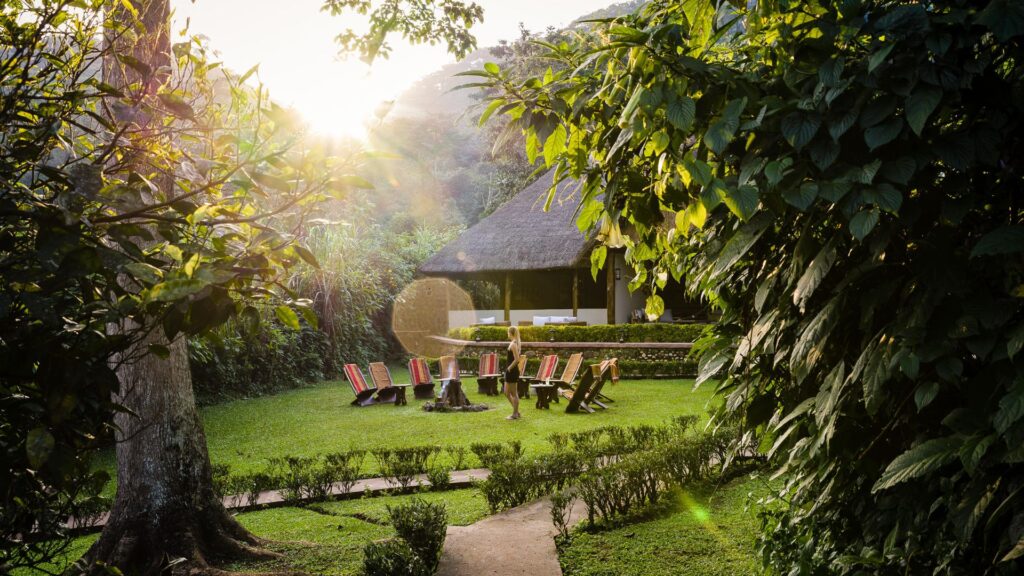
Bwindi’s luxury lodges cluster in and around the Buhoma sector, with excellent options in Rushaga and Nkuringo as well. Because we work exclusively with luxury-only properties, every lodge we recommend combines proximity to the trailhead with the kind of comfort that turns a physically demanding day into a genuinely restorative one: hot showers, real fireplaces, and a cold drink waiting at the door when you walk back out of the forest.
| Lodge | Sector | Signature Feature |
| Clouds Mountain Gorilla Lodge | Nkuringo | Uganda’s original luxury gorilla lodge, perched on Nteko Ridge with panoramic views across the Virunga volcanoes |
| Mahogany Springs | Buhoma | Elegant, eco-conscious suites along the Munyaga River, with a spa and some of the finest dining near the park |
| Gorilla Safari Lodge | Buhoma | Ridge-top cottages with sweeping forest views and easy access to the Buhoma trailhead |
| Bwindi Lodge | Buhoma | Secluded forest-edge cottages built around a strong sense of privacy and quiet |
| Buhoma Lodge | Buhoma | One of the closest properties to the park boundary, with private verandas overlooking the forest canopy |
Clouds Mountain Gorilla Lodge
Perched high on Nteko Ridge above the Nkuringo sector, Clouds is Uganda’s benchmark for luxurious accommodation for gorilla trekking. Spacious stone-and-thatch cottages open onto private verandas facing the Virunga volcanoes across the valley, and after a long trek there’s real satisfaction in watching the sun set over that same skyline from a hot bath. It’s our first recommendation for guests trekking Nkuringo’s steeper trails who want the comfort to match the effort.
Mahogany Springs
Set beside the Munyaga River just outside Buhoma’s park boundary, Mahogany Springs pairs architecturally striking suites with genuinely excellent food and a small spa, a rare and welcome touch this close to the trailhead. Large windows keep the forest constantly present without sacrificing the polish expected of a luxury property.
Gorilla Safari Lodge
Gorilla Safari Lodge sits on a ridge directly overlooking the Bwindi forest, with roomy cottages that balance rustic charm against modern comforts. Its position gives it some of the shortest transfer times to the Buhoma ranger station of any property in the sector.
Bwindi Lodge
Tucked into a quiet fold of forest, Bwindi Lodge is built for travelers who want immersion without compromise, private cottages among the trees, warm Ugandan hospitality, and a genuine sense of seclusion that suits honeymooners and couples especially well.
Buhoma Lodge
Among the closest luxury properties to the Buhoma trailhead itself, Buhoma Lodge offers comfortable cabins with private verandas facing the forest canopy and an effortless, low-friction base for a first Bwindi trek.
Combining Bwindi with a Rwanda or Tanzania safari.
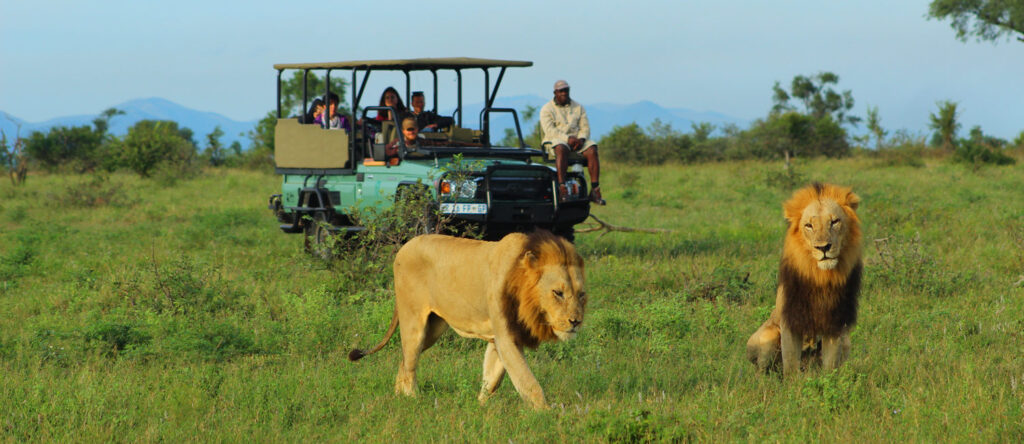
We field this question most often because we plan almost every Bwindi trek as one leg of a wider, tailor-made journey: how does Bwindi fit with everything else? The honest answer is that it fits extremely well in several directions.
Pairing Bwindi with Rwanda
Bwindi’s proximity to the Rwandan border makes a two-country primate safari genuinely straightforward. Many guests trek gorillas in Bwindi, then cross overland to Volcanoes National Park for gorilla trekking in Rwanda, golden monkey trekking, and a visit to Kigali or extend further into Nyungwe Forest National Park for chimpanzee trekking and Akagera National Park for Big Five game drives. Our Gorilla and Golden Monkey Safari and 3-day Rwanda Gorilla and Golden Monkey Trekking itineraries are two of the most popular starting templates we customize for this pairing, and our Best of Rwanda’s National Parks itinerary shows how far a 10-day trip can stretch.
Pairing Bwindi with a Tanzania Safari
For guests whose primary safari is built around Tanzania’s northern circuit, Bwindi is typically flown in as a dedicated 3–4 day extension, either at the start of the trip or immediately before flying home. It slots naturally alongside a Great Wildebeest Migration safari, a Kilimanjaro trek, or a closing stretch on Zanzibar’s beaches. If you’d rather build a single continuous multi-country journey, our 16-day Rwanda, Tanzania & Zanzibar safari and our Maasai Mara, Rwanda, Gorillas & Victoria Falls itinerary both show how gorilla trekking, classic Serengeti game drives, and beach time can be woven into one seamless, private trip. For general planning on the Uganda side, our Luxury Uganda Safaris overview and dedicated Uganda gorilla trekking guide cover Bwindi’s sister park, Mgahinga Gorilla National Park, in more depth.
Is Bwindi Right for You? Couples, Families, and Repeat Travelers
First-Time Africa Travelers
If this is your first trip to the continent, Bwindi’s Buhoma sector with its gentler terrain and widest choice of luxury lodges is the natural entry point. Paired with a classic Serengeti or Ngorongoro safari, it gives first-timers both the wide-open plains-game experience and the intimate, single-species primate encounter in one trip, which is exactly the combination most new-to-Africa guests tell us they were hoping for.
Couples and Honeymooners
Gorilla trekking has become a genuinely popular honeymoon addition; there’s something about a shared physical challenge followed by an intensely emotional wildlife encounter that resonates with couples. Bwindi Lodge and Clouds Mountain Gorilla Lodge both suit this pairing especially well, and they combine naturally with our Serengeti honeymoon safari itineraries for couples building a longer East Africa trip.
Families
The 15-year minimum trekking age means gorilla trekking itself is an activity for teenagers and adults rather than young children, but Bwindi still works well for multi-generational families; older teens can trek while younger children enjoy a forest walk or cultural visit with a dedicated guide, and Buhoma’s lodges are generally the most accommodating of mixed-age itineraries.
Repeat Africa Travelers
Guests who’ve already done a classic Serengeti-Ngorongoro circuit often tell us they want something that feels genuinely different for a second or third trip; Bwindi delivers that shift decisively. For travelers who’ve already trekked gorillas once, the Rushaga sector’s Gorilla Habituation Experience or a second trek in Rwanda’s Volcanoes National Park both offer a meaningfully deeper version of the same encounter.
Practical Travel Tips for Bwindi
- Book permits early. Peak-season (June–September, December–February) permits routinely sell out 6–12 months in advance. We recommend confirming dates as soon as your travel window is set.
- Get travel insurance with trekking cover. Given the physical nature of the activity and remote setting, comprehensive travel insurance covering hiking and medical evacuation is essential, not optional.
- Yellow fever certification. Uganda requires proof of yellow fever vaccination for entry; malaria prophylaxis is also strongly recommended. Consult your doctor at least six weeks before travel.
- Bring cash for tips. Guides, trackers, and porters are tipped in cash (USD is widely accepted); budgeting roughly USD $20–30 per guide, per day, and USD $10–15 for trackers and porters is standard practice.
- Pack layers. Mornings can dip to 10–15°C at altitude, while midday trekking works up a real sweat layer, which beats any single heavy jacket.
- Protect your camera gear. A dry bag or rain cover for cameras is essential; Bwindi’s name is not an exaggeration, and sudden downpours are common even in the dry season.
- ATOL protection. As an ATOL-protected operator, we ensure your flight-inclusive Uganda extension is financially protected from end to end, so you have one less thing to worry about when combining multiple countries on one trip.
Start Planning Your Bwindi Extension
Whether you want three focused days in Bwindi or a full multi-country primate safari through Uganda, Rwanda, and Tanzania, our team will build it around your dates, fitness, and budget, no generic templates.