
Fanjove Island: Tanzania’s Private Luxury Island Escape Guide.
Fanjove Island is a small private island in Tanzania’s Songo Songo Archipelago, roughly 200 km south of Dar es Salaam and about 20 km off the coast at Kilwa. It hosts a single barefoot-luxury lodge, an 11 km fringing reef, nesting green and hawksbill turtles, and, between roughly July and October, passing humpback whales. Guests reach it by a short flight to neighboring Songo Songo Island, followed by a boat transfer, and the best time to visit is June to March.
Most of Tanzania’s coastline is gloriously busy: dhows slipping out at dawn, spice markets in Stone Town, and beach bars along Zanzibar’s northern shore. Fanjove Island is the quiet counterpoint. It is a sliver of white sand and low coastal forest, less than a kilometer long, ringed by an 11 km coral reef and watched over by a restored 19th-century lighthouse. Apart from the lodge staff, a few visiting fishermen, and the occasional humpback whale cruising past in the channel, you will have the place to yourself.
At Luxury Safaris Tanzania, we have spent more than 15 years designing private, tailor-made journeys across East Africa, and we recommend Fanjove to a very particular kind of traveler: the one who has just finished, or is about to begin, a serious safari and wants the other half of the trip to feel like a long, slow exhale.
Already dreaming of toes in the sand?
Talk to our Fanjove Island specialists and we will sketch a private itinerary around your dates.
What Is Fanjove Island?
Fanjove Island is a largely uninhabited coral island in the Songo Songo Archipelago, administered from Songosongo ward in Kilwa District, Lindi Region, on Tanzania’s southern Indian Ocean coast. It is best known for Fanjove Private Island, an eco-luxury lodge with a handful of thatched beachfront villas, and for some of the least-visited reef and turtle-nesting beaches on the East African coast.
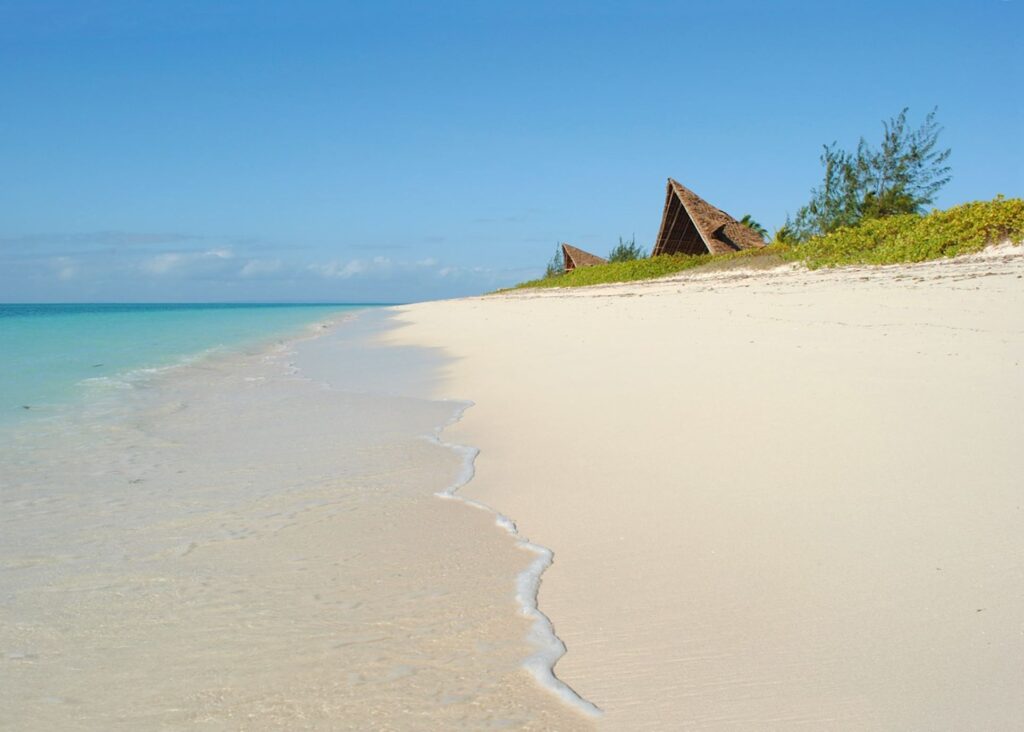
The island sits in a scattering of small, low-lying islands that includes Songo Songo, Nyuni, and Okuza. Unlike Zanzibar, which has been a trading and tourism hub for centuries, this stretch of coast remains remarkably unhurried. Staff come from the neighboring island of Songo Songo; fishermen still work the surrounding waters in traditional boats, and the only landmark of note is the lighthouse built in the 19th century, which has since been lovingly restored and now houses the lodge’s restaurant.
Independent travel writers have long singled Fanjove out. Lonely Planet’s coverage of the island calls it unique and highly recommended, particularly for anyone combining it with Kilwa and Mafia as an introduction to Swahili coast life. It is one of only two genuine private-island experiences in Tanzania. The other is Mnemba, off Zanzibar’s northeast coast, where the ultra-exclusive &Beyond Mnemba Island sits at a considerably higher price point. Fanjove offers a similar castaway feeling with a more relaxed, understated character.
Fanjove Island at a Glance
| Detail | What You Need to Know |
| Location | Songo Songo Archipelago, Kilwa District, Lindi Region, southern Tanzania |
| Distance | Roughly 200 km south of Dar es Salaam; about 20 km off Kilwa |
| Getting there | Flight from Dar es Salaam to Songo Songo Island, then a 15- to 30-minute boat transfer |
| Accommodation | Fanjove Private Island lodge: a handful of thatched beachfront villas |
| Island size | Less than 1 km long, with an 11 km coral reef around it |
| Water | Around 28°C, with visibility of up to 30 meters in good conditions |
| Best months | June to March, with June to October the calmest and clearest |
| Wildlife highlights | Green and hawksbill turtles, bottlenose and spinner dolphins, humpback whales, migratory birds |
| Ideal stay | 3 to 5 nights, usually after a mainland safari |
| Atmosphere | Barefoot, private, eco-conscious, and refreshingly unfussy |
Where Is Fanjove Island, and How Do You Get There?
Fanjove Island lies in the Indian Ocean off southern Tanzania, close to the historic town of Kilwa. To get there, you fly from Dar es Salaam to Songo Songo Island, which takes around an hour, then transfer by boat for roughly 15 to 30 minutes, sometimes aboard a traditional dhow. Door to door, the journey takes about half a day, and we arrange every leg for you.
Fanjove sits less than 50 km from the mainland, yet it feels a world away. Here is how the journey typically unfolds.
- Arrive in Dar es Salaam. Most international travelers connect through Julius Nyerere International Airport, either directly or via Nairobi, Addis Ababa, Doha, or Istanbul. If you are combining Fanjove with a bush safari, you will usually reach Dar by light aircraft from your last park.
- Fly to Songo Songo. A small scheduled or chartered aircraft takes you south along the coast to the airstrip on Songo Songo, the main island in the archipelago. The flight lasts around an hour, and the views of mangrove-lined creeks, sandbanks, and turquoise shallows are worth a window seat.
- Cross by boat. Staff from the lodge meet you for the short crossing to Fanjove. Depending on tides and sea conditions, you may travel by speedboat or by traditional sailing dhow. The dhow’s arrival, with the lighthouse slowly glowing on the horizon, is as close to a Robinson Crusoe moment as luxury travel gets.
- Step ashore. There is no jetty and no reception desk. You wade or step onto sand, are welcomed by name, and are shown to your villa while your bags follow.
There is also an overland alternative: drive from Dar es Salaam to Kilwa Masoko, a journey of six to eight hours, then take a boat out to the island. We rarely recommend it. Flying saves most of a day, and our guests would rather spend that time on the reef than on the road.
Light aircraft impose strict weight limits, usually in the region of 15 to 20 kg in soft-sided bags, and the allowance varies by operator. We confirm the exact limit for each of your flights and can arrange for surplus luggage to be stored in Dar es Salaam while you are away. For travelers arriving from a safari with camera equipment, the trip is worth planning early.
Why Fanjove Is a Different Kind of Island Escape
Fanjove stands apart from other Tanzanian beach destinations because it is genuinely private, genuinely small, and genuinely quiet. There are no resorts, roads, beach vendors, or other hotels, just one low-impact lodge, a reef, and an empty horizon. That makes it ideal for travelers who value solitude and nature over nightlife and spa-menu extravagance.
Honesty matters when we describe places to our guests, so let us be clear about what Fanjove is and is not. It is not a marble-lobbied resort with a butler on call and a sushi bar. The lodge is deliberately simple. It is built from local coral, rag stone, and palm thatch, runs almost entirely on solar power, and could, as one specialist put it, virtually be removed in an afternoon. Anything more elaborate would feel out of place.
What it offers instead is something harder to find on the East African coast: genuine seclusion with real comfort. Think open-air bathrooms under the stars, hammocks on your own sandy veranda, lantern-lit dinners at a table beside the sea, and days that start and end at the pace of the tide. For guests who have spent a week on game drives, that contrast is exactly the point.
Fanjove is also a place where the natural world is still running the show. Turtles come ashore to nest, dolphins ride the bow wave of the dhow, and in season, whales blow offshore. These are not staged encounters. They are simply what happens on an island that few people visit.
Where to Stay on Fanjove Island: The Fanjove Private Island Lodge
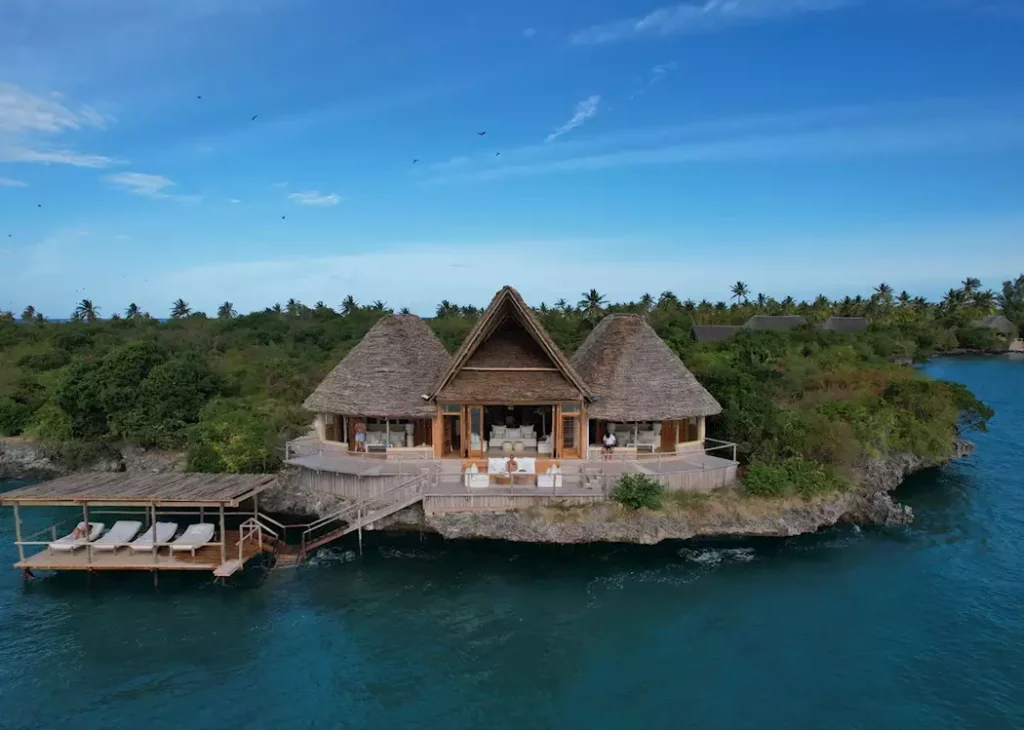
The only place to stay on Fanjove Island is Fanjove Private Island, a small eco-luxury lodge of thatched beachfront villas built from coral, rag stone, and palm leaves. Each villa has a private open-air bathroom, a sandy veranda with hammocks, and direct access to the beach. The restaurant occupies the island’s restored 19th-century lighthouse, and the whole property runs on solar power.
The Villas
The villas are spaced along the sandy shore, each with an uninterrupted ocean view. Walls of local coral rag stone and roofs of natural makuti thatch keep interiors cool, and the open sides allow the sea breeze to move freely through the space. Neutral furnishings and shell-embellished details keep the aesthetic restrained. Each villa has an open-air en suite bathroom with twin basins, and the entrance opens onto a broad, shaded seating area with swinging hammocks.
Because the lodge is small, service is personal. Staff know your name, your preferred snorkeling spot, and whether you take sugar in your coffee by your second morning. That is the kind of attention that big resorts struggle to replicate, and it is one of the reasons guests return.
The Lighthouse Restaurant
Meals are served in the island’s old lighthouse, which has been restored and converted into a dining room with views across the water. Expect fresh seafood from the surrounding waters, produce sourced as locally as possible, and a relaxed, barefoot approach to dinner. On clear nights, the lanterns on the sand and the unbroken field of stars overhead make the setting difficult to beat. If you celebrate a birthday or anniversary on the island, tell us in advance, and we will ask the team to arrange something special.
Eco-Conscious by Design
The lodge was designed with ecologists to leave the smallest possible footprint. Power is solar, rainwater is harvested, and building materials are natural and local. For travelers who care about travelling responsibly, this approach is a meaningful differentiator. It also dovetails with our approach to carbon-conscious luxury safaris in Tanzania, where we look for lodges that protect the places they depend upon.
Exclusive Use and Small Groups
Because the lodge is so small, Fanjove naturally suits families, friends travelling together, and multigenerational groups who want a place largely to themselves. If you are considering a group celebration or a full-island stay, our guide to exclusive-use safari villas in Tanzania explains how we approach private-use bookings, and our team can check what is possible on Fanjove for your dates.
Things to Do on Fanjove Island
The best things to do on Fanjove Island are snorkeling and diving in the 11 km coral reef, kayaking around the island and its neighboring bird island, watching green and hawksbill turtles nest, taking a dhow cruise at sunset, looking for dolphins and whales on a marine safari, and birdwatching in the migratory season from November to March. Many guests also simply enjoy doing nothing at all.
The beauty of Fanjove is that the day is yours to shape. Here is what our guests tend to enjoy most.
Snorkelling the Coral Reef
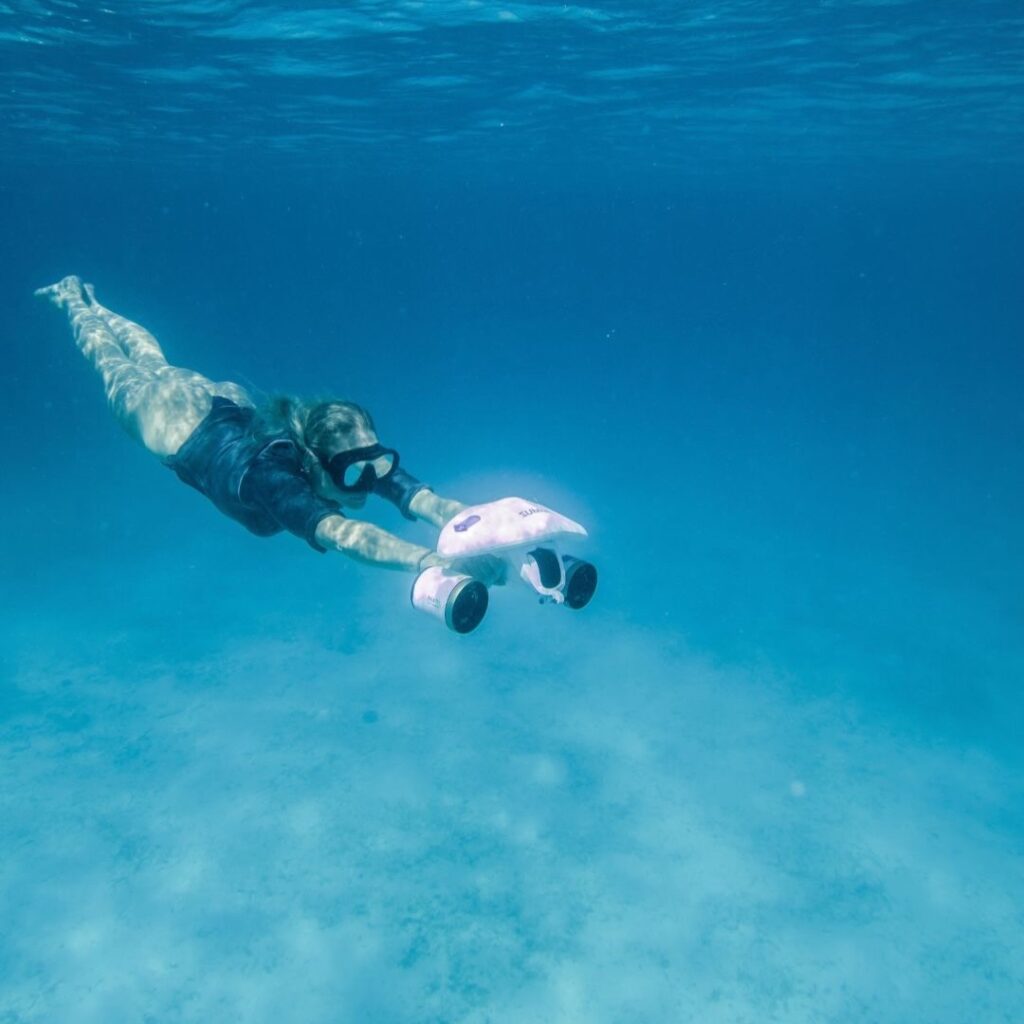
An intact coral reef extends for around 11 km around Fanjove, and it is the island’s remarkable underwater asset. In ideal conditions, the water is a warm 28°C, and visibility can reach 30 meters. Snorkellers drift over healthy hard and soft corals, clouds of reef fish, and the occasional turtle grazing on the seabed. Because there are so few visitors, the reef sees a fraction of the traffic of Zanzibar’s more popular sites.
We suggest timing your snorkel for the calmest part of the tide and, if you are a confident swimmer, asking the lodge team to take you to their favorite spots on the outer reef. Bringing your mask often pays dividends, as a well-fitting mask is the single biggest factor in a rewarding snorkeling experience.
Scuba Diving
The lodge arranges diving for certified divers, and the combination of clear water, healthy coral, and low diver numbers is a drawcard. Fanjove is not a destination for technical diving, but for relaxed reef dives, it is difficult to fault. Please bring your certification card and logbook, and tell us in advance if you would like to dive so that we can confirm availability and equipment for the dates you plan to travel.
Kayaking Around the Island
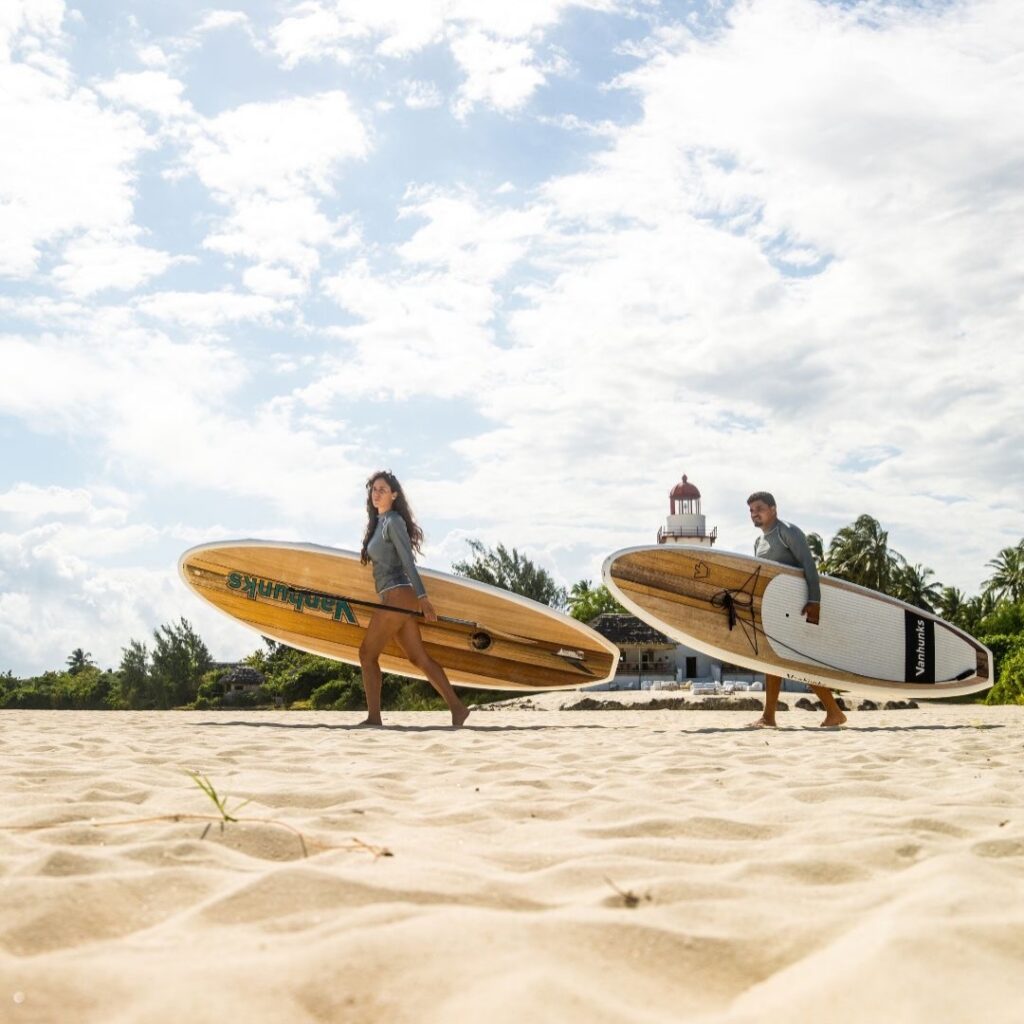
The lodge keeps single kayaks on the beach, and paddling is one of the nicest ways to understand how small and how wild this place really is. Kayaks let you explore the whole of the main island, the neighboring bird island, and the low cliffs along the coast from the water, at a pace that does not disturb wildlife. Early morning, when the sea is glassy and the light is soft, is the best time.
Sunset Dhow Cruises
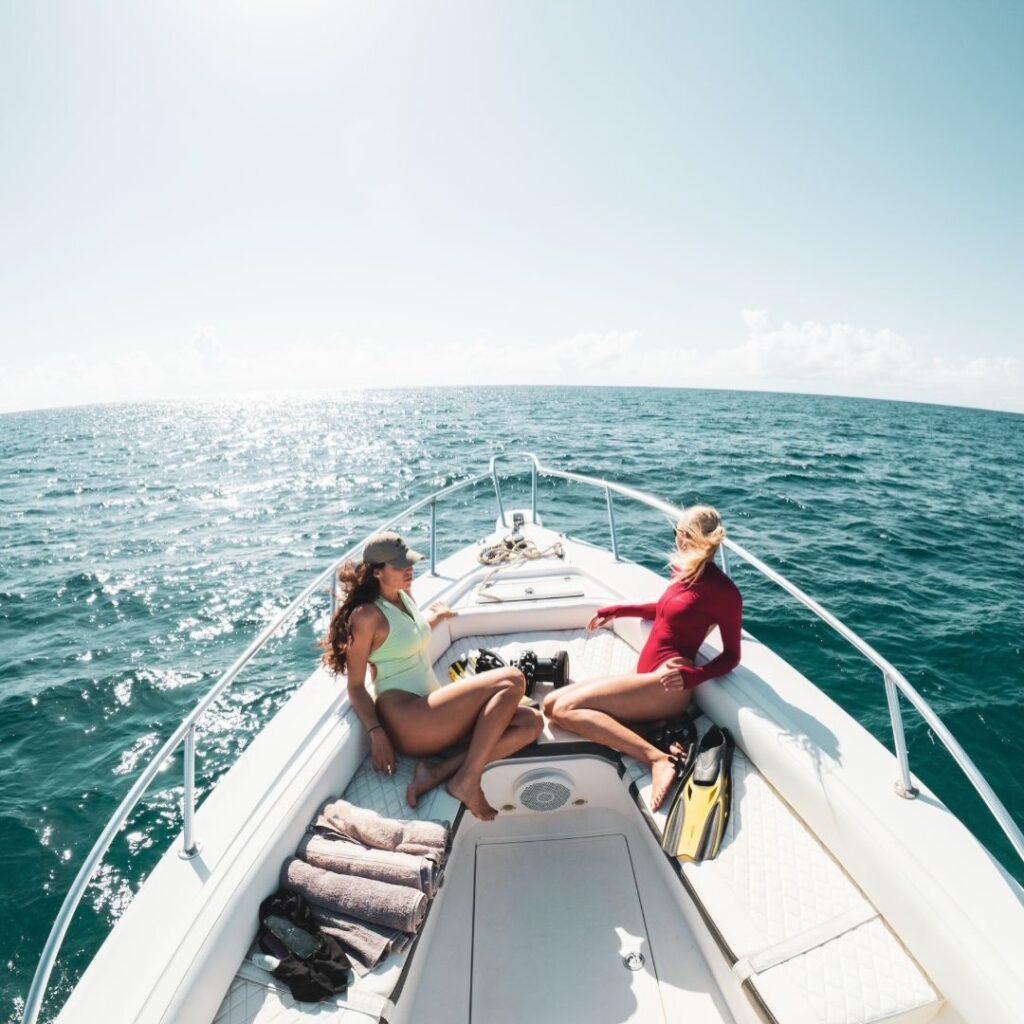
Each evening, a traditional dhow leaves before sunset, skippered by local boatmen and island staff. You glide along the reef edge with a drink in hand as the sky shifts through orange, pink, and violet. It is simple, unhurried, and, for many guests, the highlight of the stay. If you are celebrating something, ask us about arranging a private dhow dinner or a sandbank picnic.
Marine Safaris: Dolphins and Whales
The waters around Fanjove support both bottlenose and spinner dolphins, and the lodge runs marine safaris to look for them. Between roughly mid-July and October, humpback whales pass through the channel on their annual migration, and sightings from boats and even from the beach are possible. As with every wildlife encounter, there are no guarantees, but the combination of calm seas and few other boats improves your odds considerably.
Turtle Watching
Fanjove is an important nesting site for green and hawksbill turtles. Female turtles come ashore at night to dig their nests, and the lodge team monitors them as part of a wider conservation effort along this coast. Published sources vary slightly on exact timing, but nesting generally takes place somewhere between February and August, with hatchlings emerging roughly from April to July. If seeing a turtle nest or a hatching is a priority for you, tell us, and we will time your trip accordingly and brief you on viewing etiquette. Always keep your distance, avoid bright lights, and let your guide lead.
Birdwatching
From November through March, hundreds of migratory birds arrive on the island, and discreet lookouts around the shoreline make it easy to watch them with binoculars without disturbing them. Coastal species, seabirds, and waders feed on the shoreline and reef flats, and the forested interior is alive with birdsong. Keen birders will find a rewarding change of pace from savannah birding.
Sandbank Picnics, Fishing, and Slow Days
On a calm day, the lodge can organize a boat trip to a sandbank for a picnic lunch, with nothing but turquoise water in every direction. For anglers, the team can usually arrange a local fisherman from Kilwa to take you out for a morning’s fishing. Otherwise, a typical Fanjove day might involve a late breakfast, a long snorkel, a read in the hammock, a nap, and a dhow cruise at dusk. That, in itself, is the experience.
Best Time to Visit Fanjove Island
The best time to visit Fanjove Island is from June to March, when the seas are generally calmer, visibility is high, and marine life is most active. June to October is the driest and clearest window, with humpback whales passing through from about July. January to March is a strong second window, with warm weather and migratory birds. You should avoid the long rains in April and May.

Fanjove has a tropical climate, with hot, humid, and sunny conditions for much of the year. The coast is most comfortable when rainfall and wind are lowest, from roughly July to October and again from January to March. The same dry-season logic applies to much of the country, and our guide to the best time to visit Tanzania explains how the seasons shape wildlife and weather from the Serengeti to the coast.
| Period | Conditions | Highlights on Fanjove |
| June to October | Driest, clearest, and calmest; cooler, pleasant temperatures | Best snorkelling and diving visibility; humpback whales from mid-July; dolphin sightings |
| November to December | Warmer and more humid, with occasional showers | Migratory birds arrive; fewer guests; good value |
| January to March | Hot, sunny, and generally settled | Excellent reef conditions; migratory birds; start of turtle nesting season |
| April to May | Long rains, heavy downpours, and humid conditions | Turtle hatchlings are possible; lodge availability can be limited, and seas are less predictable. |
Matching the Season to Your Safari
Because most of our guests combine Fanjove with a safari, it helps to think of both halves of the trip together. The dry season from late June to October is outstanding for bush wildlife and for the beach. If your main aim is the Great Wildebeest Migration in the Serengeti, you can pair a northern safari with a few days on Fanjove during the same months. If you prefer the calving season in the southern Serengeti, which falls in January and February, Fanjove’s warm and settled weather at that time of year makes it a natural beach finale.
Fanjove Island for Couples and Honeymooners
Fanjove is one of the most romantic places on Tanzania’s coast. With a handful of private beachfront villas, lantern-lit dinners, sunset dhow cruises, and star-filled skies unspoiled by light pollution, it offers couples genuine privacy rather than manufactured romance. It works beautifully as the beach chapter of a honeymoon that begins with a luxury safari.
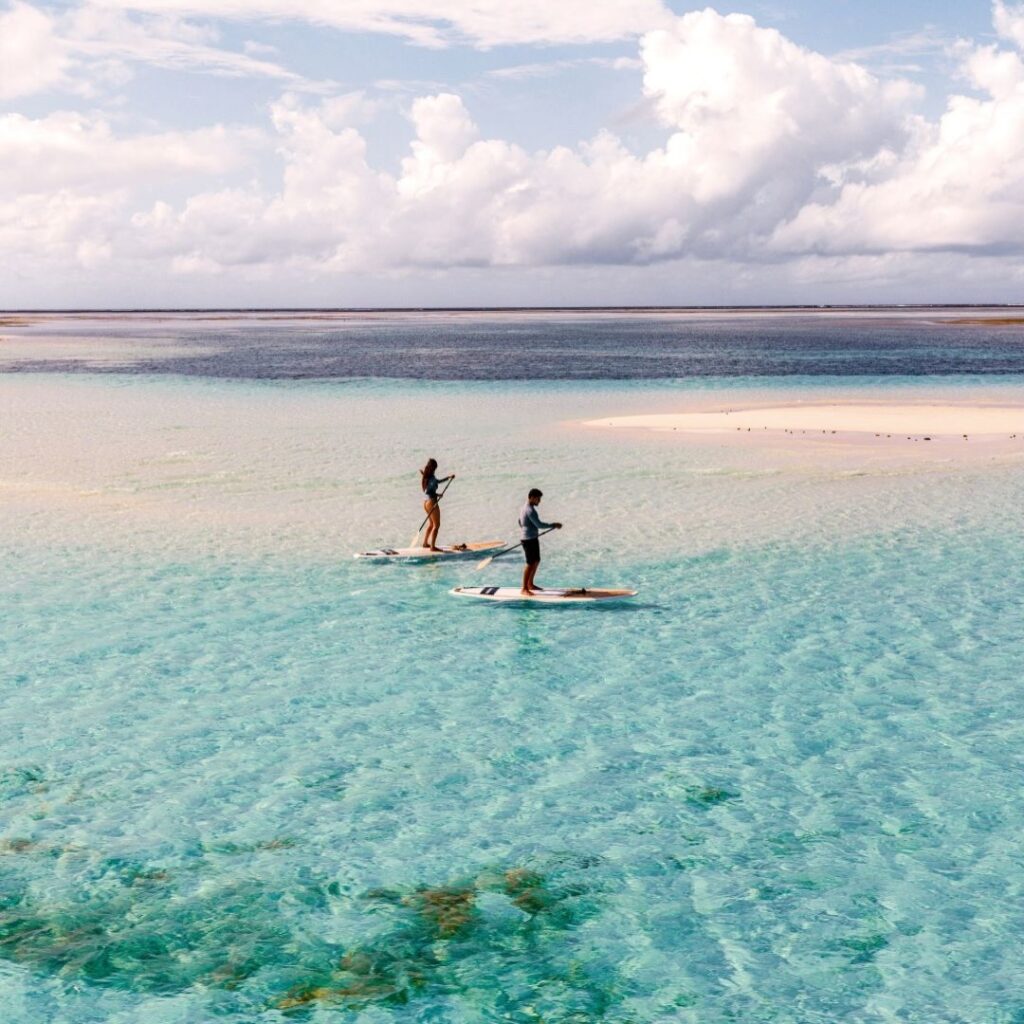
Couples tend to love Fanjove because it removes every distraction. There is no schedule, no crowd, and no pressure to be anywhere. You can wake up to the sound of waves, snorkel before breakfast, and spend the afternoon in a hammock, watching the sun slide into the Indian Ocean from a dhow. In the evening, tables are set on the sand or in the lighthouse, and the stars come out in numbers that most people have not seen since childhood.
For honeymooners, we typically recommend starting with the drama of the bush, perhaps a few nights in the Serengeti or Nyerere National Park, before flying south to Fanjove to decompress. Our honeymoon safaris are designed around that classic bush-then-beach rhythm, and Fanjove adds a more secluded alternative to the busier beaches of Zanzibar.
If you are travelling for an anniversary or milestone birthday, tell us early. We can ask the lodge team to arrange private dinners, flowers, a sandbank picnic, or a dhow cruise for two.
Is Fanjove Island Good for Families?
Fanjove suits families with older children and teenagers who enjoy snorkeling, kayaking, and wildlife and who are comfortable with a remote, simple setting. It is less suited to very young children because of the light-aircraft transfers, open water, and absence of facilities such as kids’ clubs. We always check the lodge’s current policy on children’s ages before recommending it.
Families who love the outdoors will find Fanjove magical. Children can learn to snorkel in calm shallows, paddle kayaks along the shore, search for hermit crabs at low tide and, in season, watch turtle hatchlings scramble toward the sea. There are no screens, no crowds, and plenty of space to run.
The practicalities are worth thinking through, however. Access involves light aircraft and boats, the nearest hospital is some distance away, and the lodge is intentionally simple. For families with young children, the mainland safaris and Zanzibar’s more developed resorts may be easier. Our family luxury safaris and our guide to family-friendly luxury safaris in Tanzania set out how we approach pacing, guide selection, and age-appropriate activities, and we apply the same thinking when designing a family beach stay.
Fanjove Island for First-Timers and Repeat Africa Travelers
First-time Africa travelers should treat Fanjove as a restful finale to a classic safari, while repeat travelers often see it as a fresh frontier. For first-timers, it works best after three to five nights of game drives. For those who have already visited the great parks, it offers something that almost nobody else on their list will have seen.
For First-Timers
If this is your first trip to Africa, we would almost always start with the wildlife. The Serengeti, the Ngorongoro Crater, and Tarangire remain extraordinary, and a few days of early starts and long game drives are the perfect contrast to the stillness of an island. A typical first-timer itinerary might spend six or seven nights on safari and four on Fanjove, with a night in Dar es Salaam to break the journey.
For Repeat Travelers
Experienced Africa travelers are often the ones who appreciate Fanjove most. You’ve seen the Big Five, done the river crossings, and are looking for something quieter and more original. Fanjove, combined with the historic ruins of Kilwa and perhaps a stay in a remote southern park, suits the person who wants to go somewhere their friends have not been.
How to Combine Fanjove Island With a Safari
Fanjove pairs most naturally with a southern Tanzania safari, because flights connect through Dar es Salaam. A classic combination is three or four nights in Nyerere National Park or Ruaha, followed by three to five nights on Fanjove. You can also pair Northern circuit safaris in the Serengeti and Ngorongoro with Fanjove via a domestic flight to Dar es Salaam.
Fanjove is rarely a stand-alone trip. Specialists who know the area typically suggest pairing it with a longer safari, giving you time for at least four or five nights on the beach. Here is how we plan it.
- Choose your safari region. The Southern Circuit is the easiest match geographically. Nyerere National Park offers boat safaris on the Rufiji River, walking safaris, and wild dogs, while Ruaha National Park delivers big skies, large lion prides, and dramatic baobab landscapes. If you prefer the northern parks, a final flight south from Arusha or Kilimanjaro to Dar es Salaam connects you to Fanjove.
- Decide how long to stay on the island. For most guests, three to five nights is the sweet spot. Fewer than three feel rushed given the transfers, while more than five suit those who love extended time by the sea.
- Select your lodges. In the south, The Retreat Selous is among our favorites for its blend of seclusion and refinement. In the north, we match lodges to your travel dates and migration movements.
- Plan your flights and transfers. We arrange every domestic flight, charter, and boat transfer so that connections run smoothly. Because light aircraft schedules matter, we recommend building in a buffer night in Dar es Salaam before international departures.
- Confirm marine activities and medical needs. Tell us in advance if you plan to dive, if you have mobility or health considerations, or if you would like to time your stay around whales, turtles, or birds.
Fanjove vs Mafia, Zanzibar, Pemba, and Mnemba.
Fanjove is the quietest and most private of Tanzania’s island options, with a single lodge and an intact reef. Mafia is better known for whale sharks and its marine park, Zanzibar for culture and variety, Pemba for diving and spice farms, and Mnemba for ultra-exclusive atoll luxury. The right choice depends on whether you prioritize seclusion, activity, culture, or glamour.
| Island | Character | Best For | Notes |
| Fanjove | Private, tiny, barefoot, and wild | Seclusion, snorkeling, turtles, stargazing | One lodge only; flight plus boat transfer |
| Mafia | Laid-back, marine-conservation focus | Diving, snorkeling, and whale sharks from about October to March | Home to Tanzania’s first marine park, gazetted in 1995 |
| Zanzibar | Varied, cultural, and well developed | Stone Town, spice tours, beach resorts, kitesurfing | Widest choice of hotels; busier in peak season |
| Pemba | Green, quiet, and rural | Diving, nature, spice plantations | Less developed than Zanzibar |
| Mnemba | Ultra-exclusive private atoll | Honeymoons, privacy, top-tier service | Highest price point of the group |
We know all five well. If you want a more profound look at the others, read about Mafia Island, our guide to Zanzibar beach experiences, and our overview of Pemba Island. For help choosing when to go to the archipelago, refer to our best time to visit Zanzibar guide, which covers the dry season from June to October, when temperatures typically range from 28 to 34 degrees.
A popular combination is to spend several nights on Fanjove for solitude and then end with a few days in Zanzibar for Stone Town, spice farms, and the lively beaches. The contrast makes both stays more memorable.
Beyond the Beach: Kilwa Kisiwani and Songo Mnara
The historic ruins of Kilwa Kisiwani and Songo Mnara, both near Fanjove, form a UNESCO World Heritage Site. They are the remains of medieval Swahili trading cities that once controlled gold, ivory, and spice routes across the Indian Ocean. They add a rich cultural dimension to a stay on Fanjove and are a short distance away by boat.
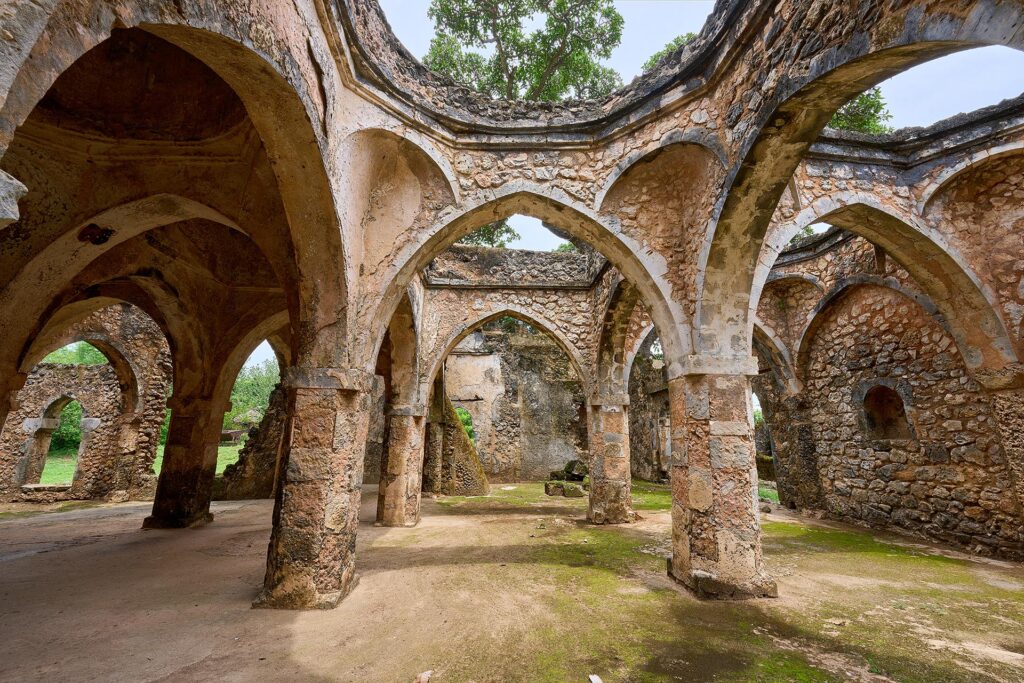
One of the pleasures of Fanjove is its proximity to a part of Tanzania’s history that few visitors encounter. Roughly 20 km away across the water, Kilwa Kisiwani was one of the most significant cities of the medieval Swahili coast, a trading power whose merchants exchanged goods as far afield as India and China. Its ruins include a grand mosque dating to the medieval period, palace remains, and the Gereza fort, whose origins go back to a Portuguese fortification of 1505. Nearby Songo Mnara preserves the stone houses and mosques of a smaller but equally atmospheric settlement.
UNESCO inscribes the Ruins of Kilwa Kisiwani and the Ruins of Songo Mnara on the World Heritage List, recognizing their value as testimony to the Swahili trading civilization. We can usually arrange guided cultural excursions for guests staying on the island, subject to sea conditions and the lodge’s logistics, and a visit makes a fascinating counterpoint to the natural wonders of the reef.
Travelling Responsibly: Sustainable Luxury on Fanjove
Sustainable travel is part of how Fanjove operates, and we encourage guests to continue that approach during their stay. The lodge runs on solar power, harvests rainwater, and uses natural, locally sourced materials, so its footprint on the island is deliberately light. Conservation groups such as Sea Sense have worked with communities along this coast to protect turtles and other threatened marine species, and the lodge team monitors nesting activity on the island’s beaches.
Part of the wider coastline falls within the Rufiji-Mafia-Kilwa Marine Ramsar Site, a wetland of international importance covering nearly 600,000 hectares. Ramsar’s site record shows how the wider area spans the Rufiji, Mafia, and Kilwa districts, a reminder of how valuable this stretch of coast is for mangroves, reefs, and marine life.
Here are a few simple ways to be a responsible guest:
- Use reef-safe sunscreen and avoid touching or standing on coral.
- Keep your distance from turtles, nests, and hatchlings, and never use flash photography at night.
- Bring a refillable water bottle and avoid single-use plastic.
- Follow your guide’s instructions on the water and on the beach.
- Ask the lodge team how you can support local conservation or community initiatives.
What Does a Stay on Fanjove Island Cost?
Prices vary by season, length of stay, and inclusions, but international operators typically publish package prices for Fanjove starting at around US$1,000 per person sharing, rising with the season and what is included. Costs generally cover accommodation and meals, with activities and transfers handled differently depending on the booking. We provide a precise, itemized quote for every itinerary.
Published prices are only a guide, because what you pay depends on the dates you choose, the number of nights, whether flights and transfers are included, and which activities you add. For example, we often price diving, fishing, and special dinners separately from the base rate. The cost of light-aircraft transfers from Dar es Salaam can also make up a significant part of the total.
Compared with Mnemba and other ultra-luxury island retreats, Fanjove has historically offered a more accessible way to enjoy a private island. As part of a longer trip, most travelers find it represents excellent value for the exclusivity, scenery, and marine experiences it provides. When we build your proposal, we spell out exactly what is included so that there are no surprises.
Practical Tips for Your Fanjove Island Trip
- Health: Consult your doctor or a travel clinic well before departure about malaria prophylaxis and recommended vaccinations for Tanzania. Bring any prescription medications you need, plus a small personal first-aid kit.
- Packing: Pack light, breathable clothing, a wide-brimmed hat, polarized sunglasses, reef-safe sunscreen, a rash vest, and sandals. Use soft-sided bags to meet light-aircraft rules.

- Snorkel gear: The lodge provides equipment, but a mask and snorkel that fit your face perfectly often make a big difference.
- Connectivity: Expect limited mobile coverage and solar-powered electricity. Treat it as a chance to switch off, and charge devices when you can.
- Insurance: Take out comprehensive travel insurance that includes medical evacuation, which is essential for remote destinations.
- Time zone: Tanzania operates on GMT+3 year-round.
- Money: Carry some US dollars or Tanzanian shillings in small notes for tips and incidental purchases, as there are no shops or ATMs on the island.
- Sea conditions: Boat transfers and marine activities depend on tides, wind, and weather, so build flexibility into your schedule and avoid tight same-day international connections.
Why Plan Your Fanjove Island Trip With Luxury Safaris Tanzania?
Fanjove rewards careful planning. Light-aircraft schedules, tidal transfers, seasonal wildlife, and the sheer remoteness of the island mean a trip works best when someone who knows the logistics designs it end-to-end. That is where we come in.
With more than 15 years of experience and over 10,000 satisfied travelers, Luxury Safaris Tanzania is a boutique operator that specializes in private, tailor-made journeys for discerning guests from the United States, the United Kingdom, Europe, and Australia. Our expert local guides know the country intimately, our itineraries are never recycled templates, and we work only with luxury lodges and camps that meet our standards. Our bookings are ATOL-protected, which gives UK travelers additional peace of mind.
When we plan Fanjove, we look at the whole journey: which safari should come first, how many nights you really need on the island, what time of year suits your interests, and how to make connections seamless. We would rather give you honest advice about whether Fanjove is right for you than sell you a stay that does not fit.
Ready to begin?
Contact our Tanzania travel experts for a tailor-made Fanjove Island proposal, with no obligation.