
Golden Monkey Trekking: A Private Luxury Guide to Rwanda & Uganda
Picture a bamboo forest at 2,500 meters, still wrapped in morning mist. Then the canopy begins to move. A flash of copper-gold, a bounding shape, then twenty, then forty. Golden monkeys pour through the stems around you, stripping young shoots with the concentration of children at a sweet counter, calling to one another, and leaping from stalk to stalk faster than your camera can focus. Your guide smiles. You have walked less than an hour from the trailhead, and you are already standing inside one of the most charming wildlife encounters in Africa.
Golden monkey trekking is the quieter sibling of gorilla trekking, and it is far too often treated as an afterthought. We think that is a mistake. At Luxury Safaris Tanzania, where we have planned private, tailor-made East African journeys for more than 15 years, we regularly hear guests say the monkeys were the surprise highlight of their primate itinerary: easier on the legs, richer in photographs, and gloriously playful. This guide covers everything you need to plan it properly, from permit prices and the best months to travel through to how it fits alongside a Rwanda gorilla trek or a wider Tanzania safari.
Golden monkeys live in only a handful of places on Earth, and you can trek to see them in just two countries: Rwanda and Uganda. We will explain the differences, tell you which we recommend for your travel style, and show you how our guides stitch the experience into itineraries that are private, unhurried, and entirely yours.
Golden monkey trekking is a guided forest walk to visit a habituated troop of endangered golden monkeys (Cercopithecus kandti) in the bamboo zone of the Virunga volcanoes. It is offered in just two places: Volcanoes National Park in Rwanda (permit US$100, minimum age 12) and Mgahinga Gorilla National Park in Uganda (permit around US$60, minimum age 15). Treks start early in the morning, usually take one to three hours to reach the monkeys, and you spend one hour with them. It is one of the least strenuous primate experiences in East Africa.
Golden Monkey Trekking at a Glance
| Species | Golden monkey (Cercopithecus kandti, also treated as C. mitis kandti), a close relative of the blue monkey |
| Conservation status | Endangered on the IUCN Red List |
| Where you can trek | Volcanoes National Park (Rwanda) and Mgahinga Gorilla National Park (Uganda) |
| Habitat | Bamboo forest on the Virunga volcano slopes, roughly 2,100 to 3,550 m above sea level |
| Rwanda permit | US$100 per person (foreign non-resident, 2026 rate), booked through your operator |
| Uganda permit | Around US$60 per person plus US$40 per person for the park entrance; confirm the current rate when booking |
| Time with the monkeys | One hour once the troop is found |
| Total trek time | Typically 1 to 3 hours of walking, plus briefing and transfers (about half a day) |
| Minimum age | 12 years in Rwanda; 15 years in Uganda |
| Fitness level | Easy to moderate; much gentler than gorilla trekking |
| Best months | June to September and December to February (drier trails) |
| Gateway | Kigali for Rwanda (about two hours by road to Volcanoes); Kisoro region for Mgahinga |
What Are Golden Monkeys, and Why Are They So Special?
Golden monkeys are endangered forest primates with burnished orange-gold backs and flanks, dark limbs, and a pale face, found only in the Virunga volcano range of Rwanda, Uganda, and the Democratic Republic of Congo, plus a small fragment of forest in Rwanda’s Gishwati. Scientists have long treated them as a subspecies of the widespread blue monkey, and many authorities now list them as a species in their own right. Either way, nothing else in East Africa looks quite like them.
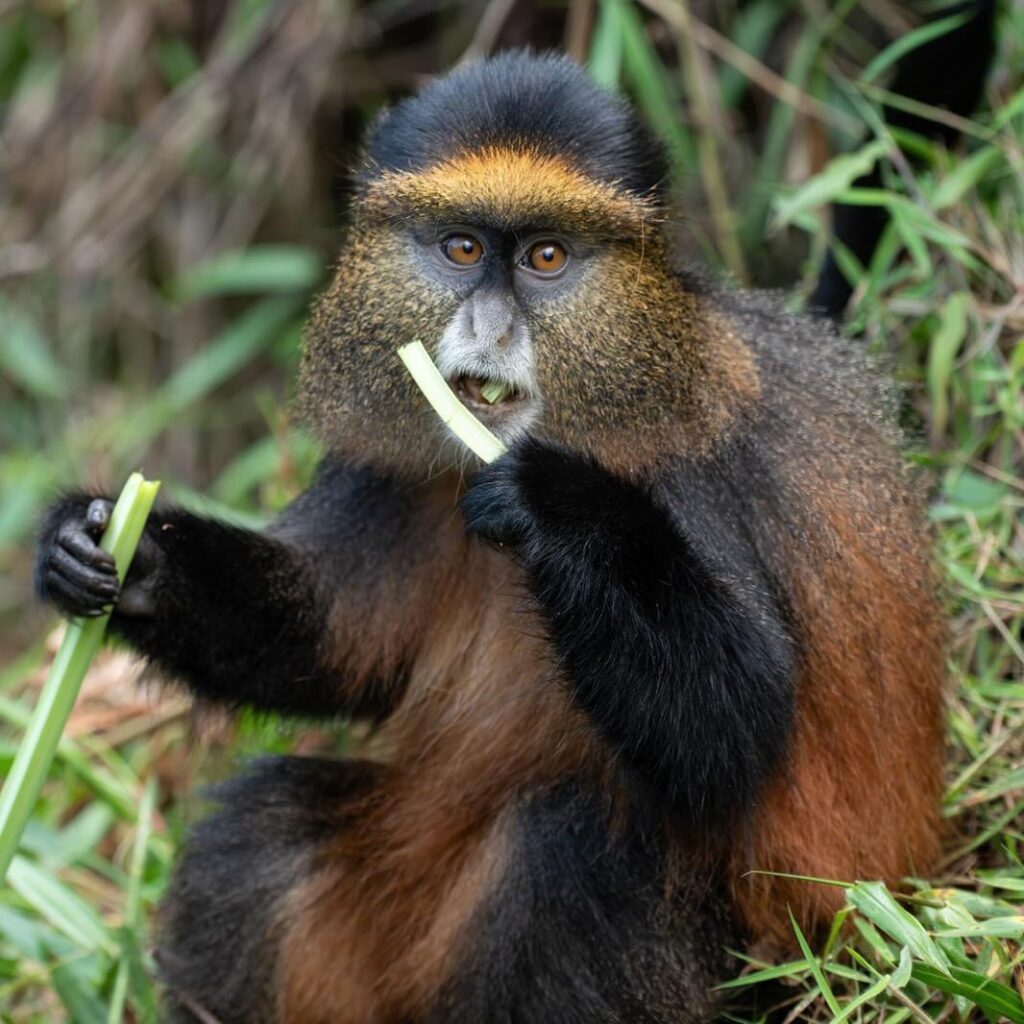
In the Virungas, their world is bamboo: young shoots, tender leaves, and the fruit and flowers that grow beneath the stems. A study of golden monkeys in Rwanda recorded them feeding on more than 100 plant species, with Virunga troops eating mainly leaves and bamboo shoots. That dependence on a single habitat is precisely why the species is threatened. Bamboo grows only on a narrow band of the volcano slopes, which sits between farmland below and the cold, bare heights above.
How many golden monkeys are left?
Population surveys carried out in Rwanda between 2007 and 2018 estimated roughly 4,600 golden monkeys in Volcanoes National Park, a number that appeared stable over the period, and only around 170 in the Gishwati forest. Those figures are small by any measure. The IUCN Red List classifies the golden monkey as endangered, citing its restricted range, habitat loss and fragmentation, and threats such as illegal bamboo harvesting and disease.
This is where tourism plays a genuinely useful role. Permit fees and the jobs that grow around them give neighboring communities a direct reason to protect the bamboo forest. When you trek with us, a share of your spend supports exactly that incentive, and our guides brief every guest on how to behave so the troops stay calm and wild.
What do golden monkeys look like, and how do they behave?
An adult golden monkey weighs a few kilograms and is built like a long-limbed, elegant cat. The golden-orange saddle across the shoulders and back stands out against the black of the limbs, tail, and crown, and in morning light, with mist rising off the leaves, the color almost glows. Troops are noisy and social. They range from a few dozen animals to a reported 80 to 100 individuals in Rwanda’s best-known habituated troop on the slopes of Mount Sabyinyo. Youngsters wrestle and chase through the stems while adults forage, groom, and watch the human visitors. Habituated troops are relaxed, so you can sit quietly and let the forest come to you.
Where Can You Go Golden Monkey Trekking? Rwanda vs. Uganda
You can trek golden monkeys in two countries: Rwanda, in Volcanoes National Park near Musanze, and Uganda, in Mgahinga Gorilla National Park near Kisoro. Both sit on the same volcanic chain and look across the same misty ridgelines, but the experience, logistics, and price differ in ways that matter when you are planning a luxury trip.
| Rwanda: Volcanoes National Park | Uganda: Mgahinga Gorilla National Park | |
| Permit (foreign non-resident) | US$100 | About US$100 |
| Minimum age | 12 years | 15 years |
| Park size | About 160 km² | About 34 km², Uganda’s smallest national park |
| Habituated troops | Two (the larger one is the most visited) | One habituated troop for tourism |
| Extra option | Easily paired with gorilla trekking and a Dian Fossey hike | Golden monkey habituation experience (full day) is available only here. |
| Access | About 2 hours by road from Kigali airport | Longer transfer; reached via the Cyanika border or from Entebbe |
| Luxury lodges | Strongest choice in East Africa | Fewer, more intimate lodges |
| Our verdict | Best for most first-timers, families, and short trips | Best for repeat travelers combining Bwindi gorillas and Mgahinga volcano hikes |
Our recommendation is simple. If you have three to five days for primates, base yourself in Rwanda. The roads are smooth, the lodges are among the finest in Africa, and the park headquarters at Kinigi is just a couple of hours from Kigali. If you are already travelling in Uganda for Bwindi gorilla trekking, adding Mgahinga is a rewarding extension, especially for travellers who enjoy volcano hiking and want a quieter corner of the Virunga Mountains.
Golden Monkey Trekking in Rwanda: Volcanoes National Park
In Rwanda, golden monkey trekking takes place in Volcanoes National Park, a 160-square-kilometer reserve that protects five of the eight Virunga volcanoes: Karisimbi, Bisoke, Muhabura, Gahinga, and Sabyinyo. Guests assemble at the Kinigi Park headquarters around 7:00 am for a briefing and troop allocation, then drive roughly 15 minutes to the edge of the forest where the trail begins. There is a single trekking session each morning.
Our Volcanoes National Park guide explains the park’s history in depth, including its founding in the 1920s as one of Africa’s oldest protected areas and Dian Fossey’s pioneering research at Karisoke. For golden monkey trekking, what matters is the terrain. The two habituated troops live on the lower, bamboo-clad slopes rather than the high saddles where gorillas often roam, so the walk is shorter and gentler. Park-side farmland yields way to a stone wall, then to the forest edge, and within a short time you are walking beneath bamboo stems that arch overhead like the ribs of a cathedral.
What the trek is actually like
Expect a steady walk of one to three hours depending on where the troop slept the previous night, with the occasional muddy patch after rain. Trackers radio ahead to your ranger guide, so you rarely wander aimlessly. Then comes the moment guests remember: the bamboo begins to shake, and the monkeys are simply there, feeding and playing at head height and above. You have one full hour in their company. Move slowly, speak softly, and take the time to watch the social drama unfold: mothers carrying infants, juveniles tumbling in mock fights, a dominant male surveying his troop from a bent stalk.
We keep the day relaxed. After the hour is up, your guide and driver meet you at the trailhead for the short transfer back to your lodge, where a hot shower, a long lunch, and a fire in your suite are waiting. Many of our guests then add a cultural afternoon at Iby’iwacu Cultural Village, which supports former poachers and community enterprise, a stop we include on our 3-day Rwanda gorilla trekking and Dian Fossey tomb hike.
Why Rwanda suits families with teenagers
Rwanda’s minimum age for golden monkey trekking is 12, while gorilla trekking requires visitors to be at least 15. That gap makes golden monkey trekking one of the few primate experiences in East Africa that younger teenagers can share with parents. For a family that cannot yet trek gorillas together, a morning with the golden monkeys becomes the shared adventure of the trip. Our guides adapt the pace to suit the youngest trekker and keep snacks, rain jackets, and cheerful humor close at hand.
Golden Monkey Trekking in Uganda: Mgahinga Gorilla National Park
In Uganda, golden monkey trekking is available only in Mgahinga Gorilla National Park, in the far south-west corner of the country beside the Rwandan and Congolese borders. At roughly 34 square kilometers, it is the country’s smallest national park, yet it packs in three Virunga volcanoes: Muhabura (4,127 m), Gahinga (3,474 m), and Sabyinyo (3,645 m), according to the UNESCO World Heritage tentative list entry for Mgahinga.
Treks are organized by the Uganda Wildlife Authority and begin with a ranger briefing at the park office in the morning, followed by a walk into the bamboo and montane forest. The minimum age is 15. The standard permit has historically cost about US$100 for foreign non-residents.
The golden monkey habituation experience
Only Mgahinga offers a golden monkey habituation experience, a full-day option in which you accompany researchers and trackers who are still accustoming a troop to human presence. Rather than a single hour, you follow the monkeys for much longer, learning how trackers read their movements and calls. It suits travelers who want depth over speed and who are comfortable with a longer day on their feet. It costs more than the standard permit, and spaces are limited, so we recommend reserving it early.
Pairing Mgahinga with Bwindi
Most luxury travelers who visit Mgahinga also go gorilla trekking in the Bwindi forest to the north. Our guides plan the overland link so you travel at a comfortable pace, with scenic stops around the Lake Bunyonyi and Kisoro highlands.
Let Our Specialists Plan Your Primate Journey
Golden monkeys, mountain gorillas and the best lodges in the Virungas, all arranged privately and tailored to your dates, your pace and your party. Tell us what you have in mind and we will reply with a proposal.
How to Go Golden Monkey Trekking: A Step-by-Step Guide.
To go on the golden monkey trekking, book a permit through a licensed operator, travel to Volcanoes National Park or Mgahinga the day before, report to the park headquarters for a morning briefing, hike with a ranger guide to the troop, and spend one hour observing the monkeys before walking back. Here is how our guides run the day in Rwanda, step by step.
- Secure your permit. Golden monkey permits are issued by the Rwanda Development Board (or the Uganda Wildlife Authority in Mgahinga). We book them for you, ideally alongside your gorilla permit so your dates line up.
- Arrive the day before. Stay in or near the park so you are not facing a long pre-dawn drive. Our 2-day Rwanda gorilla trek shows how compact a primate itinerary can be when you start in Kigali.
- Rise early and eat well. Breakfast is usually served around 5:30 to 6:00 am. Your lodge can pack a lunch and a flask of coffee.
- Attend the briefing at park headquarters. Rangers explain the rules, check your permit, and assign you to a troop. In Rwanda, the activity takes place at Kinigi at about 7:00 a.m.
- Drive to the trailhead. It is roughly 15 minutes from headquarters in Rwanda. Your private driver-guide waits for you at the end of the day.
- Trek with your ranger guide. Walk at a comfortable pace through farmland and into the bamboo. Trackers who have been following the monkeys since first light direct the group.
- Spend your hour with the monkeys. Stay together, keep your voice low, and let the monkeys approach. Do not touch or feed them.
- Return and recover. Walk back to the trailhead, rejoin your driver, and head to the lodge for lunch, a massage, or a cultural visit.
Golden Monkey Trekking Permit Costs and How to Book
A golden monkey trekking permit costs US$100 per person in Rwanda for foreign non-residents, while in Uganda, it costs about US$60 per person, plus an additional US$40 per person for park entrance. Both permits cover your park entry and ranger guide services for the activity, but neither includes transport, accommodation, meals, or tips.
| Item | Rwanda (Volcanoes NP) | Uganda (Mgahinga GNP) |
| Standard golden monkey permit | US$100 per person | About US$100 per person |
| Longer experience | Not offered | Habituation experience (full day), priced higher |
| Mountain gorilla permit (for comparison) | US$1,500 per person | US$800 per person (peak season) |
| Issued by | Rwanda Development Board | Uganda Wildlife Authority |
| Booking window | Often available at shorter notice than gorilla permits | Limited daily numbers; book early |
Permit prices are set by the park authorities and can change, so always check the latest figures on the Rwanda Development Board or Uganda Wildlife Authority websites, or let us confirm them for your dates. For a wider look at what a primate journey costs once lodges, transfers, and private guiding are included, our gorilla trekking in Rwanda guide sets out the same planning framework.
One practical tip from our reservations team: do not wait until you arrive to arrange the golden monkey permit. Rwanda’s golden monkey sessions are easier to secure than gorilla permits, but guests who leave it late risk losing their preferred day, which can disrupt the sequencing of an entire itinerary. We recommend we book both together.
Best Time for Golden Monkey Trekking
The best time for golden monkey trekking is the dry seasons, from June to September and from December to February, when trails are firmer and the views across the volcanoes are at their clearest. The monkeys live in the bamboo zone year-round, so trekking is possible in every month, and the forest is at its most vividly green during the rains.

| Months | Conditions in the Virungas | What it means for your trek |
| December to February | Short dry season; cool mornings, sunny spells | Excellent trekking; good photography; pairs well with festive holidays |
| March to May | Main rains, heavy showers, slippery trails | Quietest period; lush scenery; waterproofs essential |
| June to September | Long dry season; the most reliable weather | Peak season: book permits and lodges early. |
| October to November | Shorter rains return. | Fewer visitors; occasional showers; excellent value |
Rwanda follows the same pattern as the rest of the highland tropics: dry periods from June to September and from December to February, and wetter weather between March and May. Our Rwanda safaris guide covers these topics in more detail. If you are building a combined trip with Tanzania, our guide on the best time to visit Tanzania helps you line the two seasons up, because the dry months that suit the Serengeti largely match those that suit the Virunga.
We usually advise guests who are flexible to travel in the shoulder months of June or early October. You trade a small risk of rain for fewer people on the trails and noticeably better availability at the most sought-after lodges.
How Difficult Is Golden Monkey Trekking? Fitness, Age, and What to Pack.
Golden monkey trekking is easy to moderate: most guests walk for one to three hours over uneven but gentle terrain at altitude, with no technical climbing involved. It is widely regarded as one of the least strenuous activities in Volcanoes National Park, and it is a comfortable warm-up before a gorilla trek. The main challenges are altitude (the forest sits above 2,000 meters), mud after rain, and an early start.
Who can trek golden monkeys?
- Rwanda: visitors must be at least 12 years old.
- Uganda: visitors must be at least 15 years old.
- Reasonable general fitness is enough; you do not need mountain experience.
- If you are unwell with a cold or cough, tell your guide. Rangers can refuse entry to protect the monkeys, who are vulnerable to human respiratory illness.
- Travelers with mobility concerns should speak to us before booking; we can often choose the more accessible troop and arrange a personal porter.
What to pack for your golden monkey trek
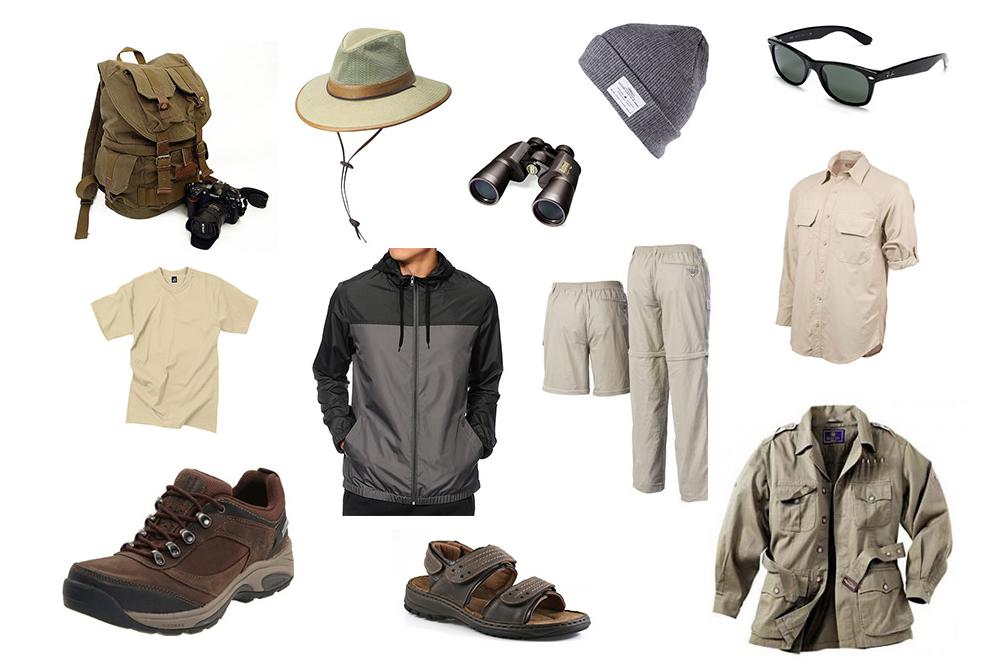
- Waterproof hiking boots with excellent grip and a waterproof rain jacket (the weather can change quickly).
- Long trousers and long-sleeved tops in muted colors to protect against nettles and insects.
- Lightweight gloves for gripping bamboo and wet branches.
- A warm layer for the cold early morning start.
- A camera with a quick shutter capability and spare batteries, plus a dry bag to keep it safe.
- Insect repellent, sunscreen, sunglasses, and a hat.
- A refillable water bottle. Your lodge will provide a packed lunch.
We also suggest hiring a porter, even for a short walk. It supports a local family directly and makes the climb easier, and our guides arrange this service as standard on request.
Photography Tips for Golden Monkey Trekking
To photograph golden monkeys well, use a quick shutter speed (at least 1/1000 second), shoot in burst mode, and expose for the bright orange fur against dark bamboo, keeping your flash switched off. The monkeys move constantly, and the forest light is dappled, so these small adjustments make the difference between blur and a keeper.
- Lens choice: a 70-200 mm or 100-400 mm zoom is ideal. The monkeys often come close, so a wide-to-short telephoto range works better than an extreme lens.
- Light: mornings are misty and soft. Raise your ISO rather than slow your shutter speed.
- Focus: use continuous autofocus and pre-focus on a branch where the monkeys are likely to land.
- Patience: let the troop settle into feeding, then wait for moments of grooming or play.
- Flash: We ask guests to keep the flash off to avoid startling the animals.
Serious photographers should read our piece on luxury safaris with a personal photographer, which explains how a private guide-photographer changes what you bring home, and then ask us to pair a dedicated photographic guide with your primate days.
Golden Monkey vs Gorilla Trekking: How Do They Compare?
Golden monkey trekking is shorter, cheaper, gentler, and more playful than gorilla trekking, while gorilla trekking is a rarer, more emotional encounter with an animal of extraordinary presence. The two experiences complement each other rather than compete.
| Golden monkey trekking | Mountain gorilla trekking | |
| Permit price (Rwanda) | US$100 | US$1,500 |
| Minimum age (Rwanda) | 12 years | 15 years |
| Trek length | Typically 1 to 3 hours | From 1 to 8 hours |
| Terrain | Lower bamboo slopes, gentle | Steeper, denser forest |
| Time with animals | One hour | One hour |
| Mood | Fast, noisy, playful | Calm, intimate, awe-inspiring |
| Best for | Families, photographers, anyone with extra time | The headline bucket-list experience |
How should you sequence them? Our 3-day Rwanda gorilla and golden monkey trekking itinerary puts gorillas on day two and golden monkeys on the departure morning, which fits flight schedules neatly. For guests with more flexibility, we often reverse it: golden monkeys first, as a gentle introduction to altitude and rainforest walking, with the gorillas as the finale. If you want the most intimate gorilla access of all, look at our 4-day exclusive behind-the-scenes gorilla experience, and for travelers short on time, there is even a 1-day Rwanda gorilla trek.
Where to Stay: Luxury Lodges Near the Golden Monkeys
The best luxury lodges for golden monkey trekking sit on the edge of Volcanoes National Park near Musanze, within about an hour of the trailhead. Staying here means a short, civilized transfer on the morning of the trek and a warm, fire-lit room waiting for you afterwards.
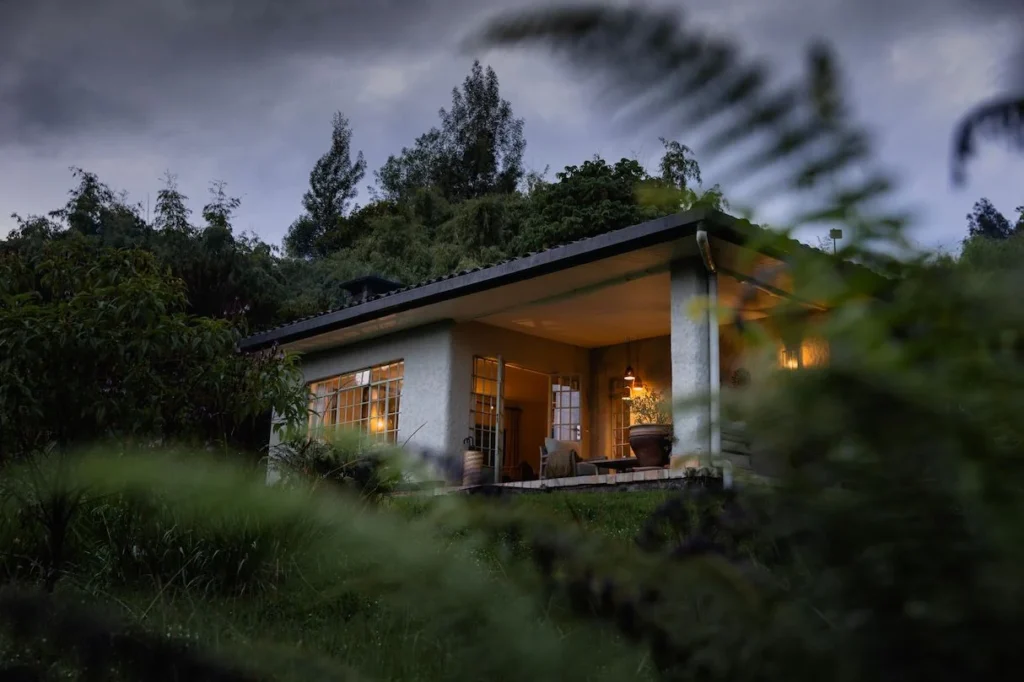
- Bisate Lodge: six villas inspired by Rwanda’s historic royal palace architecture, set within an eroded volcanic cone, with sustainability and community at the heart of the stay.
- Singita Kwitonda Lodge: a refined, design-led retreat with sweeping volcano views, ideal for couples.
- One&Only Gorilla’s Nest: a polished, contemporary lodge with a serious spa and private villas.
- Sabyinyo Silverback Lodge: stone cottages with fireplaces and verandas, close to the park headquarters, and managed by the Governors’ Camp Collection.
- Virunga Lodge: perched on a ridge with panoramic views over Lakes Burera and Ruhondo and the volcanoes.
In Uganda, Mount Gahinga Lodge sits at the edge of Mgahinga and is regularly recommended for golden monkey and volcano trips. Because room numbers are small and demand peaks from June to September, we reserve lodges at the same time as permits so your dates stay locked. For ideas on how we select accommodation, browse our other lodge guides, such as Greystoke Mahale Camp on Lake Tanganyika, where chimpanzee trekking is the headline.
Golden Monkey Trekking Itineraries We Can Tailor for You.
Every trip we plan is private, tailor-made, and led by an expert local guide, so the itineraries below are starting points rather than fixed products. We adjust lodges, pace, activities, and group size around you.
| Itinerary | Best for | How golden monkeys fit |
| 3-Day Gorilla and Golden Monkey Trekking in Rwanda | First-timers and short trips | Day 3: Golden Monkey Trek before your flight. |
| 3-Day Gorilla Trekking and Dian Fossey Tomb Hike | History and conservation lovers | Add a golden monkey morning to the Karisoke hike. |
| 4-Day Exclusive Behind-the-Scenes Gorilla Experience | Couples wanting depth and privacy | An extra day creates room for the monkeys. |
| 15-Day Maasai Mara, Rwanda, Gorillas, and Victoria Falls | Repeat, Africa travelers. | Add golden monkeys to the Rwanda leg. |
| 16-Day Rwanda, Tanzania, and Zanzibar Safari | Primates, plains, and beaches in one trip | Golden monkeys complete the primate chapter. |
Prefer something entirely bespoke? Our guide to custom-built private safari itineraries explains how we design a journey from a blank page, and our Rwanda safaris guide lists more primate and wildlife options. Browse the full range of combined African safaris to see how Rwanda connects with Tanzania, Kenya, and Uganda.
Who Is Golden Monkey Trekking For?
Couples and honeymooners
The golden monkeys offer a romantic counterpoint to the intensity of gorilla day. Mornings are cool, the forest is hushed, and you can share the hour without a long haul. After the trek, spend the afternoon at your lodge: a plunge pool, a spa treatment, and a private dinner by the fire. If you are planning a honeymoon, our guide on a Serengeti honeymoon safari shows how we layer romance into a bush itinerary, and the same philosophy applies in the Virungas.
Families
With a minimum age of 12 in Rwanda, golden monkey trekking is accessible to families with teenagers who are not yet old enough to track gorillas. We build in generous rest time, private vehicles, and a guide who knows how to bring the forest alive for younger travelers. Our guide to family-friendly luxury safaris explains how we make long journeys comfortable for every age.
First-time Africa travelers
If you have never been on safari, a short Rwanda trip is a superb introduction. The distances are small, the logistics are simple, and the golden monkeys give you an effortless, reward-rich first taste of wild Africa. Start with the 3-day gorilla and golden monkey trek and consider extending to the Serengeti on one of our Tanzania safari packages.
Repeat, Africa travelers.
You have seen the Big Five. You have watched the river crossings. Now the question is what else Africa can show you. Primates in cloud forest offer a different texture of wildlife viewing, and golden monkeys, which live nowhere else, are precisely the kind of rarity that experienced travelers collect.
Responsible Trekking: Protecting Golden Monkeys and the Virunga Forests
Golden monkeys are habituated, not tame. Following the rules protects them and makes the encounter better for everyone. We brief every guest before the trek, and we recommend you also read the guidance from Visit Rwanda and the park authorities.
- Never touch, feed, or chase the monkeys, and keep a respectful distance as your ranger directs.
- Keep your voice low and avoid sudden movements.
- Do not trek if you are ill; wild primates are vulnerable to human respiratory infections.
- Take all rubbish with you and stay on the trail.
- Hire a porter and buy local crafts to channel money into neighboring communities.
- Support conservation groups such as the Dian Fossey Gorilla Fund, which works in the same Virunga ecosystem.
Every permit you buy contributes to ranger salaries, anti-snaring patrols, and community projects that make bamboo forests worth more standing than cleared. That is the real reason this small, joyful experience matters.
Combining Golden Monkeys with a Tanzania Safari
Many of our guests pair the Virungas with the plains of northern Tanzania. The rhythm works beautifully: a few days among misty volcanoes and primates, then a flight to Kilimanjaro and the open spaces of the Serengeti, perhaps timed with the Great Wildebeest Migration, and finally a barefoot finale on Zanzibar’s beaches. Our combined African safari hub shows the range of multi-country journeys we run.
If primates are your passion, Tanzania adds a second chapter. Our 7-day Tanzania wildlife and chimp trekking safari takes you to Katavi and Gombe to track chimpanzees on the shores of Lake Tanganyika, a perfect complement to Rwanda’s monkeys and gorillas. For a first look at our Tanzanian offering, start with our full range of Tanzania safaris.
Why Plan Your Golden Monkey Trek With Luxury Safaris Tanzania
We are a boutique, Arusha-based operator, run by Active African Vacations Ltd., and we have designed private journeys across East Africa for more than 12 years, welcoming over 10,000 travelers since 2007. Here is what that experience means for your trek:
- Tailor-made, always. No fixed departures and no shared minibuses. Every itinerary is private and built around you.
- Expert local guides. Our driver-guides know the Virunga trails, the rangers, and the rhythms of the forest.
- Luxury lodges only. We select properties for service, setting, and sustainability.
- Seamless logistics. We handle permits, transfers, border crossings, and flights for you, with a human on the end of the phone throughout.
- Financial protection. We are ATOL-protected, so your booking is backed by additional security.
Learn more about us, browse our frequently asked questions, or read how to plan your safari from first enquiry to departure day.
Ready to Meet the Golden Monkeys?
Tell us your dates, who is travelling, and how you like to spend your days. Our Rwanda and Uganda specialists will return a tailor-made proposal with permits, lodges, and private guiding included.
Golden Monkey Trekking: Frequently Asked Questions.
What is golden monkey trekking?
Golden monkey trekking is a guided walk through bamboo forest to spend one hour with a habituated troop of endangered golden monkeys. It takes place only in Volcanoes National Park in Rwanda and Mgahinga Gorilla National Park in Uganda. You are accompanied by armed rangers and trackers who locate the troop before you arrive. The walk is shorter and easier than a gorilla trek, and the monkeys are lively, noisy, and very photogenic. Many travelers add it to a Rwanda gorilla safari as a second primate experience.
Where can you see golden monkeys in the wild?
Golden monkeys live only in the Virunga volcano range, which spans Rwanda, Uganda, and the Democratic Republic of Congo, plus a small forest fragment in Rwanda’s Gishwati. Tourists can trek to habituated troops in Volcanoes National Park (Rwanda) and Mgahinga Gorilla National Park (Uganda). We recommend Rwanda for most first-time visitors because it is closer to Kigali and has the strongest lodge choice.
How much does golden monkey trekking cost?
In Rwanda a golden monkey permit costs US$100 per person for foreign non-residents. In Uganda the permit has been about US$60 per person on the 2024 to 2026 tariff, and the Uganda Wildlife Authority revises prices periodically, so we confirm the current rate when you book. Neither permit includes lodging, transfers, meals, or tips, which depend on the style of trip you choose. As a point of comparison, a Rwanda gorilla permit costs US$1,500. We include the permit cost clearly in every quote.
How long does a golden monkey trek take?
Most treks take about half a day from the briefing to the return to your vehicle. You usually walk for one to three hours to reach the troop, depending on where the monkeys slept, and then spend a full hour with them. In Rwanda the trailhead is about 15 minutes from the Kinigi headquarters. Add the early briefing and the return to your lodge, and you will usually be back for a late lunch. That leaves your afternoon free for a spa, a cultural visit, or simply resting.
How difficult is golden monkey trekking?
Golden monkey trekking is easy to moderate and is among the gentlest activities in Volcanoes National Park. The monkeys feed on lower, bamboo-covered slopes, so the terrain is less steep than the gorilla routes. The altitude, above 2,000 meters, and slippery mud after rain are the main challenges. Reasonable general fitness is enough, and a porter can carry your bag and give you a steadying hand. If you have mobility concerns, speak to us in advance so we can plan accordingly.
What is the best time of year for golden monkey trekking?
The best time is during the dry seasons, from June to September and from December to February. Trails are firmer, visibility across the volcanoes is better, and walking is more comfortable. The monkeys are present year-round, so you can trek in the rainy months of March to May and enjoy fewer visitors and lush scenery, provided you pack waterproofs.
What is the minimum age for golden monkey trekking?
The minimum age is 12 years in Rwanda and 15 years in Uganda. Gorilla trekking in both countries requires visitors to be 15 or older. That makes Rwanda’s golden monkey trek one of the few primate activities that younger teenagers can share with their parents. Our guides tailor the pace to the youngest walker, and we can arrange a private vehicle and flexible timings.
Is the golden monkey trek worth it if I am already doing gorillas?
Yes, it is worth it for almost everyone. The two experiences are completely different: gorillas are calm, powerful, and deeply moving, while golden monkeys are quick, noisy, and endlessly entertaining. The permit costs a fraction of a gorilla permit, the trek is easier, and the monkeys offer superb photography. Because the activity takes only half a day, it fits neatly into a 3-day gorilla and golden monkey itinerary without adding a night to your trip.
Should I choose Rwanda or Uganda for golden monkey trekking?
Choose Rwanda if you want a short, smooth trip with luxury lodges, easy road access from Kigali, and the option to hike to Dian Fossey’s tomb. Choose Uganda if you are already visiting Bwindi for gorillas, want a quieter and less developed setting, or would like the full-day golden monkey habituation experience, which is offered only at Mgahinga. Rwanda has the lower minimum age and the stronger lodge selection.
How far in advance should I book a golden monkey permit?
We recommend booking your golden monkey permit at the same time as your gorilla permit and lodges, ideally three to six months ahead for peak months. Golden monkey permits in Rwanda can sometimes be secured at shorter notice than gorilla permits, but relying on last-minute availability risks upsetting your itinerary. In Uganda daily numbers are limited, so booking early is wise. We handle all permit reservations and keep your dates aligned across activities.
What should I wear and bring on a golden monkey trek?
Wear waterproof hiking boots, long trousers, a long-sleeved top, and a waterproof jacket, and bring a warm layer for the early morning. Lightweight gloves help with grip on bamboo and wet branches, and insect repellent, sunscreen, and a hat are worthwhile. Carry a camera with a quick shutter capability, plus water and a snack. Your lodge can supply a packed lunch. Our safari FAQs also include general advice on what to wear on safari.
Can I use flash photography or touch the golden monkeys?
No, you should never touch or feed golden monkeys, and we ask guests to switch their flash off. The monkeys are habituated to human presence but remain wild, and they can catch human respiratory illnesses. Keep your voice low and your movements slow, and stay with your guide. Rangers will tell you how close you can safely go. Following these rules keeps the troop calm and gives you the best chance of long, relaxed photographs.
What is the golden monkey habituation experience?
The golden monkey habituation experience is a full-day option available only in Mgahinga Gorilla National Park in Uganda. You accompany researchers and trackers who are still accustoming a troop to human presence, so you spend far more time with the monkeys than on a standard hour-long trek. It costs more than a standard permit and has limited availability. It suits travelers who want depth and are comfortable with a longer day in the forest. We can add it to a Bwindi and Mgahinga itinerary on request.
Can I combine golden monkey trekking with a Tanzania safari?
Yes, and it is one of our most popular combinations. You can spend a few days in Rwanda, then fly to Kilimanjaro or Arusha for the Serengeti, the Ngorongoro Crater, and perhaps Zanzibar. Our 16-day Rwanda, Tanzania, and Zanzibar safari is a good example of this itinerary. Every trip is tailor-made, so we can add or remove days and adjust lodges to suit your budget and interests.
Have More Questions About Golden Monkey Trekking?
Our specialists are happy to talk through permits, dates, lodges and routes by email or WhatsApp, with no obligation. Share your plans and we will help you shape the right trip.