Going Deeper: Remote Destinations for Couples Who Want Seclusion
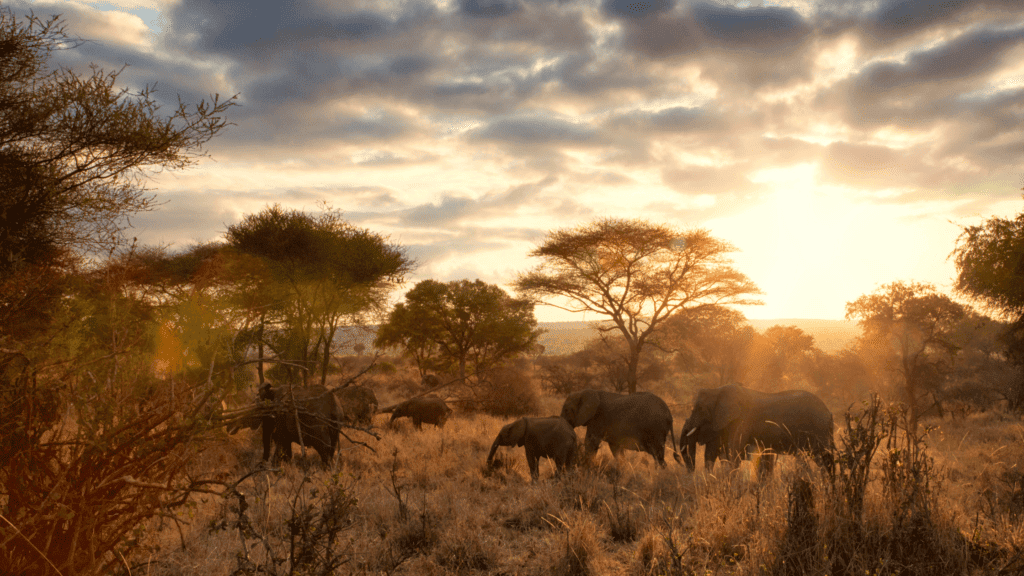
For honeymooners seeking complete seclusion, Tanzania’s lesser-visited wilderness areas provide a level of seclusion unavailable in the Northern Circuit. Ruaha National Park in southern Tanzania. Tanzania’s largest national park sees a fraction of the visitor numbers of the Serengeti, yet its wildlife is outstanding: large lion prides, enormous elephant herds, wild dogs, sable antelope, and a stark, boulder-strewn landscape of extraordinary beauty. A few nights in Ruaha followed by a fly-out to Zanzibar creates a honeymoon itinerary of real depth and originality.
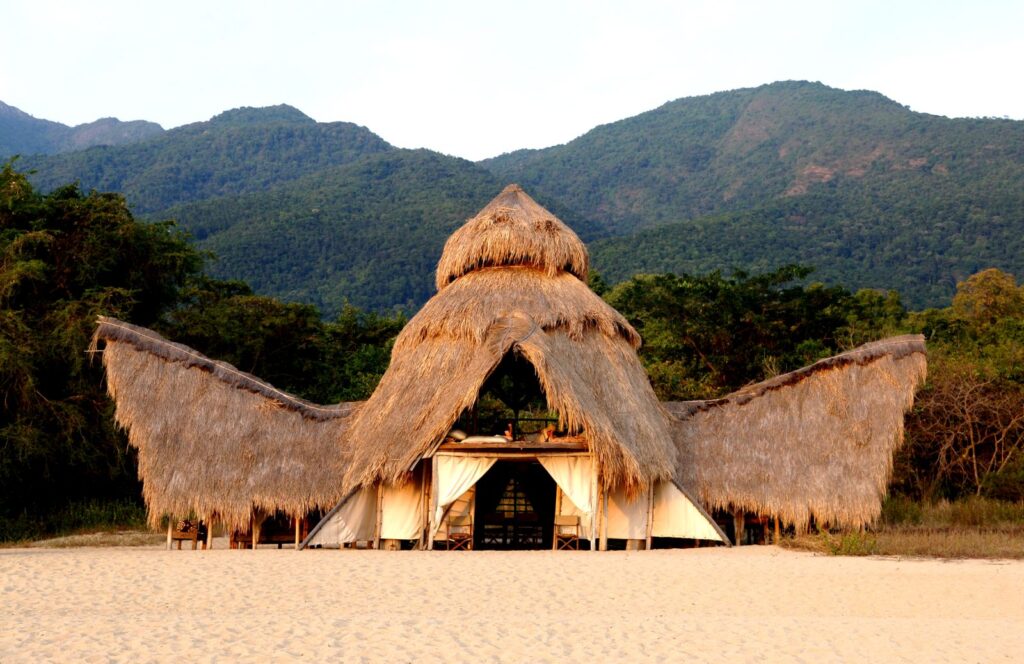
Greystoke Mahale Camp
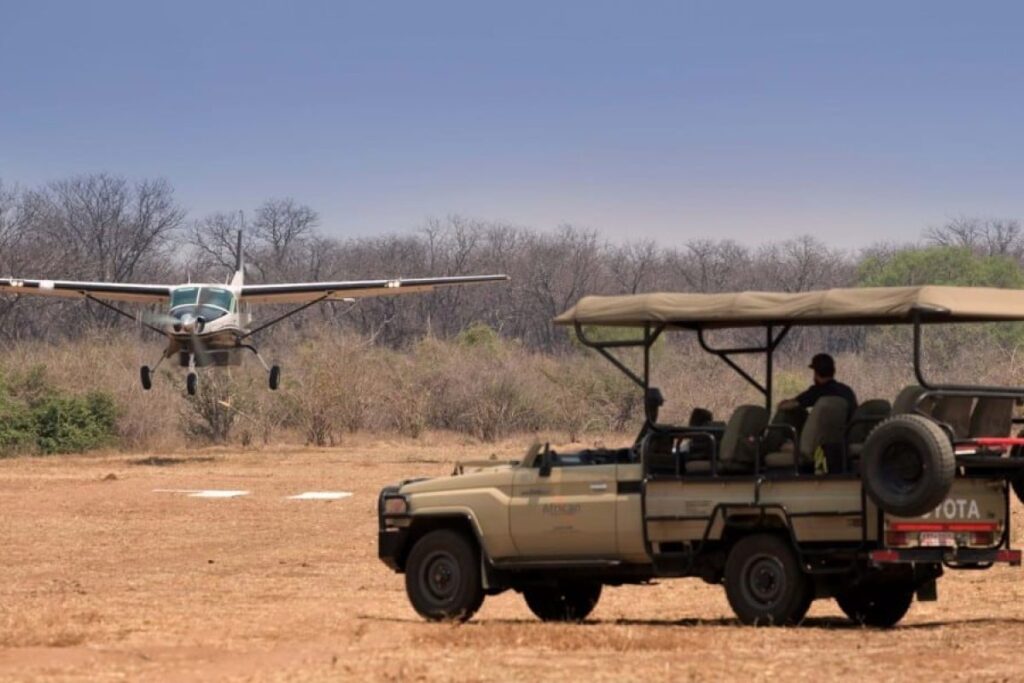
Further west, Mahale Mountains National Park on the shores of Lake Tanganyika is one of Africa’s most exclusive and extraordinary destinations. Only accessible by light aircraft and boat, Mahale Mountains National Park is home to wild chimpanzees accustomed to decades of human observation. Trekking through dense forest to sit with a chimpanzee family just meters away is a profoundly moving experience, and returning to a luxury tented camp on the lakeshore at sunset, with the Congo mountains purpling on the far shore, creates one of the most romantic endings to a day that Tanzania has to offer.
For couples who want to incorporate a multi-country experience, our Combined African Safaris can weave together Tanzania, Kenya’s Maasai Mara, Rwanda’s gorilla forests, and even the spectacular Victoria Falls into a single seamless journey.
Honeymoon Experiences You Won’t Find on a Group Tour
Hot Air Balloon Safaris Over the Serengeti
One of the most romantic experiences on the African continent is floating above the Serengeti at dawn in a hot air balloon. Drifting silently over plains that still carry the golden light of early morning, watching the world below: herds of buffalo, a lioness returning from a night hunt, and giraffes in slow-motion procession through the acacia from an altitude that renders everything dreamlike and weightless.
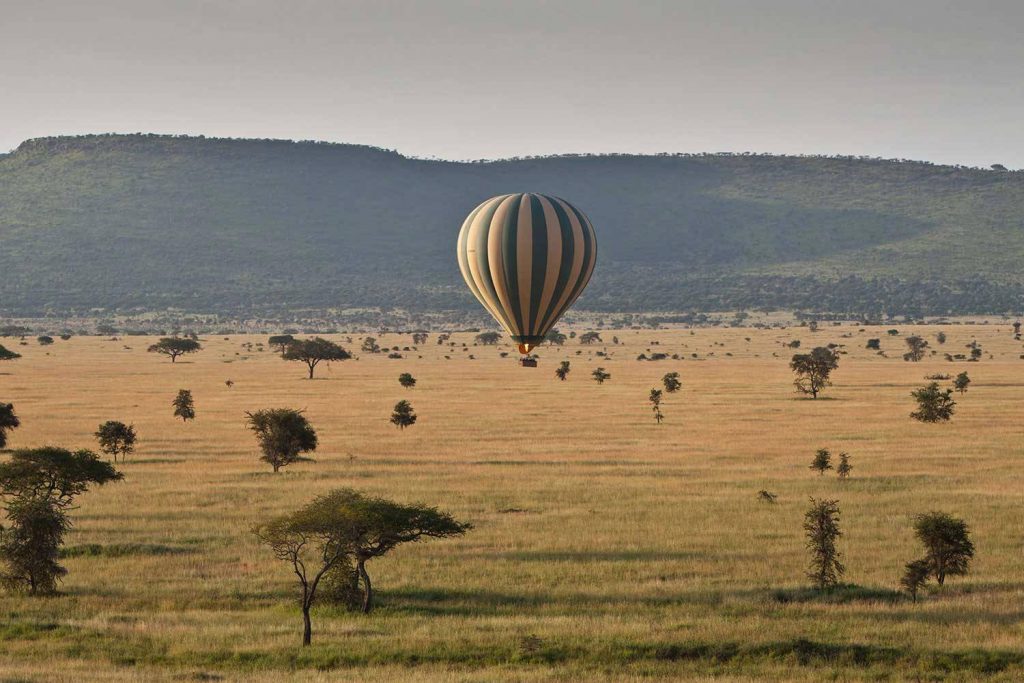
Our hot air balloon safaris in the Serengeti conclude with a champagne breakfast in the bush, served on white linen with the Serengeti spread around you. It is the kind of morning that stays with people for the rest of their lives. For a honeymoon, it is simply non-negotiable.
Private Bush Dinners and Sundowners
One of the true privileges of a private safari is the ability to stop wherever and whenever the moment calls for it. A sundowner drink at sunset, taken in the bush at a spot your guide has scouted that afternoon specifically for its view, is one of the small rituals that makes a private safari feel so personal. It might be on a rocky outcrop overlooking a river bend, or beside a lone acacia as elephants move past in silhouette, or on a bluff with a 180-degree view of plains turning from gold to amber to deep violet.
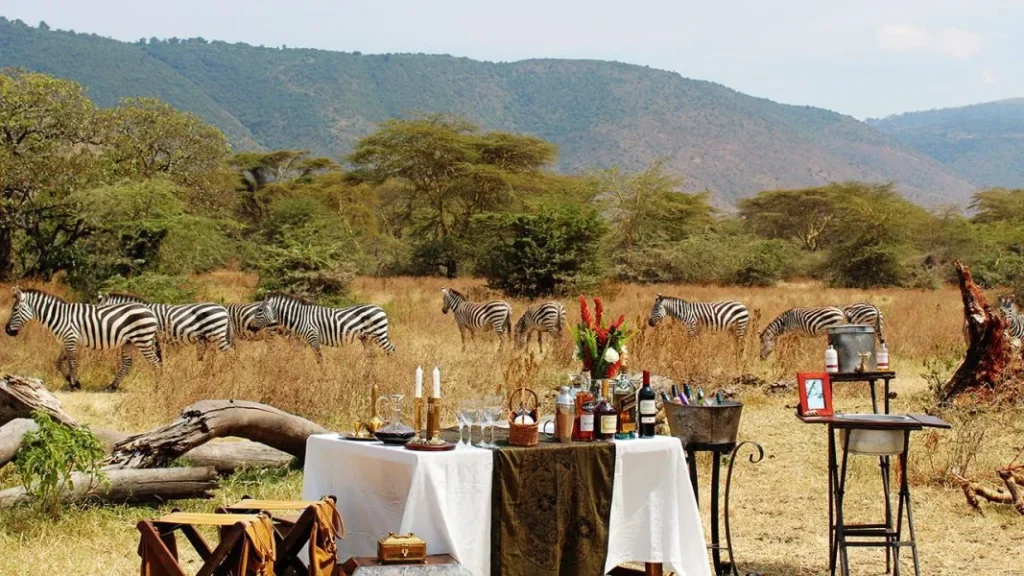
Bush dinners, arranged by your camp’s team in a secluded corner of the wilderness with lanterns, a fire, and a table set for two under the Milky Way, transform an evening meal into something entirely different. These experiences are entirely at your discretion on a private safari, and they cost nothing more than the willingness to ask.
Cultural Immersion: The Maasai and the Living Landscape
Tanzania’s wildlife remains in harmony with its natural environment. The Maasai people, whose ancestral homeland encompasses much of the Northern Circuit, are one of the world’s most recognizable and culturally intact pastoral communities, and a visit to a traditional Maasai boma carefully arranged to be genuinely reciprocal and non-extractive adds an extra dimension to a safari that wildlife alone cannot provide. Understanding that the Serengeti ecosystem has been shaped over centuries by the relationship between wildlife, pastoralists, and the land itself enriches everything you see on a game drive.
Who Would Benefit Most From a Honeymoon Safari in the Serengeti?
The truthful response is any couple for whom a “honeymoon” signifies more than just relaxing on a sun lounger and enjoying a swim-up bar. It is ideal for people who have always been curious about Africa but have never had the right reason or the right guide to go properly. It is ideal for couples who travel well together and find that shared experiences in new places bring them closer. It is ideal for nature lovers, photographers, people who find renewal in wilderness, and people who simply want their honeymoon to be the kind of story they will still tell each other twenty years from now.
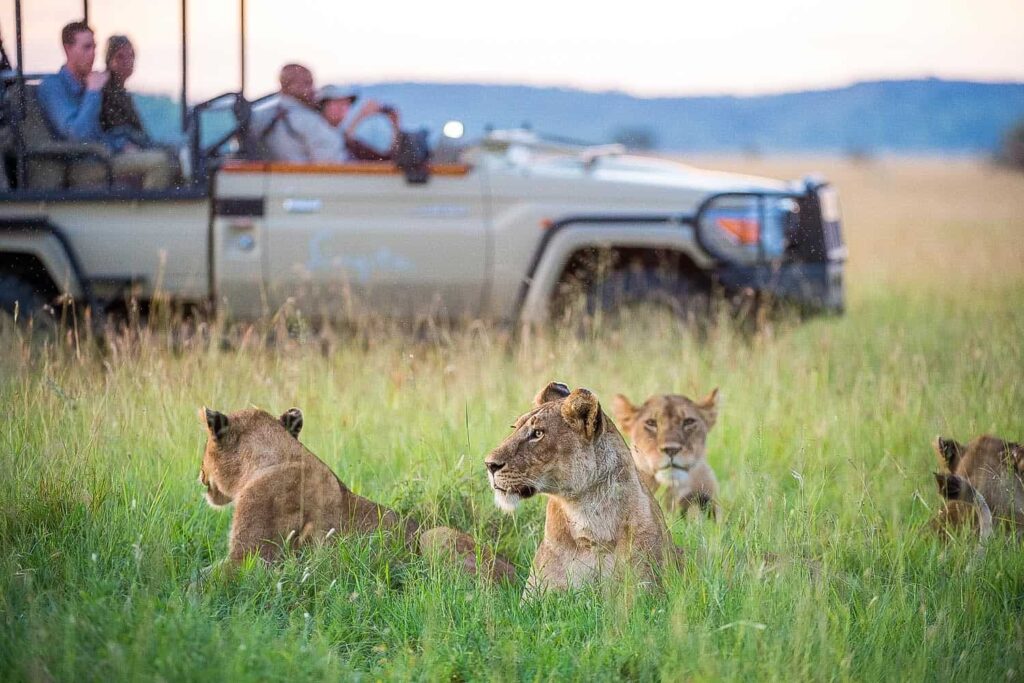
It does not require prior safari experience. Some of the most emotionally resonant honeymoon safaris we have arranged have been for first-time safari travelers, people for whom the sight of their first wild elephant, or a lion walking within feet of the vehicle, lands with a weight and wonder that no amount of wildlife documentaries could have prepared them for.
It is also ideal for couples with a taste for quality, not necessarily extravagance. A well-designed private safari is not about spending the most money; it is about spending it in the right places on a knowledgeable, passionate guide, on accommodation that places you genuinely inside the wilderness rather than adjacent to it, and on an itinerary designed with enough flexibility to follow the animals rather than a clock.
Planning Timeline and Practical Considerations
When to Go
The best time for a Serengeti honeymoon safari depends partly on what you most want to experience. The dry season from late June through October delivers the best general game viewing; dry vegetation means animals concentrate around water sources and are easy to spot, and this period also coincides with the Mara River crossings of the Great Migration in the north. December through March offers warmer temperatures, the dramatic calving season in the southern Serengeti (with predator activity at its most intense), and fewer tourists.
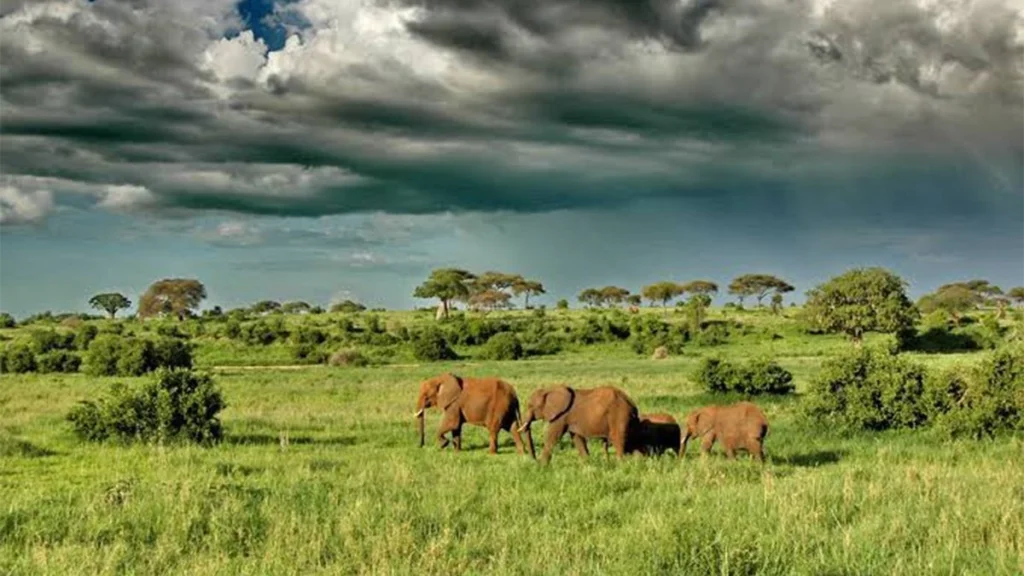
The so-called “green season” from November through May (excluding the heavy rains of April) is increasingly popular with discerning honeymooners who want privacy and dramatically reduced crowds. Camps charge lower rates, the landscape turns a deep, lush green, migratory birds are present in extraordinary numbers, and the light for photography is some of the most beautiful of the year.
How Far in Advance to Book
For peak season travel (July through October), we strongly recommend booking at least eight to twelve months in advance, particularly if you have specific accommodation preferences. The most sought-after small luxury camps, those with just six to ten tents, fill up very quickly, and a honeymoon deserves the best available options. For shoulder and green season travel, four to six months is generally sufficient, though earlier is always better.
Getting Started With Your Serengeti Honeymoon Itinerary
The simplest way to begin is to reach out to our team directly. We will schedule a conversation with a safari specialist someone who has personally traveled these routes and stayed at these properties and use that conversation to understand what you want your honeymoon to feel like. From there, we build a draft itinerary, share it with you, refine it based on your feedback, and confirm the logistics, including permits, transfers, and accommodation. We take care of every detail for you.
If you want to explore a broader range of Tanzania’s possibilities before that conversation, our full collection of Tanzania safari itineraries offers an excellent starting point, not as packages to be purchased off the shelf, but as illustrations of what is possible and what different durations and regions can offer.