
Big Five Safaris in Tanzania: Where, When & How to See Them All.

Big Five Safaris in Tanzania.

A Big Five safari is a wildlife trip built around finding Africa’s five most iconic species lion, leopard, elephant, buffalo, and rhino and Tanzania is one of only a handful of countries where all five can realistically be seen on a single, well-planned itinerary. The single best place to do it is the Ngorongoro Crater, a self-contained caldera where all five species live within a roughly 260-square-kilometer bowl, making it genuinely possible to tick off the full list in one exceptional day of game viewing. Beyond the crater, each species has a park where it is best seen: the Serengeti for lion and leopard density, Tarangire for elephant herds, and the wilder southern parks for buffalo and a genuine wild-dog bonus.

We’ve spent 15+ years designing tailor-made Tanzania safaris around exactly this kind of species-specific planning, and we’ve learned that a rushed, one-park Big Five checklist rarely does these animals justice. Below, we break down what the Big Five actually means, where each species is most reliably seen, how to sequence a multi-park itinerary, and what it takes to protect Tanzania’s most endangered member of the five, the black rhino, all informed by the same expertise we’ve used to guide 10,000+ travelers through Tanzania’s parks.

Big Five Safaris in Tanzania: Quick Facts

At a Glance Details
Best single park for all five Ngorongoro Crater, the only place in Tanzania where all five are reliably seen in one day
Best for lion & leopard density Serengeti National Park
Best for elephant herds Tarangire National Park
Best for buffalo herds Nyerere National Park (Selous) and Ruaha National Park
Rarest of the five Black rhino critically endangered and concentrated almost entirely in the Ngorongoro-Serengeti ecosystem.
Best overall season June – October (dry season) for general Big Five viewing
Where the term originated 19th-century big-game hunting named for the five animals most dangerous to hunt on foot, not the five largest
Minimum days recommended 4–5 days across two parks for a genuine Big Five safari, longer for a multi-region circuit

Want to see all five on your trip? Tell us your travel dates and we’ll design a route that maximizes your odds, park by park.

Talk to a Big Five Specialist →

What Are the ‘Big Five’? History and Meaning

The ‘Big Five’ refers to the lion, leopard, elephant, African buffalo, and rhinoceros a term coined by 19th and early 20th-century big-game hunters to describe the five animals considered most dangerous and difficult to hunt on foot, not the five physically largest animals in Africa (that list would include the hippopotamus and giraffe). The term’s colonial hunting origins have almost entirely given way to a conservation and photographic meaning today: for the overwhelming majority of modern travelers, a ‘Big Five safari’ means finding and photographing these five species safely, not hunting them.

It’s worth knowing the reputation behind each name, because it explains why guides talk about them the way they do. The buffalo is widely considered the most unpredictable and dangerous of the five; when encountered on foot, herds have been known to circle back and mob a threat rather than simply flee. The leopard is the most elusive, a solitary, mostly nocturnal cat that can go entirely unseen even in areas where it’s known to be common. The rhino, meanwhile, has gone from ‘formidable’ to ‘fragile’: it’s now the member of the Big Five most likely to be genuinely rare on any given safari, for reasons we cover in detail below.

The Big Five Explained: Where to Find Each Species in Tanzania

Lion
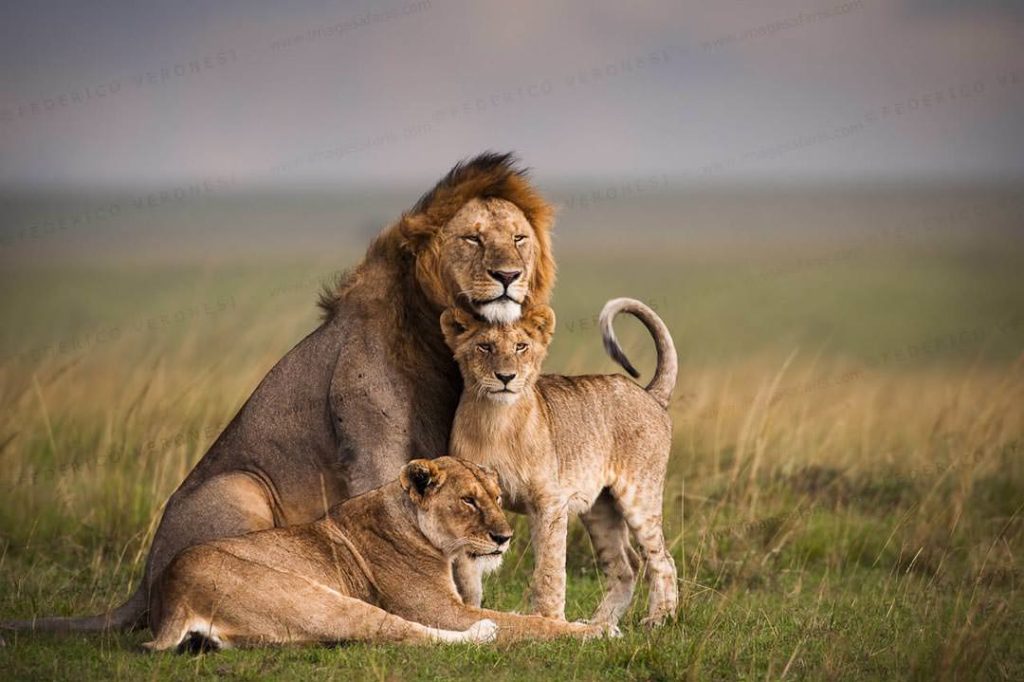
4-days Maasai Mara Great Wildebeest Migration safari

Tanzania holds some of the highest lion densities left in Africa, and the Serengeti alone is estimated to hold more than 4,000 individuals, likely the largest single lion population on the continent. Lions live in prides of related females, their cubs, and a small coalition of resident males, and in the Serengeti and Ngorongoro ecosystems, they are often seen resting in the open on cool mornings or gathered around a kill. Ruaha National Park in the south is also exceptional lion country, with some of the largest prides recorded anywhere in Africa, known to take down prey as large as buffalo and even giraffe. For tree-climbing behavior, a regional quirk rather than a universal lion trait, Lake Manyara National Park is Tanzania’s best-known destination.

Leopard

Leopards are the most solitary and elusive of the Big Five, and the Serengeti’s riverine forests along the Seronera Valley are one of the most reliable places in Africa to find one resting in a tree. Unlike lions, leopards don’t live in social groups; each adult holds and defends its territory, hunting alone, mostly at night, and hoisting kills into tree branches to keep them from hyenas and lions. Spotting one takes a sharp-eyed guide and a bit of luck a dangling tail or a paw draped over a branch is often the giveaway which is exactly why we brief our guests that a leopard sighting, more than any of the other four, is a genuine safari highlight rather than a guarantee.

Elephant

Tarangire National Park holds the largest elephant population in northern Tanzania, with herds that can number in the hundreds during the dry season, drawn to the permanent Tarangire River when surrounding water sources dry up. Matriarchal family groups of grandmothers, mothers, and calves move together through the park’s baobab- studded landscape, some of the ancient trees over a thousand years old and bearing the scars of elephants stripping their bark during droughts. Beyond Tarangire, healthy elephant populations are also found in the Serengeti, Ngorongoro Crater, and the vast southern wilderness of Ruaha National Park, which is estimated to hold one of the largest elephant populations of any single park in East Africa.

Buffalo

Cape buffalo move in herds that can number in the thousands, and Tanzania’s southern parks offer some of the country’s largest and least-crowded buffalo sightings. In Nyerere National Park (formerly Selous Game Reserve) and Ruaha, herds gather along the Rufiji and Great Ruaha Rivers to drink alongside hippo pods and basking crocodiles, especially through the dry season. Despite their size, buffalo are considered by many professional guides to be the most genuinely dangerous of the Big Five to encounter on foot a wounded or cornered buffalo is known to circle back on a pursuer, a behavior that’s earned old bulls the nickname ‘black death’ among veteran trackers.

Rhino
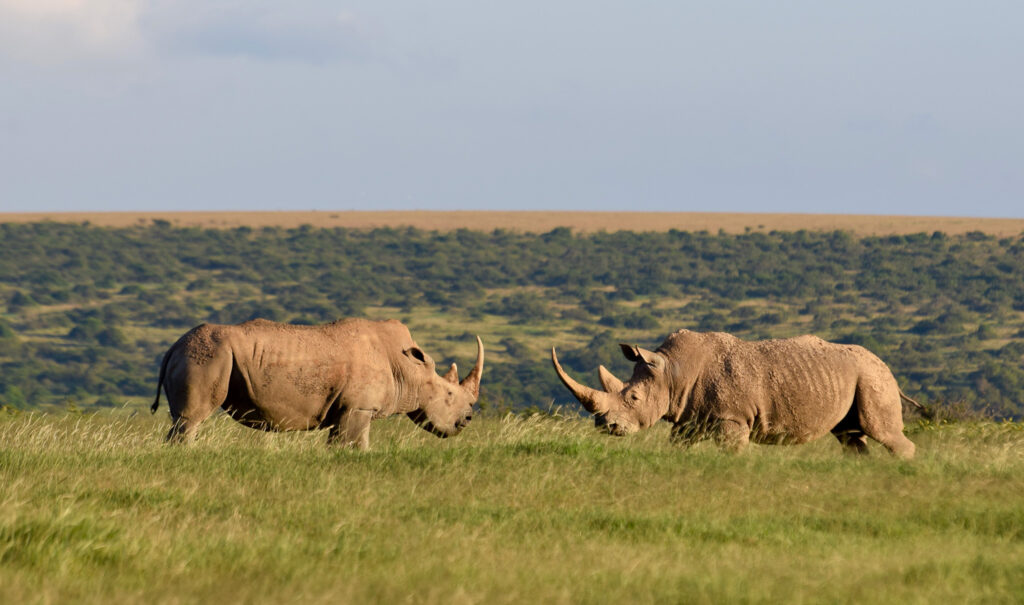
Kenya Conservation Safari: Rhinos, Elephants & Private Conservancies

The black rhino is by far the rarest and most fragile of the Big Five, and the Ngorongoro Crater is Tanzania’s most reliable place to see one. Tanzania’s rhinos belong to the eastern black rhino subspecies, classified as Critically Endangered on the IUCN Red List after poaching wiped out roughly 98% of the continent’s black rhino population between 1960 and 1995. The Ngorongoro-Serengeti ecosystem holds the largest concentration remaining in northern Tanzania, protected by intensive, round-the-clock ranger patrols; because the crater’s population lives within a natural, enclosed caldera rather than migrating across an open landscape, sightings here are considerably more dependable than almost anywhere else on the continent. We cover the conservation story behind these animals in more depth further down the page.

Each of the Big Five has its own best park and best season. Please let us know which sightings matter most to you, and we will build the route around them.

Get a Tailor-Made Itinerary →

Best Parks in Tanzania for a Big Five Safari

Ngorongoro Crater: The Only True One-Day Big Five Destination

Yes, the Ngorongoro Crater is the one place in Tanzania where seeing all five species in a single day is a realistic goal, not just a marketing promise. The crater floor, part of the Ngorongoro Conservation Area UNESCO World Heritage Site, packs an estimated 25,000-plus large mammals into a self-contained caldera roughly 260 square kilometers across, formed when a volcano larger than Kilimanjaro collapsed on itself some two to three million years ago. Because so many animals live within the crater year-round rather than migrating out, game density stays remarkably consistent in every season, a rare trait among Tanzania’s parks. Properties like &Beyond Ngorongoro Crater Lodge and Lemala Ngorongoro Tented Camp sit right on the crater rim, cutting the descent to the floor to as little as 10–15 minutes.

Serengeti National Park: Lion and Leopard Country

The Serengeti offers Africa’s highest concentration of large carnivores, and while it’s most renowned for the Great Wildebeest Migration, it’s just as compelling as a dedicated Big Five destination, particularly for lions and leopards. Rhino sightings in the Serengeti itself are rare, since the ecosystem’s small rhino population is closely monitored and concentrated in specific zones, so most of our Big Five itineraries pair a Serengeti stay with a night or two at Ngorongoro to complete the set.

Tarangire National Park: Elephant Central
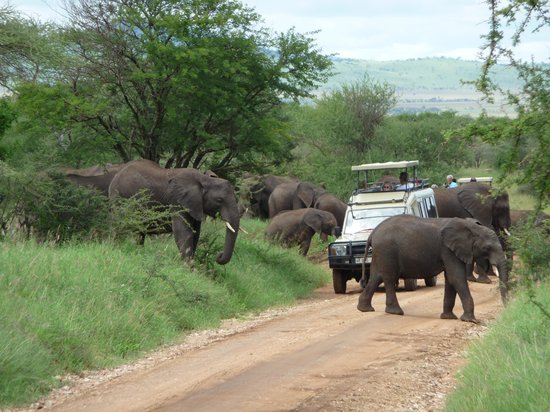
Tarangire National Park 4-Days Tanzania Camping Safari | Luxury Safaris Tanzania

Tarangire rewards travelers willing to slow down: its elephant herds are the main event, but lion, leopard, and buffalo are all present in healthy numbers, particularly along the Tarangire River during the dry season. Rhinos are not found here, which is why we typically position Tarangire as part of a northern circuit alongside Ngorongoro rather than a Big Five destination on its own. Elewana Tarangire Treetops is one of our favorite bases for this stretch of the itinerary.

Lake Manyara National Park: Tree-Climbing Lions

Lake Manyara is compact but rewarding, best known for its population of lions that climb into acacia and fig trees to escape the day’s heat and biting insects, a behavior seen in only a handful of places in Africa. Its groundwater forest and lakeshore also support healthy elephant and buffalo populations, making it a worthwhile half-day or full-day addition to a northern circuit itinerary, even though it isn’t a rhino destination.

Nyerere National Park (Selous) & Ruaha: Wild Buffalo and Big Prides

For travelers who’ve already done the classic northern circuit, Nyerere National Park and Ruaha National Park in the south offer a genuinely different Big Five experience: enormous buffalo herds, strong lion and elephant populations, and a fraction of the visitor numbers of the north. Ruaha in particular is thought to hold one of Africa’s largest lion populations, along with substantial elephant numbers and a thriving population of African wild dog not a Big Five species, but one of the continent’s rarest carnivores and a real bonus sighting. Jabali Ridge in Ruaha and The Retreat Selous in Nyerere are both excellent bases for this circuit.

Can You See the Big Five in One Day in Tanzania?

Yes, but realistically only in the Ngorongoro Crater; nowhere else in Tanzania offers the density and enclosed geography needed to find all five species within a single day’s game drive. Even experienced guides treat a full Big Five day as a genuine achievement rather than a routine outcome, since the black rhino in particular can still take patience and luck to locate even within the crater’s relatively contained floor. Elsewhere in Tanzania, a Big Five safari is best planned over several days and at least two parks, typically the Serengeti or Tarangire paired with Ngorongoro, which produces a far richer overall experience than a single rushed day spent chasing a checklist.

Best Time for a Big Five Safari in Tanzania

When is the Best Time to go on a Luxury Safari in Tanzania

The dry season, from June to October, is generally the best time for a Big Five safari, since thinning vegetation and animals’ need to stay near permanent water sources make lion, leopard, elephant, and buffalo far easier to spot across most parks. The Ngorongoro Crater is the notable exception: because its wildlife lives within the caldera year-round rather than migrating seasonally, rhino, lion, elephant, and buffalo sightings there stay strong even during the November and April–May rains, when much of the rest of Tanzania quiets down. For a full breakdown of seasonal timing across the country, see our guide to the best time to visit Tanzania.

Big Five Safari Itineraries We Recommend

A handful of itineraries we return to again and again for guests focused on the Big Five:
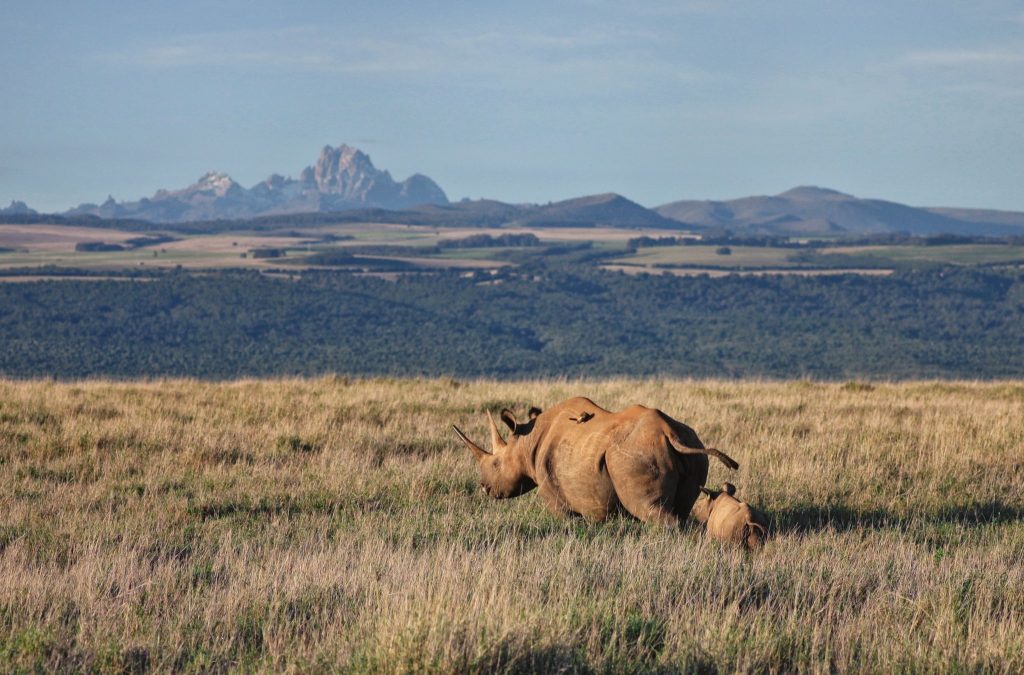
3-Day Serengeti Safari with Ngorongoro Crater & Olduvai Gorge

A compact introduction pairing the Serengeti’s predator density with the crater’s rhino sightings.

3-Day Serengeti Safari with Ngorongoro Crater & Olduvai Gorge

4-Day Fly-In Serengeti and Ngorongoro Crater Safari

A faster-paced fly-in option for travelers short on time but not on ambition.

4-Day Fly-In Serengeti and Ngorongoro Crater Safari

10-Day Classic Great Migration Safari (Ngorongoro, Serengeti & Maasai Mara)

For guests who want the Big Five and the migration on the same trip.

10-Day Classic Great Migration Safari (Ngorongoro, Serengeti & Maasai Mara)

14-Day Ultimate Tanzania Safari

Our most comprehensive route, linking Ngorongoro, Tarangire, Nyerere, and Ruaha for a genuine full-country Big Five circuit.

14-Day Ultimate Tanzania Safari

Big Five Safaris by Travel Style

Couples & Honeymooners

A 4–5 night Serengeti-and-Ngorongoro combination gives couples an efficient, romantic introduction to the Big Five without excessive time in transit, and pairs naturally with a beach extension on Zanzibar to close out the trip.

Families

Ngorongoro Crater is an excellent choice for families thanks to its short game-drive distances and high sighting density, which keeps young children engaged without hours of empty driving between wildlife encounters. Our things-to-do guide for Serengeti and Ngorongoro outlines activities that work well for a range of ages.

First-Time Africa Travelers

If your trip is your first safari, we typically recommend a northern circuit built around Serengeti, Ngorongoro, and Tarangire, the combination that most reliably delivers all five species alongside the classic, easy-to-photograph scenes most first-timers picture when they imagine Africa.

Repeat Africa Travelers

Guests who’ve already completed a northern-circuit Big Five safari often ask us specifically about Ruaha and Nyerere, wilder, far less visited parks that still deliver excellent lion, elephant, and buffalo sightings, with the added draw of African wild dog.

How We Plan a Big Five Safari.

  1. Understand your priorities. Some guests want a guaranteed rhino sighting above all else; others care more about lion and leopard density. We start by ranking what matters most to you.
  2. Anchor the itinerary around Ngorongoro Crater. Since it’s the only realistic one-day, five-species destination, the crater almost always forms the core of a dedicated Big Five route.
  3. Add a second park for depth. We typically pair the crater with the Serengeti for predator density or Tarangire for elephant herds, depending on the season and your interests.
  4. Factor in the season. Dry-season timing (June–October) improves sightings across most parks, though Ngorongoro’s enclosed ecosystem stays strong year-round.
  5. Confirm expert guiding and protection. Every itinerary is led by expert local guides and backed by ATOL protection, so the logistics stay invisible and the focus stays on the wildlife.

The Rhino Conservation Story Behind Tanzania’s Big Five

Tanzania’s black rhinos belong to the eastern black rhino subspecies (Diceros bicornis michaeli), listed as Critically Endangered on the IUCN Red List, and their story is central to understanding why a rhino sighting carries more weight than any other Big Five encounter. As recently as 1970, an estimated 65,000 black rhino roamed across Africa; intensive commercial poaching between 1960 and 1995 wiped out roughly 98% of that population continent-wide. Tanzania was among the hardest-hit range states, and its surviving rhinos are now concentrated almost entirely within the Ngorongoro Conservation Area and Serengeti ecosystem, with smaller populations in Mkomazi and Nyerere National Parks.

Rhinos in Samburu

Recovery has been slow but real, driven by decades of work from the Tanzania National Parks Authority alongside conservation partners like the Frankfurt Zoological Society, who have supported aerial surveillance, anti-poaching patrols, and individual rhino monitoring in the Ngorongoro-Serengeti ecosystem since the early 1990s. Because the exact population figures are sensitive and vary depending on the specific area being counted, we don’t quote a single number here but every guide operating in the crater today is acutely aware that a rhino sighting represents one of the rarest, hardest-won encounters in African wildlife tourism, and treats it accordingly.

Combining a Big Five Safari With Zanzibar

Most of our Big Five itineraries close with a stretch on Zanzibar’s beaches, a short flight from either Arusha or Kilimanjaro. Because the dry season (June–October) works well for both the mainland parks and Zanzibar’s best beach weather, it’s the easiest window to plan a combined trip. However, as we cover in our Zanzibar timing guide, other months have their own rewards for travelers with more flexible dates.

What are the Big Five animals?

The Big Five are the lion, leopard, elephant, African buffalo, and rhinoceros, five species originally grouped together by 19th-century big-game hunters as the most dangerous and difficult animals to hunt on foot in Africa. The term has nothing to do with physical size; it’s about the risk and difficulty involved in hunting each species at close range. Today, the phrase has been almost entirely repurposed by the safari and conservation industries to describe the five most sought-after wildlife sightings on a photographic safari.

Where can you see the Big Five in Tanzania?

The Ngorongoro Crater is the single best place in Tanzania to see all five species, since its enclosed caldera geography concentrates an exceptional density of wildlife within a relatively small area. Beyond the crater, the Serengeti offers outstanding lion and leopard sightings, Tarangire is Tanzania’s premier elephant destination, and the southern parks of Nyerere and Ruaha offer large buffalo herds and strong lion populations away from the northern crowds.

Can you see the Big Five in one safari?

Yes, a well-planned multi-park Tanzania itinerary of five days or more, typically combining the Ngorongoro Crater with the Serengeti or Tarangire, gives travelers an excellent chance of seeing all five species. Rhino sightings require the most planning, since Tanzania’s rhino population is small, closely monitored, and concentrated almost entirely in the Ngorongoro-Serengeti ecosystem. We always set realistic expectations with guests: four sightings are close to guaranteed on a well-designed itinerary, while the rhino remains a genuine highlight rather than a certainty.

Which is the most dangerous of the Big Five?

Professional guides most often point to the Cape buffalo as the most dangerous of the Big Five when encountered on foot, thanks to its unpredictable temperament and tendency to circle back and charge a pursuer rather than simply flee a trait that’s earned old bulls the nickname ‘black death’ among trackers. Elephants and lions are also capable of serious aggression, particularly a mother elephant protecting a calf or a lion defending a kill, which is exactly why walking safaris in Big Five territory are always led by an armed, professionally trained ranger.

Which is the hardest of the Big Five to spot?

The leopard is widely considered the hardest of the Big Five to find, since it’s solitary, mostly nocturnal, and spends much of its resting time hidden in dense riverine trees rather than in the open. Unlike lions, which live in visible prides, or elephants and buffalo, which move in large herds, a leopard can be present in an area for years without ever being reliably seen. Experienced guides look for specific clues, like a tail hanging from a branch, alarm calls from other animals, or a carcass hoisted into a tree, rather than simply scanning open ground.

Is Ngorongoro Crater the best place for the Big Five?

Yes, the Ngorongoro Crater is widely regarded as Tanzania’s single best Big Five destination, since it’s the only park where the density and enclosed geography make it realistic to see all five species in one day. Its roughly 260-square-kilometer floor holds an exceptional concentration of large mammals year-round, including one of Tanzania’s most dependable black rhino populations, because the wildlife lives within the caldera rather than migrating seasonally like herds elsewhere in the country.

Why is the rhino the rarest of the Big Five?

The black rhino is critically endangered due to a catastrophic poaching crisis between 1960 and 1995 that eliminated roughly 98% of Africa’s black rhino population, driven by illegal international demand for rhino horn. Tanzania’s surviving population is now concentrated almost entirely within the tightly protected Ngorongoro-Serengeti ecosystem, monitored around the clock by rangers and conservation partners. Recovery has been real but slow, which is why a rhino sighting remains the rarest and most valued of the five, even at Tanzania’s best rhino destination.

What is the best time of year for a Big Five safari in Tanzania?

The dry season, from June through October, is generally the best time for a Big Five safari, since thinning vegetation and the animals’ dependence on permanent water sources make lion, leopard, elephant, and buffalo considerably easier to spot across most parks. The Ngorongoro Crater is a notable exception, since its enclosed, year-round resident wildlife population keeps sightings strong even during the rainier months, making it a reliable Big Five destination in any season.

How many days do you need for a Big Five safari?

We recommend a minimum of four to five days across at least two parks typically Ngorongoro Crater paired with either the Serengeti or Tarangire to give yourself a realistic, unhurried chance at all five species. Shorter three-day itineraries focused solely on the crater and a nearby park can work for time-constrained travelers, but longer trips of seven days or more allow for a richer overall safari and reduce the pressure of treating each sighting as a checklist item.

Do all Tanzania national parks have the Big Five?

No, several of Tanzania’s best-loved parks are missing one or more of the five species, most commonly the rhino. Tarangire, Lake Manyara, and the Serengeti (outside its closely monitored rhino zones) don’t reliably offer rhino sightings, while Arusha National Park lacks both lion and rhino. The Ngorongoro Crater is the clear exception, hosting healthy, resident populations of all five species within a single, contained ecosystem.

What's the difference between a Big Five safari and a Great Migration safari?

A Big Five safari is organized around finding five specific species, while a Great Wildebeest Migration safari is timed around the seasonal movement of roughly two million wildebeest, zebra, and gazelle through the Serengeti-Mara ecosystem. The two aren’t mutually exclusive a well-timed Serengeti and Ngorongoro itinerary during the dry season can deliver strong migration viewing and excellent Big Five sightings on the same trip, which is exactly how we design many of our northern-circuit itineraries.

Can you do a walking safari to see the Big Five?

Yes, several Tanzanian parks, particularly in the south, offer walking safaris led by an armed, professionally trained ranger, giving a completely different perspective on Big Five species than a vehicle-based game drive. Walking safaris are generally better suited to tracking signs of buffalo, elephant, and lion at a respectful distance than to close leopard or rhino encounters, since safety protocols keep guests well back from the most dangerous species on foot.

What is a 'Big Five' photograph, and why does it matter to travelers?

A ‘Big Five photograph’ typically refers to a clear, well-composed image of each of the five species captured during a single trip, and it has become an informal benchmark that many photography-focused travelers set for themselves. Because rhino and leopard sightings are the hardest to secure, guests chasing this goal usually need more game-drive time and a guide experienced in reading animal behavior and terrain, which is precisely the kind of planning we build into longer, multi-park itineraries.

Are there Big Five safaris suitable for children?

Yes, the Ngorongoro Crater in particular suits families well, since its short driving distances between sightings keep children engaged without the long, empty stretches sometimes involved in tracking wildlife across larger, more dispersed parks like the Serengeti. We recommend combining a family-friendly park like Ngorongoro with rest days and shorter game-drive sessions, and we can tailor pacing to different age groups when we design your itinerary.

Is it ethical to go on a Big Five safari today?

Modern, photography-based Big Five safaris are fundamentally different from the term’s hunting origins, and responsible operators channel tourism revenue directly into the conservation and anti-poaching efforts that protect these species, particularly the critically endangered black rhino. Choosing operators who use licensed guides, respect park regulations on vehicle numbers and viewing distances, and support conservation partners helps ensure that safari tourism remains part of the solution rather than a pressure on already-fragile populations.

Why Plan Your Big Five Safari With Luxury Safaris Tanzania.

Finding all five species well, not just glimpsing them from a distance in a crowd of vehicles, takes local knowledge built up over years, not a checklist. For 15+ years, we’ve been designing private, tailor-made Big Five itineraries across Tanzania’s northern and southern circuits, guiding 10,000+ travelers to the parks, seasons, and camps best suited to what they most want to see. Every safari is led by expert local guides, quoted transparently, and backed by ATOL protection, so the only thing you need to focus on is the wildlife in front of you.

Ready to plan a Big Five safari built around what matters most to you? Share your priorities and travel dates, and we’ll design the route.

Start Planning My Safari →