Gorilla Trekking Safaris: Rwanda & Uganda. Encounter Mountain Gorillas Face-to-Face in the Virunga Mountains
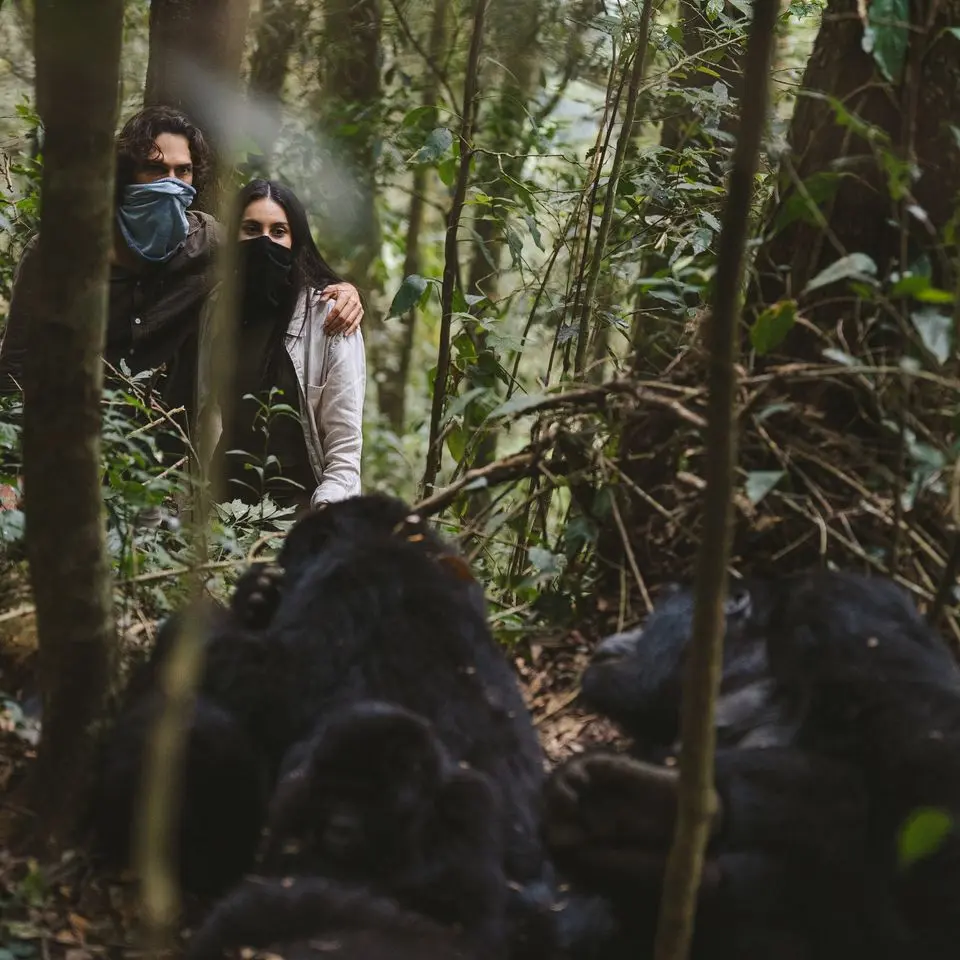
Gorilla trekking is a guided wildlife experience in which small groups of up to eight visitors hike through dense montane rainforest led by expert trackers and armed rangers to locate and spend one protected hour with a habituated family of wild mountain gorillas in their natural habitat. It takes place in three countries: Rwanda’s Volcanoes National Park, Uganda’s Bwindi Impenetrable Forest National Park, and the Democratic Republic of Congo’s Virunga National Park. Mountain gorillas (Gorilla beringei beringei) are critically endangered, with a total wild population of approximately between 1,063 and 1,100 individuals (since the 2018 gorilla census), making a gorilla trek one of the rarest and most profound wildlife encounters on the planet. A permit issued by the respective national park authority is required for every participant and must be booked well in advance; Rwanda permits currently cost USD 1,500 per person, while Uganda permits cost USD 800 per person.

Quick Facts: Gorilla Trekking at a Glance
| Wild Gorilla Population | ~1,063 individuals (IUCN 2018 census) Critically Endangered |
| Trek Group Size | Maximum 8 visitors per gorilla family per day |
| Time with Gorillas | Exactly 1 hour, strictly enforced by park rangers |
| Permit Cost (Rwanda) | USD 1,500 per person (Volcanoes National Park) |
| Permit Cost (Uganda) | USD 800 per person (Bwindi Impenetrable Forest & Mgahinga Gorilla National Park) |
| Trek Duration | 2–8 hours depending on gorilla family location |
| Altitude | 2,400–4,000m above sea level in the Virunga Mountains |
| Best Months | June–September and December–February (dry seasons) |
| Minimum Age | 15 years (both Rwanda and Uganda) |
| Habituated Families | ~23 in Rwanda, ~26 in Bwindi; additional research: families not open to tourists |
| Contact | +255 683 311 134 | info@luxurysafaristanzania.com |
Why Gorilla Trekking Is the Most Transformative Wildlife Experience on Earth
There is a specific moment, and every one of our guides who has led a gorilla trek describes it identically: when the forest goes quiet, the trackers stop and crouch, and through a tangle of giant hagenia trees and wild celery, you make eye contact with a silverback mountain gorilla. He is maybe three metres away. He is enormous, 180 kilograms of pure muscle, the dominant male of a family that may include 20 individuals, and he is watching you with an expression of such unmistakable intelligence and calm authority that you instinctively lower your gaze. That single second of eye contact with a creature who shares 98.3% of your DNA, in his forest, on his own terms, is something that restructures how you understand life on this planet.
Gorilla trekking in Rwanda’s Volcanoes National Park and Uganda’s Bwindi Impenetrable Forest is the centerpiece of our luxury Rwanda safari programs and one of the experiences we are most proud to deliver. We have been arranging gorilla treks for over 12 years, working with the finest lodges in both countries, and the response from our clients, some of the world’s most well-traveled individuals, is consistent: gorilla trekking is unlike anything else they have ever done.
This guide covers everything you need to know to plan a luxury gorilla trek: where to go, when to go, what to expect on the day, how permits work, which lodges to stay in, and how to combine your gorilla experience with other extraordinary East Africa adventures, including the Great Wildebeest Migration and Kilimanjaro trekking.
Where to Go Gorilla Trekking: Rwanda vs Uganda vs DRC
The three countries where you can trek mountain gorillas are Rwanda, Uganda, and the Democratic Republic of Congo. For luxury travelers, we almost exclusively recommend Rwanda and Uganda; the DRC, while extraordinary, carries security risks that make it unsuitable for our travelers. Here is our honest comparison of the two main destinations:
| Factor | Rwanda — Volcanoes NP | Uganda — Bwindi Impenetrable Forest |
| Permit Cost | USD 1,500 per person | USD 700 per person |
| Habituated Families | ~23 families open for trekking | ~26 gorilla groups across 4 sectors |
| Trek Difficulty | Generally shorter (2–4 hours). Well-organised trails | More variable. Some treks 6–8 hours in dense jungle |
| Luxury Lodge Quality | Exceptional: One&Only, Singita Kwitonda | Good: Buhoma Lodge, Sanctuary Gorilla Forest Camp |
| Atmosphere | Organised, premium, accessible | Wild, remote, more adventurous |
| Golden Monkeys | Yes, same park, same day possible | No golden monkeys |
| Dian Fossey Legacy | Karisoke Research Centre, Fossey tomb hike available | N/A |
| Best Season | Jun–Sep & Dec–Feb | Jun–Sep & Dec–Feb |
| Flight Access | Kigali International Airport (1–3 hrs to park) | Entebbe (Kampala) + 7–9 hr drive or 1 hr flight |
| Our Recommendation | First-time gorilla trekkers and luxury travellers | Repeat visitors, photographers, adventure seekers |
Our recommendation for first-time gorilla trekkers is Rwanda’s Volcanoes National Park. The infrastructure is exceptional, the lodges rank among the finest in Africa, and the overall experience is superbly managed. For experienced Africa travelers who want something rawer and more remote, Bwindi Impenetrable Forest in Uganda delivers a wilderness experience that is genuinely without parallel.
Gorilla Trekking in Rwanda: Volcanoes National Park
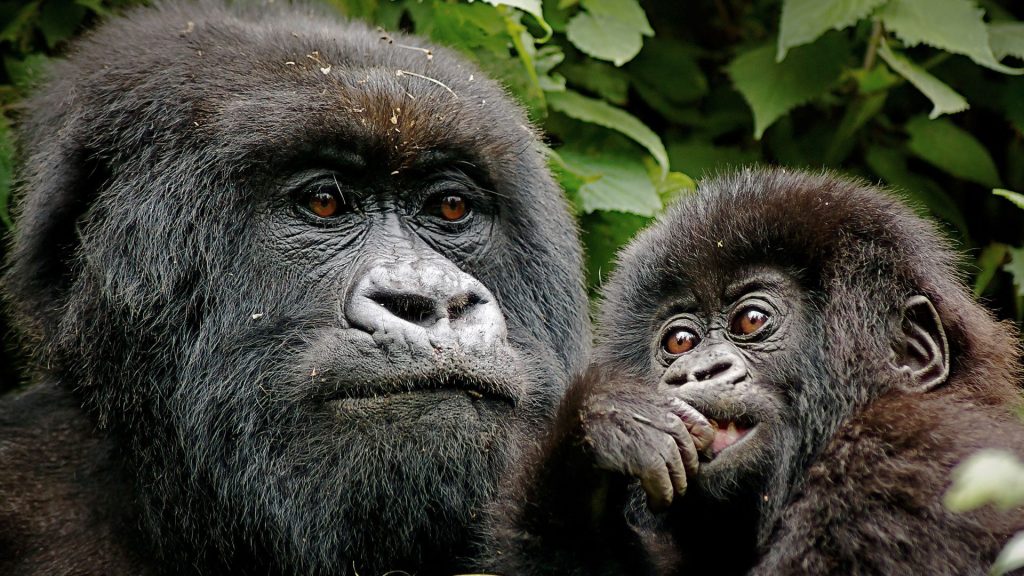
Gorillas in Volcanoes National Park, Rwanda
Volcanoes National Park, covering 160 square kilometers of dense Afro-montane rainforest in northwest Rwanda, sits within the Virunga Mountains, a chain of eight volcanoes straddling Rwanda, Uganda, and the Democratic Republic of Congo. The park is home to approximately 18 habituated gorilla families available for tourist trekking, out of a total of around 26 gorilla groups within its boundaries. The Dian Fossey Gorilla Fund and the Karisoke Research Centre reserve the remaining families for research.
What makes Rwanda the gold standard for luxury gorilla trekking is the combination of accessibility, conservation leadership, and accommodation quality that no other gorilla destination currently matches. Kigali is a surprisingly sophisticated, immaculately clean city consistently rated one of the safest in Africa, and the drive from Kigali to the park’s base camp in Kinigi takes only 2.5 to 3 hours on an excellent road. You can fly in from Nairobi, Addis Ababa, or Dar es Salaam, clear customs in under an hour, and be in the forest the following morning.
The 23 Habituated Gorilla Families
Rwanda currently has approximately 23 gorilla families open for trekking. Some of the best-known families include the Susa group, the largest, with up to 21 individuals and multiple silverbacks, and the Amahoro family, one of the most peaceful and photographically rewarding groups. Our guides often cite the Sabyinyo family, led by the dominant silverback Guhonda, as the most impressive single animal encounter in the park. Family group assignments are made at the briefing on the morning of your trek and take into account your fitness level, group preference, and available permits. We always communicate client preferences to park authorities when arranging permits.
The Dian Fossey Legacy: Karisoke Research Centre
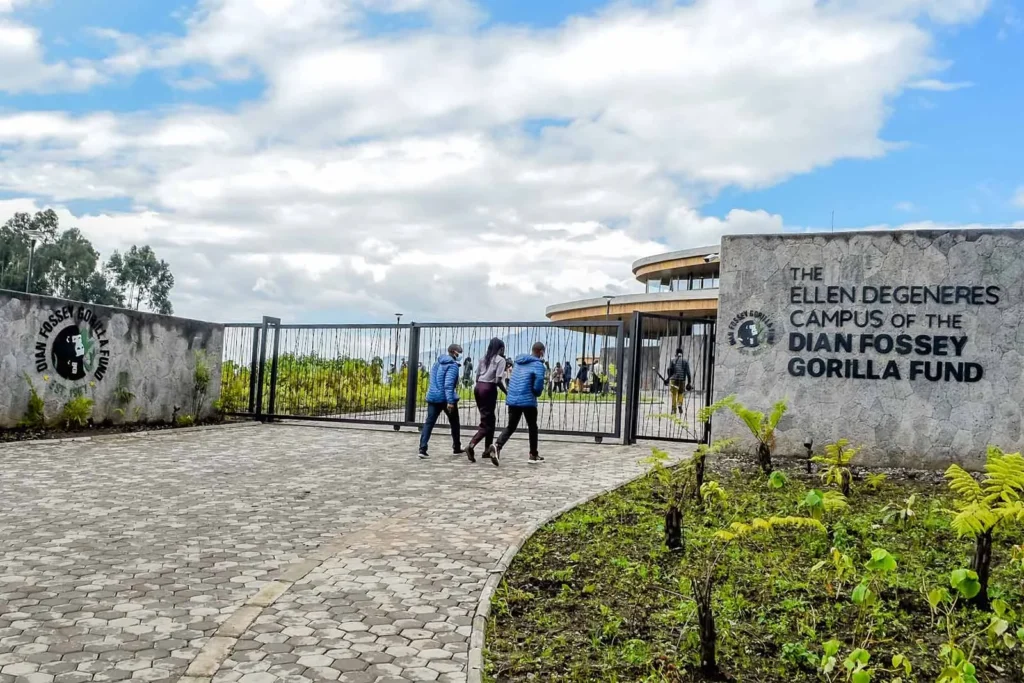
No gorilla trek to Rwanda is complete without understanding the woman who made it possible. Dian Fossey arrived in Rwanda in 1967 and established the Karisoke Research Centre between Mount Karisimbi and Mount Bisoke. Her 18 years of research, documented in ‘Gorillas in the Mist,’ were directly responsible for the gorilla population’s recovery from approximately 240 individuals in the 1980s to over 1,063 today. The Dian Fossey Gorilla Fund continues her work at Karisoke; some of our itineraries include a Dian Fossey Tomb Hike as an add-on to the main gorilla trek, taking you to the research center and Fossey’s grave on the forested slopes of Mount Bisoke.
Gorilla Trekking in Uganda: Bwindi Impenetrable Forest
Uganda’s Bwindi Impenetrable Forest National Park is, for many of the world’s most experienced wildlife travelers, the ultimate gorilla trekking destination. Covering 331 square kilometers of ancient montane and lowland rainforest in southwestern Uganda, it is a UNESCO World Heritage Site and harbors approximately 459 mountain gorillas, roughly half of the entire world’s wild population. The forest is ancient: some of Bwindi’s trees are over 200 years old, and the park contains over 160 tree species, more than 100 fern species, and 350 bird species, 23 of which are Albertine Rift endemics.
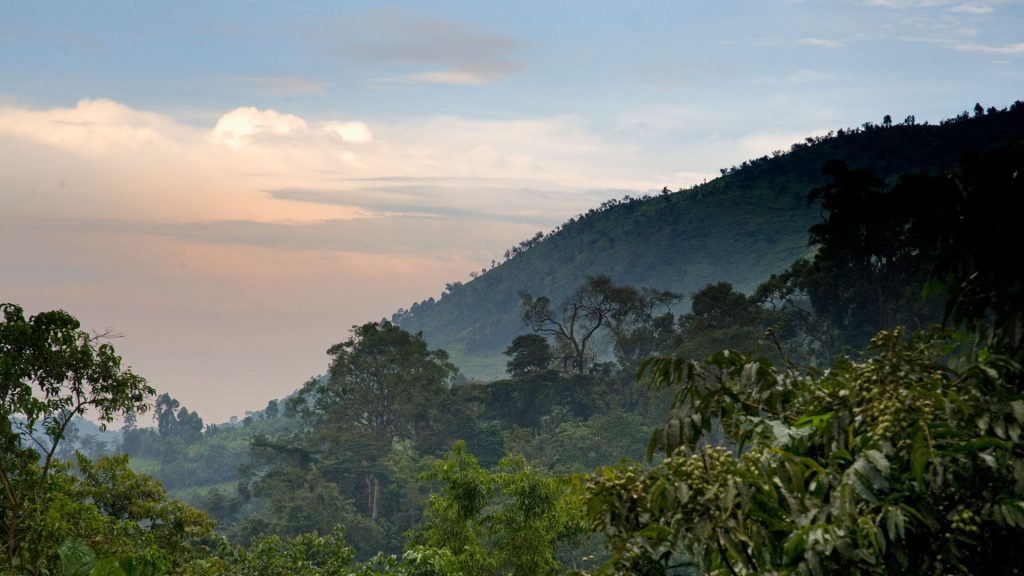
Bwindi Impenetrable Forest
What Bwindi offers that Rwanda cannot is raw, unmediated wilderness. The jungle here is genuinely impenetrable in places; the name is not metaphorical, and a trek through it, even without the gorillas at the end, would be a memorable experience. Some Bwindi treks take 2 hours; others take 8 hours of steep, mud-slicked climbing through vegetation that requires machetes to clear. The uncertainty is part of the experience, and for photographers and veteran Africa travelers, that unpredictability produces the most extraordinary results.
The Four Sectors of Bwindi
Bwindi is divided into four trekking sectors, each with distinct character and lodge options. Buhoma in the north is the most established, with a wide selection of accommodations and reliable trekking infrastructure. Ruhija in the northeast is the most remote, at a higher altitude and with often-challenging trails. In the south, Rushaga boasts the highest concentration of gorilla families, with around 9 habituated groups. Nkuringo in the southwest is the most scenic, overlooking a valley of breathtaking beauty. We select the sector that best matches your fitness level, available permit dates, and preferred lodge.
🦍 Ready to Book Your Gorilla Trek? Let Our Experts Handle Every Detail.📞 WhatsApp / Call: +255 683 311 134 | ✉ info@luxurysafaristanzania.com |
What Actually Happens on a Gorilla Trek: A Step-by-Step Guide.
Many of our clients arrive at the pre-trek briefing with a mix of excitement and nerves, unsure of exactly what the day involves. Here is what to expect, step by step, based on a typical day of gorilla trekking in Rwanda’s Volcanoes National Park:
| Stage | Time | What Happens |
| Pre-Trek Briefing | 6:00–7:00am | Meet at Kinigi Park Headquarters. Rangers brief all groups on gorilla behavior, rules, and emergency protocols. Porters are assigned. |
| Drive to Trailhead | 7:00–7:30am | Drive a 4WD vehicle to the relevant sector entry point. Altitude is around 2,400m. Bring warm layers; mornings are cold. |
| Forest Hike Begins | 7:30am onward | Your group of up to 8 visitors, 1 guide, and 2–3 armed rangers and trackers. Climb through farmland buffer zone, then enter the forest. |
| Trackers Radio Contact | Variable | Lead trackers, who entered the forest at dawn, radio the GPS coordinates of the gorilla family to your guide. |
| First Gorilla Contact | Variable | You approach to within 7 m. Cameras out. No flash photography. Stay together. Follow ranger instructions. |
| The One Hour | 60 minutes exactly | Observe, photograph, absorb. Rangers enforce the time limit and maintain safe distance. This is the defining hour. |
| Return Hike | 1–4 hours | Trek back to the trailhead. Your porter carries your pack. Champagne or juice awaits at the vehicle. |
| Certificate Ceremony | On return | Each participant receives an official certificate for gorilla trekking in the park, a permanent memento. |

The Seven Golden Rules of Gorilla Trekking
- Keep a minimum distance of 7 metres from the gorillas at all times
- Maximum group size is 8 visitors. This rule is absolute and non-negotiable
- Maximum visit time is 1 hour. Rangers enforce this strictly
- No flash photography. Sudden light can startle and distress the animals
- If a gorilla approaches you, follow your ranger’s instruction typically to crouch, look down, and remain still
- Anyone showing symptoms of illness (cold, flu, COVID, gastric issues) must not trek. Gorillas are highly susceptible to human respiratory disease
- Do not eat or drink within 7 metres of the gorillas, and never leave any litter in the forest
Understanding Mountain Gorilla Behavior: What You Will Observe.
Our expert guides prepare every client with a gorilla behavior briefing on the eve of their trek, because understanding what you are watching transforms the experience from impressive to profound. Mountain gorillas live in family groups of 5 to 40 individuals, led by a dominant silverback, a mature male with the distinctive silver saddle of grey hair across his back that develops around age 12. The silverback is the group’s decision-maker, protector, and social center.
Common Behaviours to Expect
- Knuckle-walking: The primary locomotion of mountain gorillas, using the knuckles of their hands as front supports. Adult males are extraordinary to watch in motion.
- Chest beating: Usually a display of dominance or excitement, not aggression. If a silverback chest-beats near you, your ranger will instruct you to crouch and remain still.
- Foraging: Mountain gorillas are herbivores spending 6–8 hours daily eating leaves, stems, bark, and wild celery. You will almost certainly observe these behaviors.
- Play behavior: Young juveniles, aged 3–8 years, are intensely playful and will often approach closer than adults. Some of the most extraordinary photographs come from juvenile interactions.
- Grooming: Social bonding through mutual grooming is constant within gorilla families. Observing a mother grooming her infant, or two adults exchanging the gesture, is one of the most emotionally affecting moments in wildlife watching.
Gorilla Trekking Permits: Everything You Need to Know
A gorilla trekking permit is a government-issued document that allows a single person to participate in a single gorilla trek on a specified date. It is the most valuable piece of paper in African wildlife tourism, and you must secure it 6–12 months in advance for peak dates. Here is what you need to know:
Rwanda Gorilla Permits
The Rwanda Development Board (RDB) issues all gorilla permits for Volcanoes National Park at USD 1,500 per person per trek. This fee directly funds mountain gorilla conservation; a significant portion goes to local community projects, which have been central to reducing poaching pressure on the gorillas. Permits can be purchased through the RDB website or, more practically for international travelers, through an authorized tour operator like Active African Vacations. We handle all permit procurement as part of our itinerary planning service, including securing preferred gorilla family assignments where possible.
Uganda Gorilla Permits
The Uganda Wildlife Authority (UWA) issues permits for Bwindi Impenetrable Forest at USD 700 per person. Uganda also offers the unique ‘Gorilla Habituation Experience,’ a 4-hour encounter (rather than 1 hour) with a gorilla family still undergoing the habituation process, available in the Rushaga sector for USD 1,500 per person. This extended encounter ranks among the most remarkable wildlife experiences available anywhere and caters to travelers who want maximum time with the gorillas.
When to Book Your Permit
For July–September (peak dry season), permits, especially in Rwanda, should be booked 6–12 months in advance. For the quieter green season (October–November and March–May), 3–6 months is generally sufficient. We strongly recommend contacting us as early as possible to check permit availability for your preferred dates. We coordinate permit booking for both Rwanda and Uganda as part of our complete safari planning service.
Where to Stay: Luxury Lodges for Your Gorilla Trek.
The accommodation choices near Rwanda’s Volcanoes National Park are extraordinary and among the finest lodge experiences in all of Africa. The combination of dramatic volcanic scenery, cool mountain air, and the anticipation of the following day’s trek creates an atmosphere in these properties that is difficult to describe and impossible to forget.
Rwanda: Volcanoes National Park
- One&Only Gorilla’s Nest: The flagship luxury experience near the park. Private suites in a highland meadow setting, each with fireplaces and plunge pools. Butler service, gourmet cuisine, and an exceptional spa.
- Singita Kwitonda Lodge: Newly opened and already considered one of the best lodges in Africa. Extraordinary design, conservation focus, and access to exclusive gorilla treks.
- Virunga Lodge: Long-established and beloved by returning clients. Views across the chain of volcanoes from every cottage. Warm, intimate atmosphere with genuine conservation commitment.
- Bisate Lodge: Andrian Tebbutt’s extraordinary design creation on the hillside of an ancient volcanic crater. Six private forest villas with sweeping Virunga panoramas.
Uganda: Bwindi Impenetrable Forest Area
- Sanctuary Gorilla Forest Camp: The classic, intimate Bwindi luxury camp. Eight tents in the forest, with gorillas regularly passing through the camp boundary. Nothing else like it.
- Clouds Mountain Gorilla Lodge: Located in the Nkuringo sector with extraordinary valley views. Arguably the most dramatic setting of any gorilla lodge.
- Buhoma Lodge: A well-run, comfortable lodge at the north of the park with a warm, community-integrated atmosphere and reliable trekking logistics.
Our Luxury Gorilla Trekking Itineraries
Every gorilla trekking safari we arrange is private, tailor-made, and comes with our full permit and logistics management service. Here are our most popular structured Itineraries: