
Chimpanzee Trekking in Rwanda: The Complete Nyungwe Forest Guide
Everyone flies into Rwanda talking about gorillas. Almost no one leaves talking about anything else, which is precisely why chimpanzee trekking in Rwanda remains one of the country’s best-kept secrets. Deep in the southwest, Nyungwe Forest National Park protects one of Africa’s oldest montane rainforests and roughly 500 wild chimpanzees, and following a habituated community through that ancient canopy is, in its own way, every bit as moving as an hour with a silverback, just faster, noisier, and considerably more athletic.

We’ve spent over 15 years building tailor-made luxury safaris across East Africa, and chimpanzee trekking has become one of our favorite additions to a Rwanda itinerary, whether it’s paired with gorilla trekking in Volcanoes National Park, stacked onto a golden monkey trek, or extended into a full Rwanda safari through Akagera National Park. Over 10,000 travelers have trusted our team with their African journeys, and this guide covers exactly what we tell our guests before they head into Nyungwe: where the chimps actually are, what a trek costs and feels like, how it compares to gorilla trekking, and how to build it into a wider, private safari.
What is chimpanzee trekking in Rwanda?
Chimpanzee trekking in Rwanda is a guided forest hike through Nyungwe Forest National Park in the country’s southwest, where visitors follow armed rangers and trackers on foot to find one of two habituated wild chimpanzee communities the main Nyungwe/Uwinka group and the smaller, more isolated Cyamudongo group. Treks begin before dawn, typically last two to six hours depending on how far the chimps have moved overnight, and reward visitors with up to an hour observing the animals foraging, grooming, and calling through the canopy. It is Rwanda’s second most popular primate activity after mountain gorilla trekking, and considerably more affordable.
Chimpanzee Trekking in Rwanda: Quick Facts
| At a Glance | Details |
| Location | Nyungwe Forest National Park, southwestern Rwanda, near the borders with Burundi and the Democratic Republic of Congo |
| Where trekking happens | Two habituated communities, the main Nyungwe forest group (accessed via Uwinka) and the smaller Cyamudongo forest group |
| Park size | Over 1,000 sq km of ancient Afro-montane rainforest, one of the largest remaining tracts in Africa |
| Chimpanzee population | Approximately 500 individuals across the wider park, with two communities habituated for tourism |
| Standard permit (2026) | USD $150 per person (foreign non-resident); USD $75 (foreign resident); USD $25 (East African citizen) |
| Minimum trekking age | 15 years |
| Trek duration | 2–6 hours of hiking, plus up to one hour observing the chimpanzees once located |
| Daily permit capacity | 24 permits per day (8 trekkers per habituated community, across up to 3 groups) |
| Distance from Kigali | Approximately 225 km (140 miles), a 5–6 hour drive, or a short scenic flight |
| Best time to visit | June to September and December to February (the two dry seasons) |
| Signature extra activity | The Nyungwe Canopy Walkway is a 160-meter suspension bridge 70 meters above the forest floor. |
Where Does Chimpanzee Trekking Happen in Rwanda?
Chimpanzee trekking in Rwanda takes place exclusively in Nyungwe Forest National Park, in the country’s southwestern corner, where two communities have been habituated for tourism: the main Nyungwe forest community, accessed from the Uwinka reception centre, and the smaller Cyamudongo community, a genetically isolated relic forest reached via a separate, bumpier approach road through tea plantations. A third population exists in the newer Gishwati-Mukura National Park to the north, but those chimpanzees are not yet habituated or open to commercial trekking.
Nyungwe itself is a genuine ecological marvel of over 1,000 square kilometers of unbroken Afro-montane rainforest, believed to be one of Africa’s oldest forests, having likely survived the same Pleistocene-era climate shifts that isolated Bwindi’s forest in neighboring Uganda. It sits at the very top of the Albertine Rift, straddling the watershed between the Congo and Nile river basins, which means rain falling on one side of a Nyungwe ridge eventually reaches the Atlantic, while rain on the other side flows toward the Mediterranean. That geographic drama is matched by the biodiversity it protects: 13 primate species, more than 300 bird species (29 of them found nowhere else on Earth), and roughly 500 chimpanzees spread through the canopy.
The Cyamudongo forest deserves a special mention, since it’s one of the more unusual conservation stories in the region. This small relic forest, separated from the main Nyungwe block by agricultural land, is home to a genetically isolated chimpanzee community of around 30 individuals. Researchers closely monitor this population for the inbreeding risks that come with isolation, and they have long-term (if logistically difficult) plans to reconnect the two forests. Visiting Cyamudongo means an earlier start and a rougher access road than the main Uwinka sector, but many guests find its smaller, more intimate community and thicker, lower-canopy forest genuinely rewarding.
How Chimpanzee Trekking Works in Nyungwe
How does chimpanzee trekking work in Nyungwe Forest?
Trekkers gather for a pre-dawn briefing at either the Uwinka reception centre or, for the Cyamudongo community, the Gisakura reception area, where rangers explain trail conduct before assigning groups of a maximum of eight people to a habituated community. Trackers who set out from their forest camps before sunrise use the previous night’s nest sites and fresh signs to locate the chimps, radioing their position back so guides can lead trekking groups directly to them. Because chimpanzees move quickly and unpredictably through the canopy, the hike itself can run anywhere from two to six hours, followed by up to an hour observing the group from a required 7-metre distance.
What to Expect, Step by Step
- Pre-dawn briefing (around 5:00–6:00am). You’ll check in at Uwinka or Gisakura reception, where a head ranger confirms permits, splits trekkers into groups of no more than eight, and runs through trail conduct and distancing rules.
- Group assignment. Groups are assigned to either the main Nyungwe community or the Cyamudongo community, generally based on which trackers have already picked up fresh signs that morning.
- The trek itself. Guided by an experienced park ranger, you’ll follow trails that range from manageable to genuinely demanding, since chimpanzees, unlike gorillas, rarely sit still and can cover real distance through the canopy before settling to feed.
- Locating the community. Dedicated trackers, who left before dawn to pick up the trail from the previous night’s nests, radio updated positions to your guide throughout the morning.
- The chimpanzee encounter lasts up to one hour. Once the group is located, you’ll observe them from the required minimum distance as they forage, groom, call to one another, and move through the branches overhead.
- The return hike. You’ll retrace your route back to the reception center, often with a well-earned Rwandan coffee waiting.
Ready to Track Rwanda’s Chimpanzees?
Our safari specialists can build a private, tailor-made Nyungwe itinerary around your dates, fitness level, and the rest of your Rwanda journey.
Chimpanzee Trekking Permits: Cost and How to Book
How much does a chimpanzee trekking permit cost in Rwanda?
A standard chimpanzee trekking permit in Nyungwe Forest costs USD $150 per person for foreign non-residents in 2026, issued by the Rwanda Development Board. Foreign residents pay USD $75 and East African Community citizens pay USD $25. The permit covers up to one hour with a habituated chimpanzee community plus ranger and tracker services, but does not include the separate park entrance fee, tips, or transport and at roughly a tenth of the price of a USD $1,500 gorilla permit, it’s one of the best-value wildlife encounters in East Africa.
Availability is genuinely limited: with 24 permits issued per day across both habituated communities (a maximum of eight trekkers per community, with the Nyungwe group sometimes split into smaller subgroups), demand can outpace supply during the June–September and December–February peak windows. As part of our tailor-made planning process, we book and pay for your permits directly with the Rwanda Development Board as soon as your dates are confirmed, one less logistical headache on a trip that already has plenty of moving parts.
- Standard chimpanzee permit: USD $150 (foreign non-resident), USD $75 (foreign resident), USD $25 (East African citizen)
- Daily capacity: 24 permits across the two habituated communities
- Minimum age: 15 years, no exceptions
- Park entrance fee: charged separately from the trekking permit itself; always confirm this is bundled into your quoted itinerary price
For travelers who also want to see Rwanda’s mountain gorillas, it’s worth knowing that Rwanda’s gorilla trekking permits carry a genuinely useful incentive: visitors who book gorilla trekking during the November–May low season and can show a confirmed booking of at least two nights split between Nyungwe and Akagera National Park qualify for a 30% discount on the USD $1,500 gorilla permit, bringing it down to roughly USD $1,050. We build this multi-park structure into itineraries whenever the dates and discount genuinely line up, since it rewards exactly the kind of well-rounded Rwanda trip we’d recommend anyway.
Best Time for Chimpanzee Trekking in Nyungwe Forest

The best time for chimpanzee trekking in Nyungwe Forest is during Rwanda’s two dry seasons, June through September and December through February, when trails are firmer and the steep, often muddy terrain is easier to manage. Chimpanzee trekking runs year-round; however, since Nyungwe is a genuine rainforest where showers are possible in any month, some experienced guides consider the shoulder rainy months a worthwhile trade-off for thinner crowds and a better shot at permit availability.
| Season | Months | What to Expect | ||
| Dry season (peak) | June – September | Firmest trails and the most comfortable hiking conditions; the busiest period for both permits and lodges | ||
| Short dry spell | December – February | A second, slightly quieter dry window; a popular pairing with gorilla trekking over the festive season | ||
| Long rains | March – May | Nyungwe’s wettest stretch; muddier, more demanding trails, but lush scenery and the lowest crowds of the year | ||
| Short rains | October – November | Intermittent showers with a genuinely good chance of dry mornings; November also opens the discount window for gorilla permits. | ||
Because chimpanzees are considerably more mobile than gorillas, your trek length depends heavily on the day’s weather and the group’s mood, regardless of season. We always tell guests to pack for a genuinely active few hours in the forest; comfortable trekking pace matters here more than at almost any other primate destination in East Africa.
How to Get to Nyungwe Forest National Park
Nyungwe Forest National Park is roughly 225km (140 miles) from Kigali, a 5 to 6 hour scenic drive through Rwanda’s terraced hills and tea estates, or a considerably shorter light-aircraft transfer for travelers short on time. Most independent visitors combine the drive with an overnight stop in Huye (formerly Butare) to break up the journey, while our guests typically fly, freeing up an extra day for Nyungwe itself or the rest of a wider Rwanda itinerary.
If you’re arriving fresh from a gorilla trek in the north, the drive south to Nyungwe takes roughly 6 hours by road via Kigali, which is precisely why most multi-primate Rwanda itineraries build in a comfortable two-to-three-day stay in the south rather than attempting the round trip as a day excursion. For guests entering from the Cyamudongo side specifically, the road from your lodge winds through active tea plantations and can take up to an hour longer than reaching Uwinka, so we always factor that into morning departure times.
Beyond the Chimps: Other Activities in Nyungwe Forest
Chimpanzee trekking is Nyungwe’s headline draw, but the park rewards travelers who stay two or three nights rather than passing through for a single trek, something we actively build into itineraries whenever the schedule allows.
The Nyungwe Canopy Walkway
East Africa’s first canopy walkway is a 160-meter suspension bridge strung 70 meters above the forest floor, connecting a series of viewing platforms across a steep ravine. The canopy walkway offers a genuinely thrilling way to see the forest from the chimpanzees’ own vantage point, and it pairs naturally with a trek during a two-night stay.
Colobus Monkey Trekking
Nyungwe holds one of Africa’s largest troop groups of Angola colobus monkeys, several hundred individuals moving together through the canopy, their long white tails streaming behind them. A dedicated colobus trek is calmer and less physically demanding than chasing chimpanzees and makes an excellent complementary activity for travelers staying multiple nights.
Birdwatching
With more than 300 recorded bird species, including 29 Albertine Rift endemics, Nyungwe ranks among East Africa’s premier birding destinations. Regional specialities include the Rwenzori turaco, the Ruwenzori nightjar, and the elusive, red-collared mountain babbler, and a guided dawn birding walk is a popular pairing with an afternoon chimp trek.
Waterfall and Tea Plantation Walks
A network of maintained trails leads to Nyungwe’s waterfalls through dense, ancient forest, while a visit to the Gisakura tea plantation with its neat, undulating rows running right up against the forest edge offers an easy, scenic half-day activity and a look at the industry that supports much of the local economy.
Where to Stay Near Nyungwe Forest
Nyungwe’s luxury lodges are set among the tea estates bordering the park, close enough to reach Uwinka or Gisakura reception in well under an hour on trek mornings. Because we work exclusively with luxury-only properties, every lodge we recommend pairs genuine comfort with proximity to the forest, a real asset after a long, humid morning spent chasing chimpanzees through the canopy.
| Lodge | Signature Feature |
| One&Only Nyungwe House | Rwanda’s benchmark luxury property, set within a working tea plantation with a spa built around forest botanicals and views straight into the rainforest canopy |
| Nyungwe Forest Lodge | Elegant glass-walled suites overlooking the tea fields, with direct trail access into the park itself |
| Nyungwe Top View Hill Lodge | A relaxed, comfortable base with sweeping views over the tea estates and surrounding hills |
One&Only Nyungwe House
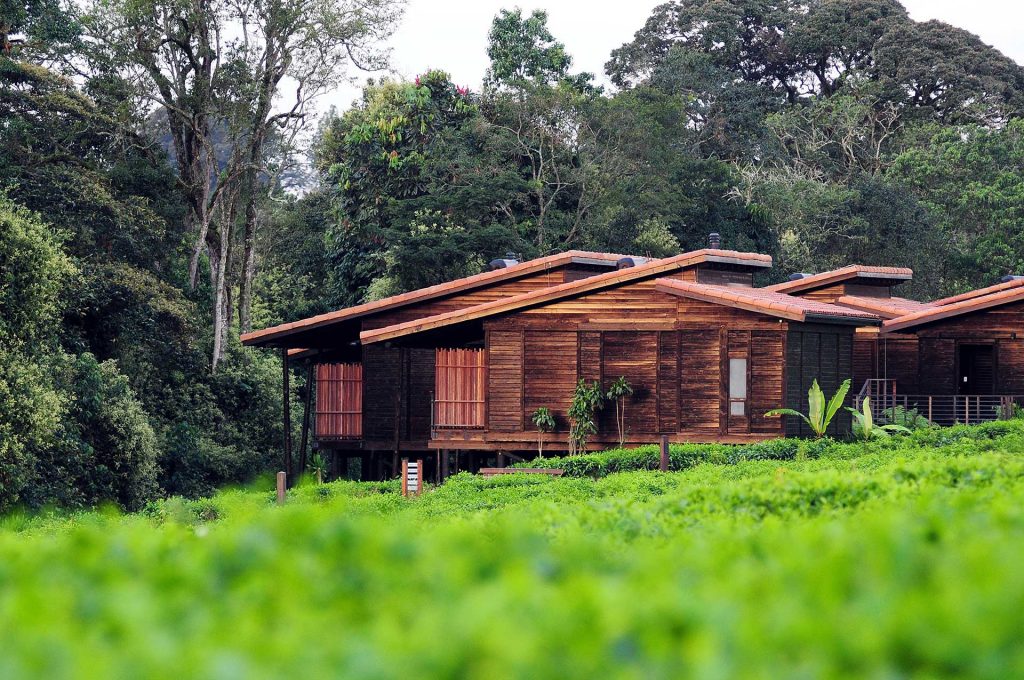
Set inside an active tea plantation on the park’s edge, One&Only Nyungwe House pairs sleek, glass-fronted suites with genuinely excellent food and a spa that incorporates wild ginger, eucalyptus, and Nyungwe’s own medicinal forest botanicals into its treatments exactly the kind of recovery a trekking morning calls for. Wake-up calls arrive early, but there’s real pleasure in sipping strong Rwandan tea on your veranda as the first light hits the tea fields in amber and bronze, before the short drive to the Uwinka ranger station for your briefing.
Nyungwe Forest Lodge
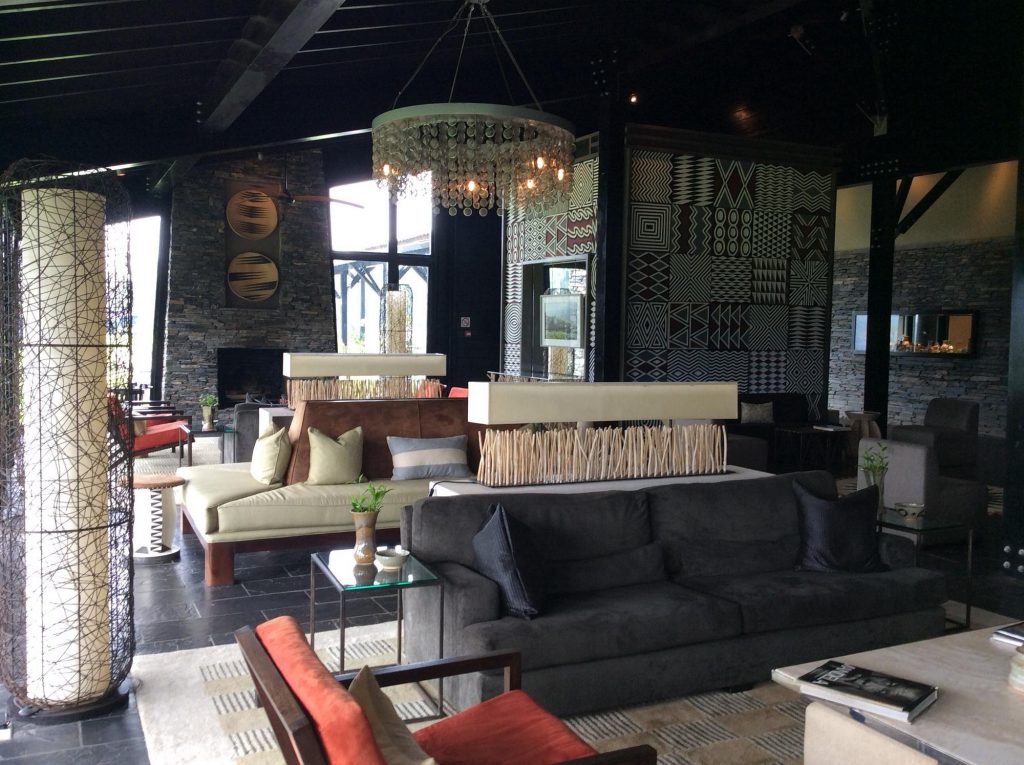
Nyungwe Forest Lodge
With floor-to-ceiling windows facing straight into the rainforest and direct trail access to the park, Nyungwe Forest Lodge suits guests who want to feel fully immersed in the forest without sacrificing polish or comfort.
Nyungwe Top View Hill Lodge
A relaxed, well-run property with sweeping hillside views, Nyungwe Top View Hill Lodge is a comfortable, lower-key alternative for travelers who’d rather put their budget toward permits and guiding than an ultra-luxury suite.
Chimpanzee Trekking vs. Gorilla Trekking: How Do They Compare?
Chimpanzee trekking in Nyungwe is faster-paced, more physically demanding, and roughly a tenth of the price of gorilla trekking in Volcanoes National Park, since these primates move quickly and unpredictably through the canopy rather than settling in one place. Gorilla trekking offers a calmer, more contemplative hour with a family that tends to stay relatively still once located, at a permit cost of USD $1,500 against chimp trekking’s USD $150. Many of our guests choose to do both, since the two encounters are different enough to feel complementary rather than repetitive.
| Chimpanzee Trekking | Gorilla Trekking | |||
| Location | Nyungwe Forest National Park | Volcanoes National Park | ||
| Permit cost (2026) | USD $150 (foreign non-resident) | USD $1,500 (foreign non-resident) | ||
| Group size | Maximum 8 per community | Maximum 8 per family | ||
| Pace | Fast, unpredictable chimps move constantly. | Calmer gorillas often stay in one area once found. | ||
| Typical trek length | 2–6 hours | 2–8 hours | ||
| Time with the animals | Up to 1 hour | Exactly 1 hour | ||
| Minimum age | 15 years | 15 years | ||
| Physical demand | Moderate to high | Moderate to high | ||
Combining Chimpanzee Trekking with the Rest of Rwanda.
Because Nyungwe sits at the far southern end of the country, most of our guests treat it as one leg of a wider Rwanda circuit rather than a standalone destination. The classic combination pairs chimpanzee trekking with gorilla trekking in Volcanoes National Park in the north and Big Five game drives in Akagera National Park in the east, a genuine full-country itinerary that also happens to qualify for the low-season gorilla permit discount. Our Luxury Rwanda Primate Adventure and Best of Rwanda’s National Parks itineraries are two of our most popular starting templates for exactly this kind of multi-park trip, alongside our Exclusive Behind-the-Scenes Gorilla Trekking Experience for guests who want a deeper gorilla encounter alongside their chimp trek.
For travelers whose main safari is built around Tanzania, Rwanda is typically flown in as a dedicated primate extension, before or after a Great Wildebeest Migration safari or a stretch on Zanzibar’s beaches. Our 16-day Rwanda, Tanzania & Zanzibar safari and Maasai Mara, Rwanda, gorillas & Victoria Falls itinerary both show how chimp trekking, gorilla trekking, classic Serengeti game drives, and beach time can be woven into a single, seamless private trip. Guests who are especially interested in primates may also include Bwindi Impenetrable Forest National Park in nearby Uganda or our chimpanzee trekking experiences in the Mahale Mountains and Gombe National Park in Tanzania, creating a truly comprehensive East African primate circuit.
Let Us Build Your Rwanda Primate Circuit
Whether you want a focused two-night Nyungwe stay or a full Rwanda-wide trip combining chimps, gorillas, and the Big Five, our team will build it around your dates, fitness, and budget no generic templates.
Is Chimpanzee Trekking Right for You?
First-Time Africa Travelers
If gorilla permits don’t fit your budget or dates, chimpanzee trekking is an excellent, considerably more affordable primate encounter to build a first Rwanda trip around and pairing it with a few days of classic game viewing in Akagera rounds out a genuinely well-balanced introduction to the country.
Couples
Nyungwe’s One&Only property and its forest-edge spa make chimpanzee trekking a naturally romantic addition to a Rwanda itinerary, a shared physical challenge followed by proper pampering. It combines well with a Rwanda Gorilla trekking and Dian Fossey Tomb Hike itinerary for couples wanting both primate encounters on one trip.
Families
The 15-year minimum age applies here just as it does for gorilla trekking, so chimp trekking suits families with teenagers rather than young children. Older teens who found gorilla trekking calm often discover chimp trekking’s faster pace and unpredictability genuinely more exciting.
Repeat Africa Travelers
For guests who’ve already trekked gorillas once, chimpanzee trekking offers a meaningfully different primate encounter on a return trip faster, noisier, and considerably more athletic, at a fraction of the cost. Combined with a stay at Lake Kivu to unwind afterward, it makes an excellent lower-key addition to a second or third Rwanda visit.
Practical Travel Tips for Chimpanzee Trekking
- Book permits early. With only 24 permits issued daily across both communities, peak-season dates can sell out weeks to months in advance; confirm as soon as your travel window is set.
- Prepare for an early start. Briefings begin around 5:00–6:00am, and the Cyamudongo approach can require leaving your lodge by 4:30am. Factor this time into your evening routine the night before.
- Dress for speed and mud. Sturdy hiking boots, long trousers, and a lightweight rain jacket are essential; the terrain is steep and can be slippery regardless of season, and you may need to move briskly to keep pace with the chimps.
- Get travel insurance with trekking cover. Given the physical nature of the activity, comprehensive travel insurance covering hiking and medical evacuation is essential, not optional.
- Skip the trek if you’re unwell. Chimpanzees are highly susceptible to human respiratory illnesses; a cold or flu will mean being turned away at the briefing, both for their protection and yours.
- Bring cash for tips. Guides and trackers are tipped in cash (USD is widely accepted); budgeting roughly USD $15–20 per guide and USD $10–15 for trackers is standard practice.
- ATOL protection. As an ATOL-protected operator, we protect your flight-inclusive Rwanda itinerary financially from start to finish.
Start Planning Your Nyungwe Extension
Tell us your travel window and we’ll secure your chimpanzee trekking permits, lodge, and transfers as one seamless private itinerary.