
Gishwati Mukura National Park.
Gishwati Mukura National Park is Rwanda’s fourth and newest national park, a small montane forest reserve of roughly 34 to 36 square kilometers in the west of the country. It protects two forest fragments, Gishwati and Mukura, and is home to chimpanzees, golden monkeys, L’Hoest’s monkeys, blue monkeys, and more than 130 bird species. It offers a quiet, restoration-focused alternative to Rwanda’s busier parks.
Most travelers come to Rwanda for the mountain gorillas, and rightly so. Yet the longer we guide in this country, the more we notice that our most thoughtful guests, the repeat Africa travelers and the conservation-minded couples, leave asking the same question: what else is there? For a growing number of them, the answer is Gishwati Mukura National Park, a young forest on the Congo-Nile Divide that is being rebuilt tree by tree and whose primates are slowly recovering from near disappearance.
This is not a park for ticking off a checklist. It is a place to walk through cool, mossy forest, listen for the pant-hoots of chimpanzees, watch golden monkeys leaping through bamboo and nettles, and understand how a country can bring a forest back from the brink. At Luxury Safaris Tanzania, we have designed private, tailor-made safaris across East Africa for more than 15 years, and we have guided over 10,000 delighted travelers. Our expert local guides know Rwanda’s forests, permit systems, and lodges intimately, and this guide shares what you need to know to include Gishwati Mukura in a luxury Rwanda journey.
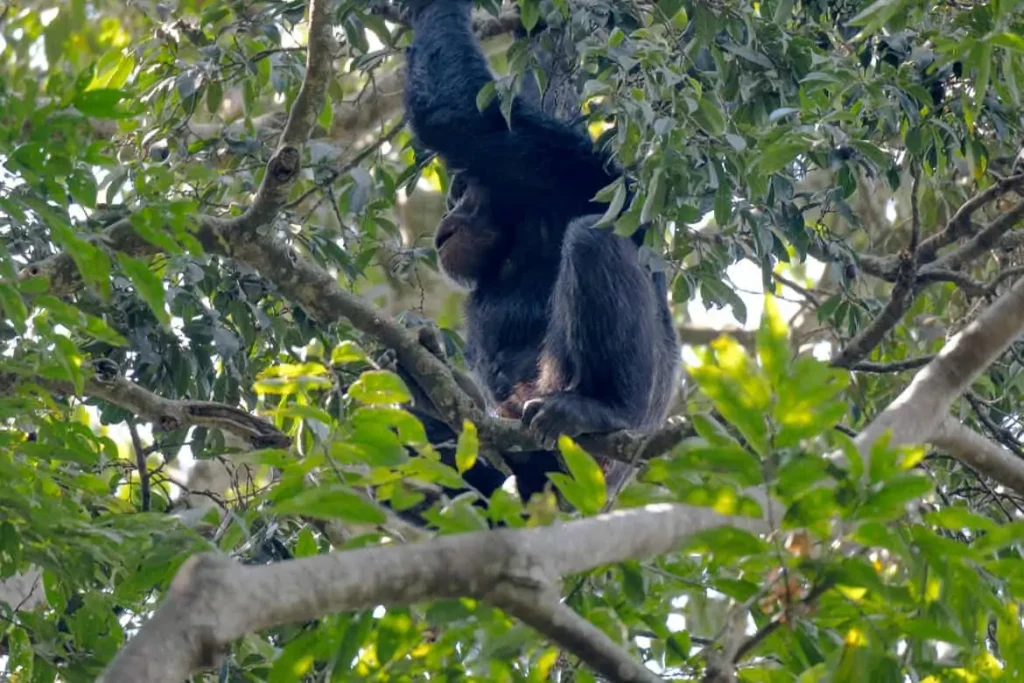
Gishwati Mukura National Park is a protected montane forest in western Rwanda, which was officially gazetted as a national park in 2015. It combines the Gishwati and Mukura forests, which lie in the Rutsiro and Ngororero districts near Lake Kivu, and it forms part of the wider Gishwati-Mukura landscape that conservationists and the Rwanda Development Board (RDB) are restoring.
The park sits on the Congo-Nile Divide, the high ridge that separates the watersheds of the Congo and Nile rivers. Its forests were once part of a vast belt of montane forest that stretched from the Virunga volcanoes in the north to Nyungwe in the south. Over the twentieth century, farmers, grazers, and settlers cleared much of that forest, and the 1994 genocide further degraded large areas. By the early 2000s, Gishwati had shrunk to a tiny fragment of its former self, and its chimpanzees had dwindled to a handful of animals.
Rwanda’s response has been among Africa’s most ambitious restoration projects. The government, working with conservation partners and local communities, has replanted native trees, established buffer zones and tree nurseries, and created a national park to protect what remains. Today the park covers about 34 to 36 square kilometers, depending on whether buffer zones are counted, and has been recognized as a UNESCO biosphere reserve.
Gishwati Forest and Mukura Forest
The park has two distinct sections, and each has its own character:
- Gishwati is the larger, more famous section and the one most associated with chimpanzees and golden monkeys. The forest has been steadily recovering, with native trees, bamboo, and understory regrowing across former pasture.
- Mukura lies to the south and is a smaller, quieter section of montane forest known for its primates and birdlife, including a long list of Albertine Rift endemics.
Because farmland separates the two forests, conservationists have focused on reforestation and corridors that could eventually reconnect them. It is a long-term project, and visiting is one of the most direct ways to support it.
Why Gishwati Mukura Matters
The park matters because it shows that forest restoration can work. Primate numbers are small but rising, and the surrounding communities are increasingly involved as guides, rangers, farmers, and hosts. For travelers, that means a visit has a visible impact, with park fees helping to fund reforestation, community projects, and conservation.
Want to add Gishwati Mukura to a Rwanda itinerary? We will check permits and lodge availability for your dates at no cost. Speak with a the safari expert.
Where Is Gishwati Mukura National Park?
Gishwati Mukura National Park is in western Rwanda, in the Rutsiro and Ngororero districts, not far from Lake Kivu and the town of Rubavu (formerly Gisenyi). It is typically reached by road from Kigali in roughly two to three hours, depending on the route and road conditions, or from Rubavu in about an hour or less.
The park’s position in the west of the country makes it an easy addition to a Rwanda itinerary that includes Lake Kivu and Volcanoes National Park. Rubavu sits on the northern shore of Lake Kivu and is about an hour’s drive from the Volcanoes gorilla trailheads, so a loop through Kigali, Volcanoes, Lake Kivu, and Gishwati is practical and scenic. The southern section, Mukura, is generally reached via the western road network, and your guide will advise on the best route depending on your lodge and schedule.
Our guides always plan this region with flexibility. Roads are generally good by East African standards, but the final approach to the forest can be rough and slow, particularly after rain, so we recommend allowing a relaxed schedule. Those who want to save time can use a charter flight to the western side of the country, and we can arrange this as part of a tailor-made itinerary.
Wildlife in Gishwati Mukura National Park
The park’s key wildlife includes eastern chimpanzees, golden monkeys, L’Hoest’s monkeys, blue monkeys, and black-and-white colobus, along with small mammals such as servals, genets, civets, southern tree hyraxes, and duikers. Birders can expect more than 130 species, including around 20 Albertine Rift endemics.
Gishwati Mukura is not a Big Five destination, and we always set this expectation clearly. It is a primate and forest experience, where the rewards come from patience, atmosphere, and detail rather than from large mammals on open plains. For travelers who love forest wildlife, that is precisely the appeal.
Eastern Chimpanzees
The chimpanzees of Gishwati are the park’s emotional heart. Their numbers fell to just a handful before conservation efforts and forest recovery stabilized the population, and today the community is estimated at roughly 20 animals, according to figures reported by conservation operators. Because the group is small and the forest is dense, sightings require patience and careful tracking, and they cannot be guaranteed. If you would like to compare this trek with other chimp-trekking experiences, please let us know.
Golden Monkeys
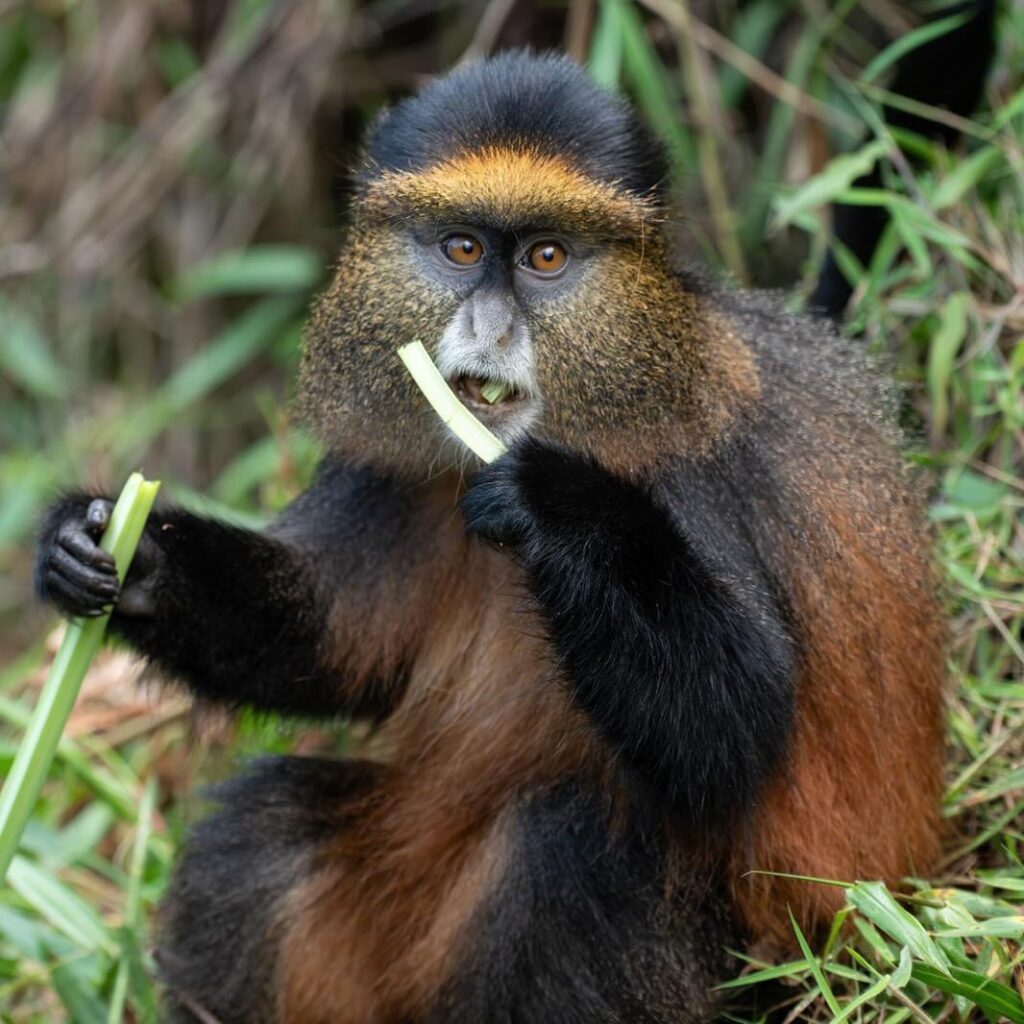
Golden monkeys are one of the most charismatic primates in Africa: bright orange-gold bodies, dark limbs, and a lively, social temperament. They are endangered and restricted to the Albertine Rift, and Gishwati is notable as one of the few places outside the Virunga Mountains where they live. If you have already trekked them in the volcano region, our guide on golden monkey trekking explains that experience, and Gishwati offers a quieter alternative.
Other Primates
L’Hoest’s monkeys, easily recognized by their white bibs, and blue monkeys are regularly encountered in the forest. Black-and-white colobus monkeys are also reported. Each species occupies a different layer of the forest, so a walk can feel like a journey through a living multi-story building.
Birds and Small Mammals
Birdwatchers can expect to see over 130 species, including Albertine Rift endemics such as the Rwenzori turaco and several sunbirds and forest warblers. Small mammals, including servals, genets, and civets, are present but secretive. Early mornings, when the forest is quiet and cool, are the best time for both birds and primates.
Things to Do in Gishwati Mukura National Park
The main activities in Gishwati Mukura National Park are chimpanzee trekking, golden monkey and primate viewing, birdwatching, guided forest hikes, and community or conservation experiences such as visiting tree nurseries and taking part in reforestation. Activities are limited and offered in small groups, so advance planning is essential.
Chimpanzee Trekking
A chimp trek in Gishwati begins early in the morning with a briefing from the park guides, who explain the rules and how to behave around the animals. Trackers then lead the group into the forest, following signs such as fresh nests, calls, and food remains. Treks can last from a couple of hours to much longer, depending on where the chimps are, and the terrain is typically steep, muddy, and slippery. When you find them, you usually have about an hour with them, as with most primate encounters in Rwanda.
Because the community is small and the forest is dense, we tell our guests honestly that sightings are never guaranteed and that the experience is as much about the forest as the animals. We recommend combining a Gishwati trek with a second primate experience elsewhere in Rwanda to balance expectations.
Golden Monkey and Primate Viewing
Guided walks can also focus on golden monkeys, L’Hoest’s monkeys, and blue monkeys. These are generally more habituated and easier to see than chimps, and they offer excellent photography in ideal light. Your guide will explain what is currently available, since activities evolve as the park develops.
Birdwatching
With more than 130 species, including Albertine Rift endemics, the park is a delight for birders. Dawn walks with a skilled guide can be exceptionally rewarding, and we recommend bringing binoculars and a field guide.
Forest Walks and Hiking
Walking is the best way to appreciate the park’s scenery and its restoration story. Trails lead through regenerating forest, past bamboo thickets, and across ridges that offer views over the surrounding hills. Expect slopes, mud, and the need for sturdy boots.
Conservation and Community Experiences
Visitors can often see tree nurseries, learn about reforestation work, and in some cases plant a tree. Community experiences, such as meeting local craftspeople and learning about traditional healing, show how the park’s neighbors are part of the story.
How Does Gishwati Compare with Nyungwe and Volcanoes?
Gishwati Mukura is smaller, quieter, and less developed than Nyungwe Forest or Volcanoes National Park. It offers a more intimate, conservation-focused visit and a small chimp population, while Nyungwe has larger primate numbers and a canopy walkway, and Volcanoes is Rwanda’s gorilla stronghold.
| Feature | Gishwati Mukura | Nyungwe Forest | Volcanoes National Park |
| Size | About 34 to 36 sq km | More than 1,000 sq km | About 160 sq km |
| Star attraction | Chimps and golden monkeys | Chimps, many primates, canopy walk | Mountain gorillas, golden monkeys |
| Crowds | Very few visitors | Moderate | Highest permits limited |
| Infrastructure | Basic, developing | Established | Well developed |
| Atmosphere | Restoration story, quiet forest | Ancient rainforest | Volcanic slopes, bamboo |
| Best for | Repeat travelers, conservation lovers | Chimp and primate enthusiasts | First-timers, gorilla seekers |
We usually recommend Gishwati as an add-on rather than the centerpiece of a Rwanda safari. It works best for travelers who have already seen gorillas, who value quiet, who want to support restoration, and who are comfortable with the unpredictability of forest wildlife. If your priority is the highest-probability chimp trekking in Rwanda, Nyungwe Forest National Park is usually the better primary choice, and Gishwati becomes a thoughtful complement.
Permits, Costs, and Park Rules
Chimpanzee and primate permits for Gishwati Mukura are arranged through the Rwanda Development Board (RDB) and should be booked in advance through your operator.
The Rwanda Development Board manages Rwanda’s parks and sets permit prices and rules. Mountain gorilla permits in Volcanoes National Park have been priced at USD 1,500 per person for non-resident visitors for several years, and golden monkey permits at around USD 100, but Gishwati Mukura’s primate activity fees have been less consistently published. Estimates have put chimp-trekking costs at levels similar to, or slightly lower than, those at Nyungwe, though these are expectations and not confirmed rates. We always verify the current figures with RDB before quoting.
How permits work in practice:
- Permits are booked through RDB or an authorized operator and are tied to a specific date and activity.
- Group sizes are small and controlled to protect the animals.
- Payment is typically made in advance, and permits are issued to named individuals.
- Availability can be limited, particularly in busy periods, so early booking is wise.
Park rules are designed to protect the primates and the forest. Typical rules include keeping a safe distance, not eating or drinking near the animals, staying in a group, avoiding flash photography, and not visiting if you are ill, since primates are vulnerable to human diseases. Your guide will brief you thoroughly before each trek.
The Best Time to Visit Gishwati Mukura National Park
The park is open all year, but the dry months of June to September and December to February are generally best for comfortable hiking. The wetter months, from March to May and October to November, can make trails muddy and slippery, although some operators note that primates can be easier to find when food is plentiful.

Rwanda has two rainy seasons and two dry seasons, and the western highlands can be wet at any time of year. Our advice is practical:
- June to September (long dry season): The best overall conditions for trekking, with firmer trails and clearer skies. This is also peak season for Rwanda’s gorilla permits.
- December to February (short dry season): Warm, relatively dry, and pleasant for forest walks and birding.
- March to May (long rains): Heavy rain, slippery trails, and fewer visitors. The forest is lush, but trekking can be demanding.
- October to November (short rains): Mixed weather with showers, a good time for birding and quieter visits.
Whatever the season, bring waterproofs, gaiters, and sturdy boots, and allow more time than you think you need. Our team will help you choose dates that fit your priorities.
Where to Stay Near Gishwati Mukura National Park
Accommodation near Gishwati Mukura is limited, and the choice is between a small luxury lodge at the forest edge or a stay in Rubavu on the shores of Lake Kivu. Because capacity is small, we recommend booking well in advance and pairing Gishwati with a lakeside or volcano stay.
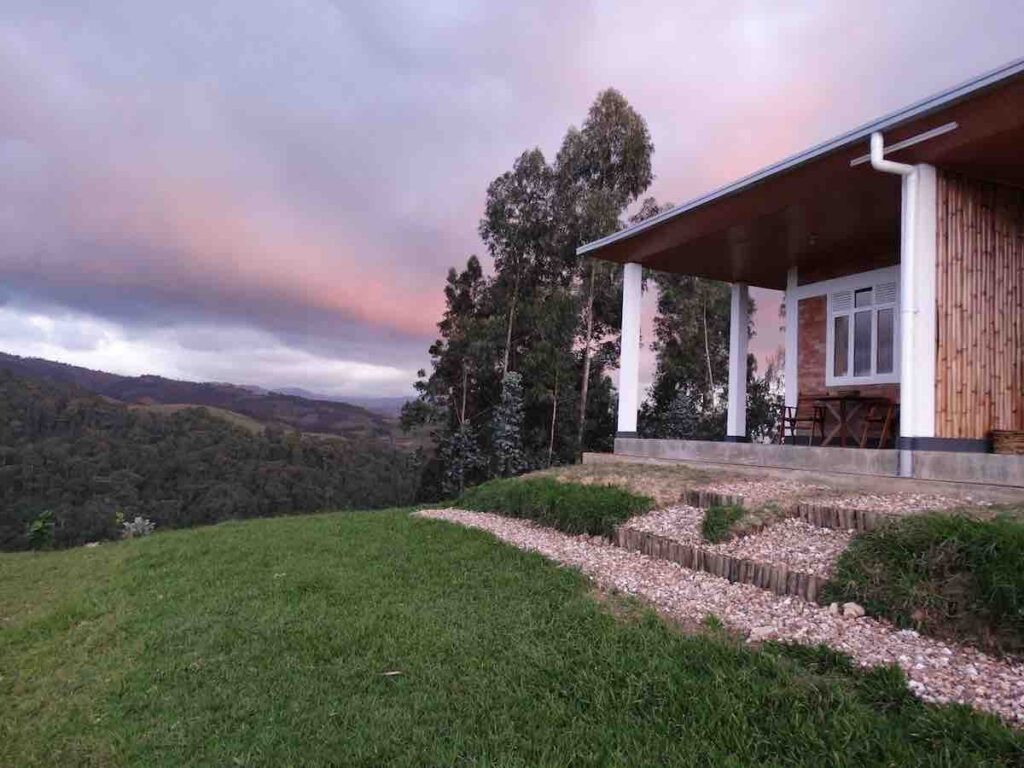
For travelers who want to stay close to the forest, a small luxury lodge on the park’s edge offers private chalets with forest views, and our understanding is that capacity is very limited, so booking roughly a month or more ahead is essential. Alternatively, many travelers base themselves in Rubavu or on the Lake Kivu shoreline, where lakeside hotels offer comfort, swimming, and sunset views, and then drive to the park for the day.
If you are combining Gishwati with gorilla trekking, you can stay in the volcano region at lodges such as Bisate Lodge, Virunga Lodge, or Sabyinyo Silverback Lodge, each with a very different character, then travel west to Lake Kivu and Gishwati. The roughly one-hour distance between Rubavu and the volcano region makes the route a natural loop. Our guide will tailor the order based on weather, permits, and your energy levels.
How to Plan a Trip to Gishwati Mukura National Park
To plan a visit to Gishwati Mukura National Park, choose your travel dates, confirm primate permits through an operator, arrange accommodation near the park or in Rubavu, plan your route from Kigali, and prepare for muddy forest conditions. We recommend booking three to six months ahead.
Step 1: Choose Your Dates and Main Priorities
Decide whether Gishwati is your main focus or an add-on. For most travelers, it complements a gorilla trek in Volcanoes National Park or a chimp trek in Nyungwe.
Step 2: Secure Permits
You can arrange permits for Gishwati and other primate activities through RDB or your operator. We check availability and confirm prices for your dates before you commit.
Step 3: Book Accommodation Early
Because lodging near the park is limited, reserve early. If you plan to combine Gishwati with the volcano region, lock in gorilla trekking lodges at the same time.
Step 4: Plan Transport
Allow two to three hours for the road from Kigali. We use private vehicles with expert drivers who are also trained guides, and we can arrange charter flights if time is limited.
Step 5: Check Entry and Health Requirements
Rwanda’s entry requirements, including visas, change from time to time. Many visitors can obtain a visa on arrival or online, but you should check the latest rules for your nationality. Our safari planning guide summarizes the essentials. A yellow fever certificate may be required depending on your travel history, and malaria precautions are advised. Consult your doctor several weeks before departure.
Step 6: Pack for the Forest
Bring waterproof jackets, sturdy waterproof hiking boots, gaiters, lightweight long trousers, gloves for holding branches, a daypack, binoculars, insect repellent, and a walking stick. We usually provide porters on request.
Who Should Visit Gishwati Mukura National Park?
Repeat Africa Travelers
Gishwati is ideal for travelers who have already enjoyed the classic safari circuits and want something quieter and more meaningful. Our guide on Rwanda safaris gives an overview of the wider options.
Couples and Honeymooners
Couples will enjoy the quiet, cool, intimate atmosphere and the chance to pair a forest walk with relaxation on Lake Kivu. Our honeymoon safaris show how we blend adventure with romance.
Families
Families with older children who enjoy walking and nature will find Gishwati rewarding, but the terrain is steep and age limits apply to many primate activities, so check requirements. Our family luxury safari guide explains how we plan trips for children.
Conservation-Minded Travelers
If you want your travel to support a real conservation story, Gishwati is one of the best examples in East Africa. Fees support reforestation and communities, and your visit helps demonstrate that protecting the forest is worthwhile.
Photographers
Forest photography is challenging, with low light and fast-moving subjects, but rewarding. A fast lens, high ISO capability, and patience are essential.
Responsible Travel in Gishwati Mukura
Responsible travel in Gishwati Mukura means following park rules, keeping a safe distance from primates, staying on trails, supporting community-owned businesses, minimizing plastic, and choosing operators who give back to conservation.
The park is young and fragile, and visitors play a role in its future. Wearing a mask if you have a cold or flu is recommended, because chimpanzees and other primates are susceptible to human respiratory diseases. Keep to the trails, take only photographs, and respect the instructions of rangers. Spending money in local communities, whether on crafts, meals, or guide services, helps convince residents that the forest is worth protecting.
Our approach to private, small-group travel is designed to keep impact light and benefits local. You can learn more about our philosophy and team on our About Us page.
Why Plan Your Rwanda Trip with Luxury Safaris in Tanzania?
We design private, tailor-made safaris led by expert local guides, with more than 15 years of experience and over 10,000 happy travelers. As an ATOL-protected boutique operator, we choose only luxury lodges and camps, and we manage every permit, transfer, and detail from enquiry to departure.
We know East Africa as a connected region, which means we can combine Rwanda with Uganda’s Bwindi Impenetrable Forest, Tanzania’s chimp forests at Gombe and Mahale, or a Zanzibar beach finish. For those who want a truly bespoke plan, our overview of custom-built private safari itineraries explains how we tailor each trip.
Ready to explore Gishwati Mukura National Park? Share your dates and wish list, and we will craft a private itinerary with a clear quote. Contact our safari experts today.