
Frequently Asked Questions about Luxury Safaris in Tanzania: Expert Answers
Expert answers to the most frequently asked questions about luxury safaris in Tanzania: cost, best time, lodges, visas, and more. Plan yours with our experts.
Planning a luxury safari in Tanzania raises a very particular set of questions. How much does it really cost? When should you go to see the Great Wildebeest Migration? Is a private, tailor-made journey worth the extra cost? What will the lodges be like when the nearest town is a four-hour flight away? Over more than 15 years of designing private safaris across East Africa, and after welcoming more than 10,000 happy travelers, we have heard every one of these questions, usually in the first week of planning.
This FAQs guide gathers the answers in one place. We have organized them by theme, so you can jump to costs, timing, lodges, travel documents, or the questions that matter most to couples, families, first-timers, and seasoned Africa hands. Each answer starts with a short, direct response and then adds the detail we would give you over a call with one of our consultants.
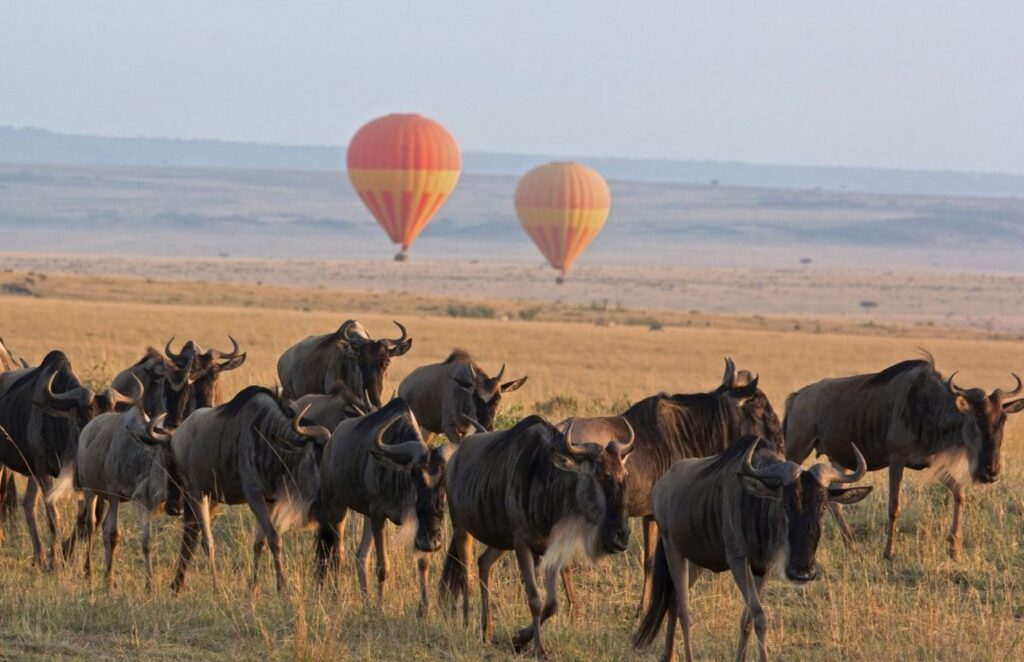
A luxury safari in Tanzania is a private, tailor-made wildlife journey with your own expert guide and vehicle, staying in small, high-end lodges and camps in parks such as the Serengeti, Ngorongoro Crater, Tarangire, Nyerere, and Ruaha. Most travelers spend 7 to 10 days on safari, often adding a beach stay in Zanzibar. The best time to go depends on what you want to see, but the dry season from June to October is the most popular for wildlife viewing.
Prefer to talk it through?
Speak with our Tanzania safari experts and we will answer your questions and sketch a private itinerary around your dates.
The Basics: What a Luxury Safari in Tanzania Really means.
What makes a safari “luxury” in Tanzania?
A luxury safari combines a private vehicle and expert guide with small, high-end lodges or camps, flexible schedules, and seamless logistics. You are not squeezed into a minibus with strangers or tied to a fixed itinerary. The luxury is as much about space and time as it is about thread counts. Our guides know where the cats were last night and when the light is best, and they plan your day around what you want to see. Lodges typically have only a handful of rooms or tents, private plunge pools or decks, gourmet cooking, and attentive, personal service. Our itineraries use luxury lodges only, and every journey is tailor-made.
Why is Tanzania one of Africa’s top luxury safari destinations?
Tanzania offers scale, variety, and some of the continent’s most famous wildlife spectacles. The Serengeti covers roughly 14,750 square kilometers and hosts the Great Wildebeest Migration, while the Ngorongoro Crater, a UNESCO-listed caldera some 610 meters deep with a 260-square-kilometer floor, shelters around 25,000 animals. Add Tarangire’s elephants, the wild southern parks of Nyerere and Ruaha, chimpanzees in the west, and the beaches of Zanzibar, and you have an unusually complete menu. We explore the full case in our article on why Tanzania is Africa’s top luxury safari destination. Few countries let you move from open savannah to a volcanic crater to a coral beach in one trip.
What is the difference between a private safari and a group safari?
On a private safari, the vehicle, guide, and itinerary are exclusively yours, whereas group safaris share both with other travelers. Private travel means you can linger for an hour with a leopard, start before dawn for a river crossing, or skip a stop that does not interest you. It also lets us match the pace to children, photographers, or couples who prefer long, lazy mornings. Private journeys cost more, but for the guests we serve, flexibility is the main reason to travel this way. We build our custom private safari itineraries around that principle.
How many days do I need for a luxury safari in Tanzania?
We recommend at least 7 days on safari and 8 to 10 days if you want to combine two or three regions without rushing. A shorter trip can be rewarding, but game drives and transfers use up a lot of time, so brief itineraries leave little room for surprises. Seven nights lets you pair the Serengeti with the Ngorongoro Crater and perhaps Tarangire. Ten to fourteen nights allows a northern and a southern park, or a safari followed by a beach stay in Zanzibar. We never recommend squeezing too many parks into too few days, because a slower rhythm almost always produces better wildlife encounters.
How far in advance should I book?
For peak seasons, we suggest booking 9 to 12 months ahead. The small camps that make a safari special often have fewer than 20 rooms, and the best ones fill early, particularly for July to October and the calving season in January and February. If you want specific lodges in the northern Serengeti for the Mara River crossings, earlier is better still. Last-minute trips are sometimes possible, especially in the green season, but your choice narrows. Contact us as soon as your dates are firm, and we will hold the best availability while you finalize your plans.
Costs, Inclusions, and Booking
How much does a luxury safari in Tanzania cost?
Luxury safaris in Tanzania typically range from roughly US$700 to well over US$2,000 per person per night at top camps in high season, with the final cost depending on the lodges, the season, group size, and how you travel between parks. Fly-in itineraries and exclusive-use villas sit at the upper end, while green-season stays at lodges are usually more modest. A 10-day private trip with premium lodges and domestic flights can therefore represent a significant investment, but it generally includes accommodation, meals, guiding, park fees, and transfers. We never quote a generic price, because the right figure depends entirely on your choices. We provide a transparent, itemized proposal so you can see exactly where the money goes.
What is included in the price of a luxury safari?
Most luxury safari packages include accommodation, meals, guided game drives, park and conservation fees, private transfers, and often internal flights, but the price varies. Drinks, premium activities such as hot air balloon flights, international flights, visas, insurance, and tips are frequently extra. At the very top camps, the rate may be fully inclusive of drinks and laundry. When we send a proposal, we list every inclusion and exclusion, so you can compare it fairly with any other quote. If something is unclear, ask us, as hidden extras are the most common source of disappointment.
Are there extra costs I should budget for?
Yes. Beyond the main package, budget for international flights, visas, travel insurance with medical evacuation, tips, optional activities, and personal purchases. A hot air balloon safari over the Serengeti, for example, is usually a separate booking. You may also want to set aside money for souvenirs and, if you are visiting the coast, for excursions. We normally include park fees in our itineraries, but we confirm the details on each quote because fee structures change. Planning for these extras upfront avoids surprises later.
How much should I tip on a safari in Tanzania?
Many operators suggest tipping roughly US$15 to US$25 per person per day for a private driver-guide and about US$5 to US$15 per person per day for the camp or lodge team, which is usually placed in a communal tip box. US dollars are the preferred tipping currency, and notes should be clean, unmarked, and recent, because torn or older notes are often refused. Tipping is discretionary and reflects the quality of service. We provide detailed guidance in your pre-departure information so that you know what is customary. It is a sensible idea to carry plenty of small denominations such as $5, $10, and $20 notes.
How do I book a luxury safari with Luxury Safaris Tanzania?
You contact us, tell us your dates, interests, and budget, and we design a private, tailor-made proposal, which you can refine until it is perfect before confirming with a deposit. Here is the process we follow.
- Tell us about your trip. Share your travel dates, group size, ages of any children, and what you most want to see or do.
- Receive a tailor-made proposal. One of our consultants designs a private itinerary with lodges, flights, and activities, along with a transparent price.
- Refine the details. We adjust the route, lodges, and pace until it feels right, and we check availability at each property.
- Confirm and pay a deposit. Once you are happy, you secure the trip with a deposit, and the balance is due closer to departure. Our UK bookings are ATOL-protected.
- Prepare for departure. We send visa, health, and packing guidance; arrange all transfers; and introduce your guide.
- Travel with support. An expert local guide meets you on arrival, and our team remains on call throughout your journey.
When to Go and Where to Go
What is the best time to go on a luxury safari in Tanzania?
The best time for most travelers is the dry season from late June to October, when vegetation thins, animals gather around water, and roads are easier to travel. January to February is another excellent period, particularly for the calving season in the southern Serengeti. The long rains fall mainly in April and May, when heavy downpours can make roads muddy and some camps close, but the landscape is green, and the lodges are quiet and good value.
When and where is the Great Wildebeest Migration?
The migration is a continuous year-round circuit of more than a million wildebeest, along with zebra and gazelle, following the rains through the Serengeti-Mara ecosystem, and its location shifts through the year. From January to March, herds are on the southern plains and Ndutu area for calving, with peak births in February. Between April and June, they trek north through the central Serengeti and the western corridor, with the first Grumeti River crossings occurring around June. From July to October they are in the northern Serengeti and Mara River region, with August typically the peak for crossings, then they drift south again in November and December. Exact timing varies with the rains, so we monitor movements closely.
Is the green season worth considering?
Yes, if you value fewer vehicles, lush scenery, dramatic skies, and lower rates, and you are comfortable with some rain. The wettest months are April and May, when heavy downpours are common, and some remote camps close. November and early December bring short rains, and the landscape turns emerald, with newborn animals and migratory birds. Mornings are often clear, with rain arriving in the afternoon, and photographers love the light. We help guests decide which parks and lodges shine in the green season and which ones to avoid.
Which national parks should I visit in Tanzania?
First-time visitors usually combine the Serengeti, Ngorongoro Crater, and Tarangire, known together as the northern circuit, while repeat travelers often add the southern parks of Nyerere and Ruaha. The Serengeti delivers endless plains, big cats, and the migration, and the Ngorongoro Conservation Area offers dense wildlife in a volcanic caldera. Tarangire National Park is renowned for elephants and ancient baobabs, especially in the dry season. We mix and match them to suit your interests and explain what each offers when designing your itinerary.
What is the difference between the northern and southern circuits?
The northern circuit is more famous, with the Serengeti, Ngorongoro Crater, and Tarangire, while the southern circuit is wilder and quieter, with Nyerere National Park and Ruaha National Park. The north offers the migration and the highest concentration of big-name wildlife. The south offers boat safaris, walking safaris, wild dogs, and a more secluded atmosphere, though visitors usually reach it by light aircraft. Many of our repeat guests choose the south for the sense of space.
| Feature | Northern Circuit | Southern Circuit |
| Main parks | Serengeti, Ngorongoro, Tarangire, Lake Manyara | Nyerere, Ruaha, Mikumi |
| Highlights | Great Migration, Ngorongoro Crater, big cats | Boat safaris, walking safaris, wild dogs, remote wilderness |
| Atmosphere | Iconic and well established | Wild, uncrowded, and exclusive |
| Best for | First-timers, migration seekers, families | Repeat travelers, couples, nature purists |
| Typical access | Road and fly-in | Mostly fly-in |
Where can I see the Big Five in Tanzania?
All of the Big Five (lion, leopard, elephant, buffalo, and rhino) can be seen in Tanzania, with the Ngorongoro Crater and the Serengeti the best-known places to find them together. The crater is one of the few places in East Africa where you have a realistic chance of seeing the endangered black rhino. Lions and leopards are widespread across the Serengeti, while Tarangire is outstanding for elephants. Nyerere and Ruaha add excellent chances of predators away from the crowds.
Lodges, Activities, and Daily Life on Safari
What are the best luxury lodges and camps in Tanzania?
The best lodge depends on location and style, but standouts include Singita Sasakwa Lodge in the Grumeti area of the Serengeti, &Beyond Ngorongoro Crater Lodge, Mbali Mbali Soroi Serengeti Lodge, Tarangire TreeTops by Elewana, The Retreat Selous in Nyerere, Jabali Ridge by Asilia in Ruaha and Greystoke Mahale Camp on Lake Tanganyika. Each offers a different atmosphere, from grand and historic to barefoot and tented. We only work with luxury lodges and camps that meet our standards, and we visit them regularly. For a more profound look at the central and northern region, see our guide to the best luxury lodges in Serengeti National Park.
What does a typical day on safari look like?
A typical day starts before sunrise with coffee and a morning game drive, followed by a hearty breakfast and a rest, then an afternoon drive or activity, and ends with sundowners and a candlelit dinner. Early mornings and late afternoons are when animals are most active, so many guests relax or swim at midday. Some days include a bush breakfast or a picnic lunch in the park. Our guides adapt the timing to what you want to see, and you never have to join every activity. The rhythm is gentle, but it tends to be full of surprises.
Is a hot air balloon safari worth it?
For many guests, a dawn balloon flight over the Serengeti is a highlight, offering a quiet bird’s-eye view of herds and landscape followed by a champagne bush breakfast. Flights usually last about an hour and depart at first light, so you need an early start. Minimum ages are generally around 6 to 7 years, depending on the operator. Wildlife visibility varies by season, but the experience is memorable in any month.
Can I go on a walking safari or a night drive?
Walking safaris and night drives are generally not permitted inside Tanzania’s national parks, such as the Serengeti, but they are offered in certain private concessions and in specific parks and reserves, including parts of the southern circuit. Armed guides lead walking safaris, and many lodges require guests to be at least 12 to 16 years old. Night drives let you see nocturnal species such as civets, genets, and leopards that are rarely visible by day. Availability depends on your chosen lodge and area, so tell us what you would like, and we will select properties that offer it.
What is the difference between a luxury lodge and a luxury tented camp?
A lodge is usually a permanent building with rooms or suites, while a luxury tented camp uses spacious canvas tents that are fully furnished with proper beds, en suite bathrooms, and often private decks. Both can be equally luxurious, so the choice is about atmosphere. Lodges often feel grand and offer pools, spas, and larger public spaces, while tented camps put you closer to the sounds of the bush at night. Some of the most exclusive camps in the Serengeti move seasonally to follow the migration, which keeps you close to the action. We match the style to your taste and your travel dates.
Can I take a private photographic safari?
Yes, and it is one of the most rewarding ways to travel. A private photographic safari gives you a dedicated vehicle with enough space for your gear, a guide who understands light and positioning, and the freedom to stay with a sighting for as long as you need. Early morning and late afternoon provide the best light, and the dry season offers cleaner views as vegetation thins. Our photography safaris can be paired with specialist guides, and we advise on the best parks for your subjects, from migration crossings to elephants against the baobabs. Tell us your camera setup and your goals, and we will plan accordingly.
Should I fly between parks or drive?
Flying saves time and is the more comfortable option for luxury travel, while driving offers scenery and flexibility for shorter distances. Many of our guests fly between the northern parks and almost always fly to Nyerere and Ruaha, since overland journeys in the south are long. Light aircraft have strict luggage limits, usually around 15 to 20 kg in soft bags, so packing carefully matters. We build our high-end fly-in safari packages around this approach and handle all the logistics.
Can I bring a drone or professional camera equipment?
You can bring professional cameras and long lenses, but drones require official permits and are restricted in national parks, so we advise leaving them at home. Photographers should bring a 400 to 600 mm lens, spare batteries, and a beanbag for stabilizing on the vehicle. Dust is a factor in the dry season, so a lens cloth and protective bag are worthwhile. We can arrange a vehicle with window seats or even a private photographic setup for serious enthusiasts. Please let us know your needs, and we will plan accordingly.
Are there rules I should know about in Tanzania’s national parks?
Yes, the main rules are to stay in your vehicle unless your guide says otherwise, keep to the tracks, observe the park speed limits, and never feed or disturb wildlife. Tanzania has also banned plastic carrier bags, so travelers are asked not to bring them into the country. Park authorities regulate vehicle numbers around sightings and enforce fees, and the Ngorongoro Crater has time-limited visits. Your guide will provide a thorough briefing, and we will also include the essentials in your pre-departure notes. These rules protect both the animals and your safety.
Questions from Couples, Families, First-Timers, and Repeat Travelers
Is Tanzania a good destination for a honeymoon?
Tanzania is one of the world’s most romantic safari destinations, thanks to private villas, bush dinners, balloon flights, and seamless beach extensions. A classic honeymoon starts with a few nights in the Serengeti and ends with relaxation in Zanzibar or a private island. Many couples love the intimacy of small camps with only a few tents. Our specialists plan every detail, from private dinners to special touches on arrival.
Is a luxury safari in Tanzania suitable for families with children?
Yes, with the right planning. There is no legal minimum age for game drives, but many lodges set their limits, and walking safaris, balloon flights, and primate trekking have age restrictions. Families benefit from private vehicles so that the schedule can follow the children’s energy, and many lodges offer junior ranger programs and family suites. Malaria precautions and distances are the main considerations for young children, so we recommend older children for the longest itineraries.
Is a luxury safari a good idea for first-time visitors to Africa?
Absolutely. A first safari benefits enormously from expert guiding and a well-paced itinerary, and Tanzania’s classic northern circuit is ideal for beginners. We typically suggest the Serengeti, Ngorongoro Crater, and Tarangire, followed by a beach stay if you wish. A private guide interprets what you see, helps you to spot animals, and makes sure you are comfortable. Do not worry about the unfamiliar: we handle the logistics, and our team is available throughout.
I have been on safari before. What should I consider this time?
Repeat travelers often enjoy quieter, wilder, or more specialized experiences, such as the southern parks, remote western Tanzania, walking safaris, or an exclusive private villa. You might choose different seasons, such as the green season, or follow the migration to a less visited region. Our luxury safaris in Tanzania for repeat travelers explain how we build such itineraries. Tell us what you have already seen, and we will design something genuinely new. Ruaha and Nyerere are especially popular with seasoned guests.
Practicalities: Visas, Health, Safety, and Packing.
Do I need a visa to visit Tanzania?
Most visitors need a visa, which can be obtained online through the official immigration portal before travel or on arrival at major airports. Fees commonly range between US$50 for a single-entry visa and US$100 for a multiple-entry visa, depending on nationality, with some travelers such as US citizens usually paying the higher fee. Your passport should normally have at least six months of validity and blank pages. Requirements change, so we always advise checking the latest official guidance. We send guests the current information with their travel documents.
What vaccinations and malaria precautions do I need?
No vaccinations are universally required to enter Tanzania, but a yellow fever certificate is required if you arrive from a country where the disease is endemic. We strongly recommend discussing malaria prophylaxis and routine vaccinations such as hepatitis A and typhoid with your doctor or a travel clinic several weeks before departure. Use insect repellent, wear long sleeves in the evening, and sleep under mosquito nets. Our specialists can point you to the right questions to ask your clinic, but medical decisions are yours and your doctor’s. Always carry medications in your hand luggage.
Is Tanzania safe for tourists?
Tanzania is generally safe for safari visitors, and lodges and camps are well run and secure. The main risks are practical rather than dramatic: sensible health precautions, respect for wildlife, and common-sense care of valuables in towns. Your guide is trained in first aid and bush safety, and we supply detailed briefings. We recommend avoiding isolated areas on your own, particularly at night. Check your government’s current travel advice before you go, and take out comprehensive travel insurance.
What should I pack and wear on safari?
Pack light, neutral-colored layers such as khaki, olive, and beige; a warm jacket for early mornings; a wide-brimmed hat; sunglasses; sunscreen; and comfortable closed shoes. Avoid dark blue and black, which can attract tsetse flies in some areas, and avoid bright colors that may spook wildlife. Light aircraft require soft-sided bags with a weight limit that is typically in the region of 15 to 20 kg. Bring binoculars, a refillable water bottle, and a small torch. We provide a tailored packing list for each journey.
Do I need travel insurance?
Yes. Comprehensive travel insurance that includes medical evacuation, trip cancellation, and baggage cover is essential for a remote destination. Many insurers require you to buy it soon after your first deposit to cover cancellation. Check that your policy covers the activities you plan, such as balloon flights or walking safaris. We also recommend checking whether your lodges are linked to evacuation services. Our team will advise you on what to look for.
Can I combine my safari with a beach holiday in Zanzibar?
Yes, and it is one of our most popular combinations. A classic itinerary pairs a week of safari with three to five nights on the coast, with a short flight from the Serengeti or Arusha to Zanzibar. Zanzibar’s beaches are at their best in the dry season from June to October, when temperatures range between about 28 and 34 degrees. Our guide to Zanzibar beach holidays explains the best areas, and we can also recommend quieter islands for a more private feel.
Can I climb Kilimanjaro as well as go on safari?
Yes. Mount Kilimanjaro, Africa’s highest peak at 5,895 meters, is in northern Tanzania and is often combined with a safari. Most travelers climb first and then recover on safari, since game drives are a gentle contrast after a demanding trek. Climbs take roughly 6 to 9 days depending on the route.
Can I add chimpanzee or gorilla trekking?
You can see wild chimpanzees in western Tanzania at the Gombe and Mahale Mountains, and many guests also add mountain gorilla trekking in Rwanda or Uganda. Chimpanzee tracking is a remote and rewarding add-on, usually reached by light aircraft. Gorilla trekking has a strict minimum age of 15 and requires permits booked well in advance. We can build multi-country itineraries combining safari, primates, and beach.
Is Wi-Fi and mobile coverage available on safari?
Most luxury lodges offer Wi-Fi in common areas or rooms, but speeds can be slow, and coverage in remote parks is limited. Mobile signals are patchy outside towns, and some camps run on solar power. We recommend treating the safari as a chance to unplug while arranging any essential contacts in advance. If you need regular connectivity for work, please let us know so that we can choose lodges accordingly. Bring a power bank and a universal adapter.
How do I get to Tanzania?
Most international visitors fly into Kilimanjaro International Airport near Arusha for northern safaris, Julius Nyerere International Airport in Dar es Salaam for southern parks, or Zanzibar’s airport for the coast. Major airlines connect through hubs such as Nairobi, Addis Ababa, Doha, Amsterdam, and Istanbul. Our team arranges airport meet-and-greets and private transfers. If you are combining several regions, we plan flights so that your route is efficient. We can also advise on the best airline connections from the US, UK, Europe, and Australia.