
Cape Town Holidays: The Complete Luxury South Africa Travel Guide.
Cape Town holidays are private, tailor-made journeys to South Africa’s “Mother City,” built around Table Mountain, the Victoria & Alfred (V&A) Waterfront, Robben Island, and the vineyards of the nearby Cape Winelands, with whale watching, shark cage diving, and penguin colonies rounding out the experience. A well-paced Cape Town holiday runs 4 to 7 days as a standalone city break, or 10 to 16 days when you extend it into a Big Five safari in South Africa, or fly north to layer in a Tanzania safari and a Zanzibar beach finale.
We’ve spent more than 15 years designing private, upscale African journeys for over 10,000 travelers from the US, UK, Europe, and Australia, and Cape Town is one of the destinations our repeat clients ask us to weave into their itineraries most often. This guide covers exactly what we tell our clients: when to go, what to do, where to stay, how many days to allow, and, because we are, at heart, a safari company, how to combine your Cape Town holiday with the wild landscapes we know best. You can read more about our approach and our team on our About Us page.
| Cape Town Holidays: Quick Facts | |
| Country | South Africa |
| Nearest major airport | Cape Town International Airport (CPT) |
| Currency | South African Rand (ZAR) |
| Language | English is widely spoken; 11 official languages are national. |
| Time zone | SAST, GMT+2 (no daylight saving) |
| Malaria risk | Malaria-free, safe for young children |
| Visa (US/UK/EU/AU/NZ/Canada) | Visa-free for stays up to 90 days |
| Ideal trip length | 4–7 days standalone, or 10–16 days combined with a safari |
Why Cape Town Belongs on Every Luxury Africa Itinerary.
Cape Town is one of the only cities on earth where you can hike a table-topped mountain in the morning, taste a Cape Winelands Pinotage by lunch, and watch the sun set over the Atlantic from a private rooftop by evening. Table Mountain rises more than 1,000 metres directly above the city bowl and is recognised as one of the New 7 Wonders of Nature, but its appeal runs far deeper than just one landmark.
Unlike much of the rest of the country, Cape Town and the Western Cape are malaria-free, which makes the region an effortless, low-stress addition for families travelling with young children. It is also, quite simply, one of the most walkable, food-obsessed, design-forward cities in Africa, with a restaurant scene that rivals London or Sydney and a wine culture that dates back more than 350 years. For travellers weighing up a full luxury South Africa safari, Cape Town is almost always the bookend, opening or closing a trip that also includes the Big Five in the bush.
When Is the Best Time to Visit Cape Town?
The best time to visit Cape Town is during the South African summer, from November to March, when days are warm, dry, and long, and the city’s beach and restaurant culture is at its peak. If whale watching is a priority, aim instead for June to November, when southern right whales arrive in Walker Bay off Hermanus, with numbers peaking around August and September. Unlike Kruger or the Tanzania safari circuit, Cape Town’s rain falls mostly in winter, not summer, so its seasons run in reverse to those of the destinations most travellers pair it with.

| Season | Months | Weather | Best For |
| Summer | Dec – Feb | Hot, dry, breezy ‘Cape Doctor’ wind | Beach days, outdoor dining, long evenings |
| Autumn | Mar – May | Mild, calmer winds, golden light | Fewer crowds, wine harvest, best value |
| Winter | Jun – Aug | Cool and rainy, occasional storms | Whale watching from Hermanus, cosy Winelands lodges |
| Spring | Sep – Nov | Mild, fresh, wildflowers bloom. | Kirstenbosch blooms, tail-end whale season |
If you’re combining Cape Town with a safari further north, timing gets more interesting. Tanzania’s dry season (June to October) and Cape Town’s whale-watching season overlap almost perfectly, which is why so many of our clients build a single itinerary that opens with a few days in Cape Town before flying up to the Serengeti or the Ngorongoro Crater. For the full month-by-month breakdown of game viewing further north, see our guide to the best time to visit Tanzania.
How Many Days Do You Need for Cape Town Holidays?
Most travellers need a minimum of 4 full days in Cape Town to comfortably see Table Mountain, the Cape Peninsula, and Robben Island and at least one day in the Winelands without feeling rushed. First-time visitors and couples on honeymoon often prefer 5 to 7 days, which allows time for whale watching or shark cage diving as an add-on, plus a slower pace around the V&A Waterfront and Atlantic Seaboard beaches.
A Sample First-Time Cape Town Framework
- Day 1: Arrive, settle into your hotel, and take a sunset at Camps Bay or Signal Hill.
- Day 2: Table Mountain Aerial Cableway in the morning, Kirstenbosch National Botanical Garden, or Bo-Kaap in the afternoon.
- Day 3: Full-day Cape Peninsula tour: Chapman’s Peak Drive, Cape of Good Hope, and the African penguin colony at Boulders Beach.
- Day 4: Robben Island ferry tour in the morning, V&A Waterfront shopping, and harbor dinner in the evening.
- Day 5: Full-day wine tasting in Stellenbosch and the Cape Winelands.
- Day 6–7 (optional): Whale watching in Hermanus, shark cage diving in Gansbaai, or simply more time at leisure.
Ready to extend further? Most of our clients then fly on to a Big Five safari in Kruger or Sabi Sands or connect via Johannesburg to Tanzania for the Great Wildebeest Migration. Just let us know how many days you have, and we’ll build the exact pacing around your dates.
Top Things to Do in Cape Town
Ride the Table Mountain Aerial Cableway.
The rotating cable car reaches the summit plateau in around five minutes, and every passenger gets a full 360-degree view of the city, the Atlantic seaboard, and Robben Island on the way up. Operating hours shift seasonally, running later into the evening in summer for sunset trips, and we always recommend booking tickets in advance, as same-day slots sell out quickly during peak season (December to February). If you’re an experienced hiker, Platteklip Gorge is the most direct route to the top on foot, taking roughly two to three hours.
Drive from the Cape Peninsula to Cape Point.
A full-day loop along Chapman’s Peak Drive, one of the most scenic coastal roads on the continent, leads to the Cape of Good Hope Nature Reserve and the windswept lookout at Cape Point, where the cold Atlantic and warmer Indian Ocean currents meet. En route, the African penguin colony at Boulders Beach in Simon’s Town is a highlight for families, letting you walk boardwalks within a few meters of nesting penguins in their natural habitat.
Tour Robben Island
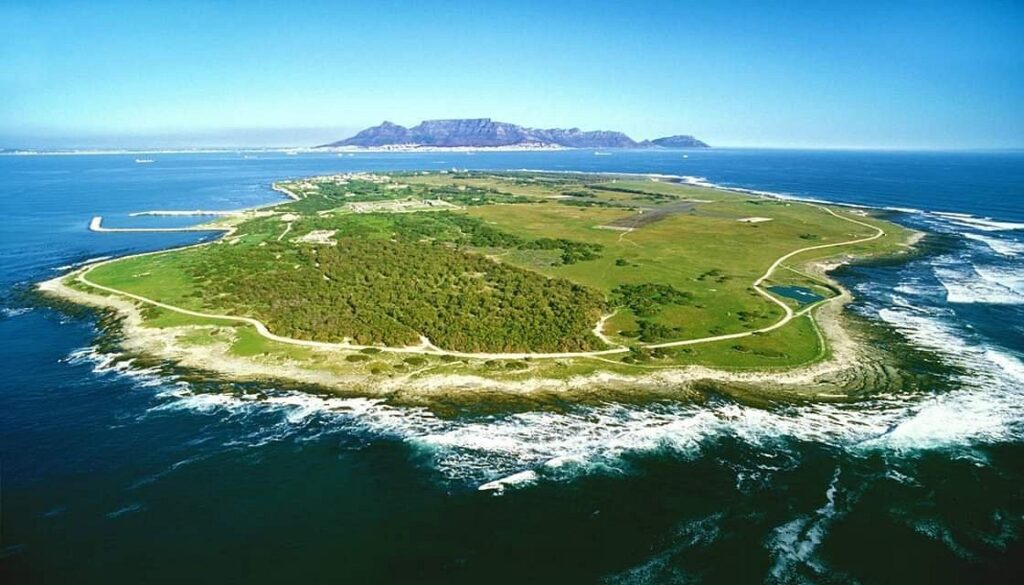
A ferry from the V&A Waterfront takes roughly 30 minutes to reach Robben Island, the maximum-security prison where Nelson Mandela spent 18 of his 27 years in custody during apartheid. Tours are led by former political prisoners or trained guides and combine a bus tour of the island with a walk through the prison block, offering one of the most moving history lessons anywhere in South Africa. Ferries run on a set schedule and sell out well ahead of peak season, so we recommend booking as soon as your dates are confirmed.
Explore the V&A Waterfront.
South Africa’s most-visited destination combines a working harbour with high-end shopping, seafood restaurants, the Two Oceans Aquarium, and the Zeitz Museum of Contemporary Art Africa (MOCAA), all within easy walking distance of most luxury hotels in the area. It’s also the departure point for Robben Island ferries and sunset catamaran cruises across Table Bay.
Taste Your Way Through the Cape Winelands

Stellenbosch, Franschhoek, and Constantia are the oldest wine-producing regions in the Southern Hemisphere, sit within an hour of the city, and produce some of the finest Chenin Blanc, Pinotage, and Cap Classique sparkling wines in the world. We cover the subject in far more depth on our dedicated Stellenbosch and the Winelands guide, including which estates pair best with a private lunch.
Go Whale Watching or Shark Cage Diving
Hermanus, roughly 90 minutes from Cape Town, is widely regarded as one of the best land-based whale watching spots on earth, with southern right whales visible from the cliff path in season (June to November). For an adrenaline add-on, Gansbaai, further along the same coast, is one of the world’s most reliable spots for diving in a cage with massive white and bronze whaler sharks.
Discover Bo-Kaap and Cape Town’s Cultural Heritage
The brightly colored houses of the Bo-Kaap, historically home to Cape Town’s Cape Malay community, sit on the slopes of Signal Hill and are among the most photographed streets in Africa. A short walk away, the District Six Museum tells the story of a vibrant, multiracial neighborhood forcibly demolished under apartheid-era policy, offering essential context alongside a visit to Robben Island.
Where to Stay: The Best Luxury Hotels for Cape Town Holidays
Where you base yourself shapes the whole trip. The V&A Waterfront puts you within walking distance of restaurants, the Robben Island ferry, and harbour views, and is home to properties such as the five-star Cape Grace, which is set on its own private pier with sweeping views of Table Mountain and the yacht marina. The Atlantic Seaboard neighborhoods of Bantry Bay, Clifton, and Camps Bay favor ocean-facing infinity pools and sunset views, with properties like Ellerman House and the Twelve Apostles Hotel and Spa perched directly above the coastline. In the City Bowl, heritage hotels such as the Belmond Mount Nelson and design-led properties like The Silo Hotel at the Zeitz MOCAA put you closer to Kirstenbosch, the city center, and Table Mountain’s cable station.
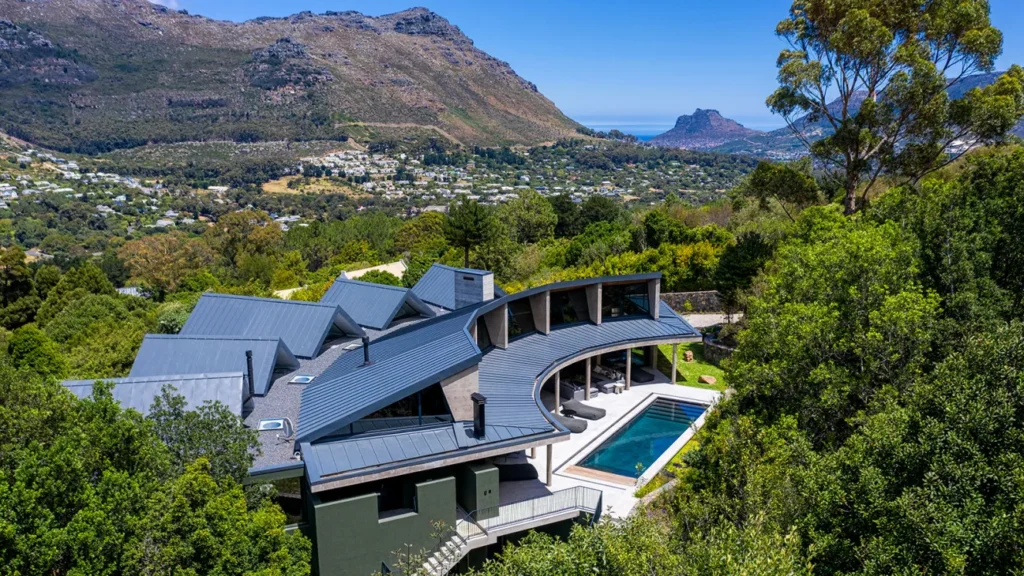
Because we design every trip privately rather than sell fixed packages, we match your hotel to your priorities, whether that’s a honeymoon suite with a private plunge pool, a family-friendly property near the waterfront, or a Winelands estate for the final night before you fly home. It’s the same tailor-made approach we bring to lodge selection across our Tanzania safari itineraries, so your Cape Town nights and your safari nights feel like one continuous trip rather than two separate bookings.
Getting to Cape Town and Getting Around
Cape Town International Airport (CPT) receives direct long-haul flights from several European and Middle Eastern hubs, as well as frequent connections from Johannesburg, which is a roughly two-hour flight and serves as the gateway for most onward safari connections. Most hotels in the V&A Waterfront and along the Atlantic Seaboard are within 20 to 30 minutes of the airport, and we arrange private transfers for every client so there’s no need to negotiate a taxi rank after a long-haul flight.
Within the city, a private driver or a self-drive rental car is the easiest way to reach sights like Cape Point, Boulders Beach, and the Winelands, since public transport doesn’t cover these routes well. Ride-hailing apps work reliably within the city itself for shorter hops between the Waterfront, City Bowl, and Atlantic Seaboard. For full-day excursions such as the Cape Peninsula loop or a Stellenbosch wine tour, we typically arrange a private guide and vehicle so you can stop wherever a view or a cellar door catches your eye, rather than sticking to a fixed coach schedule.
How to Combine Your Cape Town Holiday With a Tanzania Safari
Cape Town pairs beautifully with a Tanzania safari because the two destinations couldn’t feel more different, yet connect easily by air, usually routing through Johannesburg or Nairobi. A typical combined itinerary opens with 4 to 5 days in Cape Town, flies north to the Serengeti National Park and the Ngorongoro Crater for private game drives among the Big Five, and finishes with a few days unwinding on the beaches of Zanzibar. It’s a rhythm we build often: city and wine culture, then wilderness, then the coast.
For travellers whose main goal is witnessing the Great Wildebeest Migration, we recommend timing the safari leg for June through October or January through March, when river crossings and calving season respectively put you in the thick of the action. Honeymooners often ask us to weave Cape Town into a longer Tanzania romantic itinerary; our Serengeti honeymoon safari guide is a useful starting point for that conversation. Adventure travellers sometimes add a Kilimanjaro trek to the same trip, using Cape Town as a relaxed bookend before or after the climb.
Our 14-day Serengeti, Kilimanjaro, and Zanzibar Beach Safari itinerary shows how much a single trip can stretch when you’re already crossing continents, and we create similarly ambitious multi-country journeys on our combined African safaris guide, just as we connect destinations on trips like our Maasai Mara, Rwanda gorillas, and Victoria Falls safari. Every itinerary is designed privately around your dates, so nothing here is fixed; it’s simply a starting point for the conversation.
Get in touch and tell us how many days you have, and we’ll map out exactly how to divide your time between Cape Town and Tanzania.
Combine Cape Town With a Big Five Safari in South Africa
If you’d rather stay within South Africa, Cape Town connects by a roughly two-hour flight to the Kruger National Park region, the country’s flagship reserve and the most reliable place on the continent to see all of the Big Five: lion, leopard, elephant, buffalo, and rhino. Bordering Kruger with no fence between them, the Sabi Sands Game Reserve is where many of our clients choose to stay instead, trading a little size for exceptional off-road game viewing and some of the most refined safari lodges in Africa.

Travellers drawn to wide-open, red-dune scenery instead of bushveld should also consider the remote Kgalagadi Transfrontier Park, which straddles the border with Botswana and rewards visitors with black-maned Kalahari lions and some of the darkest night skies in southern Africa. We cover all of these destinations, along with Stellenbosch, on our main South Africa safaris hub, which is the best next stop if you’re deciding between a South Africa-only trip and one that also reaches north to Tanzania.
The Cape Winelands: A Perfect Add-On to Any Cape Town Holiday
Even travellers who consider themselves more “safari people” than “wine people” tend to leave Stellenbosch and Franschhoek surprised by how much they enjoyed it. Rolling vineyards backed by the Simonsberg and Franschhoek mountains, centuries-old Cape Dutch manor houses, and Michelin-caliber farm-to-table restaurants make it one of the most photogenic detours in South Africa, and it slots naturally into a Cape Town itinerary as a single, unhurried day trip or an overnight stay. Read our complete guide to Stellenbosch and the Winelands for estate-by-estate recommendations.
Cape Town Holidays for Every Type of Traveler
Couples and Honeymooners
Cape Town’s clifftop hotels, private sunset cruises, and candlelit Winelands dinners make it a natural honeymoon destination on its own and an even stronger one when paired with a private Tanzania safari. Many couples ask us to build a Cape Town and Serengeti combination; our honeymoon safari guide walks through how we typically structure that kind of trip.
Families
Because Cape Town is malaria-free, it’s an easy, low-anxiety base for families with younger children, with the penguins at Boulders Beach, the Two Oceans Aquarium, and the Cableway among the top kid-friendly outings. Families wanting to add wildlife without a malaria risk often extend into the malaria-free reserves of the Eastern Cape or continue on for a full Kruger or Tanzania safari once children are a little older.
First-Time Africa Travelers
If this is your first trip to the continent, Cape Town is one of the gentlest introductions available: excellent infrastructure, English widely spoken, and a manageable list of must-see sights within a compact area. It also makes an ideal warm-up before the more remote rhythm of a bush safari further north or east.
Repeat Africa Travelers
For clients who have already done a classic Serengeti or Kruger safari, Cape Town and the Winelands offer a different kind of depth: wine, architecture, history, and coastline rather than more game drives. If you’ve travelled with us before, our notes on planning a Tanzania safari for repeat travellers explain how we tend to layer new destinations like Cape Town into a second or third African trip.
Practical Travel Information for Your Cape Town Holiday
Do I Need a Visa to Visit Cape Town?
Most travellers from the US, UK, EU, Canada, Australia, and New Zealand do not need a visa to visit Cape Town for stays of up to 90 days. Your passport should be valid well beyond your departure date and should carry at least two completely blank visa pages, since border officials can refuse entry without them. Since July 2026, all travellers must also complete a mandatory digital Traveller Declaration with the South African Revenue Service within 24 hours of arrival or departure, replacing the old paper customs form. South Africa is also phasing in an Electronic Travel Authorisation (ETA) system for some nationalities, so it’s worth checking the current requirements shortly before you travel, as rules can change with little notice. Our team flags exactly what applies to your passport when we confirm your itinerary.
What Currency Is Used in Cape Town?
The South African Rand (ZAR) is the official currency, and credit cards are accepted almost everywhere in Cape Town, from hotels and restaurants to Winelands estates. It’s still worth carrying a small amount of cash for tips, markets, and informal vendors, and most ATMs at the airport and in the city center dispense South African rand at competitive rates.
Is Cape Town Safe for Tourists?
Cape Town is safe for tourists who stick to well-traveled areas and take sensible precautions, the same way you would in any major city. Millions of visitors travel through the V&A Waterfront, City Bowl, and Atlantic Seaboard every year without incident, and our guests move between sights using hotel-arranged transport or private transfers rather than walking alone after dark. As with any large city, certain neighborhoods carry higher levels of petty crime, so we route every itinerary through the areas our on-the-ground partners know well, and we’re reachable throughout your trip if anything ever comes up.
What Vaccinations Do I Need Before Traveling to Cape Town?
No vaccinations are legally required to enter Cape Town for most travelers, and because the city and Western Cape are malaria-free, antimalarial medication isn’t necessary either. We still recommend being up to date on routine vaccinations such as MMR, tetanus-diphtheria-pertussis, and influenza, and speaking with your doctor or a travel clinic before departure, particularly if you’re extending your trip into a malaria-risk safari region like Kruger or northern Tanzania. You can find broader planning notes, including packing and health guidance, on our Plan Your Safari guide.
Do I Need to Tip in Cape Town?
Tipping is customary rather than mandatory in Cape Town, and most travellers tip 10 to 15% at restaurants when a service charge isn’t already included, along with a small gratuity for hotel porters, private drivers, and tour guides. Card machines at most restaurants now include a tip prompt, though carrying some Rand in cash is useful for guides, porters, and informal vendors where card payment isn’t always available. If you’re ever unsure what’s appropriate for a particular guide or driver, we’re happy to advise as part of your itinerary planning.
What’s the Time Zone in Cape Town?
Cape Town runs on South African Standard Time (SAST), which is GMT+2 year-round, since South Africa does not observe daylight saving. That puts it just one hour behind Tanzania and East Africa (GMT+3), which makes jet lag a non-issue if you’re combining the two on one trip.
How to Book Your Tailor-Made Cape Town Holiday
Booking a private Cape Town holiday with us is a conversation, not a checkout page, because no two itineraries we build look exactly alike.
- Step 1: Share your travel style. Tell us your dates, group size, and whether you want Cape Town alone or combined with a safari.
- Step 2: We design your private itinerary. Our specialists draw on 15+ years of first-hand travel across Africa to match hotels, guides, and pacing to your preferences.
- Step 3: Review and refine. We adjust the itinerary until every day feels right, with no obligation until you’re ready to confirm.
- Step 4: Travel with support. Once you’re on the ground, our team remains reachable throughout your trip.
There’s no better way to start than a quick conversation. Contact our safari experts and we’ll begin sketching your Cape Town holiday today.