
Great Apes and Other Primates of Rwanda.
Discover Rwanda’s great apes, from mountain gorillas and chimpanzees to golden monkeys and forest-dwelling monkeys. Explore their habitats and conservation.
Rwanda is widely admired for its rolling green hills, volcanic mountains, and beautiful lakes, but one of its greatest natural treasures lives quietly beneath the forest canopy. The country is home to remarkable primates, from powerful mountain gorillas to intelligent chimpanzees and lively monkeys that move swiftly through the trees. These animals contribute to Rwanda’s ecological richness and attract nature lovers, researchers, photographers, and wildlife enthusiasts from around the world.
Exploring Rwanda’s primates offers more than an opportunity to observe wildlife. It reveals the close connections between animals, forests, local communities, and conservation. Each species has its own behavior, habitat, and survival challenges, making Rwanda an extraordinary destination for anyone interested in the natural world.
Mountain Gorillas: The Giants of Rwanda’s Forests
One of Rwanda’s most renowned wildlife species is the mountain gorilla. They inhabit Volcanoes National Park in the northwestern part of the country, where mist-covered mountains, bamboo forests, and dense vegetation provide a suitable environment for their survival.

Despite their impressive size and strength, mountain gorillas are generally peaceful animals. They live in family groups led by a dominant silverback, whose responsibilities include protecting the group, maintaining order, and helping guide its movements. While juvenile gorillas spend much of their time playing, climbing, and picking up social skills, females tend to their young.
An encounter with a mountain gorilla can be incredibly poignant. Observing a mother caring for her infant or a young gorilla playfully interacting with its companions offers a glimpse into the complexity of these animals’ lives.
However, their survival depends on continued protection. Habitat pressure, disease, and accidental injuries from snares remain important concerns. Community involvement, scientific research, veterinary surveillance, and responsible tourism help protect these endangered apes.
Chimpanzees: Intelligent Inhabitants of the Rainforest
Another fascinating great ape found in Rwanda is the eastern chimpanzee. Nyungwe National Park, a vast montane rainforest in southwestern Rwanda, is particularly important for chimpanzee conservation. Smaller populations also inhabit Gishwati-Mukura National Park.
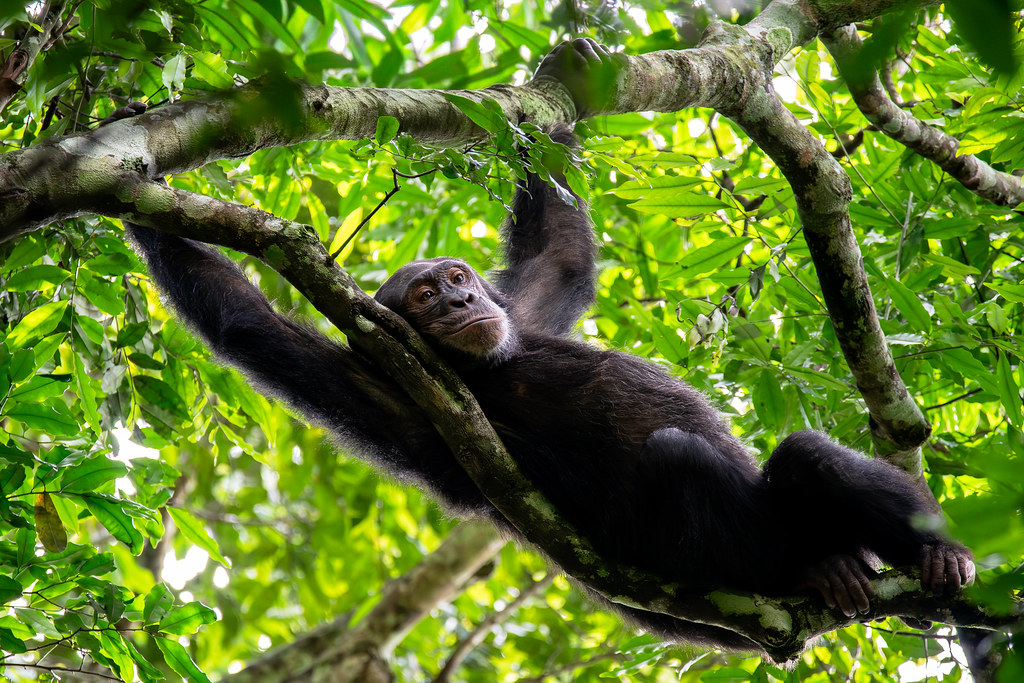
Chimpanzees are known for their intelligence, social relationships, and ability to use tools. They communicate through vocalizations, facial expressions, gestures, and physical interactions. Their communities often display complex social dynamics, with individuals forming alliances, competing for status, and cooperating during different activities.
Unlike mountain gorillas, which spend considerable time on the ground, chimpanzees frequently travel through trees and move actively across their forest habitat. Their daily routines include searching for fruit, feeding on other plant materials, grooming one another, and resting.
Watching chimpanzees in the wild can be exciting because their behavior is often unpredictable. A quiet forest walk may suddenly be interrupted by distant calls, rustling branches, or movement high above the trail.
Chimpanzees also play an important ecological role by dispersing seeds through their feeding habits. By moving seeds across the forest, they help maintain plant diversity and support the regeneration of their habitat.
Golden Monkeys: Bright Colors in the Bamboo Forest
While gorillas and chimpanzees often receive the most attention, Rwanda’s golden monkeys provide another memorable wildlife experience. These attractive monkeys live in the Virunga volcanic region, particularly within Volcanoes National Park.

Their golden-orange fur contrasts beautifully with the green bamboo vegetation that forms a major part of their habitat. Golden monkeys are energetic and social, often travelling in groups while searching for food. Their diet includes bamboo shoots, leaves, fruits, and other available plant materials.
Observing them can be very different from watching gorillas. Golden monkeys frequently leap between branches, climb bamboo stems, and move rapidly through the undergrowth. Their lively behavior makes them especially interesting to photographers and visitors who enjoy observing animal interactions.
Golden monkeys face threats from habitat changes and other human pressures. Protecting the forests they depend on is therefore essential for maintaining healthy populations and preserving the wider ecosystem.
Nyungwe’s Diverse Monkey Species
Nyungwe National Park is not simply a destination for chimpanzee tracking. Its forests support an impressive variety of other primates, making it one of Rwanda’s most important wildlife habitats.
Among its notable inhabitants are Ruwenzori black-and-white colobus monkeys. These striking primates have contrasting black and white coats and are adapted to life among the forest trees. They feed mainly on leaves and other plant material, moving through the canopy in search of suitable food.
Nyungwe is also home to L’Hoest’s monkeys, blue monkeys, red-tailed monkeys, and other species. Each has distinctive physical characteristics, feeding preferences, and social behaviors.
Some monkeys are relatively easy to notice because they travel in groups or make frequent calls. Others remain hidden among thick branches, requiring patience and careful observation. This diversity makes every forest walk different.
The presence of many primate species also demonstrates the ecological importance of Nyungwe’s varied habitats. Protecting the forest preserves not only individual animals but also the complex interactions that sustain the entire ecosystem.
Gishwati-Mukura: A Forest with an Important Mission
Gishwati-Mukura National Park is another valuable part of Rwanda’s conservation landscape. Although smaller than Nyungwe, it provides important habitat for chimpanzees and other wildlife.
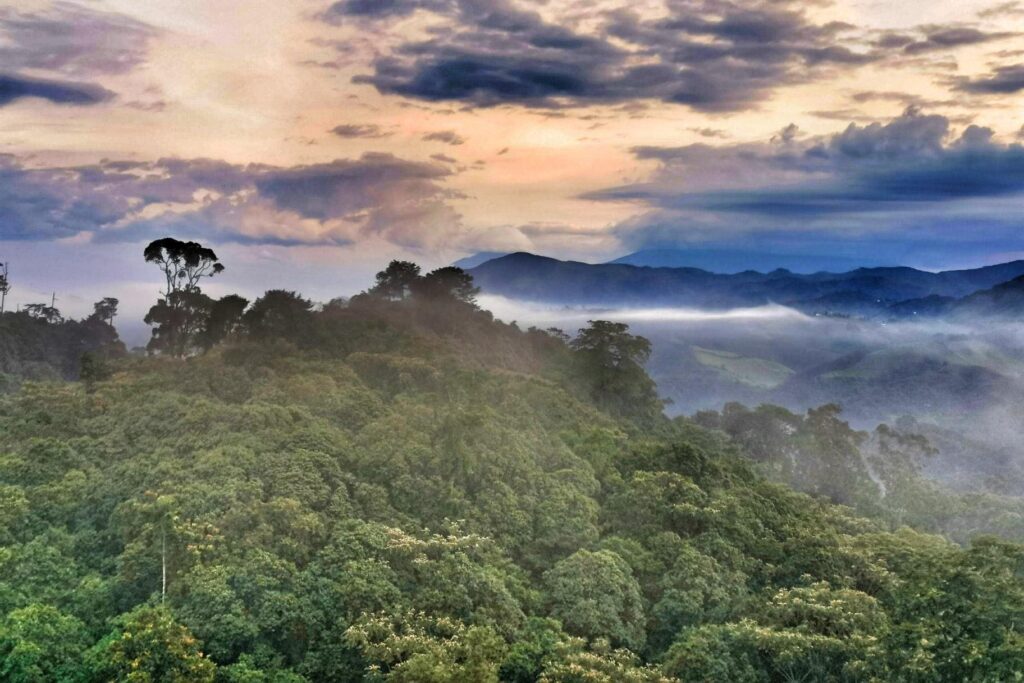
The park consists of forest areas that have experienced considerable environmental pressure. Conservation initiatives aim to restore degraded habitats, protect remaining wildlife, and strengthen connections between nature and neighboring communities.
Forest restoration requires more than planting trees. It involves protecting existing vegetation, allowing natural regeneration, monitoring wildlife, and encouraging land-use practices that reduce pressure on sensitive habitats.
The recovery of forests such as Gishwati-Mukura demonstrates why conservation should not focus exclusively on famous tourist destinations. Smaller protected areas can also provide essential shelter for threatened species and contribute to the long-term survival of Rwanda’s biodiversity.
Why Primates Matter to Rwanda
Primates contribute to the health of forests in several important ways. By dispersing seeds, feeding on different plants, and participating in food webs, they help maintain ecological processes. Their presence can also provide researchers with valuable information about forest conditions and environmental change.
Beyond their ecological importance, primates support Rwanda’s nature-based tourism industry. Gorilla and chimpanzee tracking create opportunities for guides, drivers, accommodation providers, conservation workers, and other local businesses.
When tourism is managed responsibly, some of its benefits can support protected-area management and neighboring communities. However, these benefits depend on fair participation, effective planning, and respect for wildlife.
Visitors also have a responsibility to minimize their impact. Following guides’ instructions, maintaining appropriate distances, avoiding loud disturbances, and never feeding wild animals are essential practices. Anyone who is unwell should follow park health guidance before visiting great apes, because some human illnesses can be transmitted to them.
Challenges Facing Rwanda’s Primates
Despite important conservation achievements, Rwanda’s primates still face significant challenges. Habitat loss and fragmentation can isolate populations, reduce food availability, and restrict movement between forest areas.
Snares set for other wildlife may accidentally injure primates. Human diseases can also threaten great apes, whose close biological relationship with humans makes them vulnerable to certain infections.
Climate change adds another layer of uncertainty by potentially altering rainfall patterns, vegetation, and food availability. Addressing these pressures requires cooperation among government agencies, conservation organizations, scientists, tourism operators, and local residents.
Environmental education is equally important. When people understand why primates matter and how healthy forests support livelihoods, they can become active participants in protecting these animals.
Rwanda’s great apes and other primates represent far more than spectacular wildlife attractions. Mountain gorillas reveal the strength of family bonds, chimpanzees demonstrate remarkable intelligence, and golden monkeys bring movement and color to volcanic forests. Meanwhile, the diverse monkeys of Nyungwe and the wildlife of Gishwati-Mukura highlight the importance of protecting entire ecosystems.
Their future depends on healthy habitats, responsible tourism, scientific research, and meaningful community involvement. By protecting these remarkable animals, Rwanda also safeguards its forests, strengthens its natural heritage, and preserves opportunities for future generations to experience wildlife in its natural environment.
Ultimately, the story of Rwanda’s primates is one of coexistence. Their survival reminds us that protecting nature is not separate from human progress; it is an essential part of building a healthier and more sustainable future.