
Cultural Experiences in Tanzania: A Complete Guide to Tribes, Traditions & Living Heritage.
Tanzania’s wildlife draws most travelers here first, but its people are the country’s other great story. Home to over 120 distinct ethnic groups, Tanzania offers some of Africa’s richest cultural experiences: sharing a meal in a Maasai boma near Ngorongoro Crater, walking with Hadzabe hunter-gatherers at dawn near Lake Eyasi, wandering the coral-stone alleys of Zanzibar’s Stone Town, or standing in the dust of Olduvai Gorge, where the Leakey family found some of humanity’s earliest traces.
We’ve been building tailor-made luxury safaris across Tanzania and East Africa for over 15 years, and cultural experiences are consistently among the moments our 10,000+ travelers discuss longest afterward, often more than the game drives themselves. This guide covers the specific communities and places you can genuinely visit, what each experience actually involves, how to do it respectfully, and how to weave culture into a wider Tanzania safari.

Done well, a cultural visit in Tanzania is not a staged performance but a real exchange, an invitation into someone’s home, workshop, or daily routine, arranged with consent and fair compensation. Done carelessly, it can feel extractive on both sides. This guide is written to help you do it the first way.
Cultural Experiences in Tanzania At a Glance
| Main communities to visit | Maasai, Hadzabe, Chagga, Iraqw, Datoga, and the Swahili coastal culture of Zanzibar |
| Best regions | Ngorongoro Highlands and Lake Eyasi basin (Maasai & Hadzabe), Kilimanjaro’s southern slopes (Chagga), and Zanzibar’s Stone Town (Swahili coastal culture) |
| Typical duration | Half-day village or boma visits are most common; a dedicated cultural safari runs 3–8 days. |
| Price range | Community visit fees generally run USD $20–$60 per person for a half-day village or boma visit, on top of your safari day rate. |
| Best season | Year-round, since most cultural visits do not depend on wildlife movement or weather in the way game drives do |
| What to wear | Modest, neutral-toned clothing covering shoulders and legs when visiting any village or community |
What Are Cultural Experiences in Tanzania?
Cultural experiences in Tanzania are guided visits with the country’s living communities, Maasai pastoralists, Hadzabe hunter-gatherers, Chagga farmers, and Swahili coastal traders, arranged directly with the community and built around genuine daily life rather than a staged show.
In practice, that covers a wide range of activities: an afternoon in a Maasai homestead (or boma) learning how cattle, beadwork, and age-set traditions structure daily life; a pre-dawn foraging walk with Hadzabe hunter-gatherers near Lake Eyasi; a coffee-and-banana farm walk with a Chagga family on Kilimanjaro’s lower slopes; a walking tour of Zanzibar’s UNESCO-listed Stone Town with a local guide; or a visit to Olduvai Gorge, where fossil evidence of early human evolution was first uncovered. Some of these sit inside national parks and conservation areas you’re likely visiting anyway, like Ngorongoro Conservation Area; others, like Zanzibar’s Stone Town, are destinations in their own right.
What separates a genuine cultural experience from a tourist-trap performance usually comes down to three things: whether the community itself receives the visit fee directly, whether you’re seeing an ordinary day rather than a scripted show staged purely for cameras, and whether your guide has an existing relationship with that specific community rather than simply dropping in. We only build cultural visits into our itineraries with communities and guides we have direct, ongoing relationships with.
Meet Tanzania’s Maasai: Tradition, Villages & Boma Visits
The Maasai are semi-nomadic pastoralists living across northern Tanzania’s Ngorongoro Highlands and Serengeti-Tarangire ecosystem, and a guided boma visit is the most widely available cultural experience on a Tanzania safari.
The Maasai are Tanzania’s most visible and internationally recognized ethnic group, known for their striking red-and-purple shuka cloth, elaborate beadwork, and a cattle-centered pastoral economy that has adapted, rather than disappeared, alongside modern land use and conservation. The Ngorongoro Conservation Area is unusual among East Africa’s protected areas in that it was explicitly established in 1959 as a multiple land-use area, meaning Maasai communities were permitted to continue living and grazing cattle inside its boundaries alongside the wildlife, a policy that still shapes the region today.
A typical Maasai boma visit, most commonly arranged near Ngorongoro Crater, Serengeti National Park, Tarangire National Park, or Lake Manyara, runs an hour to half a day and typically includes a welcome dance performed by warriors (moran) and women, a walk through the homestead’s circular thornbush enclosure (enkang), an explanation of how houses are built from mud, sticks, and cow dung, and a chance to buy beadwork or sandals directly from the women who made them. Many communities also demonstrate fire-making by friction and explain the age-set system that structures Maasai men’s lives from childhood to elderhood.
Community visit fees are paid per person, usually in cash, and go directly to the village rather than to a park authority. Photography is generally welcomed once you’ve asked, and buying a piece of beadwork directly from its maker is one of the more meaningful ways to put money straight into a Maasai household. We always brief guests on current fee levels and etiquette specific to the community they’re visiting before the visit itself.
The Hadzabe: East Africa’s Last Hunter-Gatherers Near Lake Eyasi
The Hadzabe are a small community of hunter-gatherers living around Lake Eyasi in northern Tanzania, one of the last groups on the continent still living substantially by hunting and foraging rather than farming or herding.
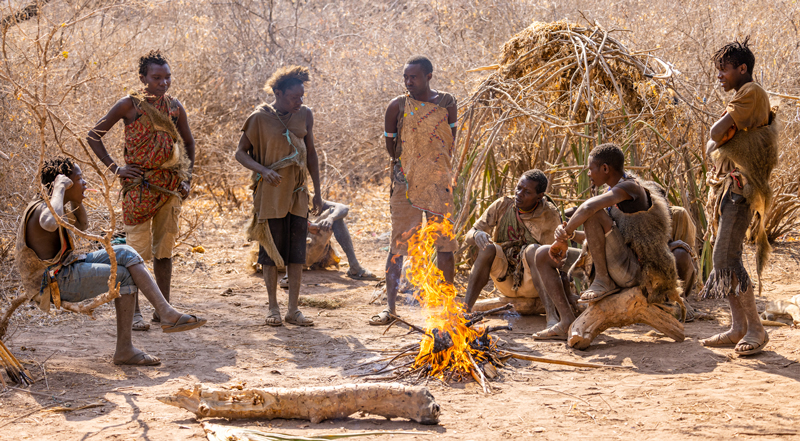
The Hadzabe (also spelled Hadza) speak a click language unrelated to neighboring Bantu and Nilotic languages, and researchers consider them among East Africa’s oldest continuous lineages, their way of life offering a rare living link to how humans lived for most of our history. Population estimates for the Hadzabe vary by source, generally in the range of thirteen hundred to two thousand people, with only a portion still living a fully traditional hunting-and-gathering lifestyle around Lake Eyasi’s dry, acacia-scrub basin southwest of the Ngorongoro Highlands.
A Hadzabe cultural visit typically starts before sunrise, joining the men on an actual foraging or small-game hunting outing using handmade bows and poison-tipped arrows, followed by time with the women gathering baobab fruit, berries, and tubers. It’s a genuinely different register of cultural encounter than a Maasai boma visit: quieter, less performative, and centered on watching real subsistence skills rather than a structured welcome. Because Lake Eyasi sits somewhat off the main northern circuit, a Hadzabe visit is usually combined with a stop at nearby Datoga blacksmith communities, who traditionally forge metal jewelry, arrowheads, and tools for both their use and trade with neighboring groups.
Chagga Culture on the Slopes of Kilimanjaro
The Chagga are Bantu-speaking farmers on Mount Kilimanjaro’s fertile southern and eastern slopes, known for centuries-old banana-and-coffee farming and an underground tunnel system built for defense and food storage.
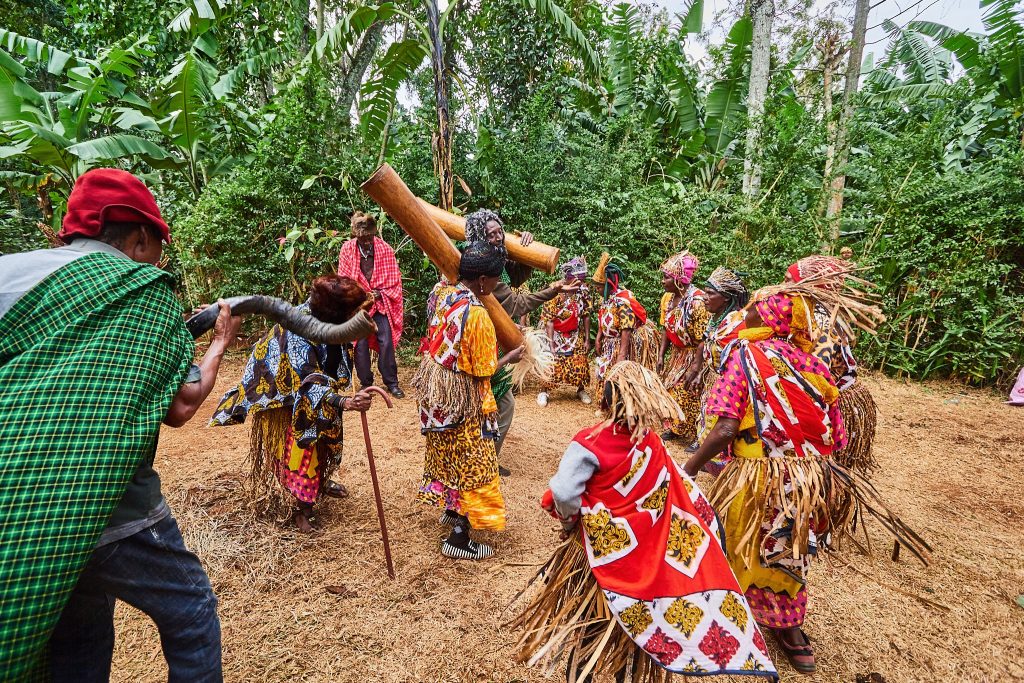
Tanzania’s third-largest ethnic group by population, the Chagga have farmed Kilimanjaro’s volcanic lower slopes for centuries, developing a distinctive homestead system of banana groves interplanted with coffee, a combination that still supports much of the local economy around Mount Kilimanjaro National Park today. A Chagga cultural visit, usually arranged as a half-day add-on before or after a Kilimanjaro trek, generally includes a walk through a working coffee-and-banana shamba (farm plot), a demonstration of traditional coffee roasting and grinding, and, at several sites around Marangu and Materuni, a visit to centuries-old defensive tunnels the Chagga dug and used historically to hide from Maasai cattle raids.
Waterfall walks are often paired with the cultural visit in this region, since several of Kilimanjaro’s lower-slope villages sit near seasonal falls fed by mountain streams. It’s a gentle, low-intensity cultural add-on that works well either as a rest day before a Kilimanjaro climb or as a standalone half-day for travelers not climbing the mountain at all.
Iraqw & Datoga: The Lake Eyasi Basin’s Lesser-Known Cultures
The Iraqw are Cushitic-speaking farmers of the Karatu highlands near Ngorongoro, while the Datoga are pastoralists and skilled blacksmiths living around Lake Eyasi, both far less visited than the Maasai but easily combined with a Hadzabe excursion.
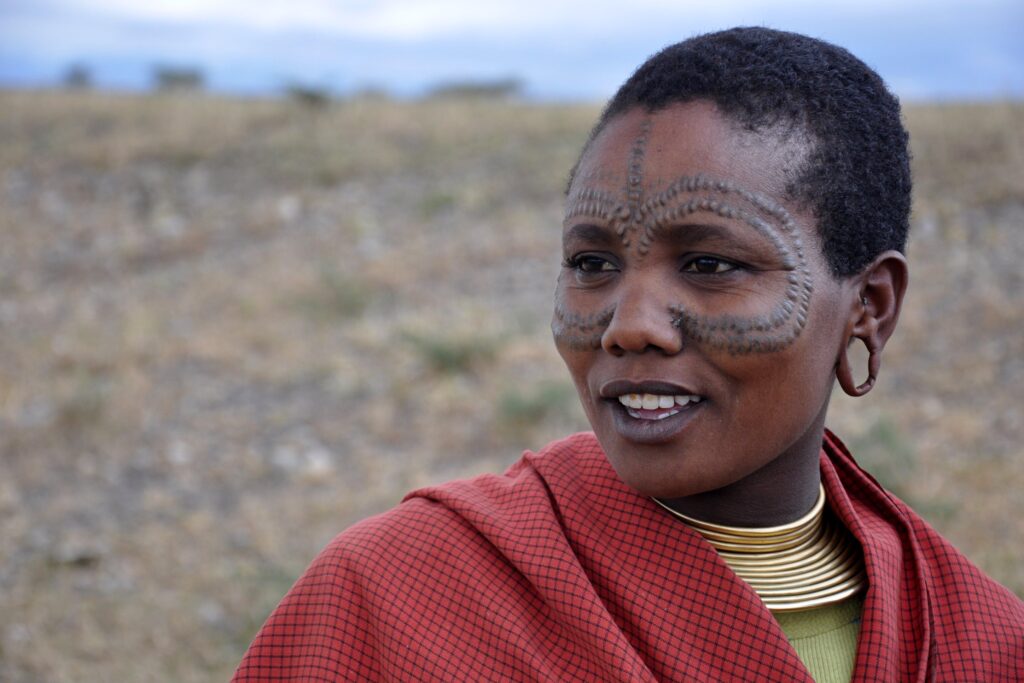
Travelers who base themselves around Karatu, the gateway town to Ngorongoro, are already in Iraqw territory without necessarily realizing it. Unlike most of their Nilotic and Bantu neighbors, the Iraqw speak a Cushitic language linked to peoples of the Horn of Africa, and their terraced highland farms of maize, beans, and onions stand in visible contrast to the pastoral Maasai landscape just a short drive away.
The Datoga, meanwhile, are traditionally pastoralist and semi-nomadic like the Maasai but are distinct in language and in their long-standing reputation as East Africa’s most skilled traditional blacksmiths, forging jewelry, spearheads, and arrowheads (including many used by neighboring Hadzabe hunters) from scrap metal using simple bellows and open fire. A Datoga smithy visit near Lake Eyasi pairs naturally with a Hadzabe morning excursion, giving a fuller picture of how several distinct communities coexist and trade within one relatively small basin.
Swahili Culture & Stone Town, Zanzibar
Zanzibar’s Stone Town is a UNESCO World Heritage-listed old town built from coral stone, the historic heart of Swahili coastal culture and a natural cultural counterpart to a Tanzania wildlife safari.

Where mainland Tanzania’s cultural experiences center on inland ethnic communities, Zanzibar offers something different: Swahili culture, a centuries-old coastal civilization built from the blending of African, Arab, Persian, and Indian influences along the Indian Ocean trade routes. Stone Town, Zanzibar’s old quarter, is the clearest physical expression of that history, a dense maze of coral-stone buildings, elaborately carved wooden doors, mosques, and a former slave-trading market whose preserved chambers now form a sobering, essential part of any visit.
A typical Stone Town cultural tour is done on foot with a local guide and covers the old fort, the House of Wonders, the Anglican cathedral built on the site of the former slave market, and the narrow bazaar streets around Darajani Market. Most visitors pair it with a spice tour on Zanzibar’s outskirts, since the island’s clove, nutmeg, cinnamon, and vanilla plantations, the historic source of its 19th-century wealth as the world’s leading clove exporter, are what earned it the nickname ‘Spice Island.’ Our Zanzibar Stone Town Exclusive Beach Safari itinerary builds a cultural stop in Stone Town and a spice tour directly into a broader Zanzibar beach experience.
Build a Culture-and-Beach Itinerary
Combine Stone Town’s history and a spice tour with beach time on Zanzibar’s coast, our team will build the exact balance of culture and relaxation you want.
Olduvai Gorge: Walking Through the Cradle of Mankind.
Olduvai Gorge, inside the Ngorongoro Conservation Area, is where the Leakey family’s excavations from the early 20th century onward uncovered some of the earliest known evidence of human evolution, including footprints at nearby Laetoli dated to roughly 3.6 million years old.

Olduvai Gorge sits within the Ngorongoro Conservation Area, a roughly 14-kilometer-long ravine that has yielded an exceptionally long fossil and stone-tool record spanning almost four million years, part of why UNESCO recognizes the wider conservation area for both its wildlife and its human-evolution significance. It isn’t a living cultural community in the way a Maasai or Hadzabe visit is, but for many travelers it’s the single most thought-provoking stop on a Tanzania cultural itinerary: standing in the same gorge where hominin fossils and stone tools first rewrote the scientific understanding of where our species began.
Most visits include a short guided walk along the gorge rim, a stop at the small site museum displaying excavated tools and fossil casts, and, where logistics allow, a side trip to Laetoli to see the preserved volcanic-ash footprints left by early hominins. Olduvai is typically visited as a stop en route between the Ngorongoro Crater rim and the Serengeti’s southern plains, making it an uncomplicated, low-effort addition to a standard northern-circuit itinerary rather than a dedicated excursion.
Usambara Mountains: The Shambaa Highlands
The Usambara Mountains in northeastern Tanzania are home to the Shambaa (Sambaa) people, whose terraced farms and forest-edge villages offer a quieter, greener cultural alternative to the northern safari circuit.

Less visited than Ngorongoro or Kilimanjaro, the Usambara Mountains reward travelers with extra time on the coastal route between the northern parks and Zanzibar. Guided village walks here move through terraced farmland, forest patches rich in endemic plant and bird species, and small trading towns, usually arranged through community-run guiding associations that channel a portion of every visit fee back into local schools and conservation projects. It’s a gentler, walking-paced cultural experience worth building in for travelers with an extra day or two on the coastal leg of a longer trip.
How to Experience Tanzanian Culture Respectfully
Ask before photographing anyone, confirm that your visit fee goes directly to the community, dress modestly, and buy crafts directly from their makers, simple habits that separate a respectful cultural visit from an extractive one.
- Ask before you photograph. Always ask a person directly before photographing them, even where photography is generally welcomed; a guide can help you ask in the local language if you don’t share one.
- Dress modestly. Cover shoulders and legs when visiting any village, homestead, or mosque, regardless of how you dress elsewhere on safari or at the beach.
- Confirm where your fee goes. Ask your operator directly whether the community visit fee is paid to the village or household you’re visiting, rather than absorbed elsewhere; we confirm this information for every cultural stop we book.
- Buy crafts directly from their makers. Beadwork, carvings, and blacksmith work bought directly from the artisan put income straight into that household, rather than a general souvenir shop.
- Treat it as a visit, not a show. The most rewarding cultural experiences are ones where you’re witnessing an ordinary day, a hunt, a farm chore, or a coffee roast, rather than a performance staged purely for visitors; ask your guide how the specific experience you’re booking is structured.
- Don’t give sweets or money directly to children. It’s a well-intentioned habit that can encourage begging over time; if you want to give something, ask your guide about donating through the village, a local school, or a community project instead.
Best Time for Cultural Experiences in Tanzania
Cultural experiences in Tanzania can be enjoyed year-round, since they don’t depend on wildlife migration patterns, though Tanzania’s dry season from June through October offers the most comfortable travel conditions overall.

| Period | Season | What to Expect |
| June – October | Dry season | The most popular travel window, with the easiest road access to Lake Eyasi and the Usambara Mountains, and the natural pairing with peak wildlife viewing |
| December – February | Short dry season | A second good window, popular for combining culture with Ngorongoro and southern Serengeti wildlife viewing |
| March – May | Long rains | Quietest season for cultural visits with the lowest rates, though some rural roads to Lake Eyasi and the Usambaras can be slower going |
| November | Short rains | Generally good value with only intermittent afternoon showers |
Because cultural visits aren’t governed by animal movement, they’re one of the more flexible pieces of a Tanzania itinerary to schedule around the wildlife-focused parts of your trip. See our full guide to the best time to visit Tanzania for how cultural stops typically slot around the Great Wildebeest Migration and each region’s dry and wet seasons.
Who Are Cultural Experiences in Tanzania For?
Cultural experiences in Tanzania suit nearly every kind of traveler, from first-time visitors wanting context for the landscapes they’re driving through to repeat African travelers looking for a deeper layer beyond wildlife.
- A Maasai boma visit or a Stone Town walking tour pairs naturally with the slower, more intimate pace many couples want; see our honeymoon safari planning guide for how we typically build these in.
- Village visits and craft demonstrations tend to hold children’s attention better than a long game drive, and most cultural stops involve gentle walking rather than strenuous activity; our family safari planning guide covers age-appropriate pacing.
- First-time Africa travelers. A Maasai boma visit near Ngorongoro or a Chagga farm walk near Kilimanjaro gives essential human context to the landscapes and wildlife you’re seeing and is easy to slot into a standard northern-circuit itinerary without adding much driving time.
- Repeat Africa travelers. Guests who’ve already done a classic Serengeti-Ngorongoro wildlife circuit often tell us a Hadzabe foraging morning or a Datoga smithy visit is exactly the kind of deeper, less-visited experience they’re looking for on a second or third trip.
- Portraits and craft-in-progress shots from a genuine, consent-based cultural visit are often the images travelers value most from a whole trip; our photography safari specialists can help build a cultural stop around good light and willing subjects rather than a rushed group visit.
How to Combine Culture with a Wildlife Safari
Most cultural experiences in Tanzania sit directly on or near the main safari routes, so they add relatively little driving time to a standard Serengeti-Ngorongoro itinerary.

A Maasai boma visit near Ngorongoro Conservation Area or Tarangire National Park typically adds only an hour or two to a day already built around game drives, since most communities sit close to park gates and main access roads. Lake Eyasi’s Hadzabe and Datoga communities sit further off the main circuit and are best combined with a dedicated day, usually en route between Ngorongoro and southern Serengeti. Kilimanjaro-area Chagga visits work naturally as a rest day before or after a trek, and Zanzibar’s Stone Town and spice tours combine easily with the final beach stretch of a longer Tanzania safari. For travelers who want a single itinerary built specifically around this theme, our Luxury Tanzania Cultural & Wildlife Safari itinerary threads several of these communities together with classic northern-circuit game viewing.
Start Planning Your Cultural Safari
Tell us which communities and places interest you most, we’ll build a private, tailor-made Tanzania itinerary that balances culture and wildlife around your dates.