
What Are the Best Attractions in Tanzania?
Ask ten well-traveled guests what they picture when they think of Tanzania, and you’ll get ten different answers: a wildebeest herd thundering across the Serengeti, a lion sleeping in a tree at Lake Manyara, a dhow drifting past Stone Town at sunset, and snow on the summit of Kilimanjaro. That’s the honest answer to what makes this country remarkable: it isn’t one attraction; it’s an entire continent’s worth of landscapes and wildlife compressed into a single nation roughly twice the size of California.
Tanzania’s best attractions are the Serengeti National Park and its Great Wildebeest Migration, the Ngorongoro Crater, Mount Kilimanjaro, Tarangire and Lake Manyara National Parks, the chimpanzee forests of Mahale and Gombe on Lake Tanganyika, and the beaches and Stone Town of the Zanzibar Archipelago. Beyond these headline names, the country protects 22 national parks and seven UNESCO World Heritage Sites, ranging from the vast, little-visited wilderness of Ruaha and Nyerere in the south to the volcanic soda lakes of the Rift Valley in the north, which is precisely why most of our guests build a trip that combines several regions rather than a single park.
We’ve spent 15+ years and guided more than 10,000 travelers through these landscapes, and the question we hear most often isn’t ‘which park is best’, it’s ‘how do we see the most without feeling rushed?’ Below, we’ve organized the 18 attractions worth knowing about into the country’s four natural regions, with practical details on when to go, how long to spend, and how to link them into one seamless, tailor-made Tanzania safari.
Tanzania: Quick Facts
| Fact | Detail |
| Location | East Africa, bordering the Indian Ocean, Kenya, Uganda, Rwanda, Burundi, DR Congo, Zambia, Malawi, and Mozambique |
| Land Area | ≈947,300 km², roughly twice the size of California |
| Capital / Largest City | Dodoma (official capital); Dar es Salaam (largest city and main gateway) |
| National Parks | 22 parks managed by the Tanzania National Parks Authority (TANAPA), covering about 15% of the country’s land area |
| UNESCO World Heritage Sites | 7, including Serengeti National Park, Ngorongoro Conservation Area, Kilimanjaro National Park, and the Stone Town of Zanzibar |
| Highest Point | Mount Kilimanjaro, 5,895 m, is Africa’s highest peak and the world’s tallest free-standing mountain |
| Signature Wildlife Event | The Great Wildebeest Migration over 1.5 million wildebeest and hundreds of thousands of zebra circling the Serengeti-Mara ecosystem year-round |
| Official Languages | Swahili and English |
| Best Time to Visit | Year-round destination: June-October is the dry season for classic game viewing; December-March is Serengeti calving season and warm Zanzibar beach weather |
| Typical Trip Length | 7 to 14 days to comfortably combine 2-3 regions; longer for guests adding Kilimanjaro or multiple parks |
What Is Tanzania Famous For?
Tanzania is most famous for the Great Wildebeest Migration through the Serengeti, the Big Five wildlife concentration inside the Ngorongoro Crater, Mount Kilimanjaro as Africa’s highest mountain, and the white-sand beaches and Swahili stone architecture of Zanzibar. It’s also home to Africa’s largest protected wilderness area (Nyerere National Park), the world’s largest inactive volcanic caldera (Ngorongoro Crater), and Olduvai Gorge, one of the most significant paleoanthropological sites on Earth.
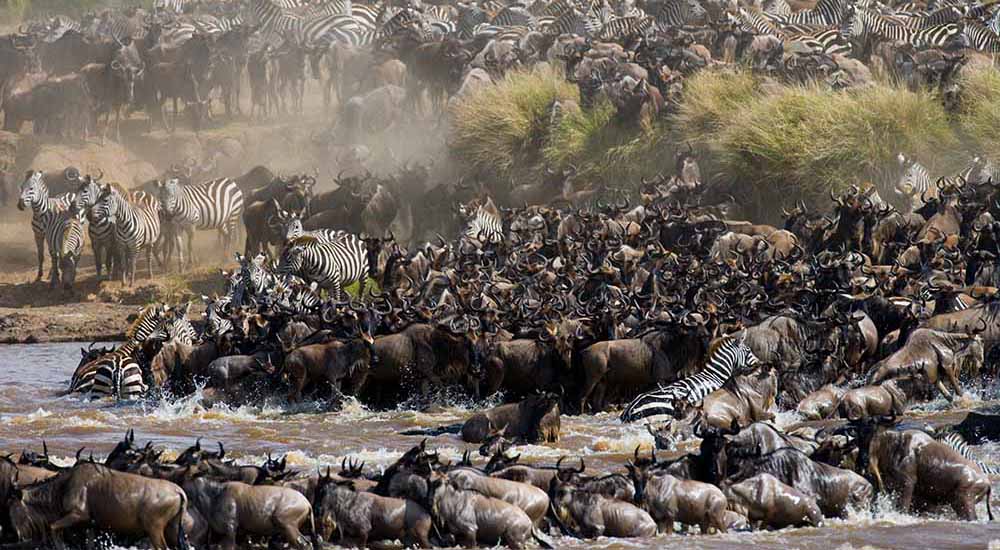
- The Great Wildebeest Migration: over 1.5 million wildebeest circling the Serengeti and Maasai Mara ecosystems in a continuous, year-round loop.
- The Ngorongoro Crater – a 260 km² caldera floor enclosed by 600-meter walls, often called Africa’s ‘Garden of Eden’ for its density of Big Five wildlife.
- Mount Kilimanjaro, a dormant volcano rising to 5,895 m, is climbable without technical mountaineering gear on several established routes.
- Zanzibar, a spice-scented archipelago of coral-white beaches and the UNESCO-listed Stone Town, the historic heart of the Swahili coast.
- Tree-climbing lions, tool-using chimpanzees, and the largest baobabs in East Africa are distinctive wildlife and landscape features found across Lake Manyara, Mahale, and Tarangire.
Northern Safari Circuit: Tanzania’s Classic Wildlife Route
The Northern Circuit is where most first-time visitors begin, and for good reason it packs the country’s most famous parks into a compact, well-connected route between Arusha and the Serengeti, most of it linked by excellent roads and short charter flights.
1. Serengeti National Park
The Serengeti is Tanzania’s flagship park and the stage for the Great Wildebeest Migration, a year-round, 800-kilometer circular movement of over 1.5 million wildebeest and 200,000+ zebras across 14,763 km² of open plains. Named for the Maasai word for ‘endless plains,’ the park has some of the highest predator densities in Africa. Lions, leopards, cheetahs, and spotted hyenas all thrive here alongside the dramatic river crossings at the Grumeti and Mara Rivers between roughly June and October.
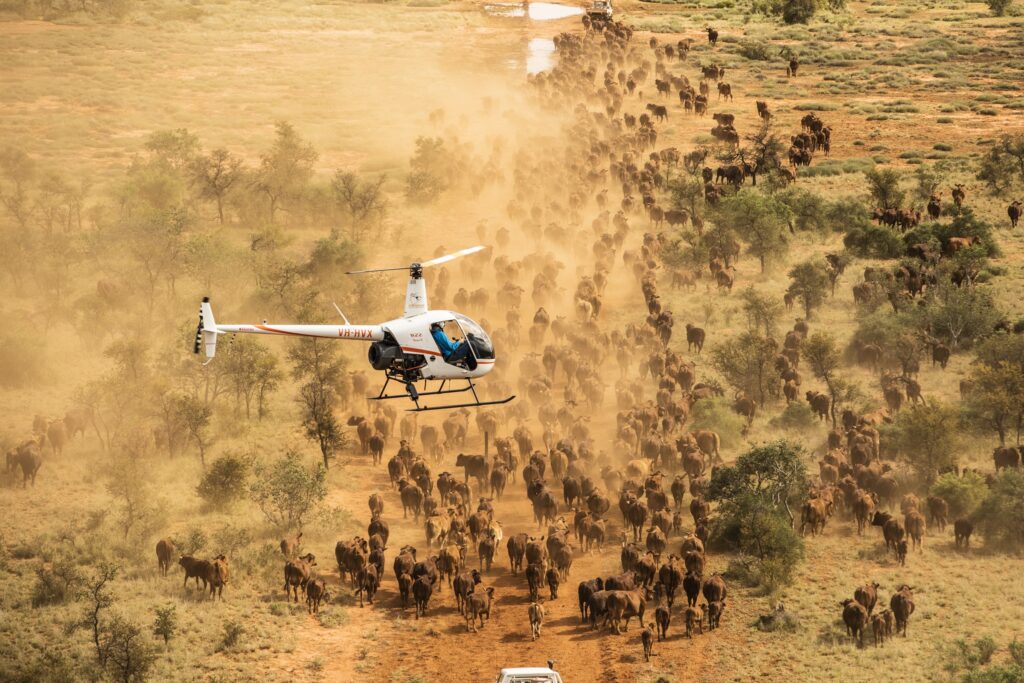
Beyond the migration, the Serengeti rewards longer stays: the Seronera Valley offers reliable year-round game viewing, the Western Corridor is a migration hotspot in June, and the southern Ndutu plains host the calving season each February. For a genuinely unforgettable morning, we regularly arrange hot air balloon safaris over the Serengeti, drifting silently above the plains at sunrise before a bush breakfast on landing. Luxury camps like Singita Sasakwa Lodge in the northern Grumeti Reserves make an exceptional base.
2. Ngorongoro Crater and Olduvai Gorge
The Ngorongoro Crater is the world’s largest inactive, intact volcanic caldera, a 260 km² floor enclosed by walls rising 600 meters, formed roughly 2 to 3 million years ago when an ancient volcano collapsed inward. Because water and grazing are permanent within its walls, the crater holds one of the highest concentrations of resident wildlife anywhere in Africa, including a healthy population of the increasingly rare black rhino alongside lions, elephants, buffalo, and leopards, a realistic single-day shot at the Big Five.

The wider Ngorongoro Conservation Area also protects Olduvai Gorge, a steep-sided ravine often called the ‘Cradle of Mankind’ after decades of fossil discoveries, including early Homo habilis remains that have shaped our understanding of human evolutionary history. Guests interested in archaeology and deep human history typically add a stop at the Olduvai Gorge Museum en route between the crater and the Serengeti. For an overnight stay directly on the crater rim, &Beyond Ngorongoro Crater Lodge is one of our most requested properties.
3. Tarangire National Park
Tarangire is renowned for its ancient baobab trees and some of the largest elephant herds in Tanzania, drawn by the permanent water of the Tarangire River, which becomes the region’s lifeline through the dry season from June to October. Family groups of 20 or more elephants are common here, and the park’s silhouette-heavy landscape of baobab trees and the dotted savannah is among the most photogenic in the country.
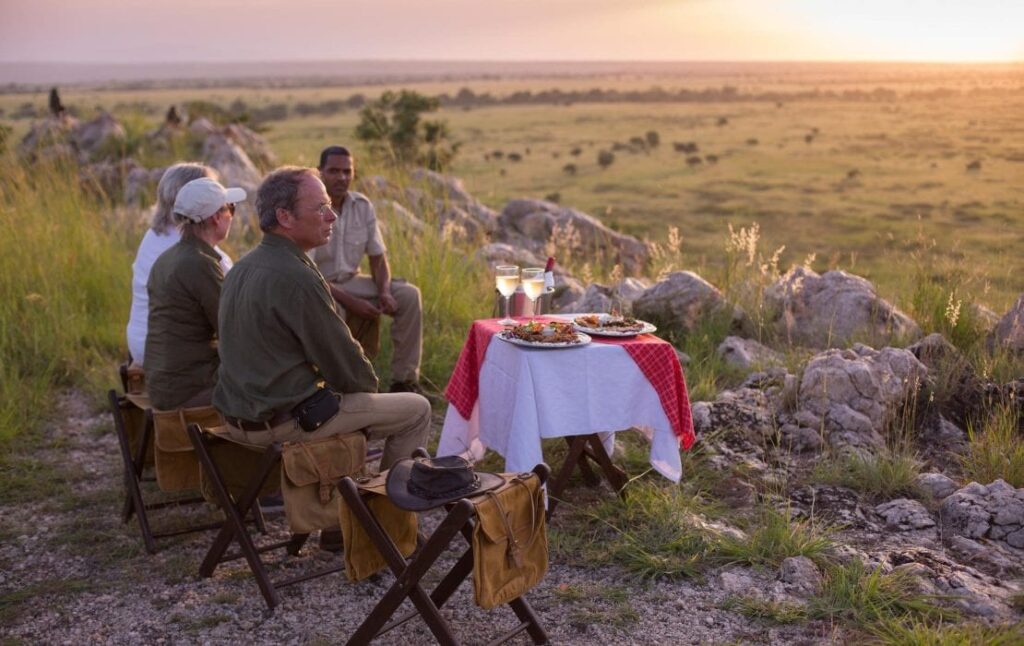
Tarangire is also less crowded than the Serengeti or Ngorongoro, which makes it a favorite for repeat Africa travelers seeking a quieter, more private game-viewing experience. Tarangire TreeTops by Elewana, with rooms built into the baobab canopy, is one of the most memorable lodges on the entire northern circuit.
4. Lake Manyara National Park
Lake Manyara compresses five distinct ecosystems, groundwater forest, acacia woodland, open grassland, an alkaline soda lake, and the Great Rift Valley escarpment, into just 325 km², and it is one of only two places in Africa with documented tree-climbing lions. The park’s shallow soda lake draws seasonal flocks of flamingos, while the volcanic Maji Moto hot springs offer one of the more unusual stops on the northern circuit.

Because it’s compact, Manyara works well as a half-day or full-day stop between Arusha and the Serengeti, and it’s one of the easier parks to introduce children to African wildlife thanks to its short, wildlife-dense game-drive loop.
5. Arusha National Park
Arusha National Park sits closest to the safari capital of Arusha itself and is the only Tanzanian park where you can walk, canoe, and game drive in a single day, all set beneath the twin peaks of Mount Meru, Tanzania’s second-highest mountain. Giraffe, buffalo, and striking black-and-white colobus monkeys are common sightings, and the Momella Lakes attract flocks of flamingos and other waterbirds.

Its proximity to Kilimanjaro International Airport makes it a natural first- or last-day stop, ideal for a gentle wildlife introduction on arrival or a relaxed final outing before departure.
6. Mount Kilimanjaro
Mount Kilimanjaro, at 5,895 meters, is Africa’s highest peak and the tallest free-standing mountain in the world, rising from the surrounding savannah to a permanently glaciated summit without the need for technical mountaineering skill on its standard routes. Climbers pass through five distinct climate zones on the way up: cultivated farmland, rainforest, moorland, alpine desert, and arctic summit, making the ascent as much an ecological journey as a physical one.
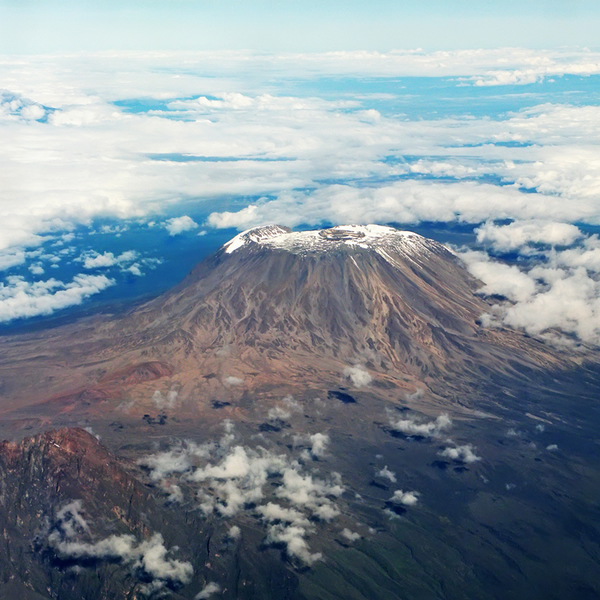 Several established routes exist, from the shorter, busier Marangu Route to the longer, more scenic Lemosho and Northern Circuit routes, which improve acclimatisation and summit success rates. If Kilimanjaro is on your list, our dedicated Kilimanjaro trekking guide covers route selection, timing, and how to pair a climb with a safari afterward. Many guests choose to summit first, then recover on a Serengeti game drive or a Zanzibar beach.
Southern and Western Tanzania: Wild, Remote, and Uncrowded
Tanzania’s southern and western parks see a fraction of the visitors of the northern circuit, largely because they require charter flights rather than road transfers, but that same remoteness is precisely what makes them so rewarding for repeat Africa travelers seeking privacy and genuinely wild landscapes.
7. Nyerere National Park (Selous)
Nyerere National Park, created in 2019 from part of the former Selous Game Reserve, is Africa’s largest protected wildlife area outside Namibia, at over 30,000 km², and one of the only parks in Tanzania that offers boat safaris on a major river. The Rufiji River winds through the park’s core, supporting large concentrations of hippo, crocodile, and elephant, while its size and remoteness mean walking safaris and boat cruises are available here in a way they simply aren’t in the busier northern parks.
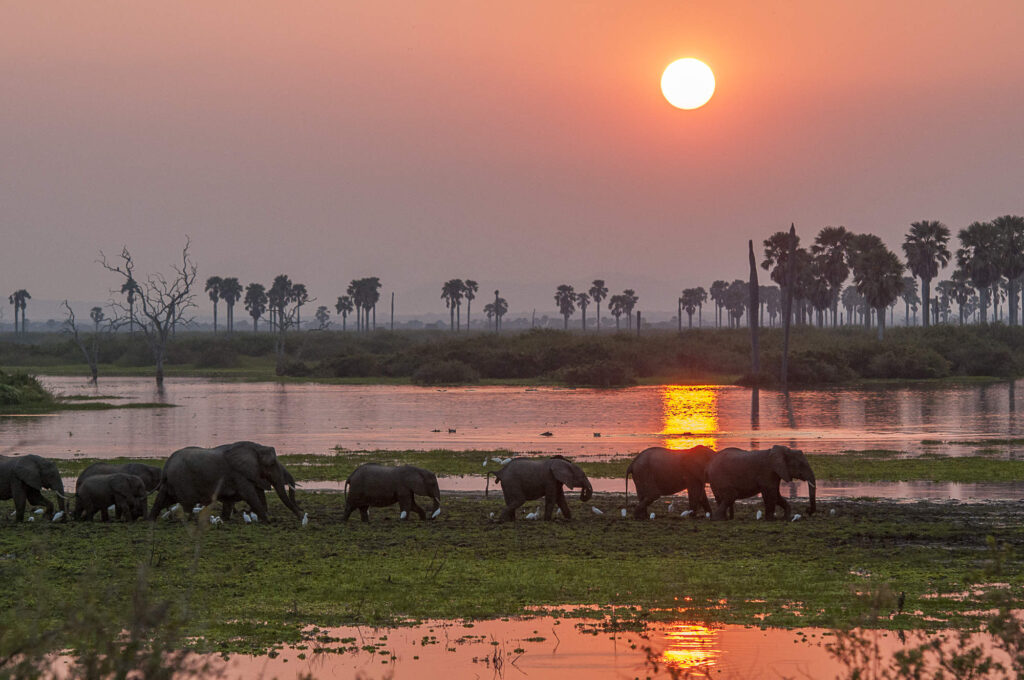
We regularly recommend Nyerere National Park to guests who want to add a genuinely different safari activity; a boat cruise at sunset with hippos surfacing beside the vessel is unlike anything on offer in the Serengeti. The Retreat Selous is one of our favorite riverside lodges here.
8. Ruaha National Park
Ruaha is Tanzania’s largest national park by TANAPA-managed area and one of the best-kept secrets on the entire safari map, holding roughly 10% of the world’s remaining lion population within its boundaries. The Great Ruaha River sustains large herds of elephant and buffalo through the dry season, while the park’s mix of Southern and Eastern African wildlife species, greater kudu, and sable antelope alongside more familiar plains game makes for a genuinely distinctive checklist.
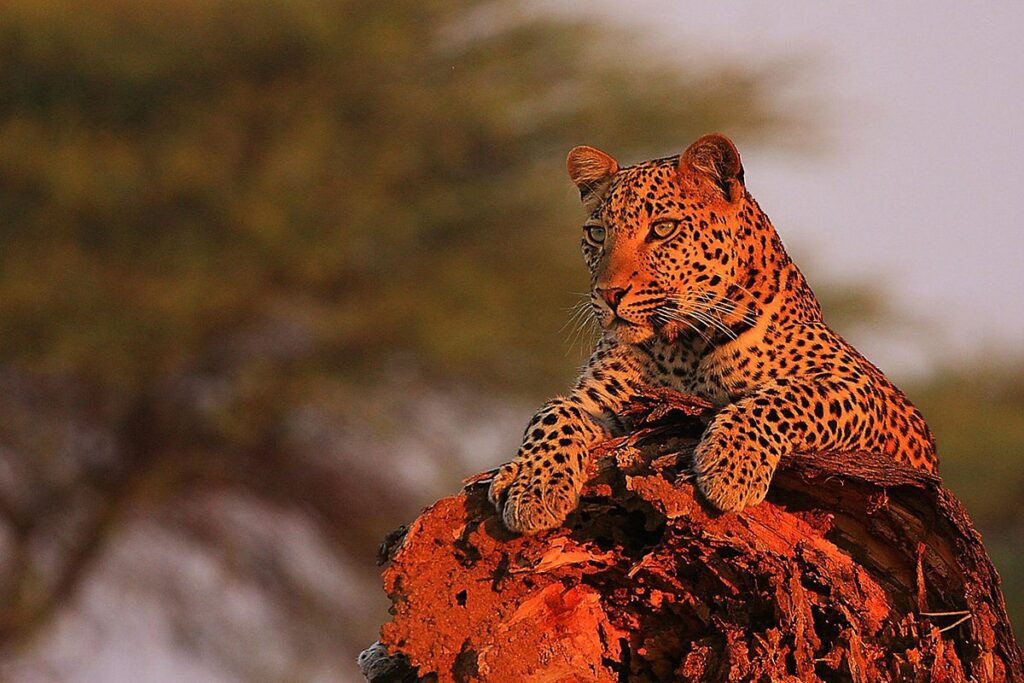
Ruaha National Park rewards travelers who’ve already done a classic northern circuit safari and want somewhere wilder and quieter for a second or third Tanzania trip. Jabali Ridge by Asilia, built into a granite kopje overlooking the park, is among the most striking lodges in the country.
9. Mahale Mountains National Park
Mahale Mountains National Park, on the remote eastern shore of Lake Tanganyika, is one of the last strongholds of wild chimpanzees in Africa, with an estimated 800 to 1,000 individuals living in its forested slopes. Reaching the park requires a boat transfer along the lake, and treks to find the habituated chimpanzee troop can involve a genuine forest hike, but the reward is an intimate, ranger-guided encounter with our closest living relatives in one of the most untouched settings on the continent.
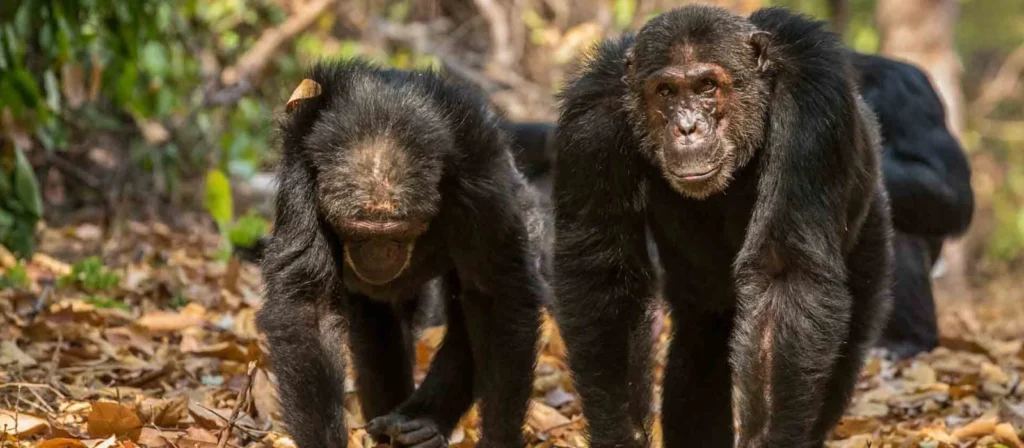
Lake Tanganyika itself, the world’s second-deepest freshwater lake, adds crystal-clear swimming and snorkeling to a trip here, a rare combination of primate trekking and lake life. Greystoke Mahale Camp, built from dhow timbers directly on the beach, is the standout luxury option.
10. Gombe National Park
Gombe National Park, also on Lake Tanganyika’s shore, is Tanzania’s smallest national park and the site of Dr. Jane Goodall’s pioneering chimpanzee research, which began in 1960 and continues today. Its steep, forested hills hold several habituated chimpanzee communities, and because the park is so compact, sightings tend to be excellent relative to the time spent trekking.

Gombe pairs naturally with Mahale for guests building a dedicated chimpanzee-trekking itinerary in western Tanzania. Our 7-Day Tanzania Wildlife and Chimp Trekking Safari combines both parks with Katavi’s wilder game viewing.
11. Udzungwa Mountains National Park
Udzungwa Mountains National Park is often called the ‘Galapagos of Africa’ because of its extraordinarily high rate of endemic species, including several primates and bird species that are found nowhere else on Earth. Unlike most Tanzanian parks, Udzungwa has no roads suitable for game drives; it’s a hiking park, with trails ranging from a short walk to the Sanje Waterfalls to multi-day treks through pristine rainforest.
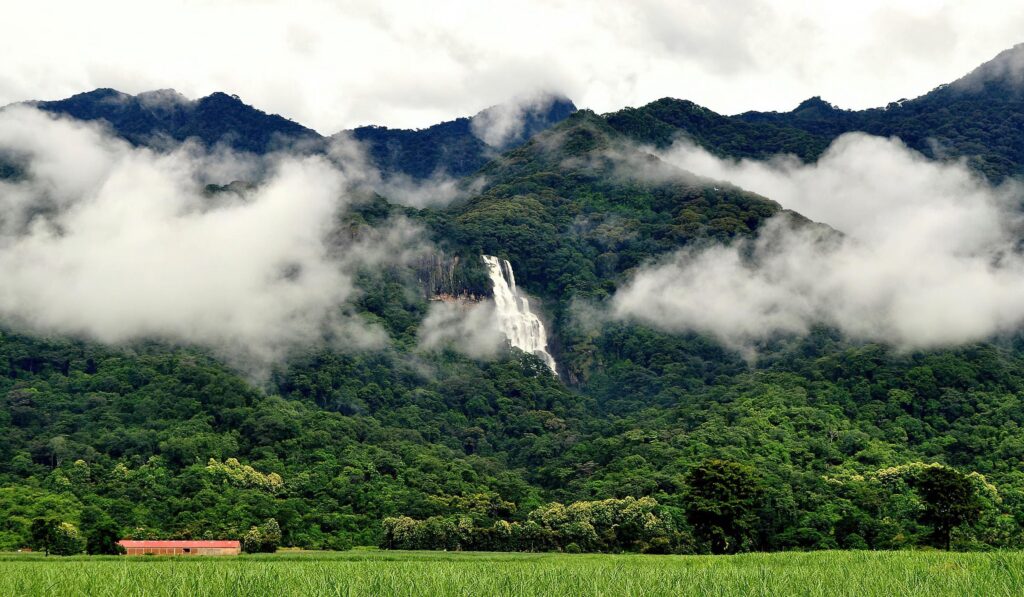
It’s a niche but rewarding addition for travelers who enjoy serious walking and want a genuinely different kind of Tanzania experience beyond vehicle-based game drives. Full details are on our Udzungwa Mountains National Park page.
Zanzibar Archipelago and the Indian Ocean Coast
No Tanzania itinerary feels complete without a few days by the ocean, and the Zanzibar Archipelago, together with its quieter neighboring islands, delivers some of the finest beaches and richest coastal history in East Africa.
12. Stone Town, Zanzibar
Stone Town, the historic core of Zanzibar City, is a UNESCO World Heritage Site and a living example of Swahili trading architecture, blending East African, Arab, Indian, and European influences into a single, still-inhabited urban landscape. Its narrow alleys hold the 17th-century Old Fort, the House of Wonders (the first building in East Africa fitted with electric lighting and an elevator), and hundreds of intricately carved wooden doors, each style once signaling the trade and origin of the merchant family behind it.
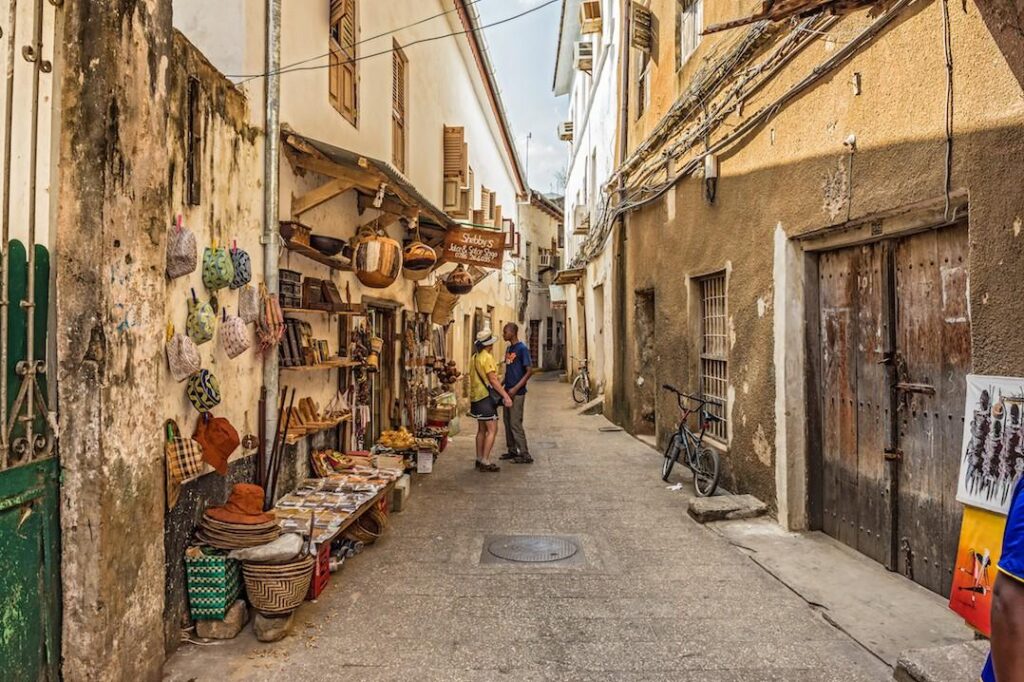
An evening at the Forodhani Gardens night food market, sampling grilled seafood and Zanzibar pizza beside the waterfront, is one of the simplest and most memorable things you can do on the island. We designed our 3-Day Zanzibar Stone Town Experience specifically around this cultural side of the archipelago.
13. Zanzibar’s Beaches
Zanzibar’s beaches range from the lively, water-sports-friendly shores of Nungwi and Kendwa in the north to the quieter, kitesurfing-favored coast of Paje and Michamvi in the southeast, all fringed by the warm, turquoise water and white coral sand the island is famous for. The dry season (June-October) and the shorter dry spell around December-February bring the calmest seas and clearest conditions for swimming, diving, and snorkeling on the surrounding reefs.
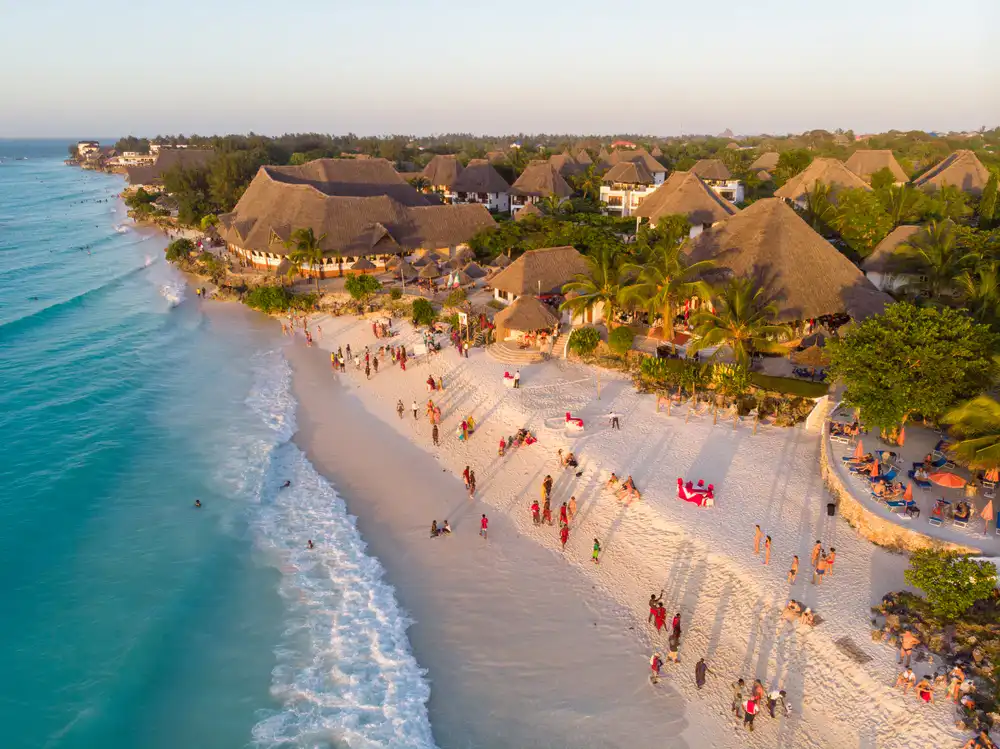
For a genuinely exclusive stay, &Beyond Mnemba Island, a private coral atoll just off Zanzibar’s northeast coast, is one of the most sought-after beach properties in the Indian Ocean. Full details on the island’s coastline and the best areas to stay can be found on our Zanzibar Beach Experience page.
14. Jozani Forest National Park
Jozani Forest is Zanzibar’s only national park and the last significant refuge of the endangered red colobus monkey, a species found nowhere outside this island. Raised boardwalks lead visitors through a mangrove swamp forest, and guided walks typically bring you within a few metres of a habituated colobus troop going about its business in the canopy overhead.
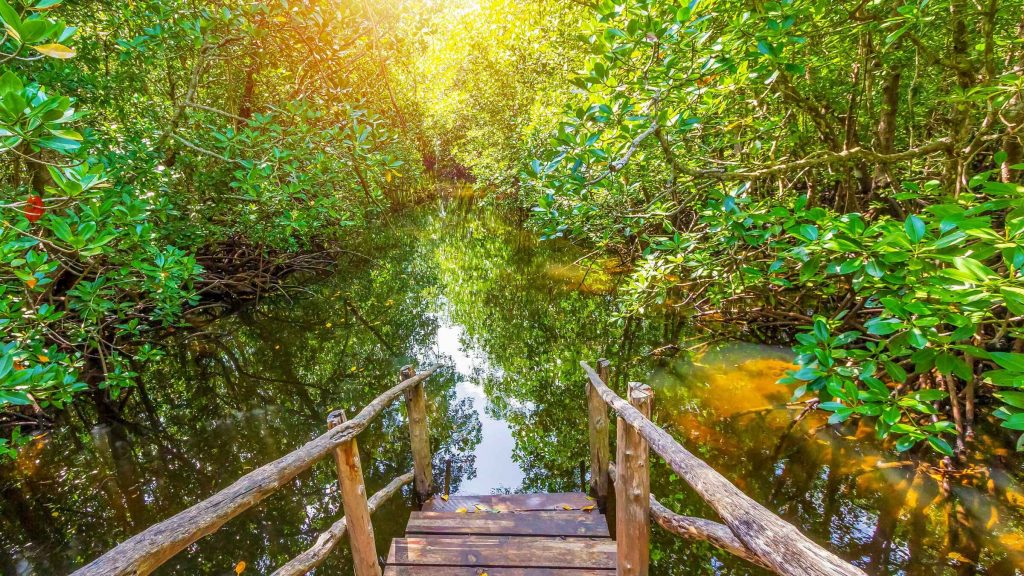
Jozani Forest
It’s an easy half-day addition to a Zanzibar beach stay and a good way to add a wildlife element to what’s otherwise a purely relaxation-focused leg of the trip. See our Jozani Forest National Park page for details.
15. Mafia Island
Mafia Island, south of Zanzibar, is one of the few places on Earth where whale sharks, the world’s largest fish species, can be reliably snorkeled with in the wild, typically between October and March when plankton blooms draw them close to shore. The surrounding Mafia Island Marine Park also protects some of the healthiest coral reefs on the Tanzanian coast, making it a serious draw for divers.
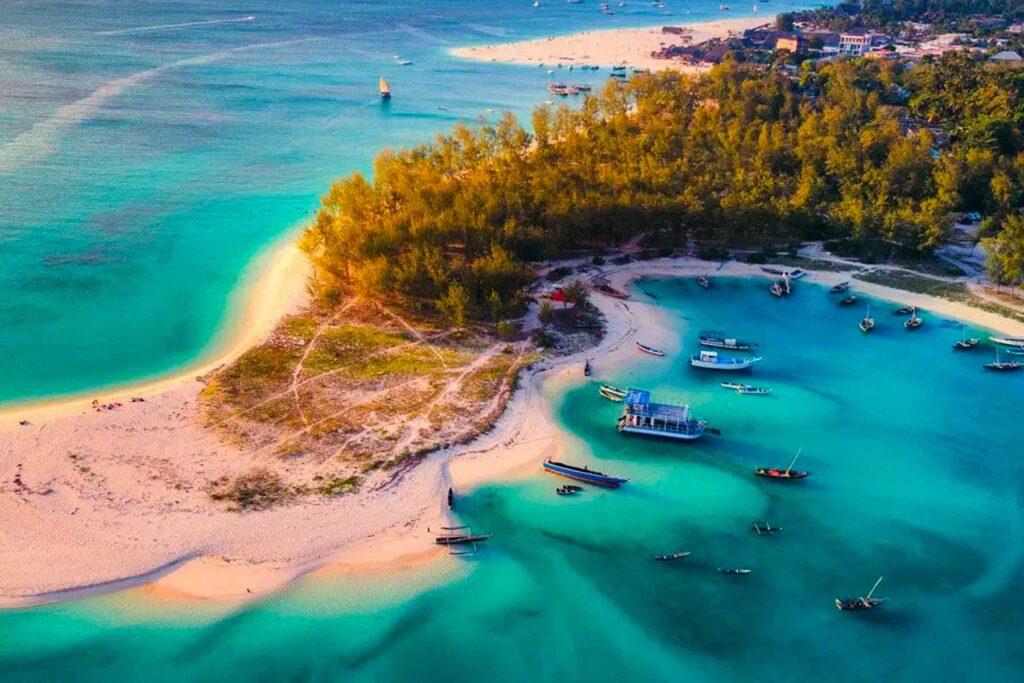
Far quieter than Zanzibar, Mafia Island suits travelers who’ve already done the archipelago’s main island and want something more private and marine-life-focused for a second coastal stop.
16. Pemba Island
Pemba Island, north of Zanzibar, is known as the ‘Green Island’ for its dense clove plantations and is widely considered one of the best diving destinations in the Indian Ocean, thanks to the dramatic drop-offs of the Pemba Channel. It sees a fraction of Zanzibar’s visitor numbers, which makes it a genuinely off-the-beaten-path choice for travelers who’ve already ticked off the archipelago’s more famous island.
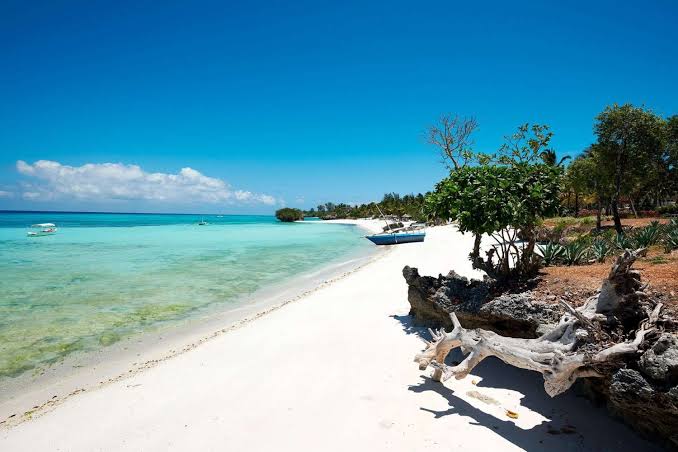
For serious divers and anyone craving true seclusion, Pemba Island is one of the quietest, most rewarding coastal add-ons we arrange.
Natural Wonders and Cultural Landmarks
17. Lake Natron and Lake Eyasi – the Rift Valley’s Soda Lakes
Lake Natron, in northern Tanzania near the Kenyan border, is one of the most caustic lakes on Earth; its high alkalinity and mineral content occasionally turn the water deep red, and it’s the single most important breeding site for East Africa’s lesser flamingo population. Nearby, the active volcano Ol Doinyo Lengai (Maasai for ‘Mountain of God’) offers a demanding but spectacular overnight climb to watch the sunrise from its rim.
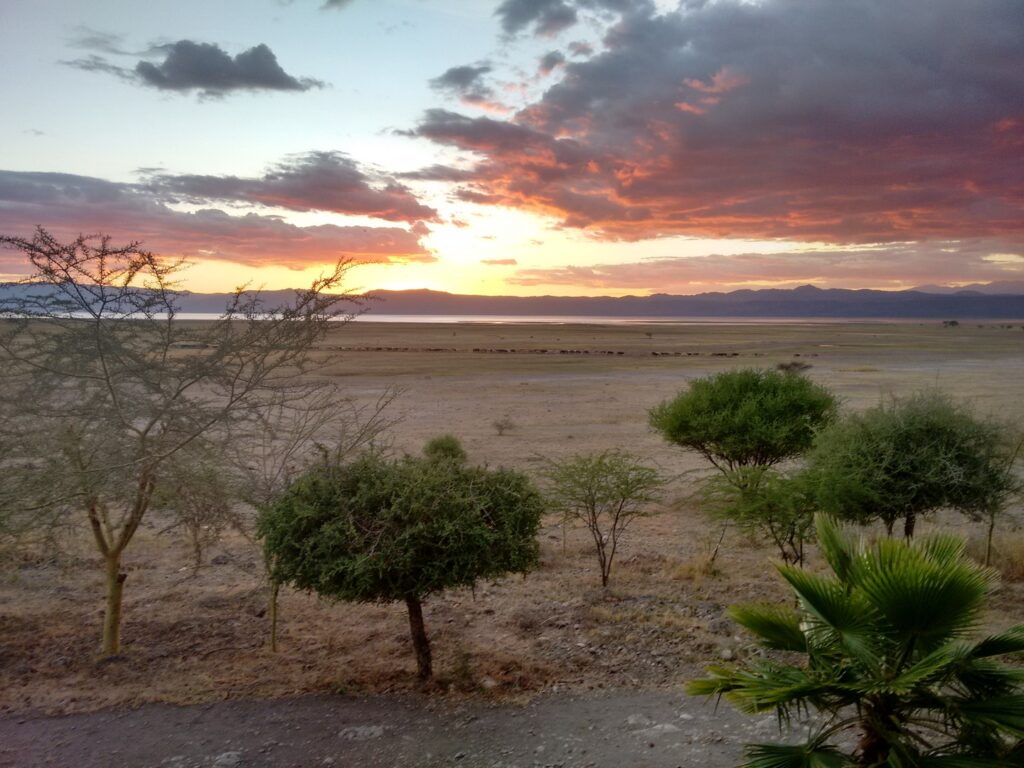
Further south, Lake Eyasi is home to the Hadzabe, one of the last hunter-gatherer communities in Africa, and the Datoga, traditional blacksmiths and pastoralists, offering a genuine and respectfully arranged cultural encounter rather than a staged performance. Guests interested in the region’s indigenous cultures should also read our page on the Maasai people, whose bomas and grazing lands span much of the northern Rift Valley landscape between these lakes and the safari parks.
18. Saadani National Park, Where Beach Meets Bush
Saadani National Park is the only place in East Africa where a genuine game drive and a swim in the Indian Ocean are possible on the very same day, its beach frontage running directly alongside bush inhabited by elephants, lions, and giraffes. It sits roughly midway between Dar es Salaam and Zanzibar, making it a natural, low-effort way to blend safari and coast without a long transfer.
It’s a smaller, quieter park than the northern circuit heavyweights and best suited to travelers looking for a relaxed, unconventional final stop rather than a primary wildlife destination. More detail is on our Saadani National Park page.
Unique and Off-the-Beaten-Path Places to Visit in Tanzania
The most unique, least-visited attractions in Tanzania are Katavi National Park’s untouched wilderness, Rubondo Island’s forest-and-lake setting on Lake Victoria, the wildflower-carpeted highlands of Kitulo National Park, and the cool, mist-covered Usambara Mountains. These destinations rarely appear on a first-time visitor’s itinerary, but for repeat Africa travelers who’ve already covered the Serengeti and Zanzibar, they’re where the real discovery happens.