
Bwabwata National Park, Namibia
Where the Okavango and Kwando Rivers frame one of Southern Africa’s richest wildlife corridors and where a private, tailor-made safari feels like discovering it first.
Bwabwata National Park is a 6,274-square-kilometer protected wilderness in Namibia’s far northeastern Zambezi Region, stretching 190 kilometers along the Caprivi Strip between the Okavango and Kwando Rivers. It sits at the geographic heart of the Kavango-Zambezi Transfrontier Conservation Area (KAZA), the world’s largest transboundary conservation landscape, and it functions as the primary corridor for elephants moving between Botswana, Zambia, Angola, and Namibia. Bwabwata is the missing link for travelers creating a Southern African itinerary that includes Victoria Falls, Chobe, or the Okavango Delta; this park boasts a big-game density rivaling that of its famous neighbors, yet it remains uncrowded.
Considering weaving Bwabwata into a wider Namibia or Southern Africa itinerary?
Bwabwata National Park at a Glance
| Detail | Information |
| Location | Zambezi Region (formerly Caprivi Strip), northeastern Namibia |
| Size | 6,274 km² (2,422 sq mi) |
| Established | 2007 (merger of Caprivi Game Park, Mahango Game Reserve, and Buffalo Game Park) |
| Governing Body | Namibia’s Ministry of Environment, Forestry and Tourism (MEFT) |
| Core Wildlife Areas | Mahango, Buffalo, and Kwando (Nkasa/Bwabwata core zones) |
| Bordered By | Okavango River (west), Kwando River (east), Angola (north), Botswana (south) |
| Big Game | Elephant, buffalo, lion, leopard (no rhino), plus giraffe, hippo, crocodile, sable & roan antelope |
| Birdlife | 400+ recorded species, one of Namibia’s top birding destinations |
| Best Time to Visit | July–October (dry season, peak game viewing) |
| Nearest Towns | Divundu and Kongola; regional hubs Rundu and Katima Mulilo |
| Nearest Airport | Katima Mulilo Airport (MPA); Kasane Airport (Botswana) is also convenient. |
| Conservation Context | Sits within the KAZA Transfrontier Conservation Area, linking five nations |
Where Is Bwabwata National Park?
Bwabwata National Park lies in Namibia’s Zambezi Region, in the narrow panhandle of land historically known as the Caprivi Strip, wedged between Angola to the north and Botswana to the south. The park runs roughly 40 kilometers wide and 190 kilometers from west to east, bounded by the Okavango River on its western edge and the Kwando River on its eastern edge. This river-bound geography is precisely what makes Bwabwata so productive for wildlife: two permanent water sources bracket an otherwise dry Kalahari sandveld landscape, concentrating game along the riverine fringes for most of the year.
Because it sits at the crossing point of four international borders, Bwabwata occupies a genuinely strategic position in Southern Africa’s conservation map. It’s roughly 200 kilometers east of Rundu and a similar distance west of Katima Mulilo, connected to both by the B8 Trans-Caprivi Highway, the single tar road that bisects the park and doubles as one of the best self-drive game-viewing routes in Namibia. For context within the region, Bwabwata is close enough to Botswana’s Chobe National Park and the Victoria Falls that many travelers combine all three into a single Southern African circuit, alongside better-known Namibian names like Etosha National Park in the north-central interior and the Skeleton Coast along the Atlantic seaboard.
For the full regional picture, including how Bwabwata fits alongside Namibia’s desert icons, see our Namibia travel guide, which maps out the country’s key regions for first-time visitors.
History and the KAZA Connection
Bwabwata National Park was formally established in 2007, created by merging three older, smaller protected areas, the Caprivi Game Park, Mahango Game Reserve, and Buffalo Game Park, into a single, better-managed conservation unit under Namibia’s Ministry of Environment, Forestry, and Tourism. The name itself comes from a local Khwe word that describes the sound of bubbling water at a set of rapids on the Kwando River, making it a fitting name for a park defined by its rivers.
What sets Bwabwata apart from almost every other park in Namibia is its role inside the Kavango-Zambezi Transfrontier Conservation Area (KAZA), a 520,000-square-kilometer conservation partnership between Angola, Botswana, Namibia, Zambia, and Zimbabwe, and the largest transfrontier conservation landscape on Earth. Bwabwata sits almost exactly at KAZA’s geographic center, forming the critical corridor that allows elephants and other wide-ranging species to move freely between Botswana’s Chobe ecosystem and Zambia and Angola to the north. It’s a working example of conservation without fences, and it’s part of why the region now holds the largest contiguous elephant population left in Africa. Readers who want the full policy and conservation picture can consult the KAZA Secretariat directly or Namibia’s own Ministry of Environment, Forestry and Tourism, which manages Bwabwata alongside the country’s other national parks.
Bwabwata is also unusual in that it is home to an estimated 5,500 people, mostly from the Khwe and Mbukushu communities, living within its boundaries in designated multiple-use zones, which is why it’s sometimes referred to locally as “the people’s park.” Community conservancies here work alongside MEFT on anti-poaching and tourism revenue-sharing, and several of the park’s lodges are joint ventures with these local communities.
Wildlife in Bwabwata National Park
Bwabwata is home to four of the Big Five: elephant, buffalo, lion, and leopard. It has four of the Big Five but no rhino, making it a strong big-game destination without technically being a Big Five park. What it lacks in rhino it makes up for in sheer density and diversity along its two river systems: hippo and crocodile are near-guaranteed sightings on any river cruise, while the drier interior supports giraffe, zebra, wildebeest, kudu, tsessebe, and several antelope species that are genuinely difficult to find elsewhere in Namibia, including sable antelope, roan antelope, red lechwe, and the water-loving sitatunga.
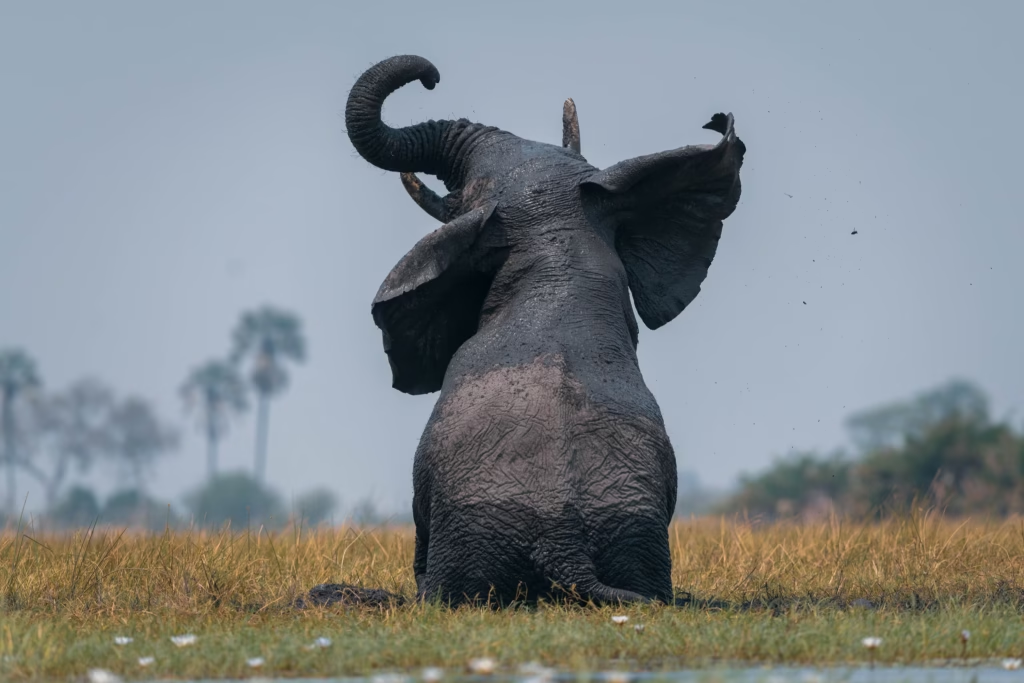
Predators are well represented too. Lions and leopards are resident, and the park’s dense riverine bush also supports spotted hyenas and, in the drier eastern stretches toward the Kwando, cheetahs. Because Bwabwata forms part of the KAZA elephant corridor, it also sees exceptionally high elephant traffic for a park its size; herds move through in the hundreds during peak dry-season months as they funnel between Botswana and Zambia/Angola, a spectacle that’s genuinely rare to witness this consistently anywhere else in Southern Africa.
Birding in Bwabwata
Bwabwata is one of Namibia’s premier birding destinations, with more than 400 recorded species. The mix of riverine forest, floodplain, papyrus swamp, and dry woodland habitat supports species you simply won’t find in Namibia’s desert regions further south or west African fish eagle, Pel’s fishing owl, Schalow’s turaco, and a long list of migratory waterbirds along the Kwando and Okavango floodplains. Serious birders often plan their entire Namibia itinerary to include Bwabwata, along with the drier-country species found around NamibRand Nature Reserve and the Namib-Naukluft, because these two ecosystems together cover an extraordinary range of Southern African bird families.
The Three Core Areas of Bwabwata
Bwabwata is managed as three distinct core wildlife zones, connected by multiple-use community areas where controlled human settlement and conservation coexist. Understanding the three cores helps enormously when planning where to base yourself.
Mahango Core Area
Sitting on the western edge of the park near the Okavango River and Popa Falls, Mahango is the most accessible of Bwabwata’s core zones and a favorite for game drives along the river floodplain. Open plains and riverine woodland here draw large elephant and buffalo herds, particularly in the dry season, and it’s one of the more reliable spots in the park for sable and roan antelope.
Buffalo Core Area
Located on the eastern bank of the Okavango, the Buffalo Core Area takes its name from a former Namibian Defence Force base once stationed here, whose ruins remain a minor point of historical interest. It offers excellent wildlife viewing with fewer vehicles than Mahango, along with attractive photographic backdrops around the old army station.
Kwando Core Area
On the park’s eastern flank along the Kwando River, the Kwando Core Area is widely considered the best of the three for dry-season game density, particularly for elephant and predator sightings, and is where most of Bwabwata’s higher-end lodges are concentrated. Boat cruises on the Kwando here rival anything on the Chobe River just across the Botswana border, minus the boat traffic.
Best Time to Visit Bwabwata National Park.

The best time to visit Bwabwata National Park is during the dry season, from July to October, when animals concentrate along the Okavango and Kwando Rivers as the interior bush dries out, vegetation thins for easier sightings, and elephant movement through the KAZA corridor peaks. September and October are the standout months for sheer game density, though they’re also the hottest, with daytime temperatures regularly exceeding 35°C. The wet season, November through April, transforms the park into lush, birdlife-rich wetland scenery with dramatic skies and excellent photography light, but wildlife disperses widely, and some lodge access roads can become difficult after heavy rain.
| Season | Months | What to Expect |
| Peak Dry Season | Jul – Oct | Best game viewing; wildlife concentrated at rivers; hot, dry days; dusty conditions |
| Early Dry / Shoulder | May–Jun | Cooler mornings, still strong game viewing, fewer visitors than peak months |
| Green / Wet Season | Nov – Apr | Lush scenery, exceptional birding and migratory species, dispersed wildlife, occasional road access issues |
| Shoulder (Late Wet) | Mar – Apr | Green landscapes easing into dry season, good value, fewer crowds |
If your priority is elephant and predator sightings, plan around the July–October window. If you’re chasing birdlife, waterscapes, or simply want the park largely to yourself, the shoulder months either side of the wet season offer an excellent trade-off between accessibility and atmosphere.
How to Get to Bwabwata National Park.
The most practical way to reach Bwabwata National Park is to fly into Katima Mulilo or Kasane and self-drive or transfer in via the B8 Trans-Caprivi Highway, which runs directly through the park and connects it to both Rundu in the west and Katima Mulilo in the east. Most international travelers arrive via Windhoek’s Hosea Kutako International Airport first, then connect onward by light aircraft or road.
- Fly into Hosea Kutako International Airport (WDH) near Windhoek, Namibia’s main international gateway.
- Take a connecting flight to Katima Mulilo Airport or to Kasane Airport in Botswana if you’re combining Bwabwata with Chobe and Victoria Falls.
- From Katima Mulilo or Kasane, transfer by road (roughly 2–3 hours) along the B8 Trans-Caprivi Highway, which runs directly through Bwabwata’s core areas.
- Alternatively, self-drive travelers can approach from Rundu in the west, entering via the Mahango Core Area near Divundu.
- A 4×4 vehicle is strongly recommended for any travel beyond the tarred B8, particularly for accessing lodges in the Kwando Core Area.
Because Bwabwata sits at a genuine crossroads close to Botswana, Zambia, and the Victoria Falls region of Zimbabwe/Zambia, many of our clients combine it with a multi-country loop rather than visiting it in isolation. We’ll map the logistics of border crossings, KAZA visa options, and light-aircraft connections as part of your tailor-made itinerary.
Where to Stay: Luxury Lodges Near Bwabwata National Park.
Bwabwata’s best lodges are concentrated in the Kwando Core Area and along the Okavango River near Mahango, ranging from intimate tented camps to community-partnered lodges built directly into riverfront settings. Because the park itself has very limited internal accommodation, most high-end stays sit on private concessions bordering the core wildlife zones, giving guests exclusive traversing rights alongside full access to the park.
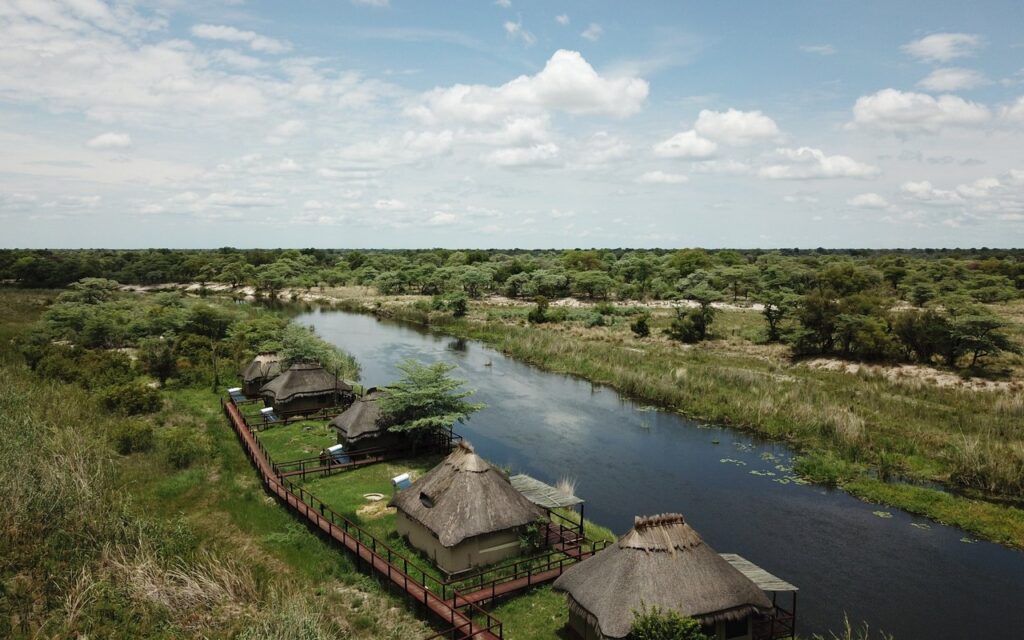
- Riverfront tented lodges on the Kwando: Several boutique operators run small-footprint tented camps directly on the Kwando River, prioritizing private game drives and boat cruises over volume tourism.
- Community-partnered lodges: A number of Bwabwata’s camps operate as joint ventures with local Khwe and Mbukushu conservancies, channelling a share of revenue directly back into the surrounding communities.
- Riverside lodges near Divundu and the Mahango gate are a good base for exploring the western side of the park and combining with a trip toward the Okavango Delta.
- Katima Mulilo and Kongola area properties are useful as a first- or last-night stop for travelers transiting between the park and Victoria Falls or Zambia.
As with every itinerary we build, we don’t work from a fixed list; we match the lodge to the traveler. Couples typically gravitate toward the smaller, more intimate tented camps on the Kwando; families do well at community-partnered lodges with more flexible activity scheduling; and photographers and repeat Africa travelers often want to be based directly on the riverfront for early and late boat cruises when the light and the birdlife are at their best.
Want current availability, rates, and our honest take on which lodge suits your trip?
Top Things to Do in Bwabwata National Park
Game Drives
Open-vehicle game drives through the Mahango, Buffalo, and Kwando core areas are the backbone of any Bwabwata safari, with early-morning and late-afternoon drives timed around the cooler hours when wildlife is most active. Because the park sees far fewer vehicles than Etosha or Chobe, sightings tend to feel unhurried and private rather than shared with a queue of other trucks.
Boat Cruises on the Kwando and Okavango Rivers
A slow boat cruise along the Kwando River or the Okavango near Mahango is arguably Bwabwata’s signature experience, bringing guests eye-level with hippo pods, basking crocodiles, and dense concentrations of waterbirds, with elephants frequently seen drinking or crossing at the water’s edge in the late afternoon.
Birdwatching Walks
Guided walking excursions focused specifically on birdlife are widely available through the park’s lodges, particularly around the papyrus swamps and floodplain fringes where species like Pel’s fishing owl and African skimmer are found.
Fishing
Catch-and-release fishing on the Okavango and Kwando Rivers for species including tigerfish and bream is offered by several riverfront lodges, typically as a half-day add-on to the standard game-viewing itinerary.
Cultural Visits
Because Bwabwata is home to established Khwe and Mbukushu communities living within its boundaries, several lodges arrange respectful, community-led cultural visits, a genuinely different experience from the more staged cultural stops found elsewhere in Southern Africa. Travelers interested in this side of Namibia should also look at our broader Namibian cultural tours content, which covers similar community-based experiences around Twyfelfontein and the Himba communities further west.
Combining Bwabwata with Other Destinations.
Bwabwata works best as part of a wider itinerary rather than a stand-alone destination, and its location makes that particularly straightforward. The park sits within a few hours of Botswana’s Chobe National Park and the Victoria Falls region shared by Zambia and Zimbabwe, making a Namibia–Botswana–Victoria Falls loop one of the most natural combinations in Southern Africa. Within Namibia itself, Bwabwata pairs logically with a broader northern circuit that includes Etosha National Park for classic Big Five-style game viewing around its famous waterholes, before or after the river-and-wetland experience Bwabwata offers.
Travelers building a longer, more comprehensive Namibia trip often extend south from Bwabwata and Etosha toward the Skeleton Coast, the dunes of NamibRand Nature Reserve and the Namib-Naukluft National Park, and the dramatic scenery of Fish River Canyon, effectively framing a wetland-and-wildlife opening with the desert landscapes Namibia is best known for internationally. For a full overview of how these pieces fit together, our things to do in Namibia guide and our wider roundup of the continent’s hidden gems in Africa are both useful starting points.
For travelers whose African bucket list extends beyond Namibia, it’s worth knowing that our core expertise and on-the-ground presence are in East Africa, particularly in Tanzania’s Serengeti and Ngorongoro ecosystems, plus gorilla trekking in Rwanda’s Volcanoes National Park and Uganda’s Bwindi Impenetrable Forest. Some clients choose to treat Namibia and East Africa as two separate trips rather than combining them in one journey, given the distance between the regions; others use Bwabwata and Namibia as a standalone add-on either side of a longer Tanzania safari. Either way, we’ll help you think through the logistics honestly rather than force-fitting destinations that don’t flow well together. Our full range of combined African safari itineraries shows the kind of multi-country routing we build regularly.
Not sure how Bwabwata fits with the rest of your Africa wish list?
Is Bwabwata National Park Right for You?
Couples
The smaller, more intimate tented camps along the Kwando River suit couples looking for privacy and a slower pace, with private boat cruises at sunset and dinners under riverfront skies, without the volume of a larger safari circuit.
Families
Bwabwata’s community-partnered lodges tend to offer more flexible, family-friendly activity scheduling than some of Namibia’s more rigid desert lodges, and the boat cruises in particular are an ideal, low-stress way to introduce children to big game without a long, bumpy game drive.
First-Time Africa Travelers
If this is your first trip to the continent, we’d generally recommend treating Bwabwata as one stop within a broader circuit paired with Etosha for classic game viewing and, potentially, Victoria Falls or Chobe just across the border rather than a stand-alone destination, simply because first-timers tend to want the fuller range of landscapes and experiences Namibia and its neighbors offer collectively.
Repeat Africa Travelers
For guests who’ve already done the classic Serengeti-Ngorongoro-Maasai Mara circuit, Bwabwata is exactly the kind of lesser-known destination worth seeking: genuine wildlife density, minimal vehicle traffic, and a landscape of river, floodplain, and Kalahari sandveld that looks and feels distinct from East Africa’s open plains.
Planning Your Trip: Practical Tips.
How Many Days Do You Need?
Most travelers should plan for at least two to three nights in Bwabwata to properly cover a river core area (Kwando or Mahango) and allow time for game drives and boat cruises, rather than rushing through as a single overnight stop en route between Botswana and the rest of Namibia. Longer stays of three to four nights allow time to explore more than one core area.
Visas and Border Crossings
Namibia allows visa-free entry for many nationalities, including the US, the UK, most EU countries, and Australia, for stays up to 90 days. Because Bwabwata is near the borders of Botswana, Zambia, and Zimbabwe, travelers visiting it along with Chobe or Victoria Falls should check if their nationality qualifies for the univisa (KAZA visa) for Zambia and Zimbabwe, which can make crossing borders between these countries much easier. We’ll confirm the exact requirements for your passport and itinerary when we build your trip.
Health and Safety
Bwabwata sits within a malaria area, and antimalarial precautions are strongly recommended for all visitors; we advise consulting a travel health professional or your doctor well ahead of departure. As with any wilderness area, guests should always follow lodge and guide safety instructions, particularly around river activities where hippo and crocodile are present.
What to Pack
Neutral-toned, lightweight clothing works best for game drives, with layers for cool early mornings and boat cruises even during the hot dry season. A reliable pair of binoculars is essential given Bwabwata’s birdlife, and given the park’s river-based activities, quick-dry clothing and a light rain layer are worth packing even in the dry season.
Conservation and the People of Bwabwata
Bwabwata’s model, a national park that is also home to roughly 5,500 people living within community conservancies, is a deliberate approach to conservation that ties local livelihoods directly to wildlife protection, rather than excluding communities from the land. Revenue-sharing partnerships between MEFT, community conservancies, and tourism operators fund anti-poaching patrols and community infrastructure, and several of the park’s lodges are structured as direct joint ventures with these conservancies. It’s a model worth understanding before you visit, not just for context, but because choosing lodges that genuinely participate in these partnerships is one of the more meaningful ways travelers can support the park directly.