Naboisho Camp offers activities the neighboring Maasai Mara National Reserve does not permit: night game drives, guided walking safaris, and fully off-road vehicle tracking, alongside some of the highest recorded lion densities in Africa.
Because Naboisho Camp operates inside a private conservancy rather than the national reserve, its guides can leave the (largely informal) track network entirely to follow wildlife across open country and can run drives after dark, both of which are prohibited inside the Maasai Mara National Reserve proper. That single distinction shapes almost everything about a stay here.
Activities
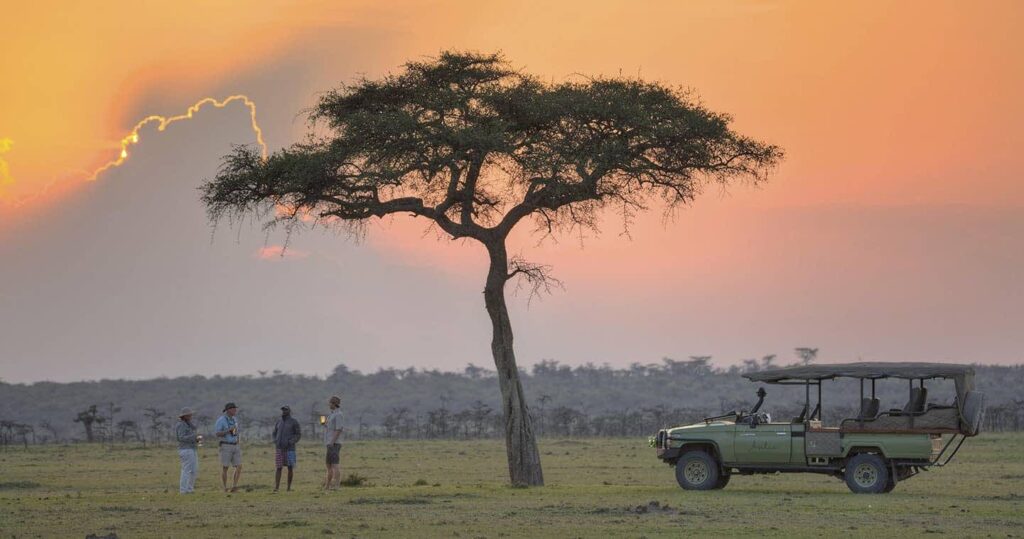
- Shared or private game drives, morning and afternoon, with genuine off-road access to follow predator movement across the conservancy
- Night game drives using spotlights to find nocturnal and crepuscular species like aardvark, genet, civet, and bushbaby, among them rarely seen on a standard day drive
- Guided walking safaris on foot with an armed Maasai guide, covering terrain and detailing a vehicle pass over
- Fly-camping: a mobile, simplified overnight camp pitched at a fresh site within the conservancy for guests wanting a deeper wilderness night
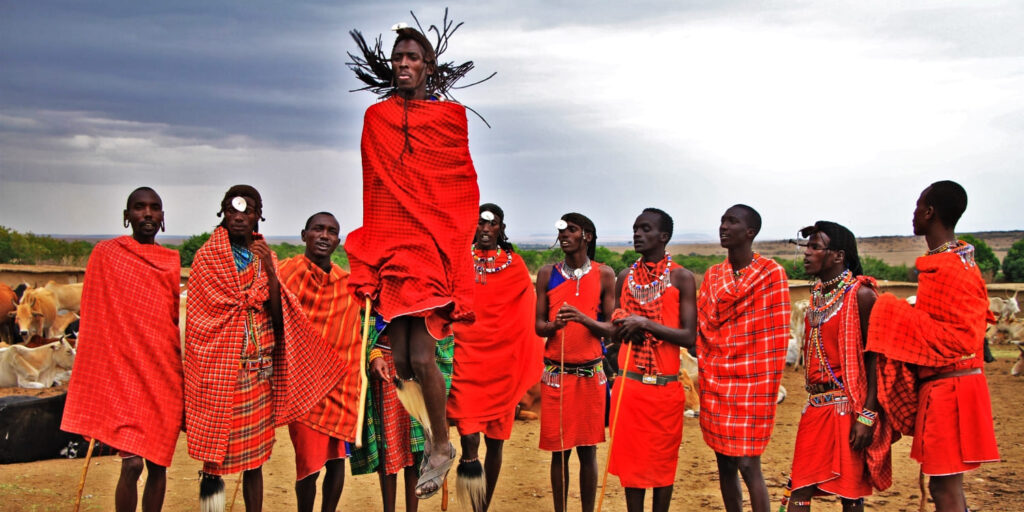
- Cultural visits to Maasai landowner communities within the conservancy, offering direct context for how the conservancy model actually functions
- An optional full-day excursion into the Maasai Mara National Reserve itself, run at an additional cost that covers reserve entry fees, for guests wanting to combine conservancy exclusivity with a reserve game drive during peak migration months
Wildlife You Can Expect
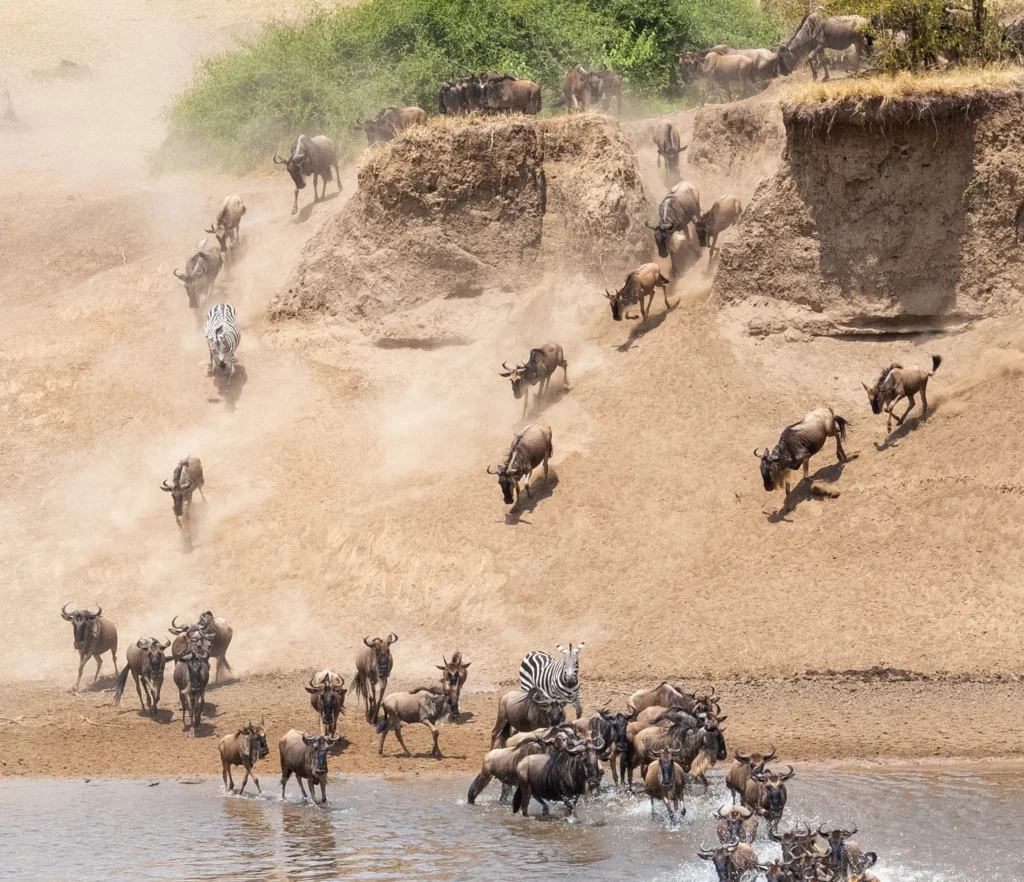
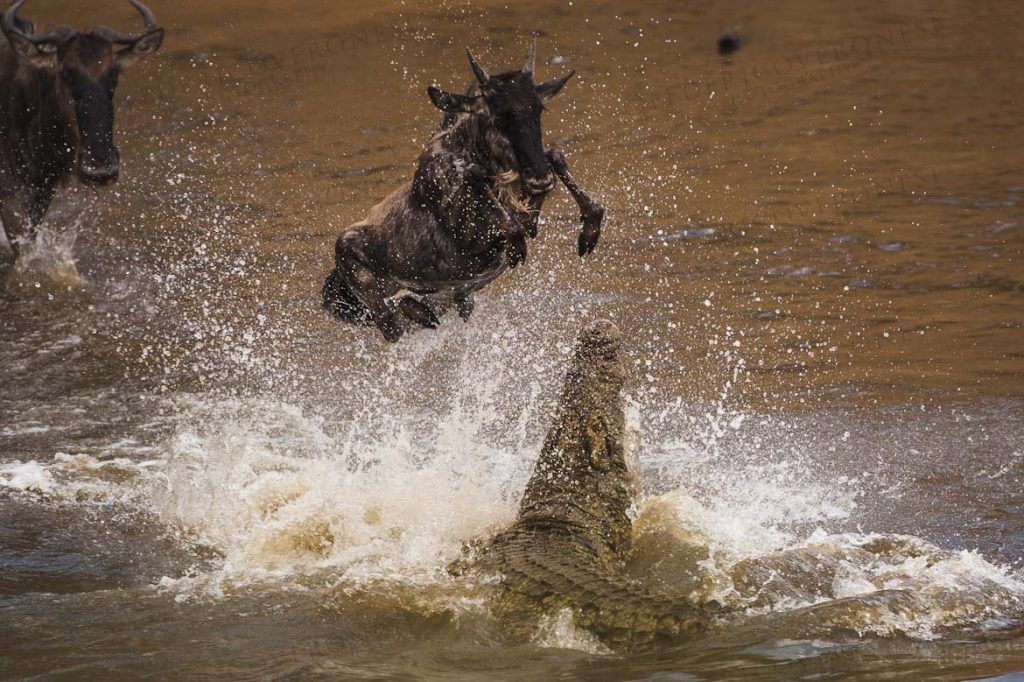
The Mara Naboisho Conservancy is widely cited as having one of the highest lion densities anywhere in Africa, and resident prides are a near-daily sighting rather than a hoped-for one. Leopard and cheetah are both well established across the conservancy, alongside healthy populations of elephant, buffalo, giraffe, and a wide range of plains antelope, topi, eland, impala, and Coke’s hartebeest among them. Because Naboisho’s wildlife is largely resident rather than migratory, sightings remain strong outside the July–October migration window too, which is not true of camps that depend on the Mara River crossings for their headline drama.
Asilia’s guiding teams are trained to the operator’s own internal standards and, for the most part, drawn from communities local to the conservancies in which they work, a deliberate choice that both supports local employment and puts genuinely encyclopedic local knowledge in the front seat of every vehicle. Asilia also runs Twende Porini (“let’s go to the bush”), a program that hosts children from surrounding communities in camp for an immersive introduction to tourism and conservation work, part of the same pipeline that produces many of its long-serving guides.
Who Should Stay at Naboisho Camp
Naboisho Camp suits honeymooners, wildlife photographers, and families with children five and older equally well, thanks to its low vehicle density, night-drive access, and dedicated family tent.
Honeymoon & Romantic Couples
The camp’s small scale, private verandas, and near-guaranteed low vehicle density at sightings make it a strong honeymoon choice for couples who want genuine seclusion without sacrificing wildlife quality. Sundowners and bush breakfasts can both be arranged as private experiences on request.
Families With Children
One dedicated family tent and a guide team accustomed to younger travelers make Naboisho workable for families; the sourced minimum age for children is 5 years old, though the age requirement should be reconfirmed directly with Asilia at the time of booking.
Solo Travelers
Communal dining and a small, nine-tent guest count make Naboisho a comfortable camp for solo travelers to meet other guests, though single-occupancy supplements typically apply, as at most Asilia properties.
Wildlife Photographers
This is arguably Naboisho Camp’s strongest single audience. Off-road access, night drives, and a resident (rather than purely migratory) predator population mean photographers are not racing a migration calendar to get results; a well-timed three- or four-night stay in almost any month can deliver serious big-cat photography, and low vehicle density at sightings means fewer competing vehicles in every frame.
First-Time Safari Travelers vs. Repeat Africa Visitors
First-timers get an accessible, comfortable introduction to East Africa without sacrificing wildlife quality for polish. Repeat Africa visitors, especially those who have already done a standard Maasai Mara National Reserve trip, tend to appreciate Naboisho precisely because it delivers a different, quieter version of the same ecosystem, with activities (walking, night drives) the reserve itself cannot offer.
Is it Worth the Price?
At roughly US$690 to US$2,250 per person per night, depending on the season, Naboisho Camp sits in the upper-luxury tier of Mara conservancy camps rather than at the very top of the market. Given the conservation lease fees baked into every rate, the low-density guarantee, and the range of activities included, most guests weighing it against similarly priced reserve-adjacent lodges which cannot offer night drives or off-road tracking find the premium justified.
Best Time to Visit Naboisho Camp
Naboisho Camp delivers strong wildlife viewing year-round thanks to its resident predator population, with July through October offering the driest conditions and the chance to combine a conservancy stay with the wider Mara migration season.

Because Naboisho’s signature wildlife, lion, leopard, cheetah, elephant, and resident plains game, does not depend on the annual Great Wildebeest Migration, this lodge is one of the few Mara-ecosystem camps where the shoulder and green seasons genuinely compete with peak season for game-viewing quality, while offering markedly lower rates and far fewer other travelers.
| Months |
Conditions |
Wildlife Highlights |
Crowds & Pricing |
| Jan – Feb |
Warm, mostly dry (‘short dry’) |
Resident predators active; good general game viewing |
Moderate crowds; mid-range pricing |
| Mar – May |
Long rains; green season |
Lush landscapes, excellent birding, and resident wildlife still strong |
Lowest crowds; lowest rates (from ~$690 pp/night) |
| Jun – Oct |
Dry season |
Peak conditions: wider Mara-ecosystem migration herds pass through the region roughly July–October. |
Highest demand; peak rates (up to ~$2,250 pp/night) |
| Nov–Dec (to ~19th) |
Short rains begin. |
Landscape greens up again; resident wildlife remains reliable. |
Lower crowds; moderate rates |
| Late Dec (20th) – early Jan |
Short dry spell, holiday period |
Strong resident game viewing |
Peak holiday demand and pricing |
Conservation & Community at Naboisho Camp.
Staying at Naboisho Camp directly funds the lease payments of the Mara Naboisho Conservancy to roughly 500 Maasai landowner families, making conservation and community income the financial foundation of the entire property, not an add-on.
Asilia helped establish the Mara Naboisho Conservancy in 2010 in partnership with local Maasai landowners, who lease their land to the conservancy in exchange for regular payments, an arrangement that converts wildlife habitat into a direct, dependable source of household income for the landowning families instead of subdividing and fencing the land for livestock or agriculture. The conservancy’s name itself, from the Maa word for “coming together, or Haarmony” reflects that partnership structure.
Community Employment & Education
Guiding, hospitality, and camp-support roles at Naboisho Camp draw substantially from communities local to the conservancy, and Asilia’s Twende Porini program brings children from those communities into camp for an immersive, multi-day introduction to conservation and tourism careers, which is part of a long-term local employment pipeline rather than a one-off outreach gesture.
Conservation Programs
Naboisho Camp and the wider conservancy support the Mara Predator Conservation Program and the Mara Elephant Project, both of which are active in monitoring and protecting the ecosystem’s key wildlife populations. A nightly conservation contribution, built into camp rates, funds AsiliaGiving initiatives across the operator’s East African portfolio.
Why Staying Here Is an Ethical Choice
The Mara Naboisho Conservancy exists specifically because tourism revenue made conservation more financially viable for Maasai landowners than the alternatives. Every stay at Naboisho Camp reinforces that calculation directly, which is a meaningfully different proposition from a lodge that simply operates inside an already-protected national reserve.
Planning Your Stay: Practical Travel Tips
Pack lightweight layers for warm days and cool Mara nights, budget cash for tipping and optional Maasai Mara National Reserve excursions, and confirm luggage-weight limits for the light-aircraft flight into Naboisho Conservancy Airstrip.
What to Pack
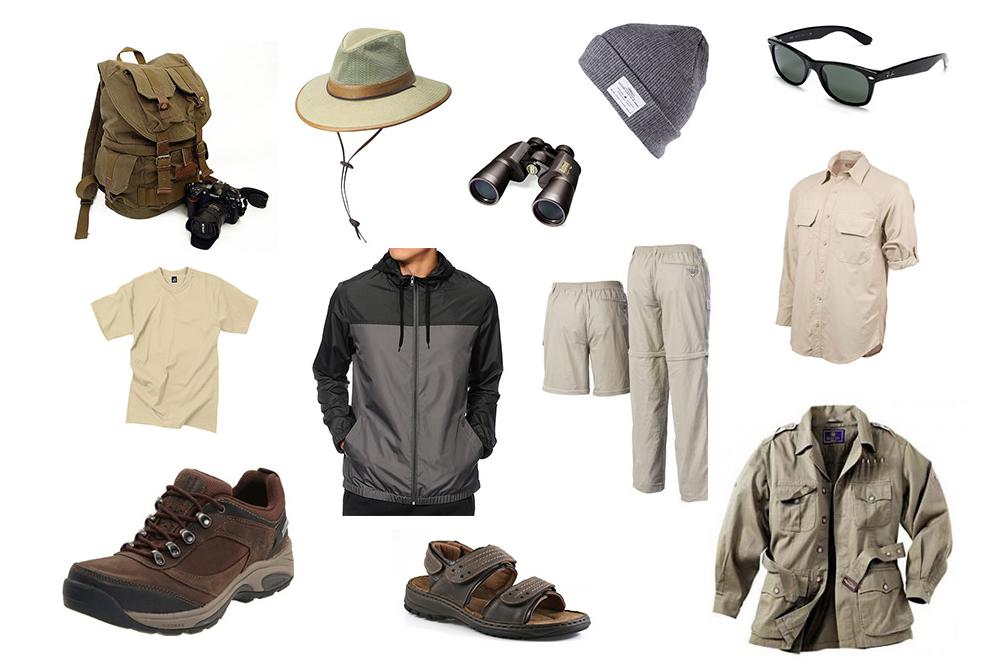
The Mara Naboisho Conservancy sits at a moderate elevation, with warm days and noticeably cool early mornings and evenings, especially on night game drives. Pack breathable, neutral-toned layers, a warm fleece or jacket for dawn drives, a hat and sunglasses, and comfortable closed shoes for walking safaris. Soft-sided luggage is strongly recommended, and usually required, for the light-aircraft flight into the conservancy; hard-shell suitcases rarely fit the aircraft’s baggage hold.
Health & Vaccination Notes
Kenya sits within a malaria zone, and anti-malarial medication is generally recommended for the Mara region. Consult a travel health professional or your physician well ahead of departure. Yellow fever vaccination requirements depend on your prior travel history and airline transit points rather than Kenya entry alone, so confirm current requirements directly with your doctor or a travel clinic before booking. Kenya’s official tourism board, Magical Kenya, also publishes general entry-requirement guidance.
Payment, Tipping & What’s Included
Naboisho Camp’s all-inclusive rate typically covers accommodation, all meals, local-brand drinks, twice-daily scheduled game drives, night drives, guided walking safaris, and transfers to and from the nearest airstrip. Flights, premium spirits and cellar wines, spa treatments, Maasai Mara National Reserve entry fees for the optional reserve excursion, and gratuities are generally excluded. Tipping is customary in Kenya’s safari industry; guides and camp staff are typically tipped separately, in cash, with USD widely accepted.
Ready to build Naboisho Camp into your East Africa itinerary?
Talk With Our Safari Experts →
Frequently Asked Questions About Naboisho Camp
Where is Naboisho Camp located?
Naboisho Camp is located inside the private Mara Naboisho Conservancy, on the northeastern boundary of Kenya’s Maasai Mara National Reserve, in Narok County, southwestern Kenya. It sits within the wider Greater Mara Ecosystem, the same landscape that connects south to Tanzania’s Serengeti.
How many rooms does Naboisho Camp have?
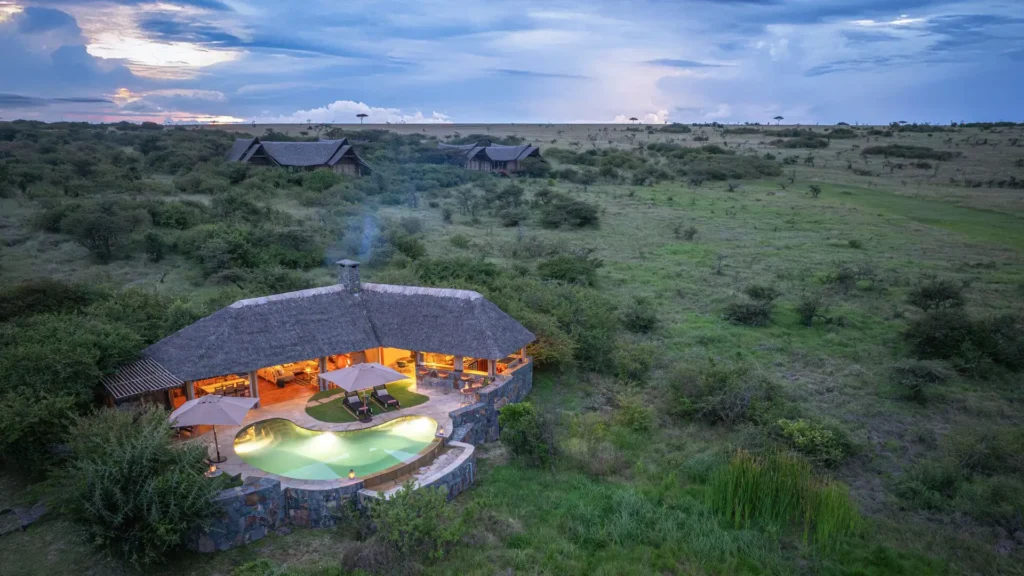
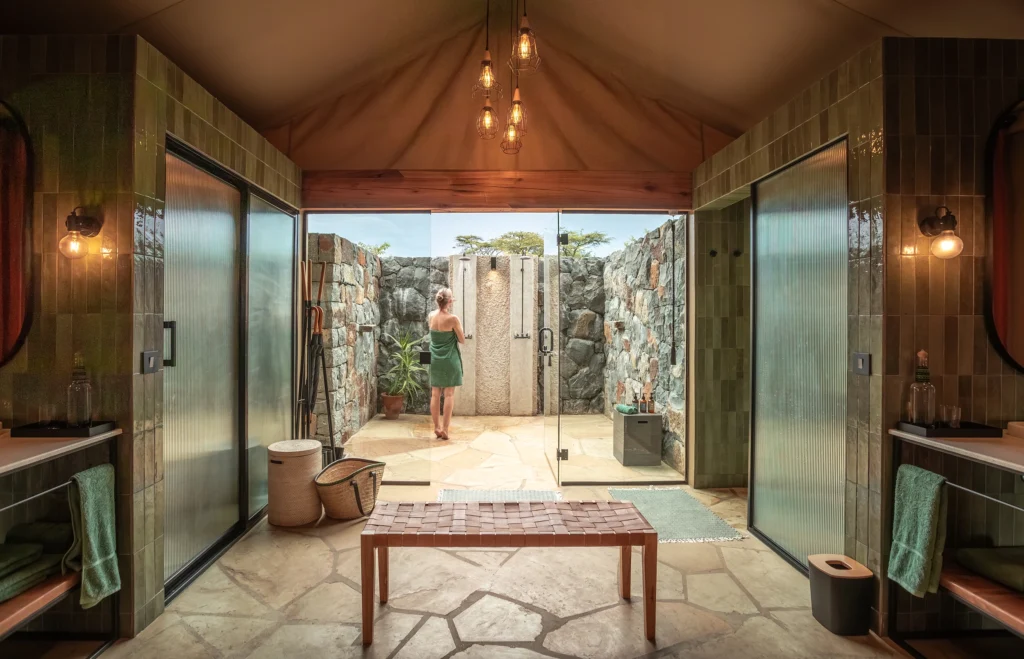
Naboisho Camp has 9 spacious tented suites, raised on stone plinths under thatched roofs, accommodating up to approximately 22 guests in total. The suites include at least one dedicated family tent with a connecting second bedroom.
How much does it cost to stay at Naboisho Camp?
Naboisho Camp’s 2027 all-inclusive rates range from approximately US$690 per person per night in the April–May green season up to around US$2,250 per person per night in the July–October peak and December holiday periods. Because rates are time-sensitive, always reconfirm them directly with your safari operator.
What is the best time to visit Naboisho Camp?
Naboisho Camp offers strong wildlife viewing year-round because its predator population is largely resident rather than migratory. July through October brings the driest weather and coincides with the broader Mara-ecosystem migration season, while the March–May green season offers excellent value, lush scenery, and far fewer other travelers.
How do you get to Naboisho Camp?
Most guests fly from Nairobi’s Wilson Airport to the Naboisho Conservancy Airstrip on a scheduled light-aircraft flight of roughly 55 to 60 minutes, followed by a short game-drive transfer into camp. Guests combining Naboisho with a Tanzania safari can also connect via Kilimanjaro or Arusha or overland via the Isebania/Sirari border.
Is Naboisho Camp inside the Maasai Mara National Reserve?
No. Naboisho Camp sits inside the adjacent Mara Naboisho Conservancy, a private, community-owned wildlife area bordering the reserve rather than inside it. This distinction is what allows the camp to offer night game drives, off-road tracking, and walking safaris, none of which are permitted inside the national reserve itself.
Is Naboisho Camp good for families with children?
Yes. Naboisho Camp includes a dedicated family tent with a connecting second room and guides accustomed to hosting younger travelers. The sourced minimum age for children is 5 years old, though this information should be reconfirmed directly with Asilia Africa at the time of booking, as policies can vary by season and availability.
What is the minimum age for children at Naboisho Camp?
Available sourcing indicates a minimum age of 5 years for children at Naboisho Camp. Because minimum-age policies at safari camps change periodically and can vary by tent type or season, we recommend confirming this directly with Asilia Africa before booking a family stay.
What wildlife can you see at Naboisho Camp?
The Mara Naboisho Conservancy is known for one of the highest lion densities in Africa, alongside well-established leopard and cheetah populations, elephant, buffalo, giraffe, and a wide range of plains antelope, including topi, eland, and Coke’s hartebeest. Because much of this wildlife is resident year-round, sightings remain strong outside the peak migration months.
Does Naboisho Camp offer night game drives?
Yes. Because Naboisho Camp operates inside a private conservancy rather than the national reserve, its guides can run spotlight-assisted night game drives, which are one of the camp’s most distinctive activities and one of the few ways to reliably see nocturnal species like genet, civet, and bush baby on safari.
What does ‘Naboisho’ mean?
‘Naboisho’ is a Maa-language word most authoritatively translated by the conservancy itself as ‘coming together,’ reflecting the partnership between Maasai landowners and tourism operators that created the conservancy. Some secondary sources render it as ‘harmony,’ a closely related concept.
Is Naboisho Camp good for wildlife photographers?
Yes, it’s one of the stronger photography camps in the Mara ecosystem. Off-road vehicle access, night drives, low guest density, and a largely resident predator population mean photographers are not dependent on migration timing to get strong results and rarely share a sighting with more than one or two other vehicles.
What is included in the Naboisho Camp rate?
The standard all-inclusive rate typically covers accommodation, all meals, local-brand drinks, twice-daily game drives, night drives, guided walking safaris, and airstrip transfers. International and domestic flights, premium spirits, spa treatments, Maasai Mara National Reserve entry fees for the optional full-day reserve excursion, and gratuities are generally not included.
Can you combine Naboisho Camp with a Tanzania safari?
Yes. Naboisho Camp sits at the northern end of the same Greater Mara–Serengeti ecosystem that runs south into Tanzania, making it a natural addition to a combined Kenya–Tanzania itinerary. See the Safari Packages section below for specific route examples that pair Naboisho with the Serengeti, Ngorongoro Crater, and other Tanzania highlights.
Does Naboisho Camp have a swimming pool and spa?
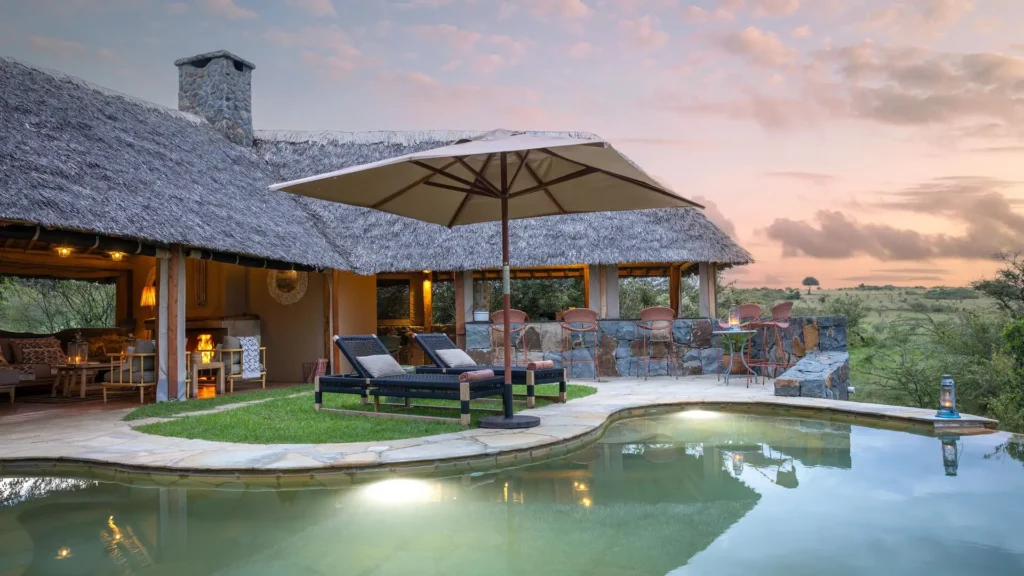
Yes. Naboisho Camp has an on-site swimming pool and a dedicated spa tent offering wellness treatments, both of which are genuine rarities at a camp of this intimate nine-tent scale.