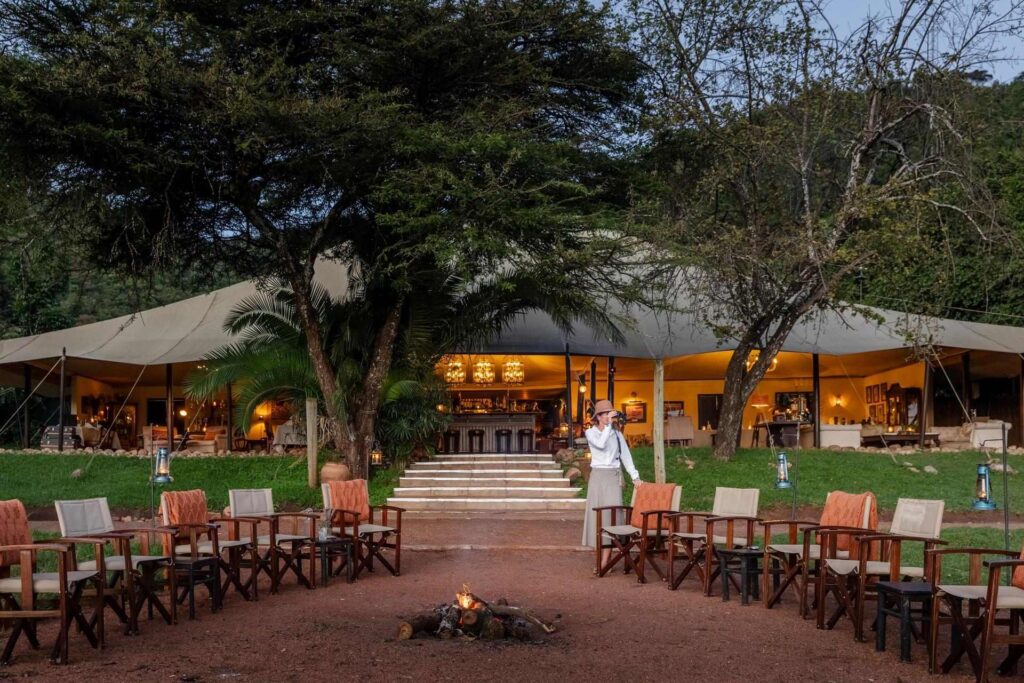
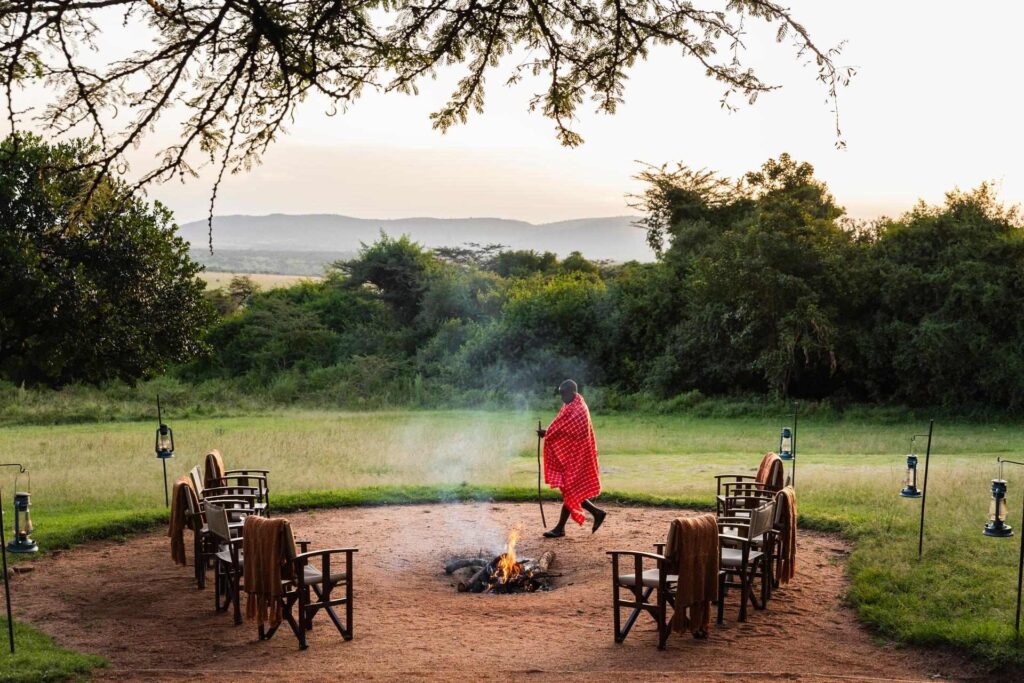
Because Olderkesi is private conservancy land rather than national reserve, Cottar’s 1920s Camp is one of a relatively small number of Maasai Mara properties where guests can legally combine day game drives, night drives, and guided walking safaris within a single stay.
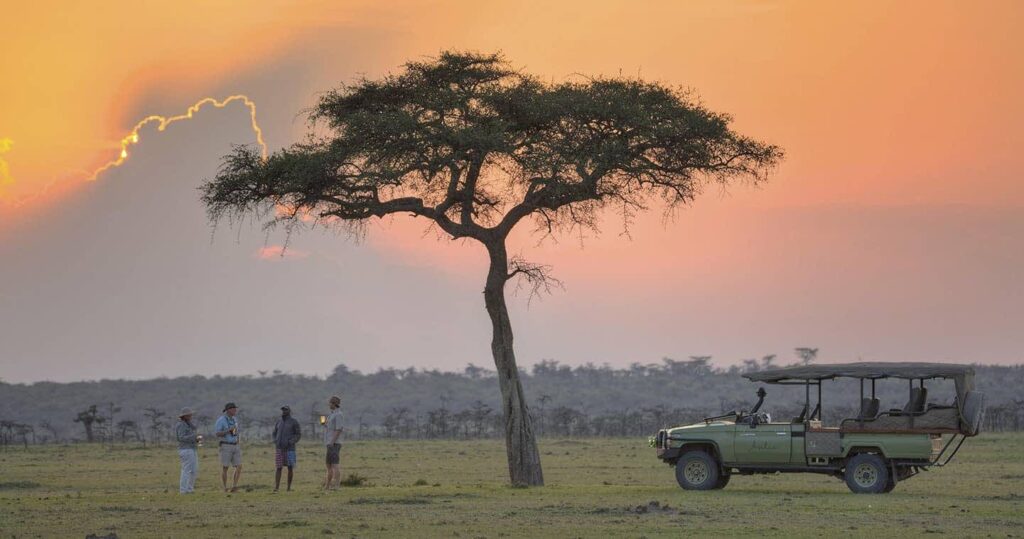
- Day & Night Game Drives: Open 4×4 vehicles head out onto the conservancy and into the Maasai Mara National Reserve for daytime Big Five viewing, while after-dark drives, permitted only on private land, regularly reveal aardvark, porcupine, springhare, and active nocturnal predators.
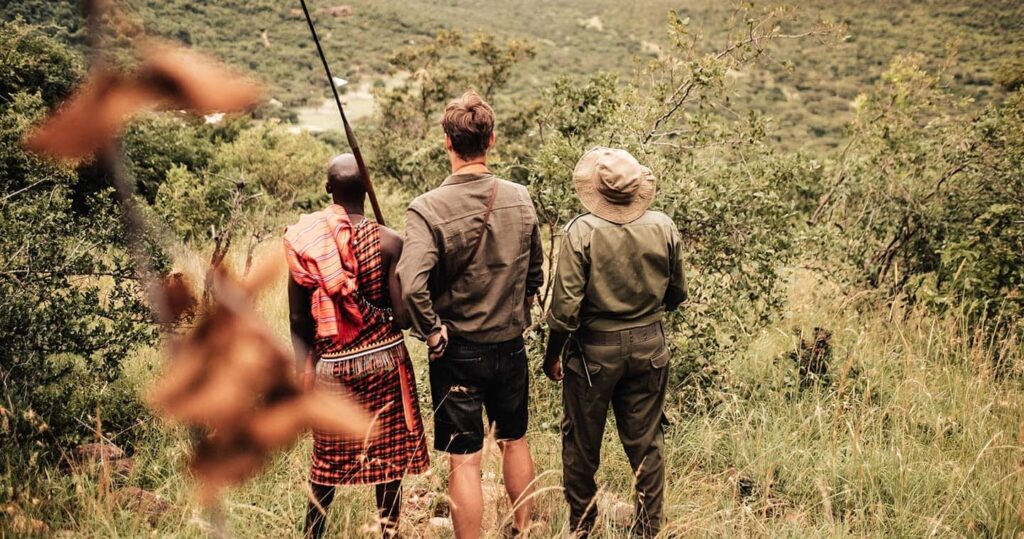
- Guided Walking Safaris: Led by experienced Maasai guides on foot across Olderkesi, these walks focus on tracking, smaller wildlife, and bush skills impossible to appreciate from a vehicle.
- Maasai Warrior School: A hands-on cultural experience where guests learn traditional skills, from spear-throwing to fire-making, directly from Maasai warriors from the surrounding community.
- E-Bike Tours: Guided electric-bike rides across the conservancy’s tracks offer a quieter, more active way to cover ground and take in the scenery.
- Foraging, Medicinal Walks & Coffee Tasting: Guides demonstrate traditional plant knowledge on themed walks, and a camp waiter can host a coffee-tasting session for enthusiasts.
- Sand River Waterfall & Rock Pool: A natural waterfall and rock pool on the Sand River offers one of the few safe wild-swimming spots in the region.
- Bead-Making with Maasai Artisan Mama Naishuru: A cultural workshop in traditional Maasai beadwork, run in partnership with a local artisan.
- Meeting the All-Female Ranger Unit: Guests can spend time with the Maasai Mara’s all-female conservation ranger team and hear directly about their anti-poaching and monitoring work.
- Hot Air Balloon Flight (extra cost): Dawn balloon flights over the wider Mara ecosystem can be arranged as an add-on for an additional fee.
- Mara Elephant Project Helicopter Flight (extra cost): A bookable conservation-focused helicopter experience run in partnership with the Mara Elephant Project.
- Raptor Experience with Kenya Birds of Prey Trust (extra cost): A specialist birding add-on focused on the region’s eagles, vultures, and other raptors.
Resident and visiting wildlife on and around the conservancy includes lion, leopard, cheetah, elephant, buffalo, giant eland, topi, spotted hyena, and, during the July to October migration season, vast herds of wildebeest and zebra moving through the wider ecosystem. The camp’s private-vehicle-and-guide arrangement, standard for the Family Tents and the Bush Villa and available on other tent categories, gives photographers and serious wildlife enthusiasts far more flexibility to linger at a sighting than shared-vehicle camps typically allow.
Who Should Stay at Cottar’s 1920s Camp
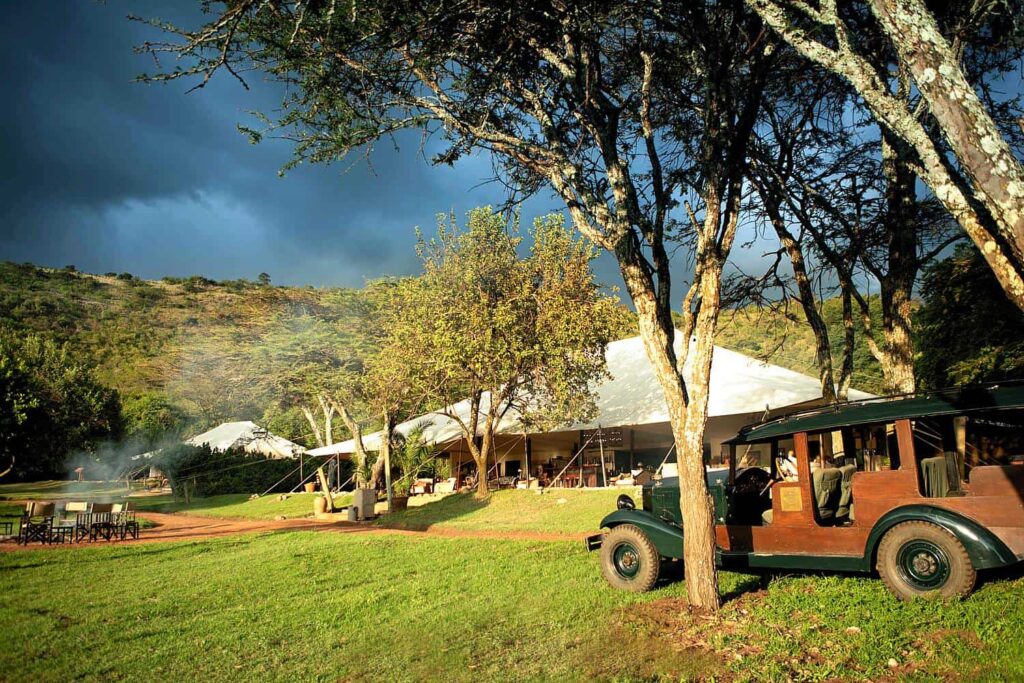
- Honeymoon & Romantic Couples: The Kiboko and Molo honeymoon tents, private dining options, and the camp’s periodic honeymoon accommodation offers make this venue a strong choice for couples.
- Families with Children: Four dedicated Family Tents, a private vehicle and guide included for family bookings, complimentary babysitting, and children’s programming such as the Maasai Warrior School make the camp a particularly strong fit for multigenerational trips. Exact minimum-age policies can vary by season, so confirm current family terms directly with the camp before booking.
- Solo Travellers: Workable, though, as at most luxury tented camps, a single supplement is likely to apply; confirm current solo pricing at the time of enquiry.
- Wildlife Photographers: Private vehicles, permitted night drives, and low vehicle density across the conservancy combine to provide photographers uncluttered sightings and flexible positioning that reserve-based camps cannot always guarantee.
- First-Time vs. Repeat Africa Visitors: First-time visitors enjoy classic Big Five viewing in a genuine period atmosphere, while repeat Africa travellers tend to value the conservancy-only access, night drives, and cultural programming that a national-reserve stay cannot offer.
- Is It Worth the Price?: At roughly four figures per person per night, Cottar’s 1920s Camp sits at the top end of Maasai Mara pricing. The case for it rests on guaranteed exclusivity of land, a strong guide-to-guest ratio, and the fact that park and conservancy fees directly fund the Cottar’s Wildlife Conservation Trust rather than simply covering overheads.
Best Time to Visit Cottar’s 1920s Camp
Cottar’s 1920s Camp is open year-round, and because Olderkesi holds resident wildlife independent of the annual migration, no month is a genuinely poor time to visit, though July through October, together with the short dry spell from December to February, deliver the highest game densities.

- January–March: Dry, clear conditions with strong big-cat sightings and excellent photography light; predators concentrate around resident prey herds.
- April–May: The long-rain green season brings lush scenery, noticeably fewer guests, and significantly lower rates; the camp remains fully open.
- June: A transitional month as grass begins to dry and herds start shifting north toward the Mara ecosystem.
- July–October: Peak Great Migration season across the wider ecosystem, with wildebeest and zebra herds moving through areas near Olderkesi’s boundary; this timeframe is the highest-demand and highest-rate period, and advance booking is essential.
- November–December: Short rains green the landscape again as herds begin their return south toward the Serengeti, with generally lighter visitor numbers than peak season.
Because access to Olderkesi is restricted to Cottar’s own guests, “crowding” here really refers to congestion at popular river-crossing points inside the national reserve rather than conditions on the conservancy itself; even at the height of the wildebeest migration, vehicle density on Cottar’s private land stays low. For a broader month-by-month view of conditions across the wider ecosystem, see our guide to the best time to visit Tanzania.
Conservation & Community
Cottar’s 1920s Camp funds its conservation work directly through guest stays: park and conservancy fees, together with a share of accommodation revenue, support the Cottar’s Wildlife Conservation Trust, which leases the Olderkesi Conservancy from the local Maasai community specifically for wildlife use. The camp is certified as a Global Ecosphere Retreat by The Long Run, an international alliance of sustainability-focused properties, placing Cottar’s among a small number of Global Ecosphere Retreat-certified camps worldwide.
On the ground, this partnership supports an all-female conservation ranger unit that patrols the conservancy, anti-poaching monitoring, and a vulture rehabilitation program, alongside employment and training opportunities for the surrounding Maasai communities across guiding, hospitality, and camp operations roles. The camp’s organic garden reduces its food-mile footprint, and solar power supplements the camp’s electricity supply.
Choosing to stay at Cottar’s 1920s Camp is, in a direct and measurable sense, an ethical choice: tourism revenue here funds the protection of community-owned land that would otherwise carry economic pressure toward conversion to agriculture or settlement, helping preserve an intact wildlife corridor between the Maasai Mara and Tanzania’s Serengeti National Park, a landscape recognized by UNESCO as a World Heritage Site on the Tanzanian side of the border.
Planning Your Stay: Practical Travel Tips
What to Pack
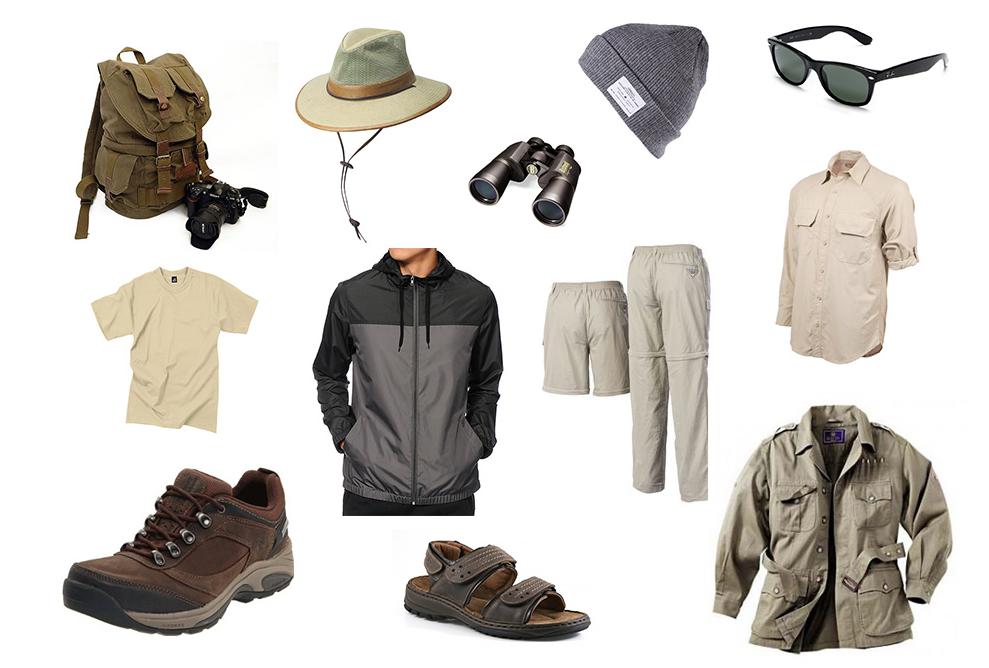
- Neutral, earth-toned clothing (khaki, olive, stone) for game drives and walks
- Layers for cool mornings and evenings at altitude, plus lighter clothing for the heat of the day
- A wide-brimmed hat, polarized sunglasses, and high-SPF sunscreen
- Insect repellent, particularly for dawn and dusk activities
- Comfortable closed walking shoes for guided bush walks
- A light rain jacket if travelling during the April–May green season
- Swimwear for the pool or the Sand River rock pool
- One smart-casual outfit for dinner in the Mess Tent
- Binoculars and a camera with a spare battery and memory card
Health & Vaccination Notes
A yellow fever vaccination certificate may be required depending on your point of departure or transit; requirements change periodically, so confirm current entry rules with your airline or a Kenyan embassy before travel. Malaria prophylaxis is generally recommended for the Maasai Mara region, and travelers should consult a physician or travel clinic several weeks before departure. Comprehensive travel insurance with medical evacuation cover is strongly advised for any remote safari stay.
Payment, Tipping & What’s Included
Full-board rates typically include accommodation, meals, local drinks such as house wines, beers, and selected spirits, and standard safari activities including day and night game drives, guided walks, and the Maasai Warrior School. Park and conservancy fees, premium wines, spa treatments, the hot air balloon flight, and the helicopter experience are charged separately, and gratuities for guides and camp staff are customary and generally paid in US dollars cash. Credit card facilities are limited in the bush, so carrying sufficient cash for extras and tipping is recommended.
Combine Cottar’s 1920s Camp with Other Parks.
Cottar’s 1920s Camp pairs naturally with a wider northern Tanzania itinerary. Popular combinations include the Serengeti National Park for the core of the Great Migration, the Ngorongoro Conservation Area for the crater’s dense wildlife concentrations, and a closing stretch on Zanzibar for beach relaxation after the safari. Travellers wanting to add a mountain component can also consider Kilimanjaro trekking before or after the safari leg. Our combined safaris planning service and our full range of Tanzania safari itineraries are the best starting points for building a tailor-made route; reach out through our contact page to have our team sequence a cross-border trip around Cottar’s 1920s Camp.
Frequently Asked Questions About Cottar’s 1920s Camp.
Where is Cottar’s 1920s Camp located?
Cottar’s 1920s Camp sits in the private Olderkesi Conservancy, a 7,600-acre concession on the southeastern edge of the Maasai Mara ecosystem in Kenya, bordering the Maasai Mara National Reserve and, further south, Serengeti National Park across the Tanzania border. The camp is roughly a 45-minute scheduled flight from Nairobi’s Wilson Airport, followed by a short road transfer from Cottar’s own private airstrip.
How many rooms does Cottar’s 1920s Camp have?
Cottar’s 1920s Camp has eleven individually positioned canvas tents: five luxury tents (Duma, Swala, Ndovu, Athi, and Kudu), four family tents each with two en-suite bedrooms, and two honeymoon tents (Kiboko and Molo). A separate exclusive-use property, the Private Bush Villa, sleeps additional guests with its own dedicated staff, pool, and vehicle, and is booked independently of the main camp.
Is Cottar’s 1920s Camp in Kenya or Tanzania?
Cottar’s 1920s Camp is in Kenya, inside the Olderkesi Conservancy on the southeastern boundary of the Maasai Mara ecosystem. It sits close to the Tanzania border and Serengeti National Park, making it a natural add-on for travellers building a cross-border itinerary that also includes Tanzania’s northern safari circuit.
How much does it cost to stay at Cottar’s 1920s Camp?
Rates at Cottar’s 1920s Camp start from around US$1,100 per person per night on a full-board sharing basis, rising to over US$1,600 during peak migration months (July to October). Park and conservancy fees, charged separately, add a further daily amount per person. Rates are seasonal and change regularly, so current pricing should always be confirmed directly with a safari specialist before booking.
Can you go on night game drives at Cottar’s 1920s Camp?
Yes. Because Cottar’s 1920s Camp sits on private conservancy land rather than inside the Maasai Mara National Reserve, night game drives are permitted, along with guided walking safaris, both of which are prohibited within the national reserve itself. Night drives regularly turn up nocturnal species such as aardvark, porcupine, and springhare, and active predators rarely seen during the day.
Is Cottar’s 1920s Camp suitable for families with children?
Cottar’s 1920s Camp is well suited to families, with four dedicated family tents offering two en-suite bedrooms, a shared lounge, and a private vehicle and guide included. Complimentary babysitting and children’s programming, including the Maasai Warrior School and junior wildlife activities, are available. Exact age policies can vary by season, so confirm current family terms directly with the camp before booking.
What is included in the price at Cottar’s 1920s Camp?
Rates typically include full-board accommodation, local drinks such as house wines, beers, and selected spirits, and standard safari activities including day and night game drives, guided walks, and the Maasai Warrior School. Park and conservancy fees, premium wines, spa treatments, hot air balloon flights, and gratuities are charged separately, and inclusions should be reconfirmed at the time of booking.
What is the best time of year to visit Cottar’s 1920s Camp?
July through October offers the highest wildlife densities across the wider Maasai Mara ecosystem, coinciding with the Great Migration. December through February is also excellent, with dry weather and strong predator sightings. April and May bring the green season, with lush scenery, fewer guests, and significantly lower rates, and the camp operates year-round with resident wildlife regardless of season.
How do you get to Cottar’s 1920s Camp?
Most guests fly into Nairobi’s Wilson Airport and connect on a scheduled flight of roughly 45 minutes with Safarilink, AirKenya, or Governors’ Aviation into the wider Mara airstrip network, followed by a road transfer to camp; Cottar’s also operates its own private airstrip, a 15-minute drive from the tents. A road transfer from Nairobi is possible, but it takes most of a day, and guests rarely use it.
Does Cottar’s 1920s Camp support conservation and the local community?
Yes. Cottar’s 1920s Camp is certified as a Global Ecosphere Retreat by the sustainability alliance The Long Run, and it funds the Cottar’s Wildlife Conservation Trust, which leases the Olderkesi Conservancy from the local Maasai community specifically for wildlife use. The camp supports an all-female ranger unit, anti-poaching monitoring, and vulture rehabilitation work and draws the majority of its guiding and camp staff from surrounding Maasai communities.
What is the minimum length of stay at Cottar’s 1920s Camp?
Cottar’s 1920s Camp requires a minimum stay of two nights, though most safari specialists recommend three nights to allow time for both day and night game drives, a guided walking safari, and at least one of the camp’s cultural or conservation-focused experiences without feeling rushed.
Can Cottar’s 1920s Camp be combined with a Tanzania safari?
Yes, and this option is one of the most popular ways to experience it. Because Olderkesi Conservancy sits close to the Tanzania border, Cottar’s 1920s Camp pairs naturally with a Serengeti and Ngorongoro Crater itinerary on Tanzania’s northern circuit, typically routed through Nairobi. A tailor-made safari operator can sequence the crossing to follow the wildebeest migration’s seasonal movement between the two ecosystems.
Is Wi-Fi available at Cottar’s 1920s Camp?
Wi-Fi is available across the camp’s communal areas and most tents, giving guests a way to stay in touch without it dominating the atmosphere. As at most remote tented camps, the connection runs on bush-based satellite internet rather than fiber broadband, so speeds suit messaging and light browsing rather than heavy streaming.