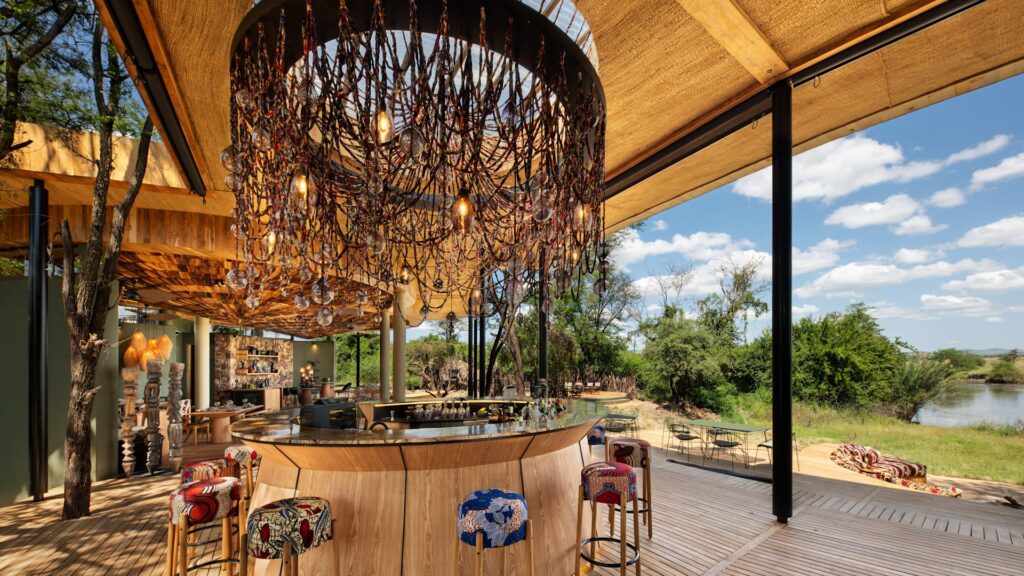
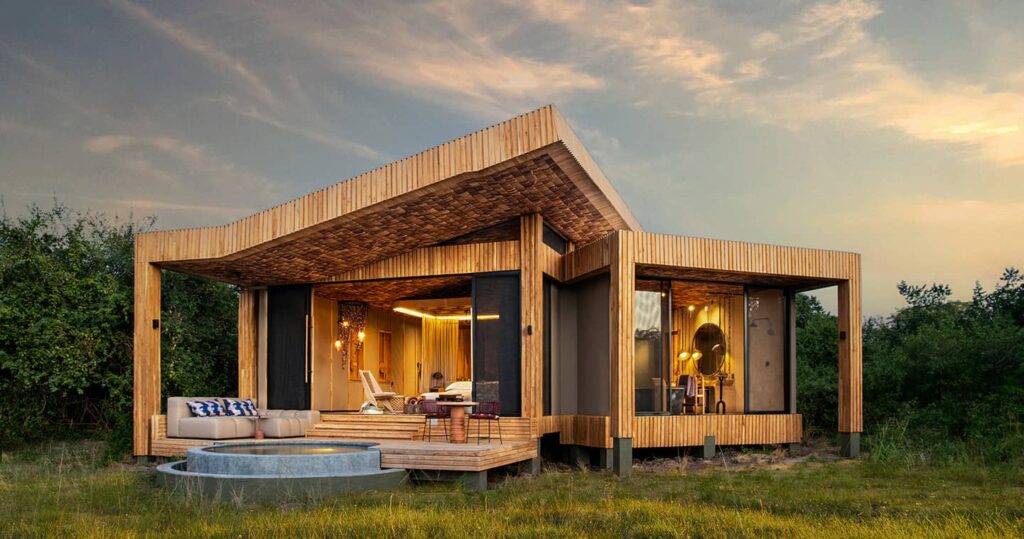
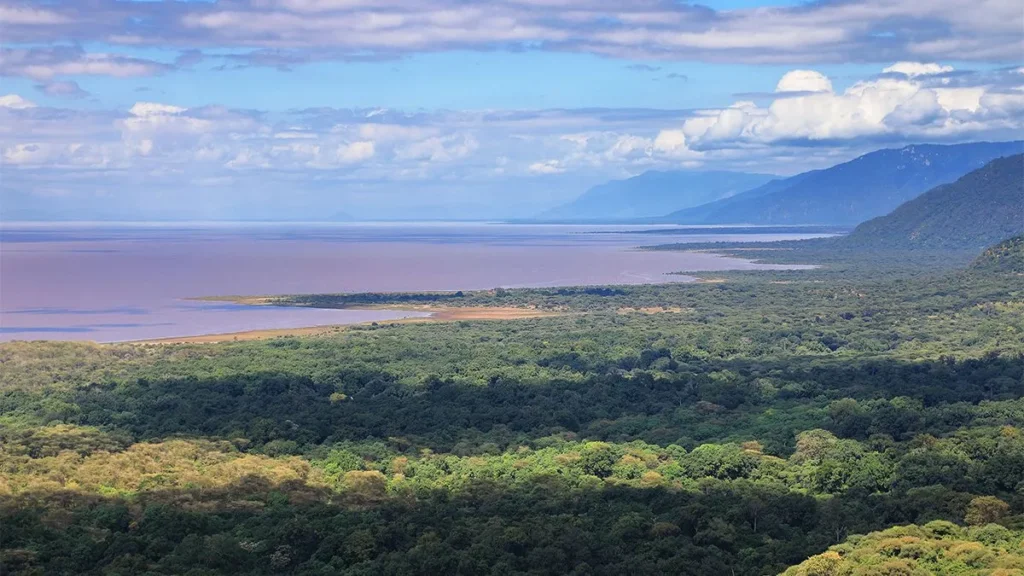
Twice-daily game drives form the backbone of the activity program at &Beyond Grumeti Serengeti River Lodge, supplemented by guided walks, seasonal hot air ballooning, and a genuinely unusual excursion for the Serengeti: a day trip to Lake Victoria.
Game Drives
Morning and afternoon game drives run in private 4×4 vehicles with an experienced guide, and thanks to the lodge’s remote position, sightings here tend to unfold without another vehicle in sight, a rarity anywhere else in the Serengeti during peak season. Drives regularly turn up large lion prides and clans of hyena, alongside big herds of resident plains game, and the guiding team’s deep familiarity with this specific stretch of the western corridor means sightings come with real interpretive context rather than a rushed pursuit of the next animal.
Guided Walks and Cultural Visits

Guided nature walks give guests a slower, ground-level look at the ecosystem, tracking signs, smaller wildlife, and the birdlife that thrives around the river, while a local community visit is typically included in the stay, offering genuine cultural interaction rather than a token stop. A day trip to nearby Lake Victoria is one of the more distinctive excursions on offer here, a genuinely rare addition to a Serengeti itinerary that few other lodges in the region can match.
Hot Air Balloon Safaris
A sunrise hot air balloon flight over the western corridor, typically followed by a bush breakfast on landing, can be arranged seasonally from the lodge. See our dedicated guide to hot air balloon safaris in Serengeti for what to expect. As with most Serengeti lodges, ballooning is generally excluded from standard rate inclusions and should be budgeted as an add-on.
Wildlife Visitors Can Expect
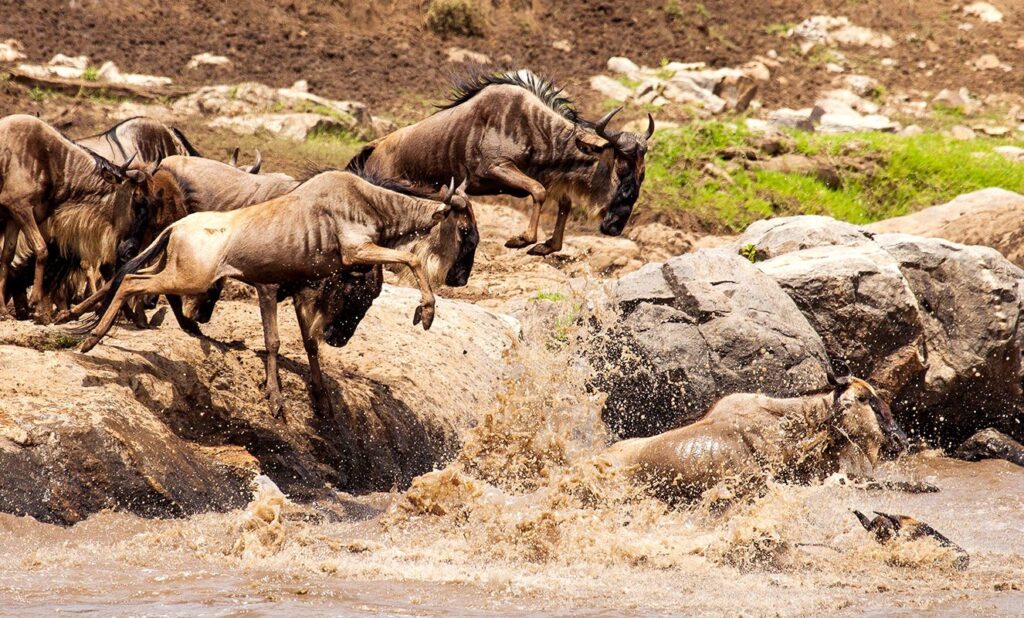
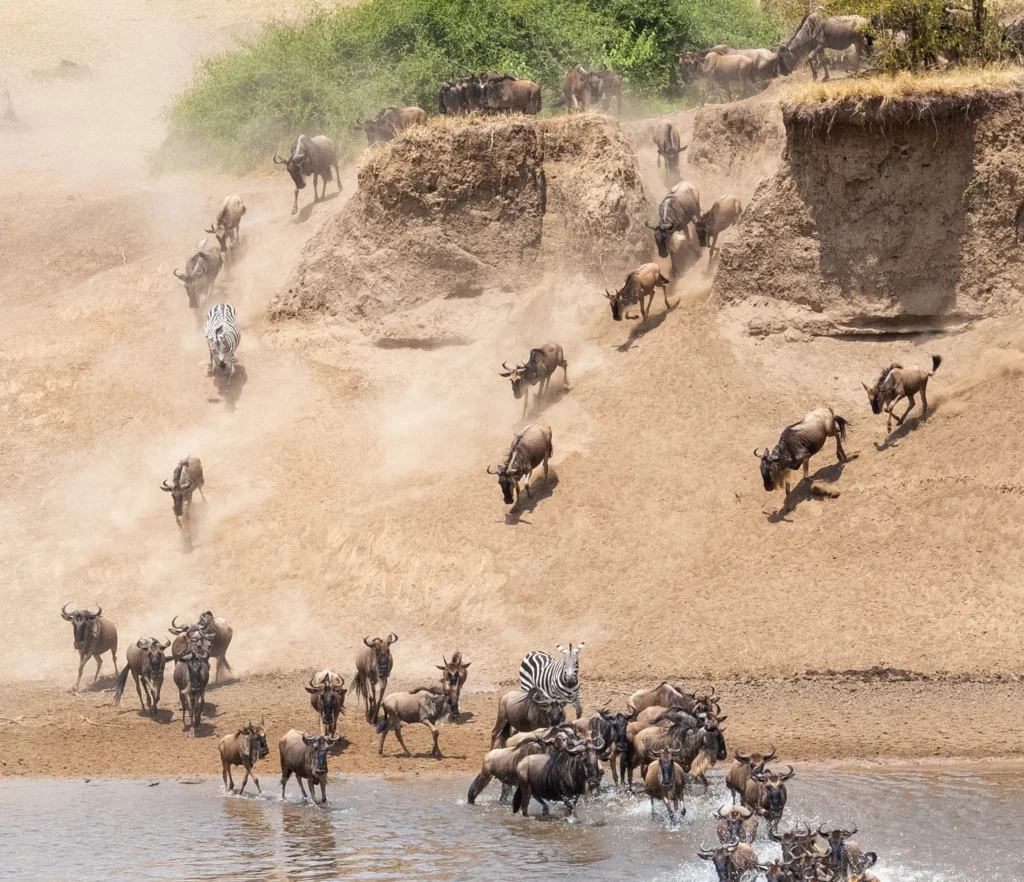
The lodge’s river frontage and forest setting put guests in reach of large lion prides, clans of spotted hyena, and substantial herds of resident plains game, including zebra, topi, and Thomson’s gazelle, alongside resident hippo pods and Nile crocodiles in the river below camp. The lodge’s evergreen forest canopy is also home to black-and-white colobus monkeys, a species found nowhere else in the Serengeti and one of the area’s genuine wildlife signatures. During the Great Migration, the western corridor sees its own dramatic river crossings as wildebeest and zebra push through the Grumeti area, typically concentrated between May and July, distinct from the better-known northern crossings near the Mara River.
Who Should Stay at &Beyond Grumeti Serengeti River Lodge?
&Beyond Grumeti Serengeti River Lodge suits honeymooners, families, photographers, and repeat Africa travelers about equally well, thanks to a private plunge-pool suite for every guest, a dedicated family suite with no minimum-age restriction, and a level of remoteness that appeals strongly to travelers who have already done the busier central Serengeti circuit.
Honeymoon & Romantic Couples
Ten private plunge pools, riverside sundowners, and a boma dinner under an open sky make this a strong honeymoon pick for couples who want genuine seclusion rather than a busy, high-turnover camp. The remoteness that defines the location works decisively in favor of privacy and romance here.
Families With Children
The dedicated two-bedroom family suite, the WILDchild activity program, and the property’s explicit welcome of all ages make &Beyond Grumeti Serengeti River Lodge one of the more genuinely family-friendly options in the Serengeti’s western corridor, without the minimum-age policies that shut younger children out of many comparable luxury camps.
Solo Travelers
The interactive kitchen and central boma dining format naturally encourage conversation among guests, making this a comfortable choice for solo travelers who want company at mealtimes without being pushed into a group schedule during the day game drives run on a private-vehicle basis.
Wildlife Photographers
The combination of a rarely visited stretch of the Serengeti, resident lion and hyena activity, a hippo pool visible from camp, and the unique presence of black-and-white colobus monkeys gives photographers subject matter that is difficult to find anywhere else in the ecosystem, with the added benefit of drives that rarely share a sighting with another vehicle.
First-Time Safari Travelers vs. Repeat Africa Visitors
First-time visitors get a full, well-rounded Serengeti introduction here, though the remoteness and relative distance from other parks mean it suits travelers with a few extra days to spend rather than a tightly packed first trip. Repeat Africa visitors tend to be the strongest audience: this is precisely the kind of quiet, uncrowded corner of the Serengeti that experienced safari travelers specifically seek out once the central circuit has already been covered.
Is it Worth the Price?
At roughly US$980 to US$2,930-plus per person per night depending on season, &Beyond Grumeti Serengeti River Lodge sits toward the upper end of the Serengeti’s luxury tier, reflecting both the brand’s positioning and the remoteness of the location. Given the private plunge pool in every suite, the low ten-suite density, and a genuinely uncrowded stretch of the ecosystem that few other properties can offer, most travelers who prioritize seclusion and exclusivity find the rate justified, particularly for a honeymoon or milestone trip where privacy matters more than proximity to other parks.
Best Time to Visit &Beyond Grumeti Serengeti River Lodge.
The single best window for migration viewing at &Beyond Grumeti Serengeti River Lodge is May through July, when wildebeest and zebra herds push through the western corridor and across the Grumeti River near camp, though resident lion, hyena, and plains game make this a rewarding stop throughout the year.

| Months |
Conditions & Wildlife Highlights |
Crowds & Pricing |
| January – February |
Dry spell; strong resident lion and hyena activity; migration herds mostly in the southern Serengeti and Ndutu |
Moderate crowds; mid-range pricing |
| March |
Onset of the long rains; lush green landscape; quieter game drives |
Low crowds; lower rates |
| April |
Peak of the long rains; herds beginning to move west toward the corridor; difficult driving conditions in places |
Lowest crowds; lowest rates of the year |
| May |
Rains easing; wildebeest and zebra herds arriving in the western corridor in large numbers |
Rising demand; rates increasing |
| June – July |
Peak western corridor migration; dramatic Grumeti River crossings near camp; excellent predator activity |
High season; peak crowds and rates |
| August – September |
Herds mostly moved north; strong resident game remains; quieter western corridor |
Moderate crowds; easing rates |
| October |
The dry season continues; resident wildlife is concentrated around permanent water sources, including the river below camp. |
Moderate crowds; moderate rates |
| November – December |
Short rains; herds far to the south and east for the December calving season; resident game remains strong near camp |
Lower crowds; holiday-period demand in late December |
Outside the May-to-July migration window, &Beyond Grumeti Serengeti River Lodge’s resident lion prides, hyena clans, hippo pods, and colobus monkey troops keep the western corridor genuinely rewarding for wildlife viewing year-round, an advantage of a lodge built around a permanent water source rather than one that depends entirely on the migration passing through.
Conservation & Community at &Beyond Grumeti Serengeti River Lodge
&Beyond Grumeti Serengeti River Lodge operates inside Serengeti National Park, a protected UNESCO World Heritage Site since 1981, and carries Beyond Green sustainability certification from Preferred Hotels & Resorts, reflecting independently verified standards for conservation and community impact.
What the Lodge Does for Conservation
&Beyond’s company-wide model directly conserves roughly one million acres of habitat across its portfolio of lodges, built around its long-standing Care of the Land, Care of the Wildlife, and Care of the People ethos, with company targets covering carbon footprint reduction, sustainable water use, and the elimination of single-use plastic water bottles across its properties. At the lodge level, the deliberately low ten-suite footprint minimizes physical impact on this stretch of river, and Beyond Green certification requires independent verification against recognized sustainability and community-benefit standards rather than a self-reported claim. The lodge’s current site-specific conservation initiatives and any wildlife monitoring partnerships directly with &Beyond, as program details are updated periodically and were not independently confirmed for this specific property at the time of writing.
Community Employment and Education
&Beyond’s community development work across its Tanzania properties runs through Wild Impact (formerly Africa Foundation), the company’s long-standing development partner, which channels tourism revenue into education, healthcare, and small-business development in communities near its lodges. A local community visit is typically included in a stay at &Beyond Grumeti Serengeti River Lodge, giving guests direct, guided exposure to this work rather than a passive mention in a brochure. The specific community projects currently active near this lodge, as guests wanting current, on-the-ground detail, are generally best served by asking their guide directly during the stay.
Why Staying Here Is a Considered Choice
Choosing a low-density, ten-suite lodge in one of the Serengeti’s least-visited corners is a genuinely lower-impact way to experience the ecosystem, and &Beyond’s broader Care of the Land, Care of the Wildlife, Care of the People model gives a stay here a more direct line to conservation and community outcomes than many comparable luxury properties can claim.
Planning Your Stay: Practical Travel Tips.
A stay at &Beyond Grumeti Serengeti River Lodge calls for the same practical preparation as any remote western Serengeti safari: warm-weather layering, standard East African travel health precautions, and an itinerary built around the short, efficient fly-in access this lodge is known for.
What to Pack
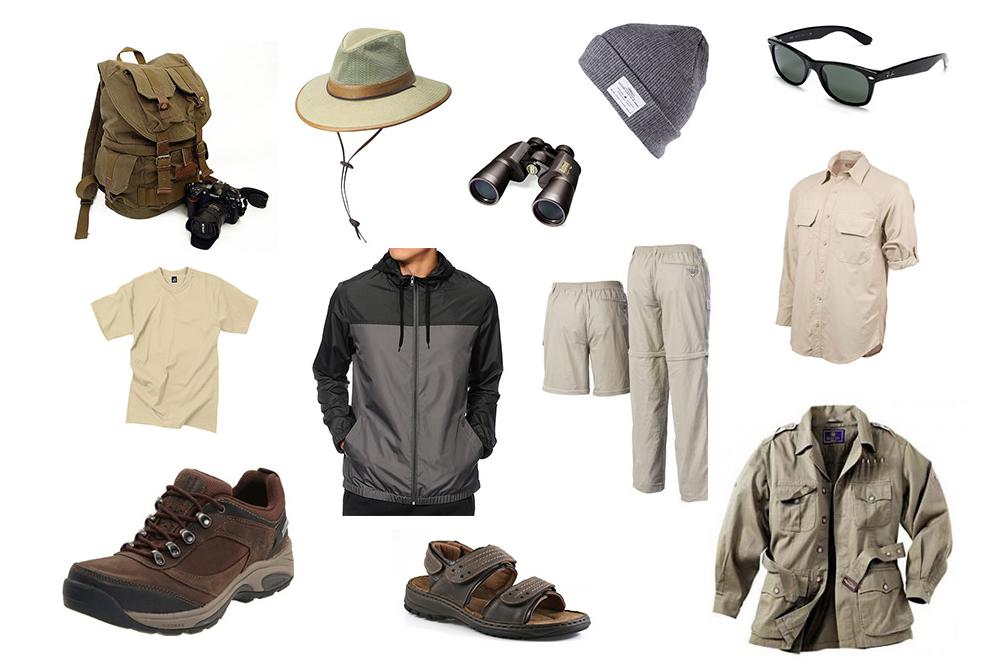
The western corridor sits at a lower, warmer elevation than the Serengeti’s northern reaches, so days run warm year-round with cooler mornings and evenings, particularly during the June-to-September dry season. Pack a light layer for early game drives alongside breathable, neutral-toned clothing (khaki, olive, and tan), a wide-brimmed hat, sunglasses, and high-SPF sunscreen. Comfortable closed shoes are worth including for the guided walks, along with binoculars (the lodge also provides a pair of SWAROVSKI OPTIK binoculars per suite), a camera with a reasonable zoom lens, and swimwear to make use of the suite’s private plunge pool. Bush flights carry strict soft-bag luggage limits, so pack in a duffel rather than a hard-shell case.
Health and Vaccination Notes
The western Serengeti sits within a malaria zone, so consult a physician or travel clinic about antimalarial medication before departure, and pack insect repellent for evenings around the river. Tanzania requires proof of yellow fever vaccination for travelers arriving from at-risk countries; check current entry requirements with a travel clinic or Tanzanian embassy ahead of the trip, since rules can change. Comprehensive travel insurance, including medical evacuation coverage, is strongly recommended for any remote safari location, and it is worth noting that emergency evacuation insurance is typically already included in the lodge’s standard rate.
Payment, Tipping, and What’s Included
Standard rate plans at &Beyond Grumeti Serengeti River Lodge typically include accommodation, three meals daily, soft drinks, and a house selection of wines, spirits, and beer; game drives; laundry; a local community visit; and emergency evacuation insurance; and hot air balloon flights, premium-label drinks, and spa treatments are usually charged separately. Tipping is customary in Tanzania’s safari industry and typically given in cash (US dollars are widely accepted), with guides and lodge staff tipped separately; ask Luxury Safaris Tanzania for current guideline amounts, since expectations vary by group size and length of stay.
How to Combine With Other Parks

Ruaha National Park
The western corridor’s remote position makes fly-in combinations the most practical way to pair this lodge with the rest of a Tanzania itinerary. Most travelers combine a stay here with central Serengeti, Ngorongoro Conservation Area, or Tarangire National Park before or after, rather than attempting a road transfer between them. Travelers wanting to extend the trip further can add a few days on Zanzibar at the end of the safari or combine it with Kilimanjaro trekking beforehand. Our Combined Safaris page outlines several ways to link these destinations into a single seamless itinerary.
Want help weaving Grumeti into a full Tanzania itinerary?
Start Planning With Our Experts →
Frequently Asked Questions About &Beyond Grumeti Serengeti River Lodge
Where exactly is &Beyond Grumeti Serengeti River Lodge located?
&Beyond Grumeti Serengeti River Lodge sits inside the western corridor of Serengeti National Park itself, on a tributary of the Grumeti River near Kirawira. This is distinct from the neighboring private Grumeti Reserves concession managed by a different operator, which borders the park immediately to the west; the lodge sits within the national park’s own boundary and its own migration crossing point.
How many rooms does &Beyond Grumeti Serengeti River Lodge have?
The lodge has 10 river-facing suites in total, comprising 9 standard suites of roughly 23 to 29 square meters each, plus one two-bedroom family suite. Every suite includes a private plunge pool, an indoor shower with river views, and a separate open-air outdoor shower.
What is the nearest airstrip to &Beyond Grumeti Serengeti River Lodge?
Grumeti Airstrip is the nearest airstrip, just a 5- to 10-minute drive from the lodge one of the shortest airstrip transfers of any luxury Serengeti camp. Scheduled flights connect Arusha Airport to Grumeti Airstrip daily, with flight times of roughly 1.5 to 2.5 hours depending on routing.
When is the best time to see the wildebeest migration from &Beyond Grumeti Serengeti River Lodge?
The western corridor migration typically peaks between May and July, when wildebeest and zebra herds cross the Grumeti River near the lodge in dramatic, crocodile-filled crossings. This window differs from the northern Serengeti’s Mara River crossings, which peak later, between roughly July and September.
Is &Beyond Grumeti Serengeti River Lodge good for families with children?
Yes. The lodge offers a dedicated two-bedroom family suite and a WILDchild activity program for younger guests and explicitly welcomes all ages, without the minimum-age restrictions found at many comparable luxury Serengeti camps.
Does &Beyond Grumeti Serengeti River Lodge have Wi-Fi?
Yes. Wi-Fi and cellular connectivity are both available at the lodge, though guests in this remote part of the western Serengeti should still expect a noticeably slower connection than anywhere urban.
What is included in the room rate at &Beyond Grumeti Serengeti River Lodge?
Standard rates typically include accommodation, three meals daily, soft drinks, house wines, local-brand spirits and beer, game drives, laundry, a local community visit, and emergency evacuation insurance. Hot air balloon flights, premium-label drinks, and spa treatments are usually charged separately.
Is &Beyond Grumeti Serengeti River Lodge good for a honeymoon?
Yes. Every suite includes a private plunge pool and veranda, the lodge’s remote position guarantees genuine seclusion, and the nightly boma dinner under an open sky is widely regarded as one of the more romantic dining settings in the Serengeti.
What animals can I expect to see at &Beyond Grumeti Serengeti River Lodge?
Expect large lion prides, clans of spotted hyena, resident hippo pods, and Nile crocodiles in the river below camp, alongside herds of zebra, topi, and Thomson’s gazelle. The surrounding evergreen forest is also home to black-and-white colobus monkeys, a species found nowhere else in the Serengeti.
How do I get to &Beyond Grumeti Serengeti River Lodge from Kilimanjaro or Arusha?
Most guests fly from Arusha Airport to Grumeti Airstrip, a journey of roughly 1.5 to 2.5 hours depending on routing, followed by a very short 5 to 10-minute road transfer to the lodge. Travelers arriving via Kilimanjaro International Airport typically connect through Arusha for the onward bush flight. A direct road transfer from Arusha is possible but takes around eight hours and is rarely used given how efficient the fly-in option is here.
Is &Beyond Grumeti Serengeti River Lodge all-inclusive?
Rates are full-board and include most beverages, game drives, and a local community visit, but exclude hot air balloon flights, premium-label drinks, and spa treatments by default. Confirm precisely what is and is not covered for your specific rate category before booking.
Can I combine &Beyond Grumeti Serengeti River Lodge with other parks in Tanzania?
Yes. Its remote western-corridor position makes fly-in combinations with central Serengeti, Ngorongoro Conservation Area, or Tarangire National Park the most practical way to build a wider itinerary, and many trips extend afterward to Zanzibar’s beaches or combine with a Kilimanjaro trek.
Is a walking safari available at &Beyond Grumeti Serengeti River Lodge?
Yes. Guided nature walks are available, offering a slower, ground-level look at tracking signs, smaller wildlife, and the birdlife along the river, and a local community visit is typically included as part of the broader activity program.
Who operates &Beyond Grumeti Serengeti River Lodge?
The lodge is owned and operated by &Beyond, a company founded in 1991 around its Care of the Land, Care of the Wildlife, and Care of the People ethos, with 29 lodges and camps across three continents and a long-standing community development partnership through Wild Impact.
What was &Beyond Grumeti Serengeti River Lodge previously known as?
The lodge previously operated under the name Grumeti Serengeti Tented Camp before being rebranded as &Beyond Grumeti Serengeti River Lodge, though the location, suite count, and core design have remained consistent through the change.