

EXCELLENT Based on 125 reviews
 Posted on Tripadvisor
 Tobias KMay 21, 202610 days Rwanda-Uganda trip Billy planed an 10 days Rwanda-Uganda trip. Amazing trip filled with one in a lifetime experiences and to a fair price. I Will definitely recommend - also our driver and guide Edward, who was very nice 👌Posted on Tripadvisor
 TurboprinsenMay 16, 2026Safari trip to Uganda for Gorilla trekking and to Rwanda for Bisoke volcanoes hiking and watching Golden Monkeys A fantastic trip to Uganda and Rwanda with our guide and driver Samuel. He is simply the best with his great knowledge of the area, wildlife and history of these two beautiful countries. We felt so safe and taken care of all the time and I will highly recommend Samuel as your guide 😊Posted on Tripadvisor
 Maarten AMarch 30, 2026Carefree experience We were on a business trip and wanted to extent our stay with a two-day safari. We got picked up by Edward right where our work trip ended, and could enjoy a carefree experience. We even got an extra game-drive when we turned out to have a bit extra time. Edward was very helpful and brought us exactly where we wanted to go to. Would highly recommend.Posted on Tripadvisor
 gitit6February 27, 2026שירות מושלם שירות מצויין לאורך כל הטיול הרגשנו שיש לנן מישהו שדואג לנו. הכל היה מצויין!!!!! מאוד מקצועיPosted on Tripadvisor
 Elizabeth CFebruary 18, 2026A couple getaway! We had a very short day in Uganda. Definitely wish we would have prolonged it a few more days. Our guide Sam was absolutely spectacular. He was full of energy, very knowledgeable, and very helpful. Anytime we need to stop he would stop, knew all about the national parks, and was always there to help us. FIVE STARS!!!!!⭐️. I highly recommend going with this company and especially having Sam as your guide guide.Posted on Tripadvisor
 Jo LFebruary 7, 2026worth the investment for an unforgettable experience! fantastic experience end to end - exactly as described. Diana was an excellent communicator before the trip, and answered all our questions with very clear information. Payment was also very flexible. Peter Kato was a very attentive and knowledgeable guide throughout the 4 days. sorted out all the driving, paperwork and immigration flawlessly. He also always put our best interests at heart - we asked for a walking tour around Kisoro after our gorilla trekking which was an unforgettable experience (highly recommend). we also did the Botwa experience - another highly recommend itenary! the gorilla and golden monkey trekking in Uganda was phenomenal, definitely worth the investment! The lodges were very immersive, great food and service. highly recommened! ⭐⭐⭐⭐⭐Posted on Tripadvisor
 Companion11004206832January 30, 2026uganda trip I really enjoyed the trip to Uganda, especially in the gorilla forest. Peter helped me a lot, like a friend. They also helped me climb Mount Rowenzori. It was very fast, almost 5 days. It was a unique mountain with rock climbing and glacier climbing.Posted on Tripadvisor
 Dwhits125December 30, 2025Great Experience Trekking with the Gorillas We had a wonderful experience trekking with the Gorillas. Peter, our guide, picked us up promptly from the airport in Rwanda. He was with us for our time in Rwanda and was polite, friendly, knowledgable, and a careful driver as well. The whole tour was organised smoothly, from booking to airport pick up, hotel check in, gorilla orientation, trekking through the jungle and return to the airport. Peter was able to adapt to our last-minute changes to our aeroplane departure, which was greatly appreciated. An excellent trip all around!Posted on TripadvisorKoen66November 23, 2025Geweldige tour, goede organisatie en super sympathieke gids Veel flexibiliteit en klantgericht tijdens de voorbereiding om samen de best mogelijke tour op te stellen. Super gids en chauffeur. Erg goede keuze van hotels. Active African is zeker een aanraderPosted on Tripadvisor
 KathryncbNovember 6, 2025Amazing East African Adventure! What an amazing East African adventure! Billy put together a fantastic 18 day itinerary and everything went off according to plan. Communication from beginning to end was seamless and coordination with Billy’s partner company in Tanzania was perfect. We enjoyed gorilla and chimp trekking, multiple parks in Uganda and Tanzania, a quick visit to Rwanda, superb lodges and stunning scenic drives inbetween. Ismael and Godwin, our outstanding guides and drivers, made sure we got to see the very best that East Africa has to offer. Their on the ground knowledge and expertise made for a wonderful trip.
The Ultimate East Africa Safari (Uganda, Kenya & Tanzania)
An expert-planned 18-day private safari across Uganda, Kenya, and Tanzania. Trek mountain gorillas in Bwindi, witness the Great Migration in the Serengeti and Maasai Mara, and encounter endangered rhinos at Ol Pejeta. Fully tailor-made
Overview of the Ultimate East Africa Safari | Uganda, Kenya & Tanzania | 18 Days.
18 Days · Gorillas · Great Migration · Big Five · Rhinos · Chimpanzees
Three Countries. One Seamless Journey. A Lifetime of Memories.
There is a particular kind of traveller who reaches a point where a one-country safari is no longer enough. Not because they have grown jaded; quite the opposite. They have tasted East Africa and understood, viscerally, that this continent is too vast and too varied to be experienced through a single lens. They want the whole picture. They want to sit in silence one morning with a mountain gorilla in Uganda’s mist-wrapped forest, then find themselves three days later watching a million wildebeest carve across the Kenyan plains, and then stand on the rim of the Ngorongoro Crater in Tanzania and understand, in the space of a single breath, that every superlative ever applied to East Africa is an understatement.
This expedition, spanning eighteen days and three countries, caters specifically to that type of traveller. It is the most comprehensive private safari journey we offer, and in eighteen years of planning East Africa itineraries, we have never had a client who completed it and did not call it the finest trip of their life.
Uganda contributes something that no Kenyan or Tanzanian ecosystem can replicate: the mountain gorilla. Bwindi Impenetrable Forest is home to nearly half of the world’s remaining mountain gorilla population, and spending one hour in the presence of a habituated family group in their natural habitat is an encounter that resists every attempt at description. From there, the journey moves north to Kenya Ol Pejeta Conservancy for rhinos and predators on the Laikipia Plateau, the Namunyak wilderness for elephants and the Samburu people of northern Kenya, and the private Mara conservancies for the Great Migration without the crowds. Finally, Tanzania’s Serengeti National Park provides the grandest stage of all the northern reaches of the greatest wildlife reserve on earth, where the migration plays out across the horizon and the big cats are more numerous than anywhere else in Africa.
This itinerary can be taken as designed or tailored to your specific dates, interests, and pace. No two departures are identical, as no two travellers are alike.
Duration of this Ultimate East Africa Safari: 18 days
| Duration | 18 days / 17 nights |
| Countries | Uganda · Kenya · Tanzania |
| Key Experiences | Mountain gorilla trekking · Chimpanzee tracking · Reteti Elephant Sanctuary · Ol Pejeta rhino conservation · Olderkesi Mara conservancy · Great Migration · Northern Serengeti big cats |
| Accommodation | Luxury ecolodges, private tented camps, and exclusive bush camps all selected for seclusion and wildlife proximity |
| Internal Transfers | Seven chartered flights: no long overland drives between destinations |
| Arrival | Entebbe International Airport, Uganda (EBB) |
| Departure | Kilimanjaro International Airport, Tanzania (JRO) |
| Best Season | June – October (peak Migration, dry season game viewing, optimal gorilla trekking conditions) |
| Group Size | Fully private, your vehicle, your guide, your pace |


Detailed itinerary for the Ultimate East Africa Safari | Uganda, Kenya & Tanzania | 18 Days. (Day by Day)
Day 1: Entebbe, Uganda: Arrival & Welcome
Your East Africa journey begins not with a game drive but with a transition: the crossing from wherever you have come from into a country that is, in almost every sensory register, different from anywhere else on earth. Entebbe sits on the northern shore of Lake Victoria, the largest lake in Africa and the second largest freshwater lake in the world, and there is a quality to the air here, warm, rain-washed, alive with birdsong, that signals immediately that the ordinary world has been left behind.
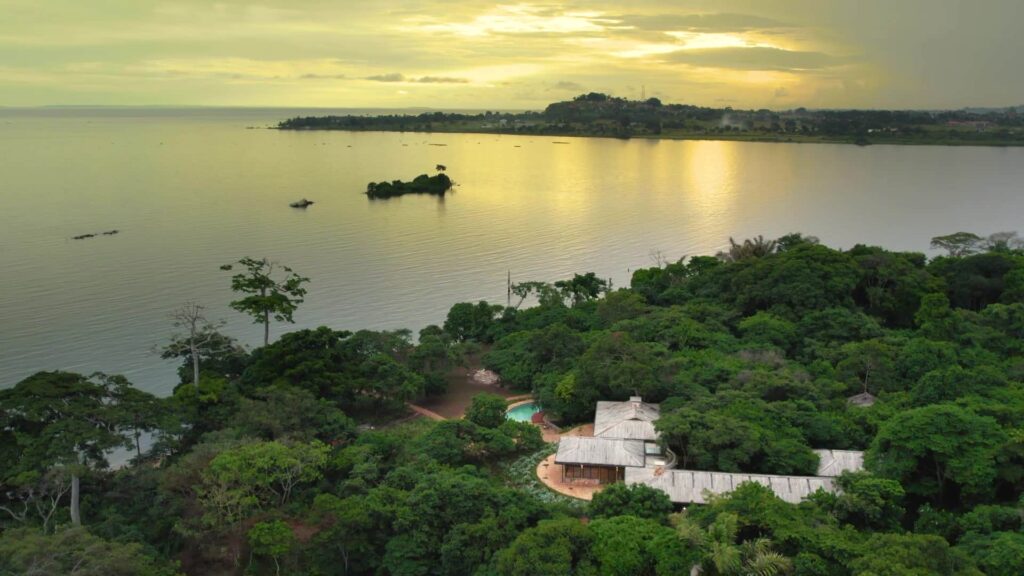
Entebbe Forest Lodge Aerial View
Our representative meets you at Entebbe International Airport and transfers you to your overnight accommodation, a boutique property set amid lush gardens in what was Uganda’s capital during the colonial era. This evening is for meeting your private guide, who will accompany you for the duration of the journey, not a series of local guides handed off at each camp, but a single specialist who knows your preferences, tracks your interests, and deepens the narrative of the trip from first day to last. A welcome dinner sets the tone for what lies ahead.
Accommodation Options.
- Entebbe Forest Lodge: Entebbe Forest Lodge is a peaceful, nature-immersed retreat tucked within lush forest near Entebbe, offering a quiet escape with rustic charm and a refreshing connection to Uganda’s natural beauty just moments from the city.
- Lake Victoria Serena Golf Resort & Spa: Lake Victoria Serena Golf Resort & Spa is a grand lakeside retreat overlooking Lake Victoria, offering elegant Mediterranean-inspired architecture, a championship golf course, and a serene blend of luxury, leisure, and scenic beauty just outside Kampala.
Day 2: Entebbe to Bwindi Impenetrable National Park, Uganda
This morning, you board a chartered flight from Entebbe to the airstrip at Kihihi, in southwestern Uganda, and make the transfer to your rainforest ecolodge on the edge of Bwindi Impenetrable National Park. The lodge has been chosen with care: it sits at the forest margin, which means that the sounds of the night are those of Bwindi itself, tree hyrax calling, owls, and occasionally the unmistakable low rumble of mountain gorillas moving through the understory not far from camp.
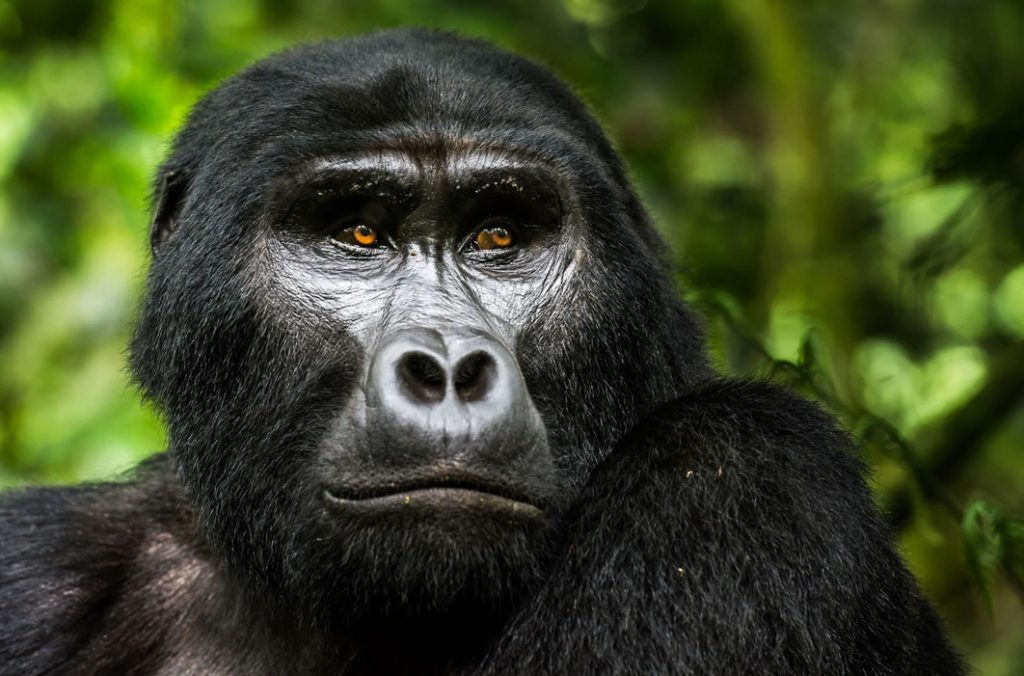
Gorilla trekking in Bwindi Forest National Park
Bwindi is a UNESCO World Heritage Site and one of the most biologically rich forests in Africa, sheltering more than 120 mammal species, over 350 bird species, and, critically, roughly half of the world’s remaining mountain gorilla population (approximately 460 individuals in the most recent census), a number that represents a genuine conservation success story built partly on the foundation of responsible tourism. This evening, your guide provides a thorough briefing on gorilla trekking etiquette, the biology of mountain gorillas, and what to expect from the days ahead.
Accommodation Options
- Clouds Mountain Gorilla Lodge: Clouds Mountain Gorilla Lodge is an exclusive, high-altitude retreat perched above Bwindi Impenetrable National Park, offering breathtaking forest views, intimate luxury, and privileged access to one of Africa’s most extraordinary gorilla trekking experiences.
- Sanctuary Gorilla Forest Camp: Sanctuary Gorilla Forest Camp is an intimate, luxury tented camp set deep within Bwindi Impenetrable National Park, offering a rare blend of comfort and immersion with direct access to unforgettable mountain gorilla encounters.
Day 3 & 4: Gorilla Trekking in Bwindi: The Encounter That Changes Everything
Into the Impenetrable Forest
You rise before first light. Breakfast is taken in the grey pre-dawn quiet, and then you are driven to park headquarters for the morning briefing, a gathering of rangers, trackers, and guests where permits are confirmed, rules are reviewed, and the particular gorilla family you will follow today is identified. The trackers have been in the forest since before your alarm sounded, following the family from last night’s sleeping site to wherever they have moved this morning.
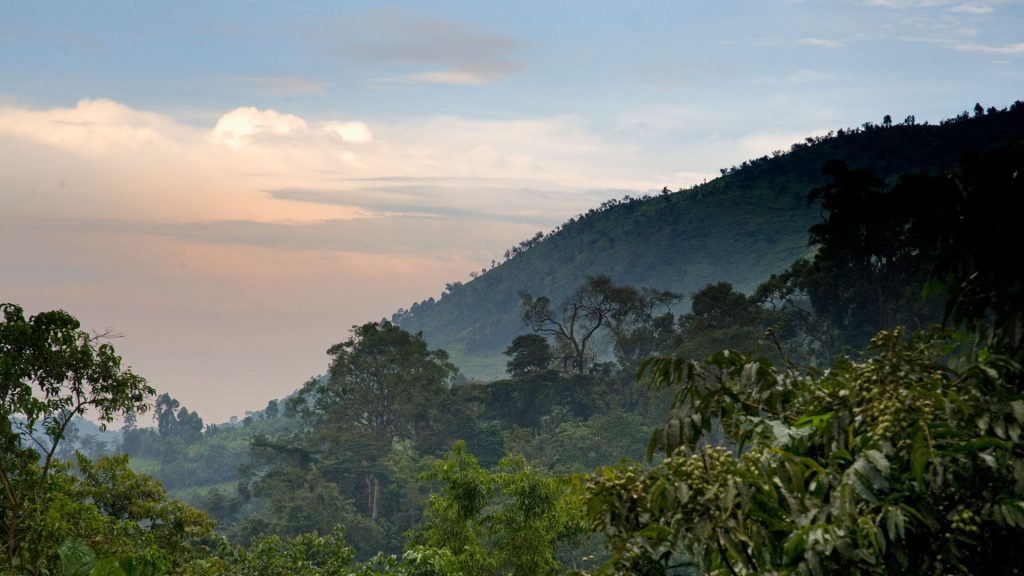
From the trailhead, you walk into Bwindi. The word ‘impenetrable’ was applied to this forest by the early colonial explorers who found it almost impossible to navigate, and even today, with established trails, the forest earns its name. The canopy closes above you within minutes. Light filters through in columns. The understory is dense, dark, and extraordinarily alive; every surface is covered in moss, lichen, and fern. You may hear chimpanzees in the distance or the liquid call of a magnificent blue turaco overhead.
The distance to the gorilla family varies day to day: fifteen minutes one morning, three hours of steep, muddy climbing the next. None of that matters when you arrive. A habituated mountain gorilla family pays you almost no attention: a silverback sprawled across a patch of forest floor, entirely at ease with his magnificence; females grooming infants; juveniles tumbling through the vegetation with a playfulness that is immediately and uncomplicatedly delightful. You have one hour with the family. Most people describe it, afterwards, as the most profound wildlife encounter of their lives. We have never had a client dispute regarding that.
Conservation Coffee: Where the Economy Serves the Forest
Time permitting on one of your Bwindi afternoons, we arrange a visit to a local conservation coffee cooperative, a community enterprise in which farmers grow, process, and roast premium coffee beans, with the proceeds directed in part toward gorilla protection. As we stroll through the coffee fields, seeing how the local economy can support both the community and the survival of an endangered species offers a calm but strong contrast to the emotional experience of seeing the gorillas. The coffee itself is exceptional.
Gorilla trekking permits are strictly limited and must be secured well in advance, particularly for the peak June–October window. Book early. We handle all permit logistics for you.
Day 5: Kihihi to Entebbe to Nairobi: Crossing Into Kenya
A morning flight returns you to Entebbe, where you connect with your flight to Nairobi. The transition between countries is part of the structure of this journey; each crossing marks a shift in ecosystem, culture, and wildlife character, and the move from Uganda’s rainforest world to Kenya’s savanna landscape is one of the more dramatic of these shifts. Nairobi is a city of genuine complexity and energy, and your overnight in a quiet garden property in the Karen suburb in the hills made famous by Isak Dinesen’s memoir of her years on a coffee farm at the foot of the Ngong Hills provides the right kind of pause between chapters.
Accommodation Options
- Hemingway’s Eden Residence: Hemingway’s Eden Residence is an exclusive, residential-style retreat set in the leafy suburbs of Nairobi, offering refined privacy, contemporary elegance, and a serene home-like stay tailored for discerning long-stay travellers.
- Fairmont The Norfolk: Fairmont The Norfolk is a historic and elegant city retreat in the heart of Nairobi, blending timeless charm, refined comfort, and a legacy of hospitality that has defined luxury travel in Kenya for over a century.
Day 6 – 8: Ol Pejeta Conservancy, Kenya: Rhinos and the Laikipia Plateau
The Laikipia Landscape
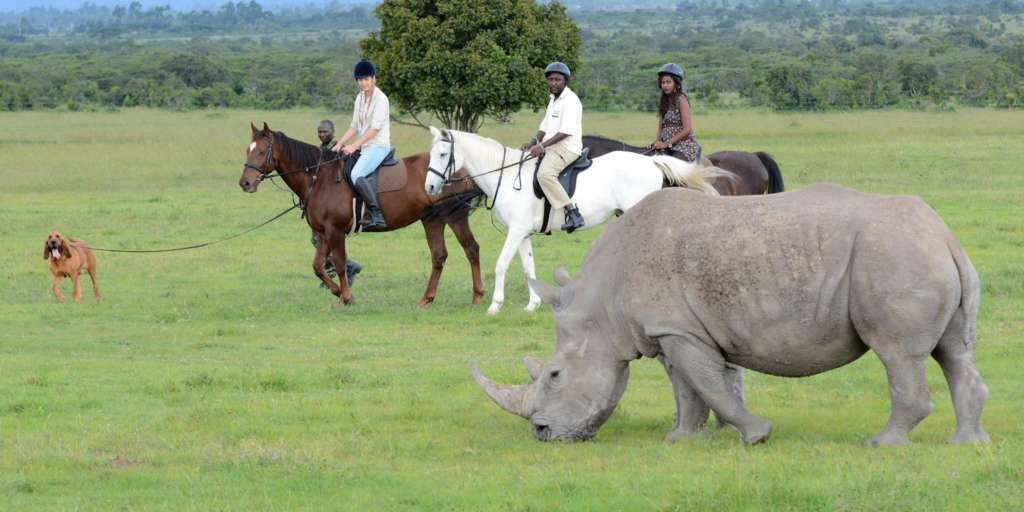
A chartered flight north from Nairobi deposits you on the Laikipia Plateau, where the altitude produces a clarity of light and air that feels different from anywhere else in Kenya. Ol Pejeta Conservancy spreads across 90,000 acres of diverse habitat at the foot of Mount Kenya. A working cattle ranch since the 1940s, it began setting aside land for wildlife conservation in 1988 and has since become the most important rhino sanctuary in East Africa. The snow on Mount Kenya’s peaks is visible from camp on clear mornings, which at this altitude is most mornings.
The conservancy holds Kenya’s highest density of black rhinos outside a national park, and it is the only place in the world where you can encounter the two last surviving northern white rhinos, Najin and Fatu, a mother and daughter who carry, between them, the entire genetic future of a subspecies. Their story is one of the most tragic and important in modern conservation, and the rangers who protect them are some of the most dedicated people you’ll meet on this journey. We pair this visit with the larger narrative of conservation across East Africa, how science, community engagement, and responsible tourism are combining to protect species that would otherwise disappear within a generation.
Game Drives, Walks, and Night Drives
Beyond the rhinos, Olpejeta is an exceptional safari country. The predator density is among the highest in Kenya; lions, leopards, and cheetah are all resident, and game drives through the conservancy’s varied terrain produce the kind of encounters that national parks, with their vehicle queues, cannot replicate. Guided bush walks bring you into the landscape on foot, which produces an entirely different quality of attention: your guide reads the ground, the wind, and the behaviour of birds, and your understanding of the ecosystem deepens with every step. Night drives add the nocturnal layer: the aardvark, the serval, and the leopard moving along the ridge line in the beam of a spotlight.
Camp here is intimate and deliberately classic tented, with proper en suite facilities, meals served under the stars, and a fire each evening around which the day’s encounters are examined and debated. There is a quality to evenings in camp at Ol Pejeta that is difficult to replicate: the silence is genuine, the sky is extraordinary, and the awareness that you are sleeping inside one of Africa’s outstanding conservation success stories adds a weight to the experience that purely scenic destinations cannot match.
Accommodation Options:
-
- Tambarare Camp, an A&K Sanctuary: Tambarare Camp, an A&K Sanctuary, is an elegant and intimate safari camp set within the wildlife-rich Ol Pejeta Conservancy, offering refined comfort, privacy, and immersive encounters in one of Kenya’s most important conservation areas.
- Sweetwaters Serena Camp: Sweetwaters Serena Camp is a stylish tented safari camp set within the renowned Ol Pejeta Conservancy, offering comfortable accommodation, sweeping views over a busy waterhole, and front-row access to one of Kenya’s most diverse wildlife and conservation areas.
Day 9 & 10 Namunyak Conservancy, Northern Kenya: The Elephant Sanctuary and the Samburu Frontier
Kenya’s Undiscovered North
A short chartered flight takes you north into one of Kenya’s least-visited and most rewarding wilderness areas: the Namunyak Community Conservancy, framed by the dramatic Mathews Range and managed by the Samburu people, semi-nomadic pastoralists who have coexisted with the region’s wildlife for generations. Namunyak is what Kenya looked like before the tourism infrastructure of the south developed: wild, uncrowded, and operating at an entirely different tempo.
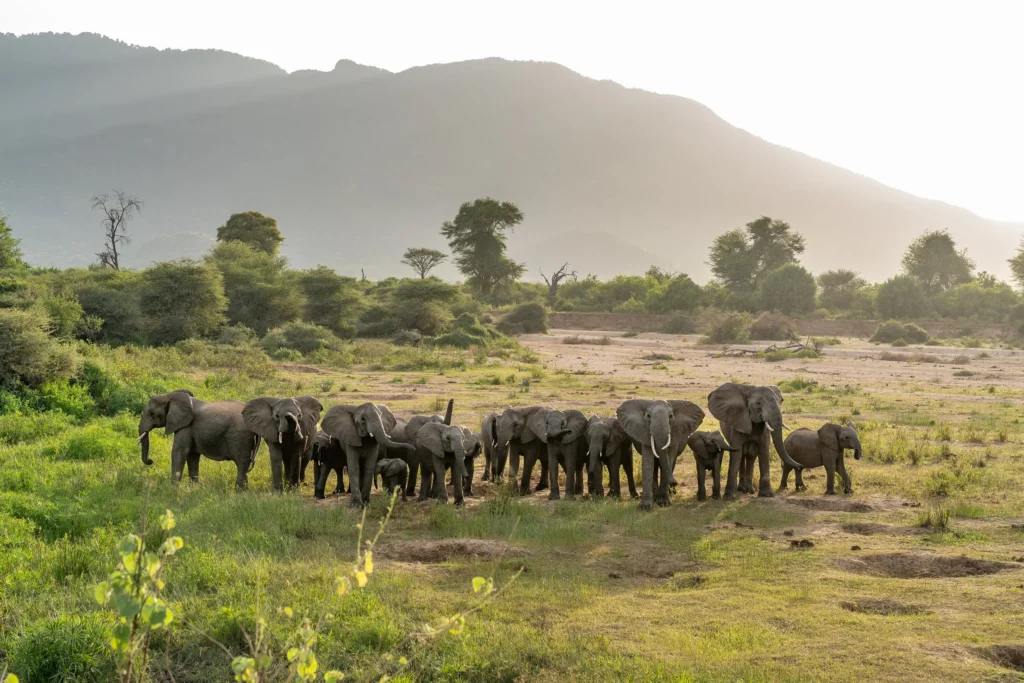
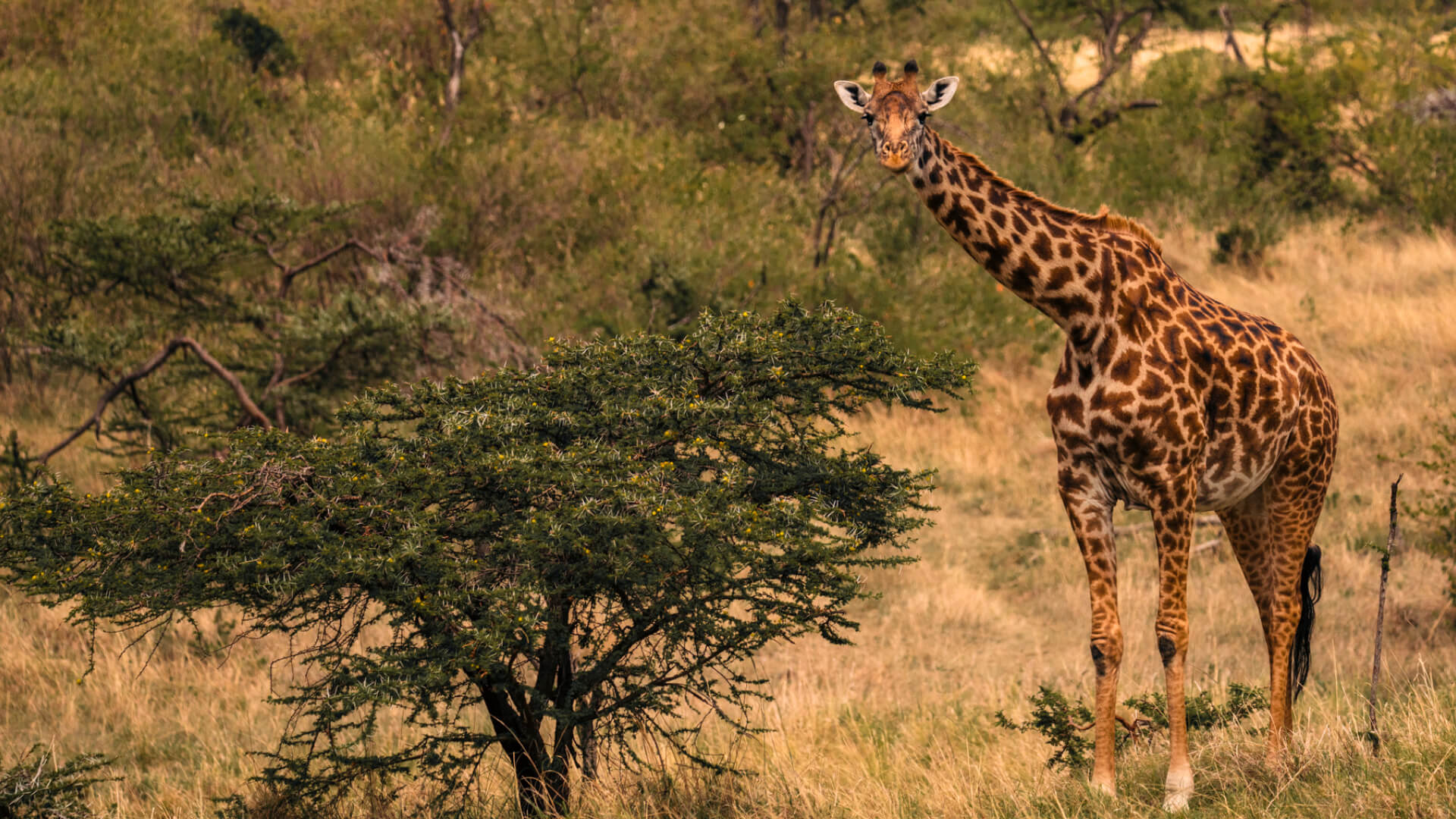
The wildlife here is distinct from the Maasai Mara and Laikipia circuits that most itineraries cover. Reticulated giraffes, the tallest giraffe subspecies and one of the most photogenic animals in Africa, move through the acacia scrub in small groups. The gerenuk, the long-necked antelope that feeds standing upright on its hind legs, is an almost mythological-looking creature found reliably in this northern ecosystem. The African wild dog, one of the continent’s most endangered large carnivores, uses the conservancy as part of its extended territory. And the elephant herds of northern Kenya, which move seasonally between the Mathews Range and the forests near Mount Kenya along routes they have used for decades, are among the most genetically important populations on the continent.
Reteti Elephant Sanctuary: Conservation in Indigenous Hands
The centrepiece of your Namunyak days is a private visit to Reteti Elephant Sanctuary, the world’s first elephant sanctuary owned and operated by Indigenous community members. Reteti rescues and rehabilitates orphaned elephant calves found across northern Kenya, raising them through a critical early period before returning them to the wild. The keepers are Samburu men, and watching them interact with the elephant calves who know and trust them completely is one of the most quietly moving wildlife encounters on this entire journey.
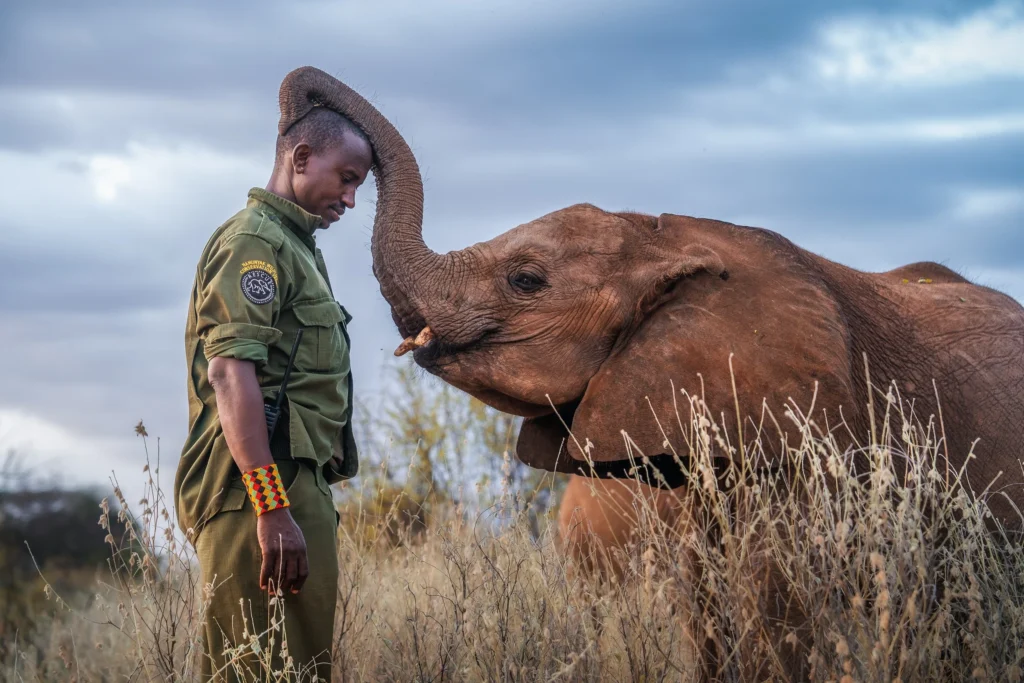
Reteti Elephant Sanctuary
The sanctuary visit also carries a broader significance. Reteti has demonstrated that conservation works best when it is economically and culturally integrated into the lives of the people who share the landscape. The Samburu keepers are not employees of a distant NGO; they are community members who have come to understand the elephants in their care as assets to their own wellbeing and who carry that understanding back to the conservancy. This model of conservation, grounded in Indigenous knowledge and economic incentive rather than external diktat, is increasingly recognised as the future of wildlife protection across East Africa.
Ask your guide to arrange a morning walk with a Samburu elder across the conservancy. Their knowledge of the landscape the plants, the animal movements, the seasonal patterns accumulated over generations without written records, is extraordinary.
Accommodation Options
- Sarara Camp: Sarara Camp is an exclusive, design-forward safari camp set within the remote Namunyak Wildlife Conservancy, offering intimate luxury, dramatic landscapes, and deeply authentic cultural and wildlife experiences far from the usual safari circuit.
- Reteti House: Reteti House is an exclusive-use, design-led private villa set within the wild landscapes of Namunyak Wildlife Conservancy, offering complete privacy, personalised service, and a deeply immersive safari experience rooted in conservation and community.
Days 11 & 12: Olderkesi Conservancy, Kenya: Private Mara Without the Crowds
A flight southwest takes you to the Maasai Mara ecosystem, but not to the national reserve; instead, it goes to the Olderkesi Community Wildlife Conservancy, a 7,000-acre private landholding adjacent to the reserve that serves as one of its most productive migration corridors. Olderkesi was established by Maasai landowners who chose to integrate wildlife into their agricultural model rather than replace one with the other: by limiting development to defined areas and maintaining vast unfenced grazing land, they created a system where wildebeest, zebra, and the predators that follow them can move freely across the landscape, generating conservation income for the community while reducing human-wildlife conflict.
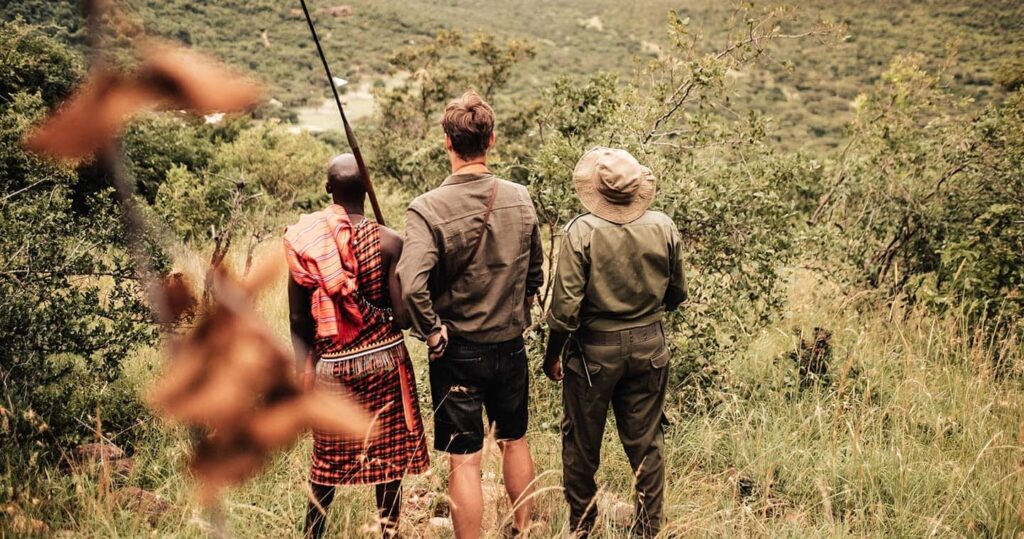
The result, from a safari perspective, is exceptional. The Great Migration goes through Olderkesi as the animals move north from the Serengeti to Kenya, so during the busiest time from July to October, thousands of wildebeest and zebra pass through the area, along with the predators that follow them. Lions here are more numerous per square mile than almost anywhere else in Kenya. And because the conservancy operates with strict visitor limits, you experience all of these sights in the kind of seclusion that the national reserve, with its volume of vehicles, cannot offer.
Private conservancy privileges apply here: guided bush walks through the acacia scrub at dawn, off-road drives into terrain that park vehicles cannot access, and night drives that reveal the nocturnal Mara in all its unsettling splendour. A wilderness picnic in the middle of a plain, with no structure visible in any direction and wildebeest grazing on the horizon, is the kind of experience that sounds straightforward and produces memories of startling vividness.
Accomodation Options
- Cottar’s 1920’s Camp: Cottar’s 1920s Camp is a vintage-inspired luxury safari camp on the edge of the Masai Mara National Reserve, blending classic 1920s elegance with authentic bush living and exceptional wildlife experiences in one of Africa’s most iconic safari regions.
- Enkwa Camp: Enkwa Camp is an intimate, owner-run safari camp set within a private conservancy bordering the Masai Mara National Reserve, offering a personalised, off-the-beaten-path experience with strong guidance and close-up wildlife encounters away from the crowds.
Days 13 – 15: Northern Serengeti, Tanzania: The Migration in Full Spectacle
Crossing Into Tanzania’s Greatest Wilderness
A flight south across the Kenya-Tanzania border delivers you to the northern reaches of the Serengeti National Park, a UNESCO World Heritage Site that covers roughly the same area as the state of Maryland and whose reputation as one of the world’s iconic nature destinations has never been overstated. The Serengeti is the Tanzanian side of the same ecosystem you explored in Kenya, with the same animals and migration but a more dramatic landscape.

Your camp in the northern Serengeti has been positioned in a principal migration corridor, the stretch of savanna through which more than two million wildebeest, zebra, and Thomson’s gazelle move on their annual 1,800-mile circuit between the southern Serengeti calving grounds and the short-grass plains of Kenya’s Mara. The northern Serengeti’s migration is the most significant wildlife movement on earth, peaking between July and October. The river crossings, with wildebeest plunging into the Mara River while crocodiles wait in the current and lions patrol the bank, are the defining images of East African wildlife photography, and they happen here, sometimes within sight of camp.
The River Crossings: Raw, Repetitive, and Utterly Compelling
The river crossing experience has a paradox that all witnesses understand: you can’t predict or force a crossing, and you can’t leave if you suspect one is coming. The wildebeest gather on the bank in their thousands, and then for reasons that no scientist has fully explained, they either plunge en masse into the crocodile-filled water or they simply turn around and walk away. A crossing can begin with no warning after a three-hour wait or not happen at all. What the event demands from travellers is the kind of patient attention that the Serengeti seems designed to teach.
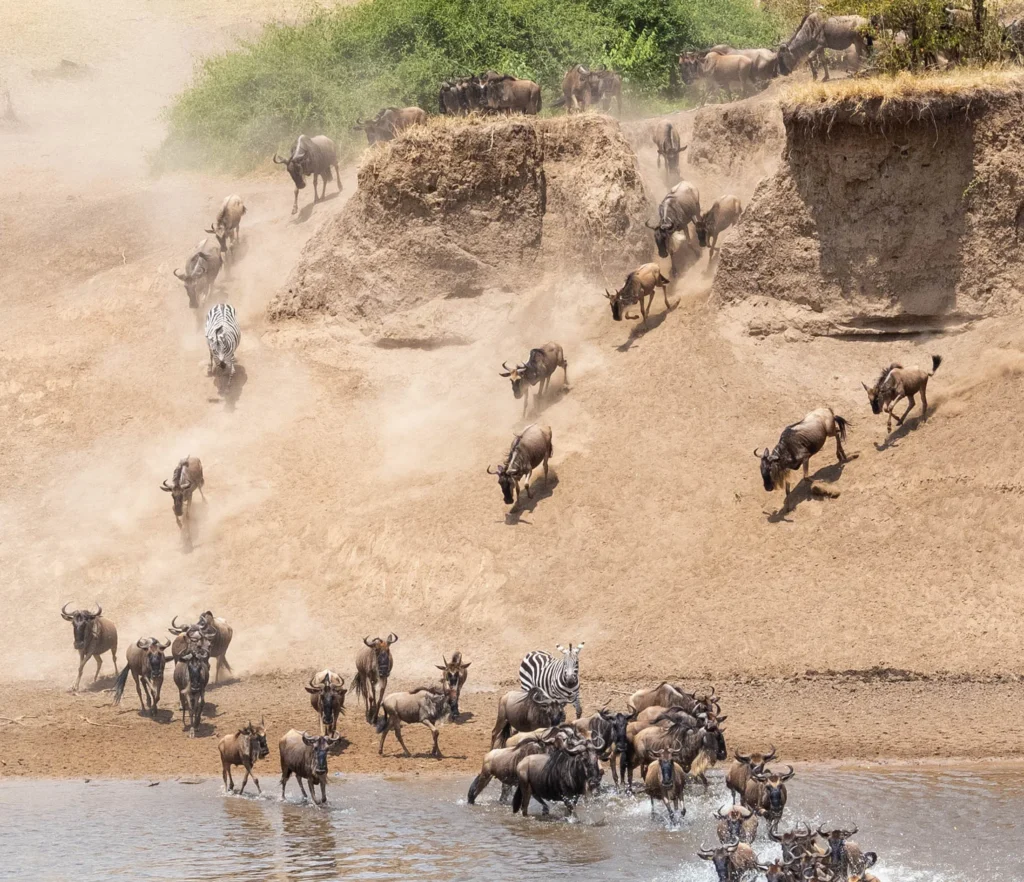
Your guide positions the vehicle in the right place, reads the herd’s behaviours, and waits with you. When a crossing begins, the first animal takes the plunge, panic transmits through the herd like a current, and the water erupts into movement; the experience is loud, chaotic, and absolutely gripping. It is one of the moments on this journey where the sheer scale of the natural world asserts itself so forcefully that personal scale becomes temporarily meaningless.
Evenings in the Bush Camp
The camp is deliberately simple in structure and extraordinary in experience: walk-in canvas tents with proper beds and en suite facilities, a mess tent open on all sides to the plain, and a fire each evening around which the day is processed. There is no electricity beyond what solar panels provide. The darkness at night is complete. The Milky Way over the northern Serengeti is the kind of sky that people who have grown up under light-polluted cities find genuinely disorienting; it is simply too full, too bright, too present. Your guide can name every constellation visible from this latitude and will do so if asked.
Accomodation Options
- One Nature Mara River: One Nature Mara River is an ultra-luxury tented camp set along the iconic Mara River in the Serengeti National Park, offering lavish design, complete privacy, and front-row access to one of Africa’s most dramatic wildlife spectacles.
- Elewana Serengeti Migration Camp: Elewana Serengeti Migration Camp is a classic luxury safari camp set along the Grumeti River in Serengeti National Park, offering an authentic tented experience with front-row access to the dramatic wildlife movements of the Great Migration.
Days 16 & 17: East-Central Serengeti Kopjes, Cheetah, and the Predator Plains
A short flight moves you to the east-central Serengeti, where the landscape shifts from the river-crossed northern corridor to the open short-grass plains dotted with kopjes, ancient granite outcroppings that erupt from the savanna like the exposed bones of the continent. These rock formations are central to the ecology of this part of the Serengeti: lion prides use them as vantage points and communal resting places; leopard cache kills in the fig trees that grow in the crevices; rock hyrax colonise the warm southern faces; and agama lizards flash their improbable orange-and-blue colouring in the morning sun.
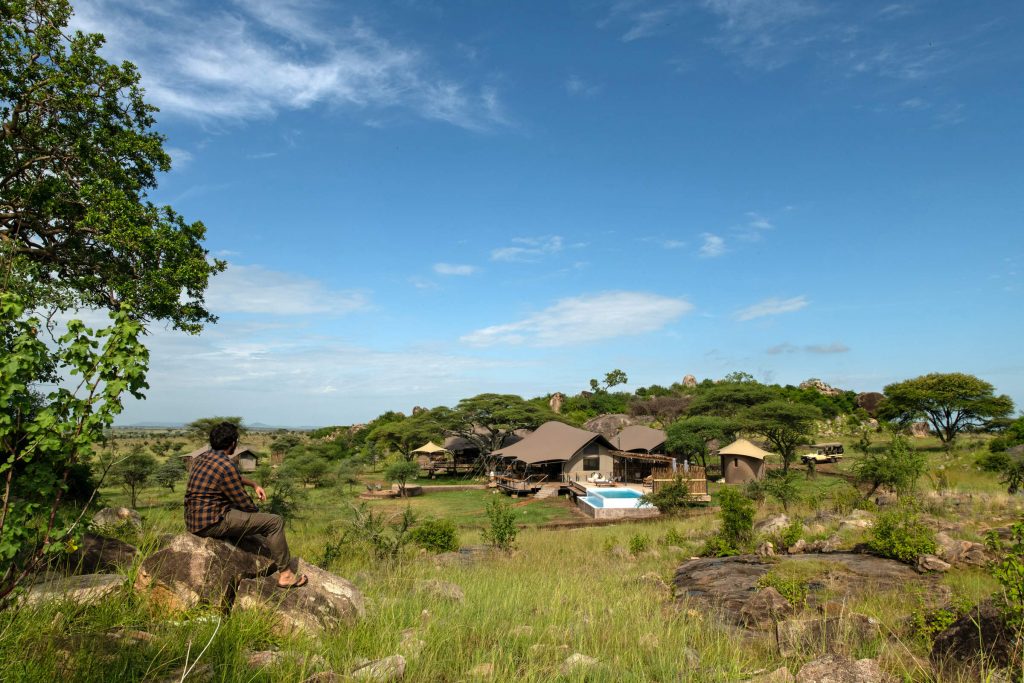
This section of the Serengeti was, until recently, reserved for predator research, a scientific study area where cheetahs, in particular, were monitored with an intensity that produced one of the most detailed behavioural datasets on the species anywhere in the world. The cheetah density in this area remains exceptional. Your guide works the plains each morning with the unhurried methodical attention that finds cheetahs: the distinctive silhouette on a termite mound, the fixed gaze directed at a herd of gazelle 300 metres away, and the specific posture that indicates a hunt is imminent. Watching a cheetah accelerate from stillness to seventy miles per hour and then decelerate over the body of its prey is a sequence that the Serengeti’s east-central plains deliver with a regularity unmatched anywhere else in Africa.
The nearby Nyabogati River sustains year-round concentrations of wildlife independent of migration patterns, which means that even outside the peak migration window, the game viewing in this part of the Serengeti is consistently excellent. Elephants move along the riverine forest. Buffalo graze the floodplain. Hippos occupy every pool with their characteristic territorial intensity. And the big cat density, lions, leopards, and cheetahs, is what earns this area its reputation as the finest predator-watching country in East Africa.
Accomodation Options
- Namiri Plains Lodge: Namiri Plains Lodge is a remote and refined safari lodge set in the predator-rich eastern plains of Serengeti National Park, offering understated luxury, exceptional big cat encounters, and a truly secluded Serengeti experience.
- Lemala Nanyukie: Lemala Nanyukie Lodge is a stylish, contemporary safari lodge set in the quiet eastern reaches of Serengeti National Park, offering spacious design, modern comfort, and excellent year-round wildlife viewing in a more secluded part of the Serengeti.
Day 18: Arusha & Departure: The End of a Journey, The Beginning of a Return
The final morning has a quality that every traveller on this circuit knows: the reluctance is real, and it is not the reluctance of someone who has had enough. It is the reluctance of someone who has had exactly the right amount and is aware, clearly, of how rare that is. A flight to Arusha brings you to the northern Tanzanian town that serves as the gateway to the region’s great ecosystems: the Serengeti, Ngorongoro, Tarangire, and Kilimanjaro. A farewell lunch is served at a property at the base of Mount Meru, where day rooms are available before your transfer to Kilimanjaro International Airport for international departures.
What you carry out of this continent is not easily named. It is something between a new standard of experience and a new understanding of scale: the knowledge that a gorilla family can exist in a forest in Uganda and a cheetah can hunt on a Tanzanian plain and a million wildebeest can move between two countries on a route they have followed since before recorded history, and that all of this is real and accessible and worth every effort required to reach it.
What’s Included?
✔️ Accommodation (luxury camps & lodges)
✔️ All meals as per itinerary
✔️ Park entry fees & conservation charges
✔️ Game drives in a 4×4 safari vehicle with a pop-up roof
✔️ Professional English-speaking safari guide
✔️ All transfers (including airport pick-up & drop-off)
What’s Not Included?
❌ International flights
❌ Optional activities
❌ Travel insurance & visas
❌ Tips & personal expenses
Explore More Luxury Kenya & Tanzania Safaris Itineraries & Other Combined Safaris
Serengeti Wildebeest Migration Safari
Maasai Mara and Zanzibar Beach Safari
Maasai Mara, Rwanda gorillas, and Victoria Falls
Masai Mara, Amboseli and Diani Beach safari
Why Plan Your Ultimate East Africa Safari With Us
Our speciality is Tanzania, the Serengeti, the Ngorongoro Crater, Tarangire, and the southern circuits, but our expertise extends across East Africa. We plan combined multi-country safaris with the same depth of knowledge and the same personal approach that defines everything we do. When you plan this journey with us, you are not buying a product from a catalogue. You are working with specialists who have walked these conservancies, know these guides personally, and have placed clients in these camps and followed up when they returned.
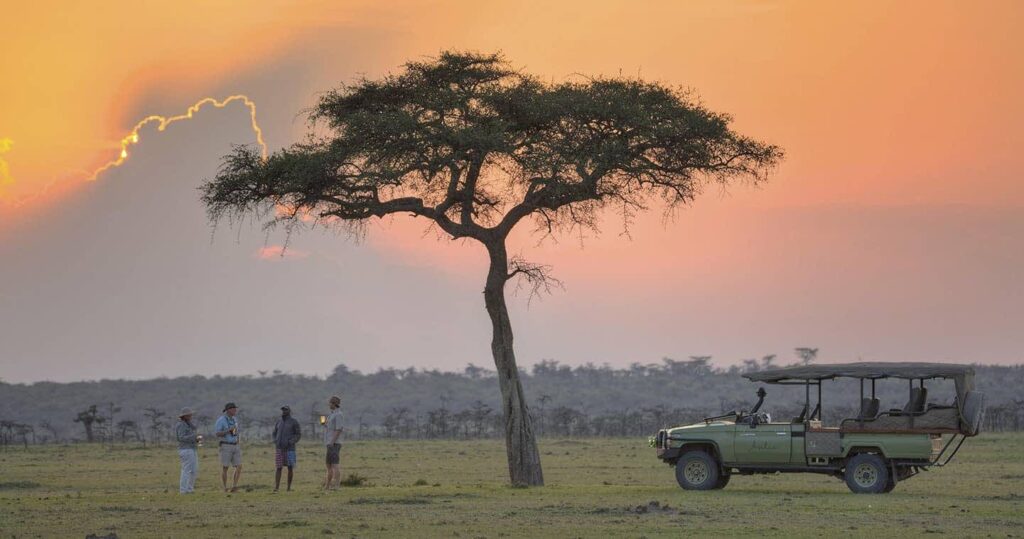
We plan this journey as a genuinely private experience: your vehicle, your guide, your schedule. We do not place you in a group tour. If you want to stay an extra hour at the Ol Pejeta rhino enclosure due to an intriguing talk with the ranger, we will. If the cheetah in the east-central Serengeti is hunting and your guide wants to wait, we wait. This flexibility is the difference between a private itinerary and a group departure, and it is a difference that transforms every day of the journey.
Frequently Asked Questions: Ultimate East Africa Safari
What is the best time of year for a combined Kenya, Tanzania, and Uganda safari?
The optimal time for this three-country itinerary is from June to October, when the Great Migration is in full swing between the Serengeti and the Maasai Mara. During this period, game viewing across Kenya and Tanzania benefits from the dry season’s low vegetation and concentrated wildlife around permanent water, and gorilla trekking in Bwindi is at its most accessible, with drier forest trails and clearer visibility. The Mara River crossings peak during July and August, making them particularly sought after. January through March offers an excellent alternative for travellers who want fewer crowds, lower rainfall in Kenya and Tanzania, and an extraordinary calving season in the southern Serengeti. Gorilla trekking is slightly more demanding in the green season’s wetter conditions. The primary periods to avoid are April and May, when Kenya and Tanzania’s long rains make road conditions difficult and several camps close for the season.
How physically demanding is gorilla trekking in Bwindi, and how should I prepare?
Gorilla trekking in Bwindi is the most physically demanding element of this itinerary, but it’s manageable for any reasonably active traveller in good health. The terrain is steep and often muddy, and the altitude ranges between 5,000 and 8,000 feet depending on where the gorilla family has moved. Treks can last anywhere from thirty minutes to six hours of walking; the duration is entirely determined by where the gorillas are on the morning of your visit. We always recommend trekking poles, which are available at park headquarters, and sturdy ankle-supporting boots. Rangers travel with you throughout the trek and set a pace that accommodates every member of the group. Porters are available to carry bags and provide physical support on steep sections; hiring one is both practically useful and directly beneficial to the local community. The minimum age for gorilla trekking is 15 years old. Travellers with significant mobility limitations should speak with us about alternative Bwindi experiences, including gorilla habituation sessions from closer to the forest edge.
What is the difference between the Maasai Mara National Reserve and a private Mara conservancy?
The Maasai Mara National Reserve is one of Africa’s most famous wildlife destinations, and deservedly so, but it is a public park that attracts a significant volume of visitors, particularly during the migration season, when popular sighting areas can accumulate many vehicles simultaneously. Private conservancies like Olderkesi, which border the reserve, offer access to the same wildlife corridor and the same migration herds but with strictly limited visitor numbers that create a fundamentally different experience. In the conservancies, you are often the only vehicle at a sighting. You can drive off-road, which allows your guide to approach wildlife in a way that public park restrictions do not permit. You can do night drives and guided bush walks, which are not allowed inside the national reserve. The lion density in well-managed Mara conservancies is comparable to or higher than in the reserve itself, and the overall quality of individual wildlife encounters is consistently superior. For discerning travellers on a private safari, conservancy is always our recommendation.
Can this 18-day itinerary be extended or shortened to fit my schedule?
Yes, this flexibility is precisely the kind of adjustment we plan for most clients. The 18-day structure represents what we consider the ideal pacing for a three-country circuit of this scope, but every element is negotiable. Travellers with 14 days available typically choose to focus on either Uganda and Kenya or Kenya and Tanzania, rather than all three countries. Those with 21 or more days frequently add a Ngorongoro Crater circuit, a beach extension in Zanzibar, or a southern Tanzania wilderness component in Ruaha or Nyerere. We also plan entirely different three-country combinations, Rwanda’s gorillas instead of Uganda’s, for instance, or a Kenya coast extension after the Mara based on individual preferences. The itinerary on this page is a starting point, not a fixed product. Tell us your dates, your priorities, and any non-negotiable experiences, and we will build the version of this journey that fits your life.
How is a fully private safari different from a small-group tour, and is it worth the additional cost?
A small-group safari, typically six to twelve people on a fixed departure date, offers genuine wildlife experiences and the camaraderie of shared encounters. What it cannot offer is the flexibility, pacing, and depth of a fully private journey. You have complete control over your departure date on a private safari, allowing you to choose based on your desired sights and timing. Your guide is selected to match your specific interests: a birding specialist, a predatory behaviour expert, and a guide with a particular depth in conservation science. Your vehicle stops when you want to stop, and it moves when you are ready. If you want to spend two hours with a leopard and her cub while the group tour vehicle returns to camp for the communal lunch, you should stay. The quality of individual wildlife encounters is measurably higher when you are not competing for positioning with other vehicles or working within a group schedule. Private planning provides a level of contingency management that group departures cannot match, especially for a journey of this length and ambition, eighteen days through three countries covering some of the most logistically complex terrain in East Africa. If a flight is delayed, if conditions at a particular camp require adjustment, if an unexpected wildlife opportunity demands a change of plan, a private guide and private logistics respond in real time. Whether this is worth the additional cost is a personal judgement. Clients who have done both formats consistently describe the private experience as superior, based on years of planning these journeys.
Begin Planning Your East Africa Journey
An eighteen-day safari through Uganda, Kenya, and Tanzania is not a holiday. It is a threshold experience, the kind of journey that alters your relationship with the natural world and leaves a permanent mark on how you understand the planet you live on. We say this statement not as marketing language but as an observation drawn from years of planning these journeys and hearing, again and again, from the clients who have completed them.
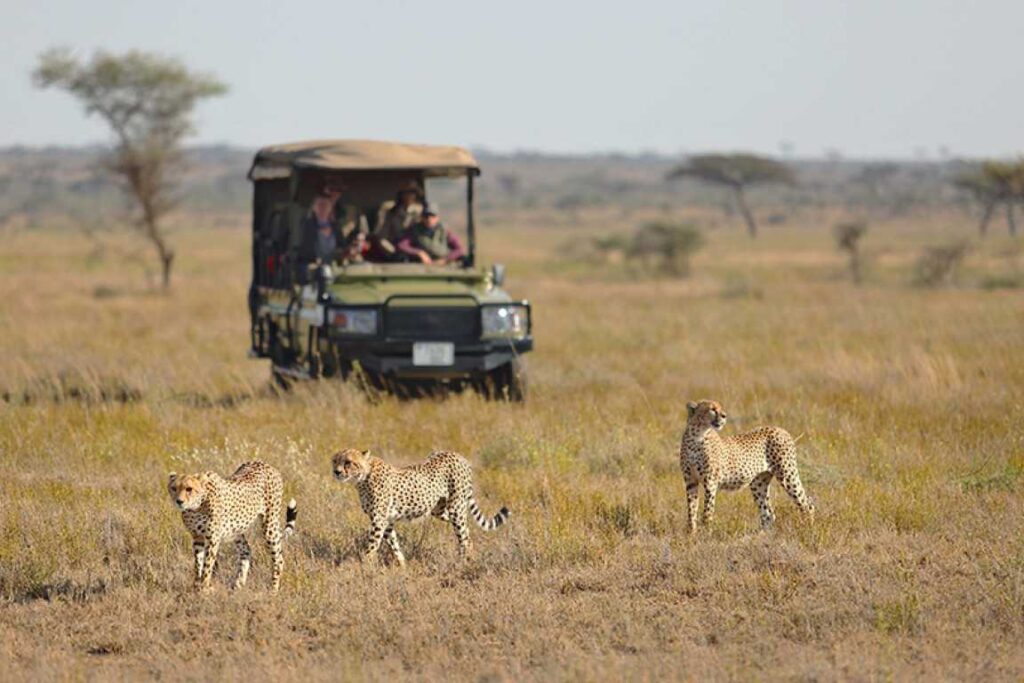
The logistics of a three-country, multi-ecosystem private safari are considerable. Gorilla permits must be secured months in advance. Camp availability in the northern Serengeti during the migration peak is limited. Internal flights must be coordinated with wildlife movement patterns rather than fixed schedules. This is work that requires specialist knowledge and direct relationships, and it is exactly the work we do.
Contact us today to start the conversation. Tell us when you want to travel, what you most want to experience, and who is coming with you. We will take it from there. Reach our team here →
We respond to every enquiry personally, within Minutes. The gorillas are waiting. The Migration will not pause. And the northern Serengeti at dawn you will simply have to see it for yourself.