The February Tanzania Photography Safari: Calving Season on the Ndutu Plains
Between late January and early March, the short-grass plains around Ndutu, straddling the southern Serengeti and the Ngorongoro Conservation Area, become the most concentrated and photographically extraordinary landscape in Africa. February marks the peak of the wildebeest calving season, with up to eight thousand calves born daily across the southern plains. The grass is short and nutritious, cropped flat by the preceding months of grazing, which means subjects are visible at long distances and the horizon is wide and unobstructed, ideal for the kind of vast landscape photography that places predator and prey within a context of infinite, ancient space.
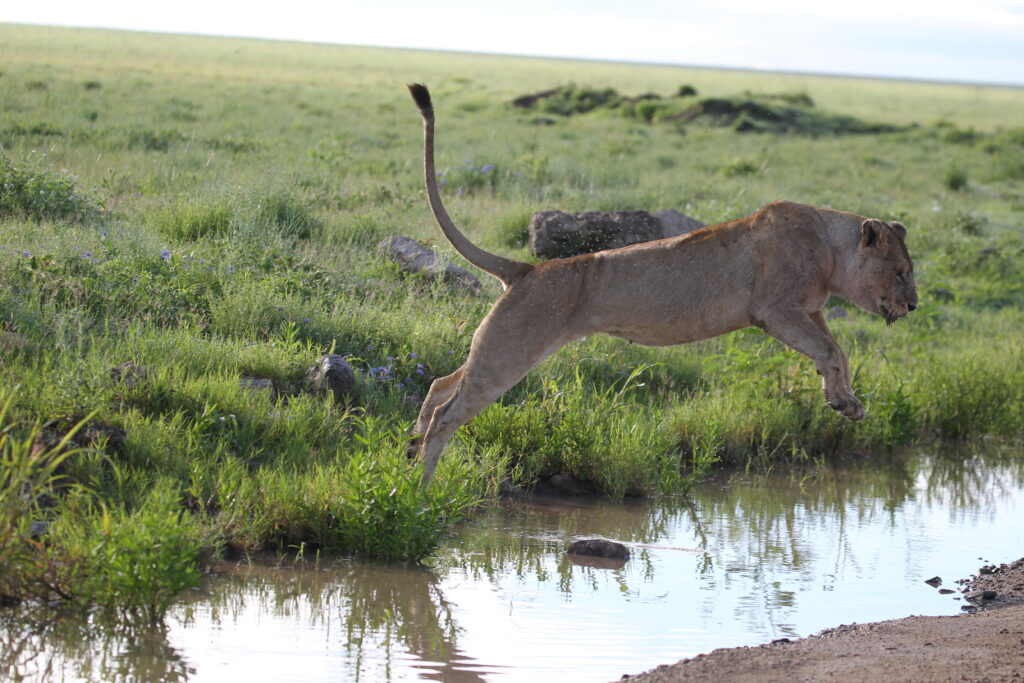
The photographic subjects during this season are unparalleled anywhere. Lion prides are actively hunting across the plains, their kills visible in the open grassland with none of the obscuring bush that characterizes the northern Serengeti. Cheetah mothers with cubs are navigating the tension between hunting opportunity and the constant predator pressure of lions and hyenas, exhibiting behavioral sequences of extraordinary drama and emotional complexity. Spotted hyena clans are at their most active, trailing the herds and capturing calves with their efficient brutality, which makes them both captivating and hard to ignore. And the calving wildebeest themselves, the confusion, the vulnerability, and the absurdly touching determination of a newborn finding its feet within minutes of birth while its mother circles it against the approach of jackals produce imagery that is as emotionally affecting as anything the natural world offers a camera.
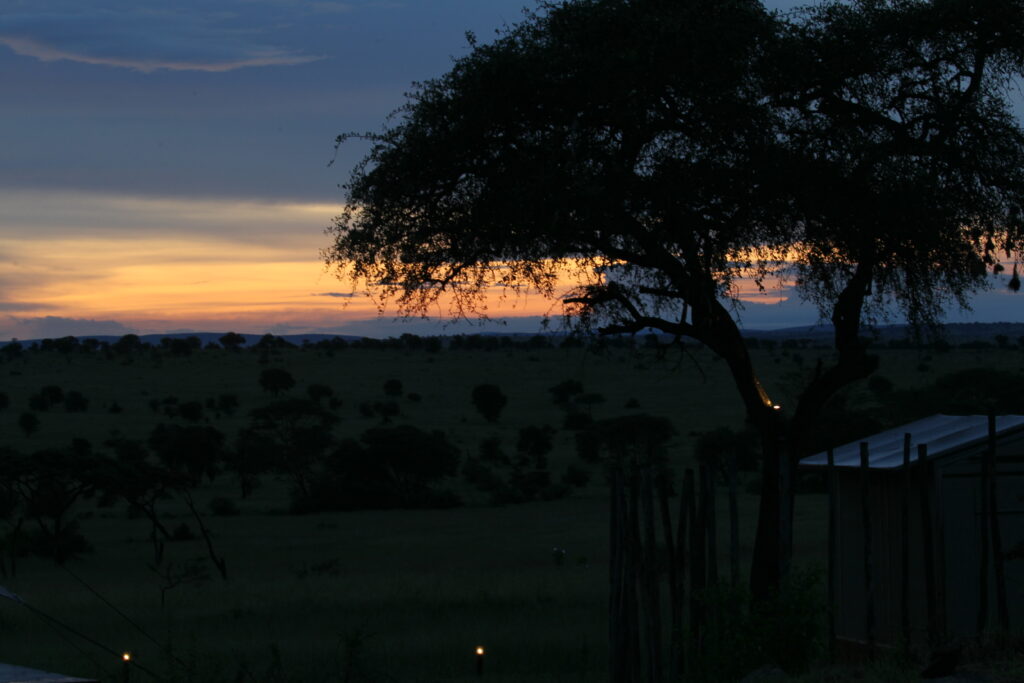
The February Tanzania photography safari sets up two private camps in the Ndutu area and the central Serengeti: one near where the wildebeest are giving birth and the other in the acacia forest and rocky areas of the central park, where local big cats provide a wonderful second subject for photographers. The finest landscape-photography light the Serengeti produces all year comes from the warm, long-golden mornings in February, under the building cumulonimbus that precede the short rains.
The July–September Tanzania Photography Safari: River Crossings in the Northern Serengeti
From July through September, the migration pushes north. The herds that spent the calving season on the Ndutu plains have been moving steadily northward since April, through the western corridor and the Grumeti River crossing zone, and by July, the front of the migration has reached the Lamai Wedge and Kogatende areas of the northern Serengeti, the Tanzanian bank of the Mara River system, where the famous crossings begin. This is the most internationally recognizable phase of the Tanzania photography safari and, for photographers who specifically want the crossing action, the essential window.
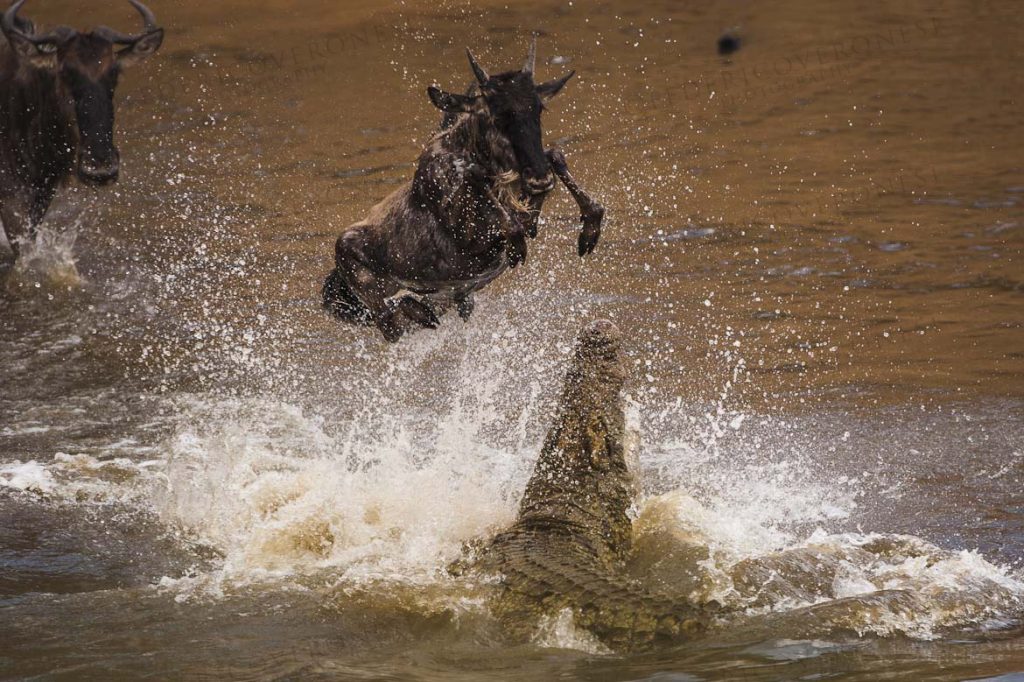
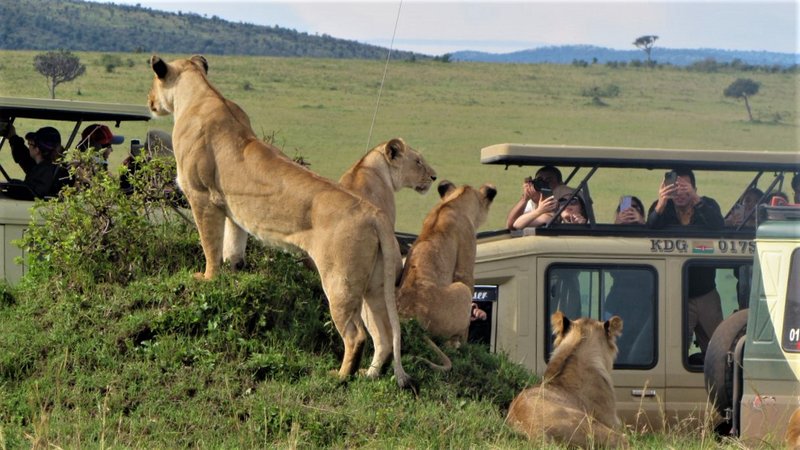
The Mara River crossings of the northern Serengeti differ from the Kenyan Mara crossings in one crucial photographic respect: the Tanzanian side of the river offers a different landscape context, wider, more dramatic riverine vegetation, different river bend configurations, and a general sense of more space around the action. The vehicle concentration on the Tanzania side is also, in most seasons, lower than on the Kenyan side, which means cleaner backgrounds and less competition for the best positions. Our camp in the Lamai Wedge area is positioned to give early morning access to the most active crossing zones, with real-time intelligence from a ranger and tracker network that covers the entire northern Serengeti river system.
The central Serengeti remains productive year-round, and our July–September photography safari includes a second camp in the central park specifically for resident cat photography, the lion prides, cheetah families, and leopard territories that produce consistent results regardless of where the migration is concentrated. The complete Serengeti photography experience combines migration drama in the north with resident predator intimacy in the center, and the July–September version of this itinerary delivers both.
The Photography Infrastructure Behind Our Tanzania Photography Safari
Vehicle Configuration for the Tanzania Photography Safari
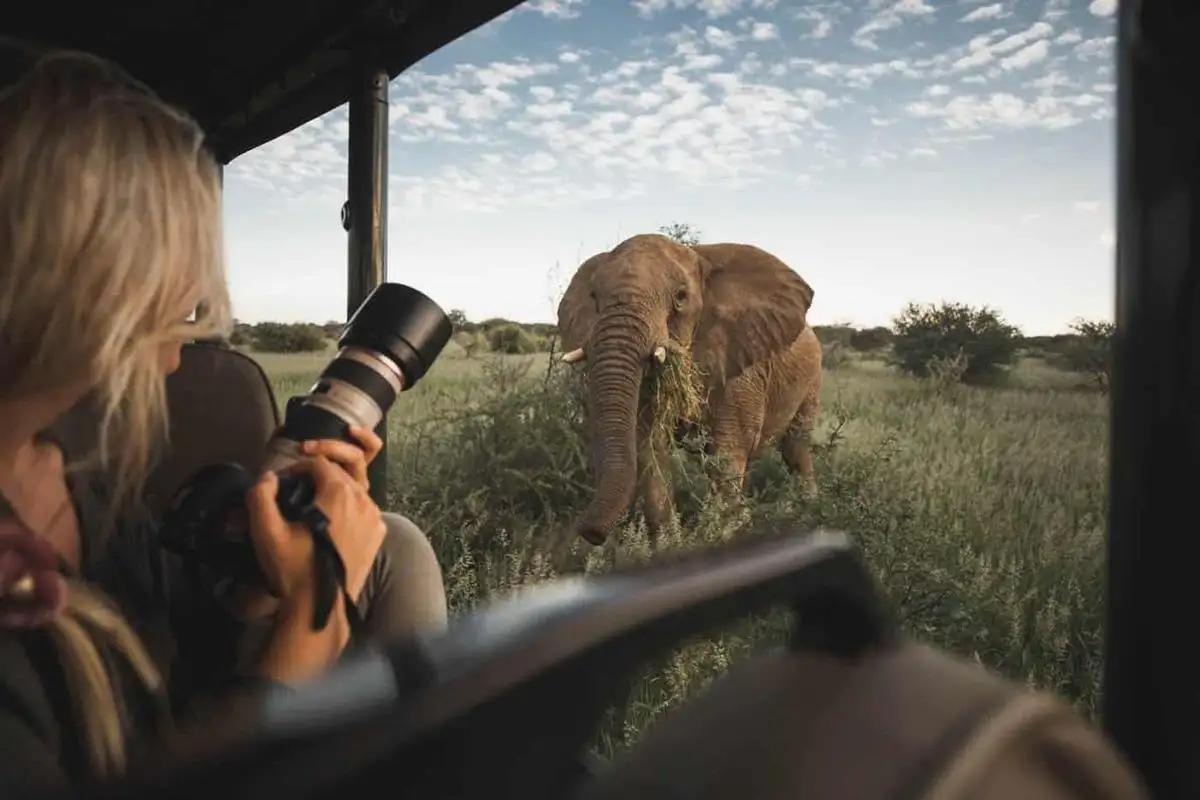
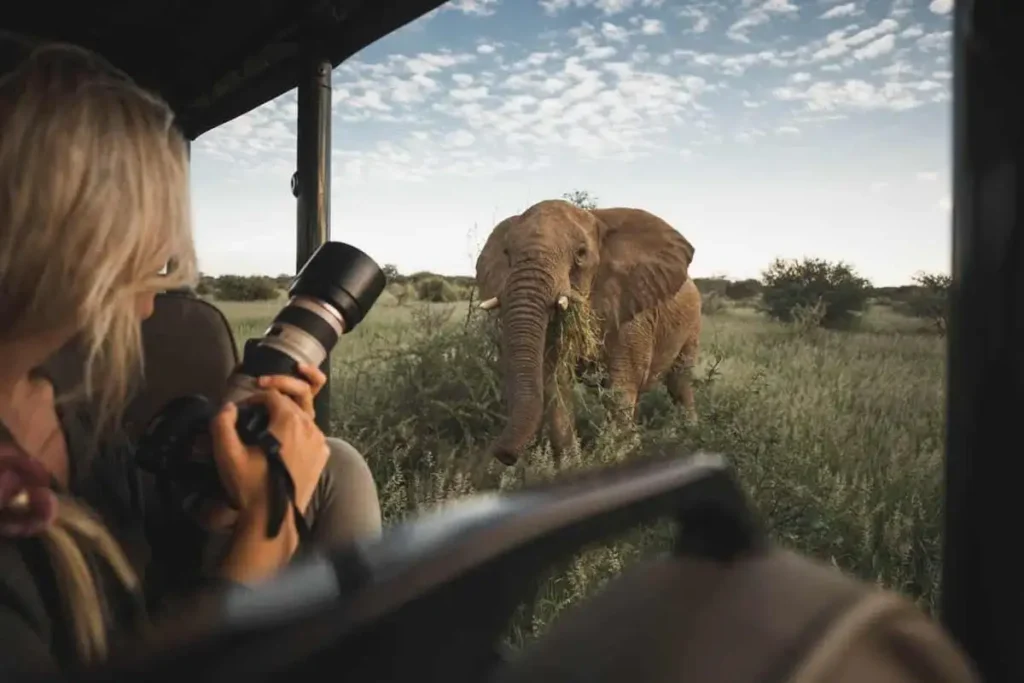
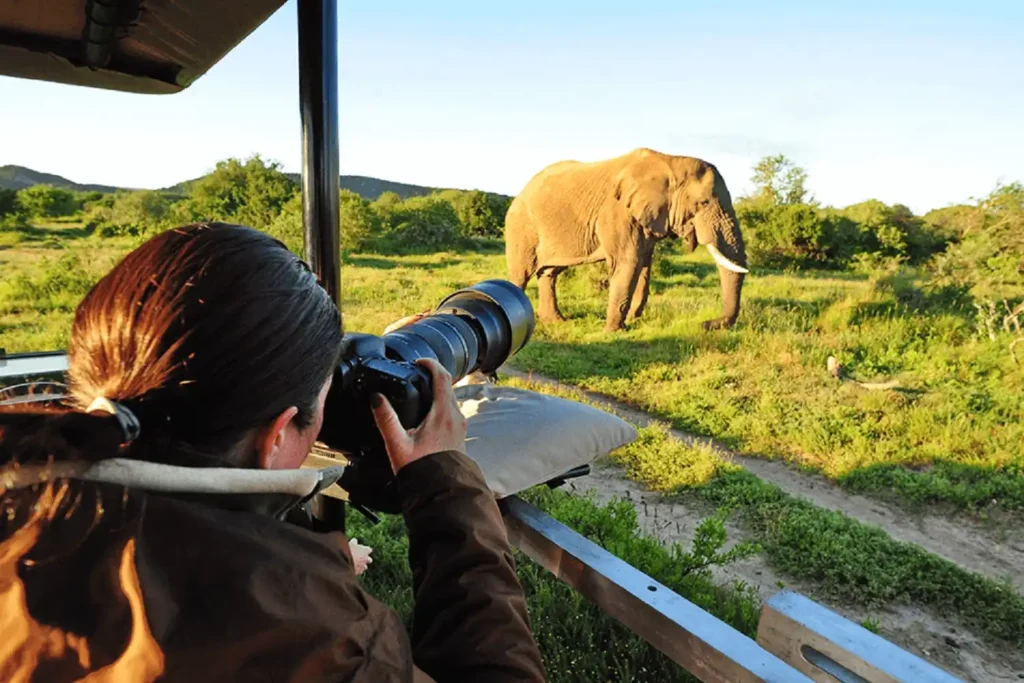
The competitor offers a window seat. We offer something more considered than that. Each vehicle on our Tanzania photography safari carries a maximum of four guests, no exceptions, configured with individual dedicated shooting positions at every window. The vehicles run extended-roof hatches wide enough for two photographers to shoot simultaneously in opposite directions. Window-mounted bean bags at every seat replace the improvised arrangements that degrade image quality on rough terrain. The vehicles carry spare batteries, card readers, a portable monitor for in-field image review, and a rain cover protocol for the brief but violent afternoon downpours that occasionally interrupt the dry season.
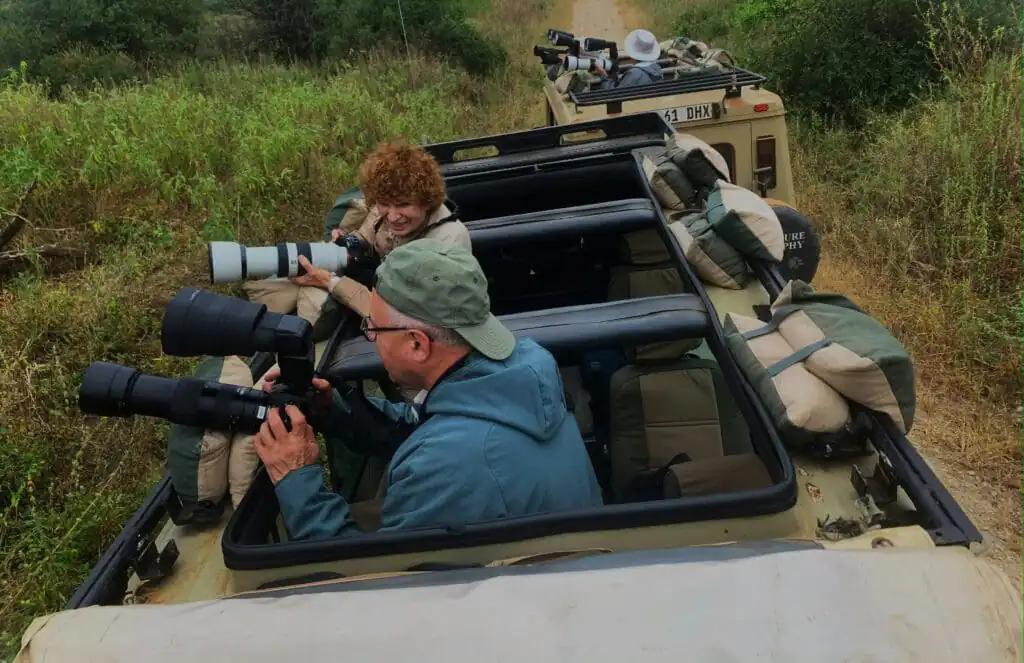
Engine management is a photography discipline, not an afterthought. On approach to a subject, the engine idles down progressively. At the final position, it is cut, unless safety requires otherwise. The guide communicates with rangers and trackers throughout the day by radio but does so in a register that does not disturb either the animals or the photographer in the session. These protocols are the product of years of understanding how the decisions made inside a vehicle affect the quality of the images made from it, and they are embedded in the standard operating procedure of every Tanzania photography safari we run.
The Two-Camp Tanzania Photography Safari Structure; Why It Matters Photographically
The Serengeti is not one landscape. It is a mosaic of distinct ecological zones: short grass plains, long grass plains, acacia woodland, kopje grassland, riverine forest, and seasonal wetlands, each with its own characteristic light, its cast of resident animals, and its own compositional grammar. A Tanzania photography safari that spends its entire duration in a single camp, however well-positioned, explores one section of this mosaic. Our two-camp structure moves you between zones, ensuring that your portfolio by the end of ten days contains the landscape variety that defines a complete Serengeti visual record rather than a series of variations on a single theme.
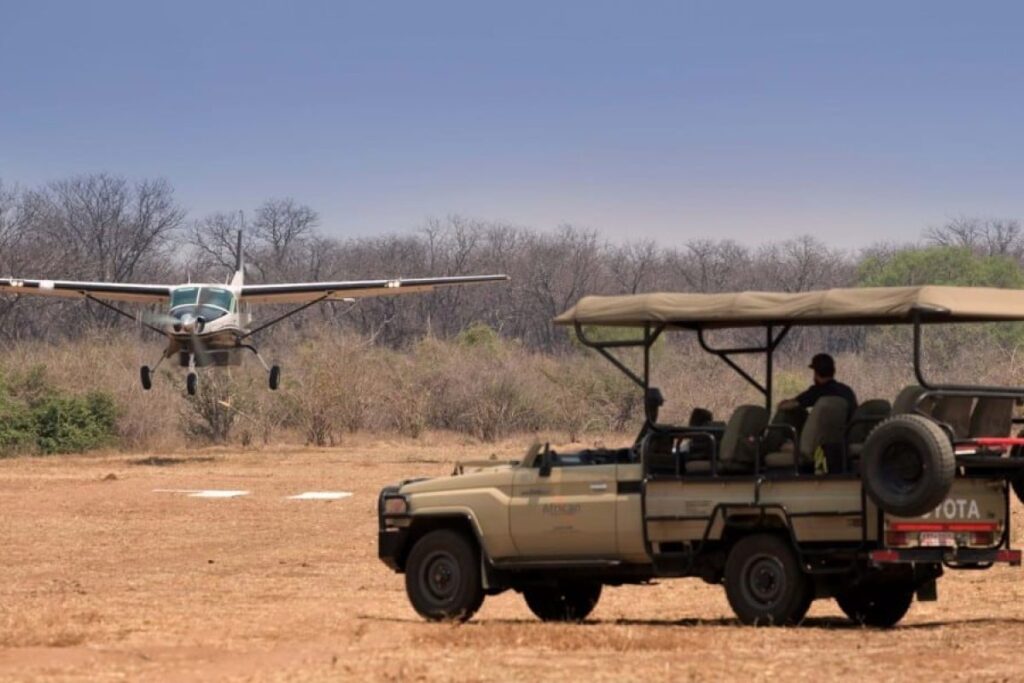
The logistical complexity of maintaining two private camps in different sections of the Serengeti, with a charter connection between them and a real-time intelligence network informing which camp is positioned where, is significant. It is also, in our assessment, the single most important structural feature of this Tanzania photography safari. See our full Serengeti safari guide for a detailed explanation of the Serengeti’s ecological zones and their photographic characteristics.
The Photography Guide Standard on Our Tanzania Photography Safari
The difference between an expert photography guide and an ordinary safari guide with a camera is not equipment; it is behavioral knowledge. Predicting animal behavior sixty seconds ahead of the action, the skill that defines great wildlife photography positioning, comes from years of watching the specific animals in a specific ecosystem and building a pattern library of responses, habits, and tendencies. Our Tanzania photography safari guides have spent between ten and twenty years in the Serengeti ecosystem. They know named individual animals across multiple species. They understand the particular behavioral signatures of the central Serengeti’s resident cheetah families and can position you ahead of the chase rather than alongside it. They have photographed the Serengeti themselves, extensively, which means their coaching is not theoretical; it comes from having sat in the same position with the same challenge and having found or missed the decisive moment themselves.
For guests who want to understand the guiding philosophy in more detail before booking, our about us page describes how we train and select our team of guides for Tanzania photography safaris.
Tanzania Photography Safari: Subjects, Light, and Seasonal Specificity.
What to Expect to Photograph on a February Tanzania Photography Safari
The February Tanzania photography safari is built around six primary subject categories. The Ndutu Plains serve as the emotional centerpieces, showcasing calving, wildebeest birth, the first standing, bonding, and vulnerability. Predator hunting scenes are the main focus: the presence of many vulnerable animals leads to lions, cheetahs, leopards, wild dogs, and hyenas all hunting at the same time, with several hunts happening during the same The open grass landscape itself, short-cropped plains under a vast sky, punctuated by distant acacias and the dark lines of moving herds, offers landscape composition on a scale not available in any other season. Smaller subjects, bee-eaters nesting in the plains termite mounds, and kori bustards displaying the extraordinary martial eagle sequence of stooping and catching provide intimate portfolio variety. The warm, low, and long-golden light from a sun not yet high enough to flatten the landscape provides some of the finest photography conditions available anywhere in Africa. See our February calving season photography guide for the detailed subject-by-subject breakdown.
What to Expect to Photograph in a July–September Tanzania Photography Safari
The July–September Tanzania photography safari offers four subject categories of exceptional power. River crossing sequences the approach, the hesitation, the panic of the crossing, the crocodile strikes, and the scramble up the opposite bank are the defining imagery of this season and can be worked as action sequences, environmental portraits, or narrative series depending on your positioning and compositional approach. Resident predator behavior in the central Serengeti lion pride dynamics, cheetah family hunting, and leopards in riverine trees provides the intimate behavioral work that crossing action alone cannot supply. The northern Serengeti landscape, bigger skies, more dramatic topography, and the Mara River itself as a compositional element offer landscape work distinctly different from the February southern plains. And the herd movement photography, the columns of wildebeest and zebra moving north under building afternoon clouds, produces the large-scale, environmental migration imagery that defines the visual vocabulary of the Serengeti.
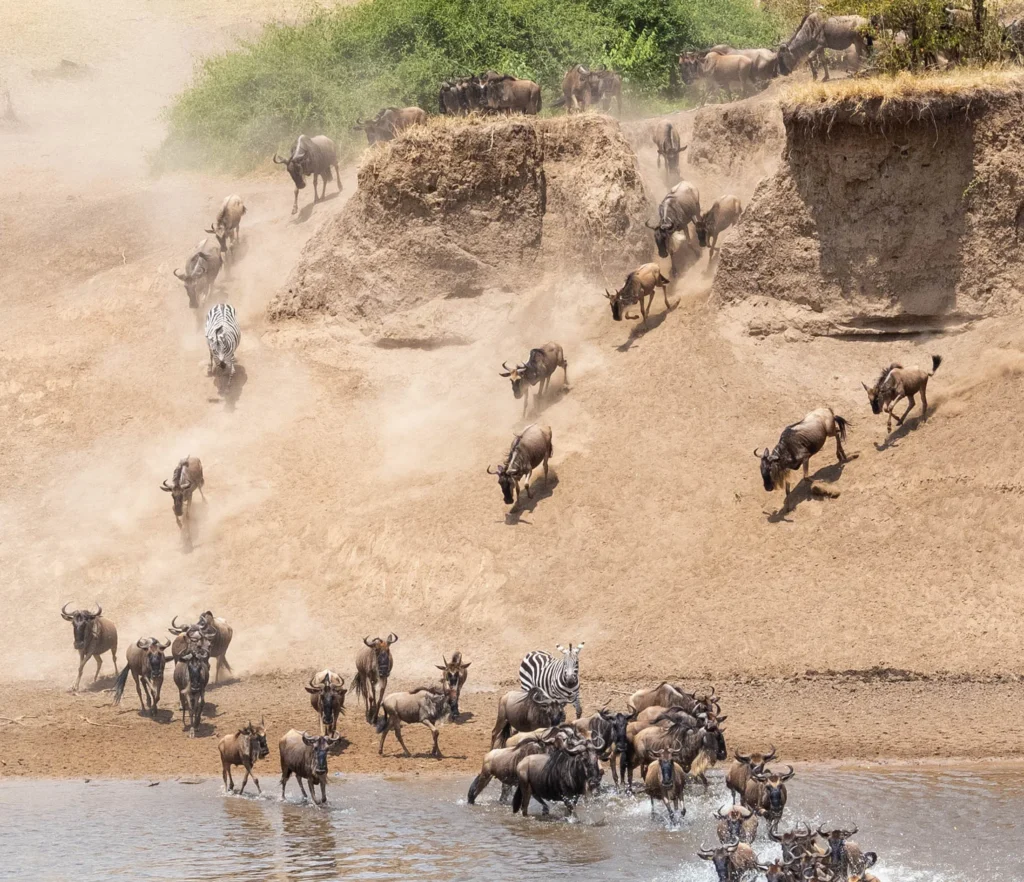
Read our full Tanzania Great Migration safari guide for context on the seasonal migration patterns that determine where we position your camps.
What is the best season for a Tanzania photography safari: calving or river crossings?
The answer depends entirely on the portfolio you want to build. The February calving season, centered on the Ndutu plains in the southern Serengeti and Ngorongoro Conservation Area, offers the finest landscape photography conditions of the year: short grass, open horizons, and warm, long-golden light combined with an extraordinary concentration of predator activity around the calving herds. The resulting images tend to be emotionally affecting, compositionally open, and often more intimate than crossing photography. The July–September river crossing season offers more dramatic action: the kinetic energy of tens of thousands of animals crossing crocodile-patrolled water is unmatched anywhere in the natural world for sheer visual intensity. Crossing images tend to be high-energy, chaotic, and spectacular. For photographers who want both registers of intimacy and drama, landscape and action, our Kenya and Tanzania combined photography safari covers both seasons across the two countries.
What camera gear do I need for a Tanzania photography safari?
Your guide will send a personalized equipment briefing before departure, but the essential framework for Serengeti photography is as follows. A telephoto lens in the 400–500mm range is the primary tool for large mammal and predator work. A 70–200mm or 100–400mm zoom handles behavioral sequences where subjects move between close and distant and doubles as the second body backup lens. A wide-angle zoom in the 16–35mm or 24–70mm range covers landscape sessions, herd-scale compositions, and the kopje/sky work of the central Serengeti. Memory storage should be generous; crossing sequences consume two thousand frames in thirty minutes. A portable hard drive or second-generation backup system protects against card failure in remote conditions. For a complete gear list organized by camera system, see our Tanzania safari photography packing guide.
How many photographers are in each vehicle on this Tanzania photography safari?
Always a maximum of four. This is not a preference or a guideline; it is the structural foundation of the photography experience. Four photographers in a vehicle configured with individual window positions means that every person has a clean, unobstructed shooting angle at all times; that the vehicle can position closer to sensitive subjects without behavioral disturbance; and that the guide can give specific, personal attention to each photographer’s technique throughout the session. We do not compromise on these principles regardless of booking demand.
What photography skills do I need before going on a Tanzania photography safari?
None beyond basic camera familiarity. The Pre-Departure Photography Consultation identifies exactly where you are technically, and every subsequent session is calibrated to that starting point. Guests who have never photographed wildlife before will learn the specific autofocus and exposure settings for the Serengeti’s conditions in the first morning’s drive. Guests with years of wildlife photography experience will find that the guide’s behavioral knowledge and positioning skill enable images they have not made before, regardless of how much time they have spent in other ecosystems. The common thread is commitment to the process, being willing to leave camp before dawn, staying with a subject when nothing is happening because something is about to, and treating the image review sessions as genuine learning rather than optional extras. The Tanzania photography safari rewards engagement at every level of prior experience.
Can a Tanzania photography safari be done without a dedicated photography guide?
Technically, yes. Practically, the difference is between a safari where you occasionally photograph things that happen in front of you and a Tanzania photography safari where a guide anticipates what is going to happen, positions you for it, manages the vehicle and your technique simultaneously, and debriefs the results afterward so that your skill improves progressively across ten days. Standard safari guides in Tanzania are expert naturalists and wildlife trackers. Photography guides are a specific subset of that expertise, adding the camera knowledge, compositional understanding, and behavioral prediction skills that make the difference between documentary record-keeping and portfolio-quality work. Every guide on our Tanzania photography safari program meets this specific standard, which is why we carry their profiles and field experience on our about us page for guests to review before booking.
How does a private Tanzania photography safari compare to a group photo tour?
On a group photo tour, the itinerary is fixed in advance, vehicle positioning is a compromise between multiple photographers with competing needs, and the guide’s coaching is generic rather than specific to your system, your level, and your creative goals. On a private Tanzania photography safari with us, every element camp position, daily program, session focus, workshop content, and image review depth is designed around your group exclusively. If you want to spend the entire morning with a single cheetah family rather than moving between subjects, you stay. If the guide’s intelligence suggests repositioning the camp closer to a crossing zone between days, we make that call without asking whether it suits a group schedule. The private model is not a premium version of the group experience; it is a fundamentally different product that produces fundamentally different photographic results. Our private Tanzania safari describes the full operational difference.
What happens if the migration crossings are not active during my Tanzania photography safari?
The Serengeti does not produce blank days. Even in seasons when the migration crossings are slower, when the herds have crossed and not yet returned, or when river levels make the wildebeest reluctant to commit, the central Serengeti offers resident cat photography, elephant family behavior, giraffes in acacia woodland, vast landscape compositions, and the hundreds of resident bird species that no migration photography guides ever seem to mention. Your guide’s network tracks crossing activity in real time and repositions the vehicle program accordingly. If a crossing zone is inactive, the day pivots to resident cat work. The session switches to landscape and ecological topics if the resident cats don’t move. A Tanzania photography safari with a guide who knows the entire ecosystem, not just the migration corridor, is never dependent on a single subject category for its creative success.
Can the Tanzania photography safari be extended to include Zanzibar or the Ngorongoro Crater?
Absolutely. Zanzibar is a natural post-safari extension of three to five days on a spice island and beach destination that provides complete contrast and recovery from the early mornings and creative intensity of the Serengeti. The photography of Zanzibar, including the carved wooden doors of Stone Town, the dhow harbors at sunset, and the coral reef underwater photography for divers and snorkelers, represents an entirely different register from wildlife work and is a welcome shift. The Ngorongoro Crater adds a day or two of contained, high-density wildlife photography in one of Africa’s most dramatic landscapes, a collapsed volcano whose floor holds nearly thirty thousand animals within seventeen kilometers of vertical caldera walls. Our Tanzania safari planning guide covers all extension options in detail.
Build Your Tanzania Photography Safari With the Team That Knows the Serengeti’s Light
Every image on your hard drive tells you something about the experience that produced it. The images you print and hang are those made in the field by a photographer who was in the right place at the right time, not by chance, but because every decision leading up to that shutter press was made correctly. Camp position, drive timing, vehicle angle, subject distance, engine protocol, and patience at the bank before a crossing are all important factors.
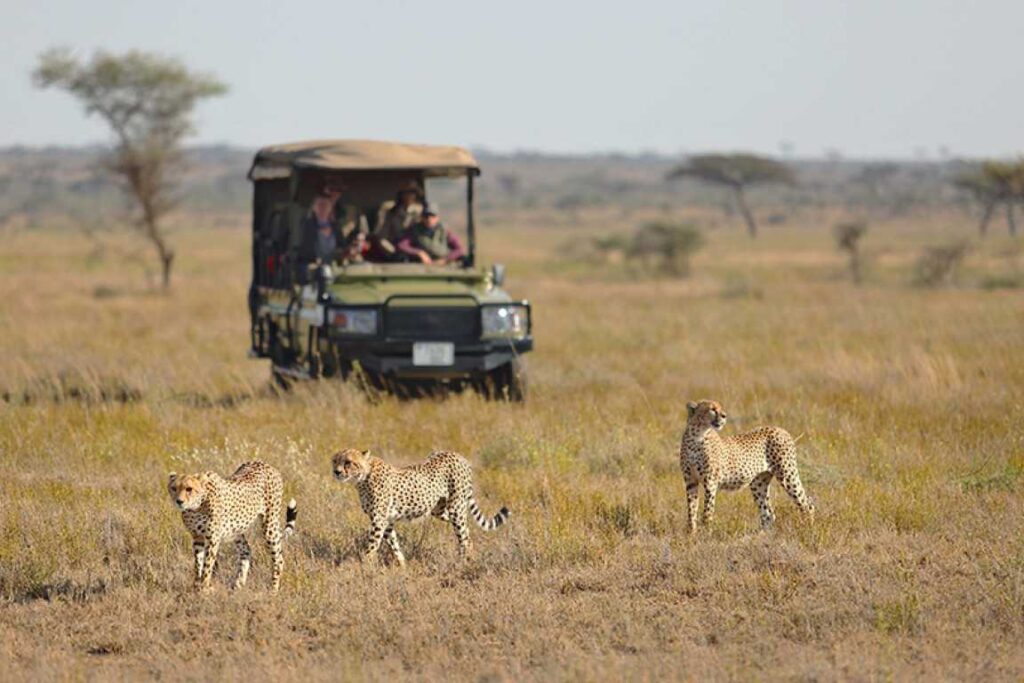
We build Tanzania photography safaris that manufacture the conditions for those images. Not by luck. Not by being in the general area at the general time. But by knowing the Serengeti’s animals, light, and rhythms from years of being there, and by designing an experience around your specific creative goals rather than a standard itinerary that works for everyone and is perfect for no one.
Contact our team today and tell us which season you want, what portfolio you are trying to build, and how much time you have. We will tell you exactly where to go, when to be there, and how we intend to help you make the Tanzania photography safari images you have been imagining. You can also explore our full Tanzania safari range, read the complete Serengeti photography guide, or compare the calving season and river crossing seasons in detail before reaching out.
The light on the Serengeti at six in the morning is already moving. Every minute of it is unrepeatable. The Tanzania photography safari is about being there when it arrives.