The Photography-First Philosophy Behind Every Kenya Safari We Design
Most safari companies treat photography as a feature, something to mention in the marketing, a pair of binoculars, and a polite suggestion to keep your lens cap off. We treat it as the entire point. The itinerary described here has been constructed around a single organizing principle that separates a genuine Kenya photography safari from every standard migration tour: the decisive hour.
Every serious wildlife photographer knows that the quality of an image depends less on the subject than on the light in which it is captured. In the Maasai Mara, that light is extraordinary during two windows each day: the ninety minutes after sunrise and the ninety minutes before sunset when the sun is low enough to produce the warm, directional, shadow-rich illumination that defines iconic African photography. Everything about how we structure your days, plan your positions, and manage your vehicle in the field is designed to protect these two windows and use them to their absolute maximum. We do not schedule anything during the golden hour except photography.
We use the flat, harsh overhead light hours in the middle of the day differently than other safari vehicles that rush between sightings. This period is when we review images from the morning session, run practical workshops on exposure, composition, and behavioral prediction, and debrief on what the guide observed that you may not have noticed from behind the lens. It is also when the camp’s chef produces lunch, the veranda looks out over the plain, and the wildebeest move through the distant grass in their endless, purposeful columns. You will not be bored.
What the Kenya Photography Safari Covers: Subjects, Locations and Light
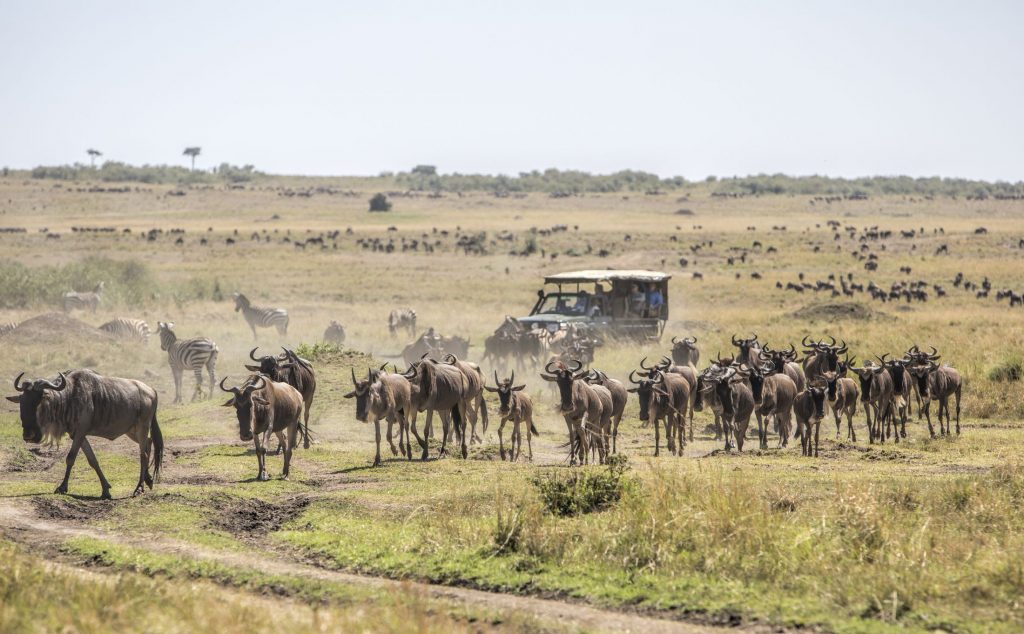
Kenya’s Maasai Mara ecosystem is, between July and September, the most photographically concentrated environment on Earth. The migration herds approaching two million animals, when zebra and gazelle are added to the wildebeest, fill the plain with subject matter on a scale that makes composition a genuinely pleasurable problem. But the migration is the backdrop, not the whole story. Your Kenya photography safari will help you create a collection of photos in different styles: sweeping views of the grassy plains under big clouds; close-up shots of cheetah families teaching their young to hunt; calm portraits of lion prides resting in the shade; fast-action shots of animals crossing the Mara River with water splashing everywhere; and, in the private conservancy, nighttime scenes of serval, genet, and nightjar lit up by the vehicle’s spotlight.
Each day’s program is designed to shift between these registers, wide and tight, action and stillness, and predator and prey, so that your portfolio by the end of ten days has both variety and coherence. This is what distinguishes a curated Kenya photography safari from a sequence of game drives with a camera along for the ride.
The photographic Technical Framework of Our Kenya Photography Safari.
Vehicle Setup for the Kenya Photography Safari
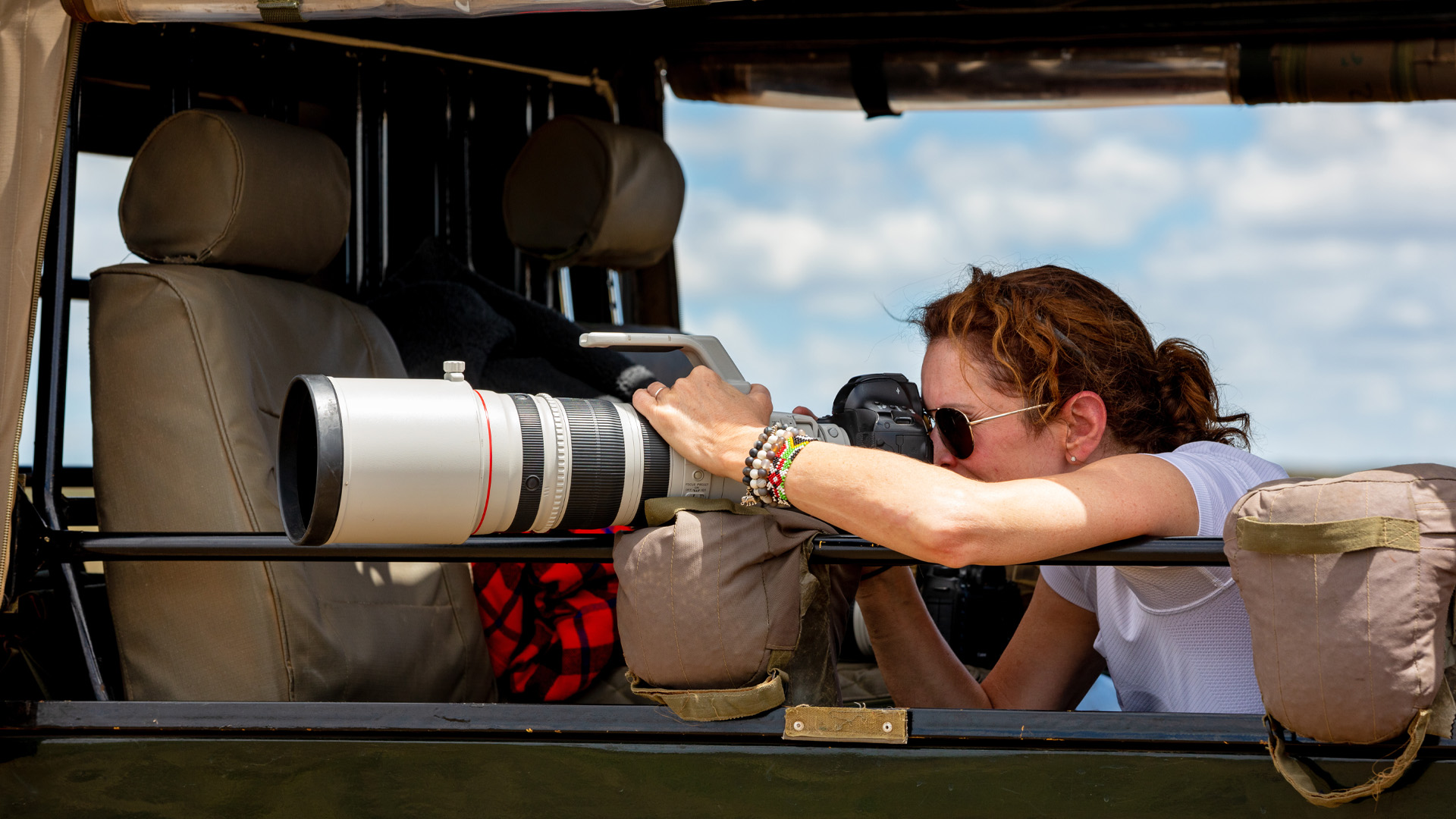
A standard safari vehicle, configured for eight people, is nearly useless for serious photography. The middle seats face the wrong direction, the roof hatch is shared between multiple photographers, and the engine idle vibration, however slight, ruins long exposures at dawn. Our Kenya photography safari vehicles carry a maximum of four guests, configured with dedicated window-mounted bean bag rests at every shooting position, adjustable armrests for telephoto support, and a raised roof hatch wide enough for two photographers to work simultaneously in opposite directions. The vehicle communicates with a second vehicle in the field by radio, allowing coordinated positioning around a subject so that no photographer is shooting into another vehicle in the background.
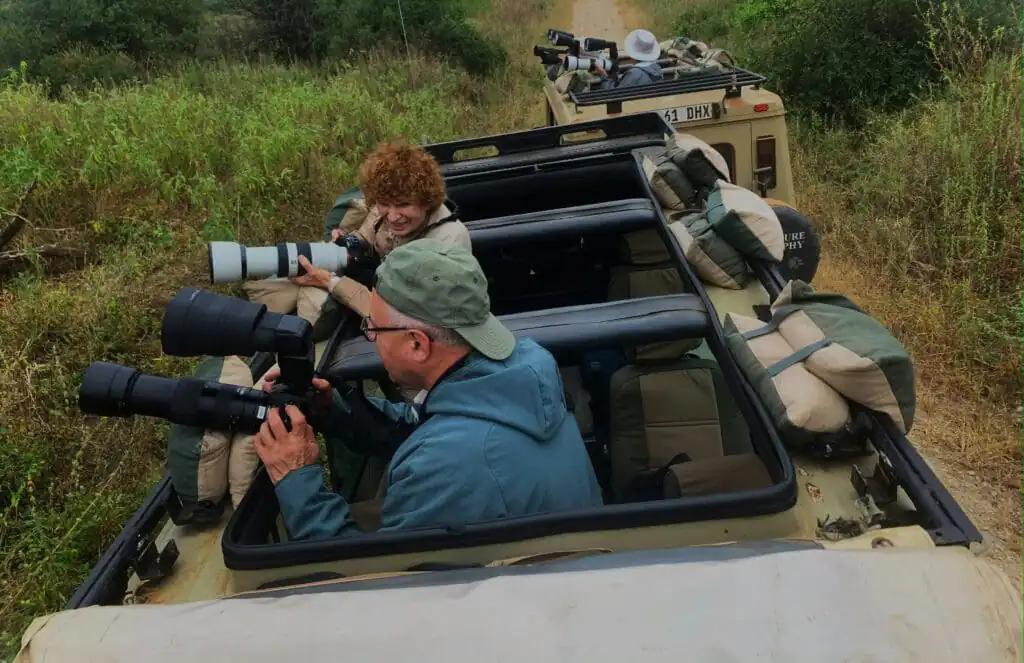
Engine management is treated as a photography discipline. On approach to a subject, the vehicle slows and the engine noise decreases progressively. At the final position, the engine is cut unless the terrain or safety conditions require otherwise. The guide does not speak during active shooting unless to provide critical information about an animal about to move or a second subject entering the frame, and even then communicates in the quietest possible register. These protocols are not advertised features; they are the standard operating procedure of a guide who has spent years understanding how to get the best from a camera in the field.
What Gear to Bring on a Kenya Photography Safari
Your guide will send a full equipment briefing tailored to your specific camera system before departure, but the essential framework is the same. A telephoto lens in the 400–600mm range is the workhorse of migration photography: long enough to fill the frame with a moving lion at forty metres, fast enough (f/4 or f/5.6) to handle the imperfect light of a crossing in shadow. A second body with a wider lens, a 70–200mm or 100–400mm zoom, handles behavioral sequences where the subject moves between close and distant and serves as the backup if your primary system has an issue in the field. A mid-range zoom in the 24–105mm range covers landscape work, vehicle shots, and the intimate subject sessions. Flash is not used on this Kenya photography safari in the standard field sessions, but a small diffused unit can be useful for the nocturnal night drive sessions, where it is used at low power to fill foreground shadow.
Storage: bring more cards than you think you need. A crossing sequence can consume two thousand frames in twenty minutes. External batteries, a portable card reader, and a laptop or iPad for in-camp image review are essential. See our complete Kenya safari photography packing guide for the full breakdown by camera system.
Skill Levels Suited to This Kenya Photography Safari
This itinerary works for photographers at every level, and the reason is structural rather than polite. Expert photographers benefit from an expert guide who knows how to find and position subjects, manages all the logistics, and can discuss craft at a high level. Beginner photographers benefit from exactly the same guide, applied differently: explaining the relationship between shutter speed and motion blur in real time with a moving cheetah as the example, or adjusting your autofocus system during the vehicle ride so that it actually tracks a running zebra rather than hunting for focus on the empty plain behind it. The Kenya photography safari’s instruction component scales to where you are, not to a pre-set curriculum.
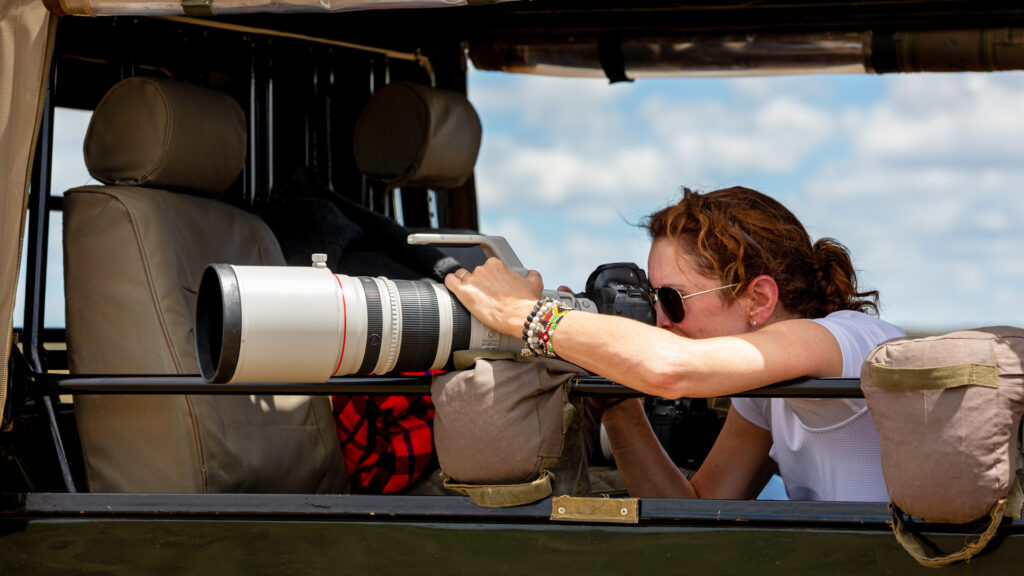
For guests entirely new to dedicated photography travel, we recommend reviewing our introduction to wildlife photography for safari guests before departure. This practical guide, written by our lead guides, covers the fundamental settings and techniques for East African wildlife conditions.
What camera and lens do I need for a Kenya photography safari?
For the migration and large mammal photography that defines the Maasai Mara experience, the minimum useful telephoto is around 300mm, and a 400mm or 500mm prime or zoom will significantly improve your results. For crossing action, a fast continuous shooting speed (10 frames per second or above) is valuable. A mirrorless system with excellent subject tracking performs exceptionally in these conditions. That said, every camera system, including a capable smartphone or a bridge camera, will produce meaningful images if the vehicle positioning and timing are right, and the moment is precisely where a good guide makes the difference that no equipment can compensate for. Before your departure, send us your current equipment list, and we will send you specific settings recommendations for the Mara light and subjects you will encounter.
When is the best time for a Kenya photography safari at the Maasai Mara?
July through September is the peak season for migration photography in Kenya, as the herds push north across the Mara River into the Maasai Mara from Tanzania’s Serengeti. The river crossings, the defining drama of Mara photography, are most frequent and most spectacular during this window. The light in the Mara during these months is characterised by building cloud formations in the afternoons, which produce dramatic skies for landscape work, and the grass height of the dry season keeps subjects visible rather than hidden in long green growth. For calving-season photography, newborn wildebeest, highly active predators, and extraordinarily photogenic short grass plains in January and February in Tanzania’s southern Serengeti offer a complementary experience.
How many photographers are in each vehicle on this Kenya photography safari?
Always a maximum of four. This is a hard limit, not a guideline. Four photographers in a vehicle configured with individual window positions means that every person has an unobstructed shooting position and sufficient space to manage a large telephoto comfortably. It also means the vehicle can position closer to subjects without the behavioral disturbance that larger vehicles cause and that the guide can give specific attention to each photographer’s technique and positioning during a session. We do not compromise on quality, regardless of demand.
Is the Mara River crossing photographically guaranteed on this Kenya photography safari?
No crossing in East Africa is guaranteed; the wildebeest cross when they choose and cannot be scheduled. What we can guarantee is that between July and September, if crossings are happening anywhere in the Mara system, our guide’s network will know where and position you there with maximum lead time. We have access to real-time intelligence from rangers and guides across the ecosystem. During a typical seven-day Mara stay in peak season, our guests witness an average of two to four crossings of significant scale. More important than the number is the quality of positioning: being at the right crossing point, on the right bank, with the right light behind you, rather than arriving after the herd has committed. Our guides have spent years understanding the crossing behavior patterns at each major ford, and that knowledge is the most valuable photography asset we provide.
What is the difference between shooting in the national reserve and the private conservancy on a Kenya photography safari?
The Maasai Mara National Reserve is a government-managed area where vehicles must stay on designated tracks, off-road driving is prohibited, and there is no access after dark. The private conservancies that surround and adjoin the reserve operate under community management with different rules: off-road positioning is permitted, meaning you can drive directly to a subject rather than shooting from a track at an angle; night drives allow you to photograph nocturnal species that no national reserve visitor ever sees; and guided walks on foot provide the low-angle perspective of a camera below the grass line, shooting up toward the sky, that produces some of the most distinctive and original images possible in East Africa. Our Kenya photography safari uses both areas deliberately, combining the migration density of the reserve with the photographic freedom of the conservancy.
Can I learn wildlife photography on this Kenya photography safari if I am a complete beginner?
Absolutely, and many of our most transformed guests are those who arrive having never shot wildlife before. The dedicated image review sessions, the real-time in-field coaching, the pre-departure briefing, and the carefully managed progression from warm-up day to full migration complexity are all designed to take you from wherever you are to noticeably better by the end of ten days. You will leave with a portfolio of images you are proud of, a set of techniques you understand and can repeat, and a specific sense of what you want to develop further. For photographers who want to continue growing after the trip, our optional post-departure remote Lightroom session with your guide extends the instruction into the editing phase.
How does a private Kenya photography safari compare to a group photo tour?
On a group photo tour, you share a vehicle with strangers whose skill levels, subject preferences, and shooting pace may differ significantly from yours. The guide divides their attention among multiple participants with competing needs. Positioning decisions are compromises between what each photographer wants. The debrief and critique sessions are generic rather than specific to your images. On a private Kenya photography safari with us, your group exclusively makes every decision regarding vehicle positioning, session length, subject choice, and coaching content. If your group consists of two people who want to spend the entire morning with a single cheetah family rather than moving between subjects, that is what we do. If you want to shift from landscape work to predator behavioral sequences mid-session because the light has changed, we shift. The private model is not a luxury option layered onto a standard product; it is the foundation of the entire photography experience.
Can this Kenya photography safari be combined with Tanzania for a cross-border itinerary?
Yes, and the combination is one of our most powerful offerings for serious photographers. The Mara River crossing season from July to October in Kenya links perfectly to the Serengeti in Tanzania, where you can see the same animal herds in a different setting that provides better photo opportunities, more open views, more rocky outcrops, and different types of predators. We design cross-border Kenya–Tanzania photography safaris that follow the migration across both countries, with the crossing action of the Mara combined with the landscape grandeur and the predator diversity of the central Serengeti. Our Kenya and Tanzania combined photography safari page describes this option in detail. For photographers who want the full range of East African light and landscape, it is the most complete photography expedition we offer.
Book Your Kenya Photography Safari With the Team That Knows the Mara’s Light
You have spent years developing your eye. You know what a great wildlife image looks like: the decisive moment, the quality of light, and the behavioral detail that turns a snapshot into a story. What you need is a ten-day Kenya photography safari designed by people who think the same way: guides who read the landscape at dawn to anticipate where the light will fall in forty minutes, who know the individual animals of the Mara well enough to predict behavior, and who treat vehicle positioning as a craft in its own right.
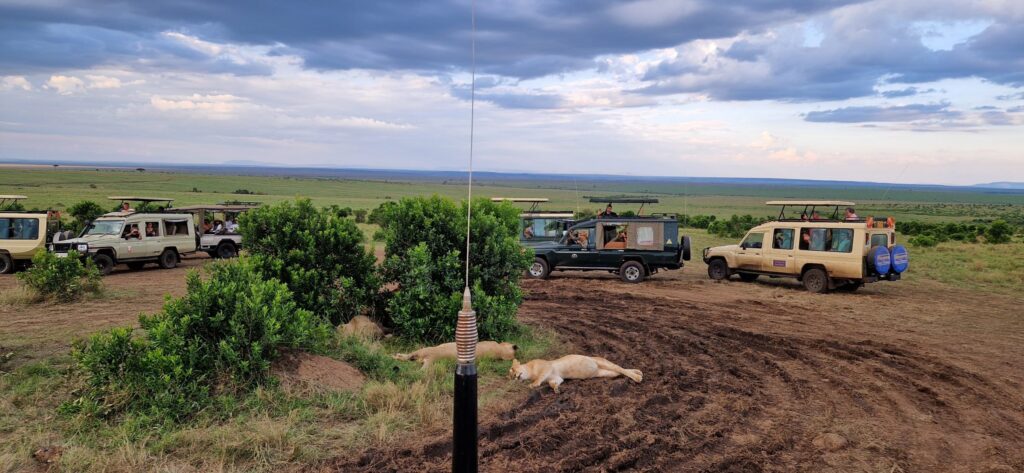
At Luxury Safaris Tanzania, we build Kenyan photography safaris from the ground up for each group. We take into account your travel dates, camera system, experience level, and specific photographic ambitions in the design before suggesting any camp or drive. We do not run fixed group departures for our photography itineraries, because great wildlife photography does not benefit from a fixed group. It benefits from attention, flexibility, and a guide who can spend the full morning with one cheetah if that is what the images require.
Contact our team today and tell us what you want to make. We will inform you when and where to go and create a Kenya photography safari that meets your needs. You can also explore our full Kenya safari range, read our Maasai Mara photography guide, or browse our East Africa custom safaris to see how we approach itinerary design.
The Mara’s morning light waits for you.