Kenya Migration Safari: Private 8-Day Luxury Maasai Mara Itinerary

Witness the Great Migration river crossings from private camps inside the Maasai Mara: no crowds, no group schedules, pure wildlife immersion. Our Kenya Migration Safari is fully custom, expertly guided, and built around where the herds actually are.

Overview of the Kenya Migration Safari: 8 Days Immersed in the Greatest Wildlife Spectacle on Earth

A fully private, luxury Kenya Migration Safari built around where the herds are, not where the crowds go. Designed exclusively for you by the specialists at Luxury Safaris Tanzania.

The Kenya Migration Safari That Puts You Ahead of the Herd, Literally. Before the light has fully risen over the Maasai Mara, before any vehicle from the boundary lodges has reached the gate, you are already out. Your private guide read the previous evening’s movement patterns before you woke, and by the time you have your first coffee in hand, he has chosen a position near the Mara River bank where the wildebeest have been massing since first light. You drive in silence across the open grassland, which is wet and shining in the early air, and then you smell them before you see them: a warm, animal smell that carries across the valley, and then you hear them: a low, continuous rumble and bellow, growing in volume as you crest the rise and see the river below.

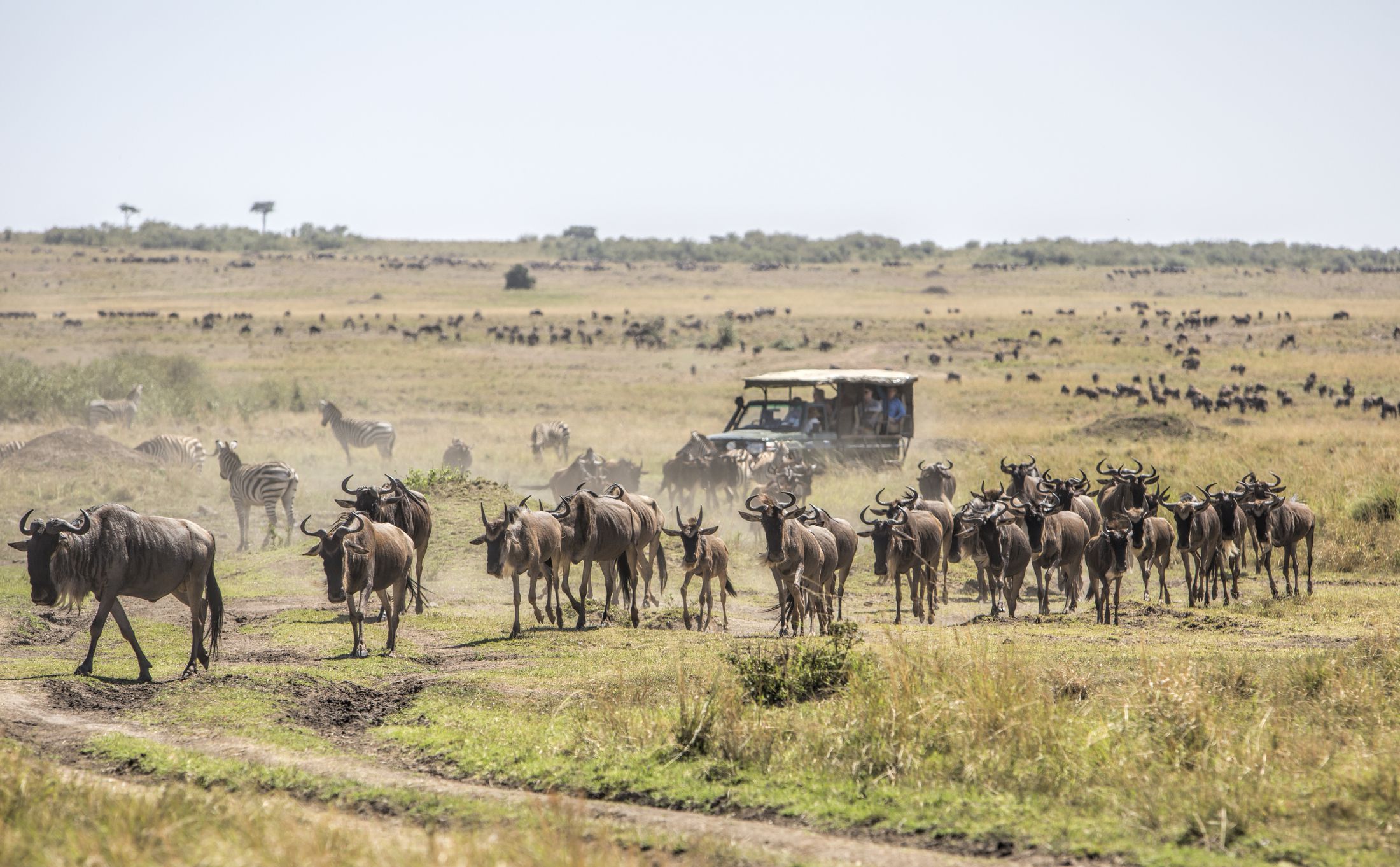
Half a million animals. The opposite bank is black with wildebeest pressed shoulder to shoulder, packed back as far as your binoculars can follow. The front ranks are at the water’s edge, shifting and nervous, pressing forward and retreating, caught between the instinct to cross and the ancient knowledge of what waits in the water. Your guide turns off the engine, and you sit, completely alone with the spectacle, and wait.

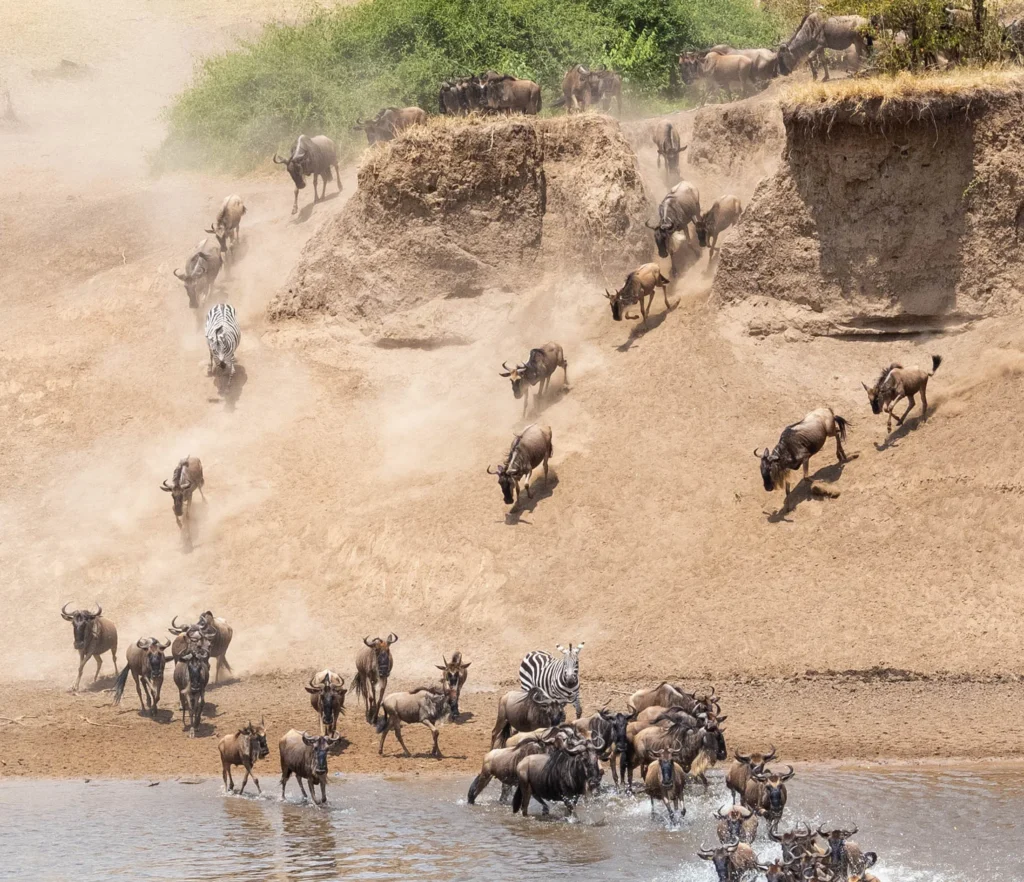
When the crossing comes, it comes all at once. There is no warning. One animal commits, and then the dam breaks: thousands of bodies launching simultaneously down the bank and into the olive-colored water in a cascade of hooves and spray and sound that builds on itself until you can’t hear anything except the crossing, until it fills your entire sensory landscape and there is nothing else in the world. This is the Kenya Migration Safari, not as a packaged experience but as a private encounter with something that the earth has been producing in this form for longer than human memory reaches.

We design every Kenya migration safari privately, built around your travel dates, your interests, and the actual location of the herds. What follows is the itinerary framework. Everything else is shaped around you.

Understanding the Kenya Migration Safari:Ā Why Kenya Migration Safari Timing Is Everything.

The Great Migration is not a fixed event. It is not a phenomenon you can place on a calendar with certainty. It is a fluid, weather-dependent, instinct-driven movement of approximately two million animals around a 1,800-kilometer annual circuit of the Serengeti-Mara ecosystem, and the single most common mistake made by travelers and, frankly, by many of the operators who sell them safaris is treating it like a scheduled performance.

Most operators run the same “migration safari” circuit on the same fixed dates year-round. They put you in the Maasai Mara in July, August, or September because that is the conventional wisdom, and if the herds have moved earlier or later in response to unusual rainfall, they shrug and show you the resident game instead. This is not a Kenya Migration Safari designed around the migration. It is a Kenya safari that hopes the migration happens to be nearby.

We plan differently. Our team is in contact with guides on the ground throughout the year, tracking herd movements and monitoring rainfall patterns across the broader Serengeti-Mara ecosystem. When you book a Kenya Migration Safari with us, your itinerary is built around the best available intelligence for your specific travel window, including which section of the Mara is receiving the densest concentrations of animals, which river crossing points are most active, and where the predator concentrations are highest. This is what serious migration planning looks like, and it is one of the most significant distinctions between our private approach and what most tour operators provide.

Why the Maasai Mara Kenya Migration Safari Happens Where It Does

The Maasai Mara National Reserve is the northern tip of the vast Serengeti-Mara ecosystem that spans the Kenya-Tanzania border. Across the frontier in Tanzania, the Serengeti National Park, an area roughly ten times the size of the Mara, is where the wildebeest spend the majority of their year. The Mara is where they arrive between roughly late June and October, pushed north by the drying of the southern Serengeti grass and drawn by the greener pastures that Kenya’s rainy season produces.

The Mara River, which bisects both the reserve and the private conservancies that border it, is the obstacle that creates the dramatic crossings. It runs through the ecosystem year-round, carrying water from the Mau Forest highlands down to Lake Victoria, and during the migration the wildebeest must cross it multiple times as they follow the grass on both banks. The crossings themselves, which can occur at any of several recognized crossing points, are triggered by the collective pressure of animal numbers building on one bank, and they can happen at any time of day, though the highest concentrations of crossings tend to occur in the mornings when the animals have been drinking and massing since dawn.

This is why camp location matters so profoundly on a Kenya Migration Safari. A large lodge three kilometers from the river means driving to the crossing points and finding twelve other vehicles already there. A private camp near a known crossing point means your guide has the river visible from breakfast, can position you on the bank before the massing animals commit, and can sit with you through the chaos of the crossing itself without the pressure of returning for anyone else’s schedule.

Itinerary Highlights for the Kenya Migration Safari Itinerary: Eight Days in the Heart of the Maasai Mara

Detailed itinerary for the Kenya Migration Safari Itinerary: Eight Days in the Heart of the Mara. (Day by Day)

Day 1 of the Kenya Migration Safari; Nairobi: Africa's Safari Capital

Days 2–4 of the Kenya Migration Safari; The Private Conservancy: Where the Mara Begins

Days 5–7 of the Kenya Migration Safari; The Maasai Mara National Reserve: At the River

Day 8 of the Kenya Migration Safari; Nairobi, Departure.

What’s Included?

āœ”ļø Accommodation (luxury camps & lodges)
āœ”ļø All meals as per itinerary
āœ”ļø Park entry fees & conservation charges
āœ”ļø Game drives in a 4×4 safari vehicle with a pop-up roof
āœ”ļø Professional English-speaking safari guide
āœ”ļø All transfers (including airport pick-up & drop-off)

What’s Not Included?

āŒ International flights
āŒ Optional activitiesĀ 
āŒ Travel insurance & visas
āŒ Tips & personal expenses

Explore More Luxury Kenya Safaris Itineraries & Other Combined Safaris

Serengeti Wildebeest Migration Safari

Serengeti Wildebeest Migration Safari

Maasai Mara and Zanzibar Beach Safari

Maasai Mara Wildlife and Zanzibar Beach Safari

Maasai Mara, Rwanda gorillas, and Victoria Falls

Maasai Mara, Rwanda gorillas, and Victoria Falls

Masai Mara, Amboseli and Diani Beach safari

Masai Mara, Amboseli and Diani Beach safari

Extending Your Kenya Migration Safari: Adding Tanzania to Your Kenya Migration Safari

The wildebeest that arrive in Kenya’s Maasai Mara in July come from Tanzania’s Serengeti, and extending the Kenya migration safari into Tanzania allows you to follow the same animals across the border ecosystem, tracking the migration in both its northern (Kenya) and transitional phases. Our Kenya and Tanzania migration safari combines both sides of the ecosystem with the Serengeti National Park and the world-famous Ngorongoro Crater for a two-country migration experience that represents the fullest possible version of this story. Many guests who do the Kenya Migration Safari return the following year to complete it with the Tanzania leg or build the full circuit in a single trip.

Gorilla Trekking After the Kenya Migration Safari

Gorillas in Bwindi Impenetrable National Park

For the ambitious traveller with appetite for East Africa’s full range of experiences, the Kenya Migration Safari combines naturally with gorilla trekking in Uganda or Rwanda. The flights from Nairobi to Entebbe or Kigali are short a few hours and the contrast between the open savannah of the Mara and the ancient rainforests of Bwindi Impenetrable National Park or Rwanda’s Volcanoes National Park is one of the most dramatic ecological transitions available in travel. Our combined East African safari packages create seamless multi-country itineraries that cover migration, gorillas, chimpanzees, and if time allows a restorative close with a few days on Zanzibar.

Frequently Asked Questions About the Kenya Migration Safari

When is the best time to go on a Kenya migration safari to see the river crossings?

The Mara River crossings that define the Kenya Migration Safari typically occur between late June and October, with the peak crossing activity most reliably observed in July, August, and the first half of September. However, the precise timing varies from year to year based on rainfall patterns in both Kenya and Tanzania, and it can shift by several weeks in either direction. The herds arrive in the Maasai Mara when the southern Serengeti grass dries out and depart when new rains regenerate it, a timeline that no calendar can precisely predict. This is why we plan every Kenya migration safari around real-time intelligence on herd locations rather than fixed seasonal assumptions. Within the July-October window, we advise guests that the chance of witnessing at least one river crossing over a six-day Mara stay is very high, while the chance of witnessing a major crossing on any given day is more variable. The best Kenyan migration safaris build in enough time at the river to let the crossings happen on the animals’ schedule rather than yours.

What is the difference between a Kenyan migration safari in the national reserve versus a private conservancy?

The Maasai Mara National Reserve and the private conservancies that border it share the same wildlife populations and, during migration season, the same herds, but they operate under fundamentally different rules. Inside the reserve, all driving must stay on established tracks, night drives are completely prohibited, and the number of visitors sharing any given sighting can be considerable during peak season. On the adjacent private conservancies, visitors travel in smaller numbers across much larger areas; off-road driving is permitted when conditions allow, and exclusive activities like night drives, guided bush walks, and off-road game tracking are available that simply cannot be offered inside the national reserve. The best Kenya Migration Safari experience uses both: the private conservancy for exclusive access and flexible activities in the first part of the trip, and the national reserve for proximity to the river crossings in the second. This dual-access structure is a central feature of how we design every Kenya Migration Safari.

How does a private Kenyan migration safari differ from a group tour, and is the premium worth it?

On a group Kenya Migration Safari, you share a vehicle with strangers, move to a fixed daily schedule, and compete with other vehicles at wildlife sightings, including, critically, at the river crossings themselves, where a large group tour might find its allocated viewing spot already occupied by fifteen other vehicles by the time it arrives. On a private Kenya Migration Safari, every vehicle, every camp seat, and every hour of your guide’s attention is exclusively yours. You set the pace. If the crossing builds slowly over an entire morning and you want to wait it out, you wait. If a cheetah hunt is developing five hundred meters off the track and your guide wants to drive to it, he does so. If you want to sit in silence on the river bank at sunrise with nobody else present and watch the crocodiles position themselves for the day, you do so. The difference is not merely one of comfort; it represents a fundamentally different quality of encounter with the wildlife and the landscape. For guests who have done a group migration tour before, the move to private is invariably described as the transition from watching a wonderful safari to being inside one.

Can I guarantee seeing a Mara River crossing on my Kenya migration safari?

No, and any operator who guarantees a river crossing is either misleading you or not being precise about what they mean. Mara River crossings are genuinely wild events, triggered by conditions, predator pressure, the momentum of animal numbers, and the collective nervous state of the front ranks that no guide can predict with certainty hours in advance. What we can guarantee is the highest possible probability of witnessing a crossing, achieved through our camp positioning near confirmed crossing points, our real-time intelligence on where the herds are moving, and the experience of a guide who understands crossing behavior and knows how to read the signs that a crossing is imminent. Guests who spend six or more days at the Mara during peak migration season with a knowledgeable private guide and a camp positioned near the river overwhelmingly do witness crossings, typically multiple crossings across their stay. The experience of waiting for a crossing that then happens at the moment your guide predicted it would is one of the most satisfying things a Kenyan migration safari can deliver.

What other wildlife can I expect to see on a Kenya Migration Safari beyond wildebeest?

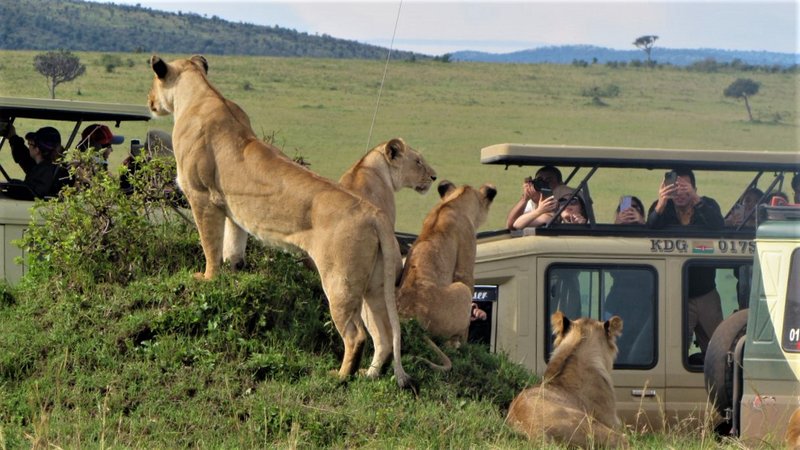
The Kenya Migration Safari is dominated by the wildebeest spectacle, but the sheer density of prey animals that the migration brings to the Maasai Mara creates predator concentrations that are extraordinary in their own right. The Mara’s lion population is one of the densest in Africa, and during migration season the lions are hunting almost continuously, typically targeting zebra and wildebeest calves but taking larger prey when opportunity presents. Cheetahs, which are present in the Mara year-round, benefit enormously from the arrival of Thomson’s gazelle with the herds, and cheetah hunts are among the most regularly seen and most thrilling predator interactions of any Kenya migration safari. Leopards, more solitary and more secretive, are encountered most reliably along the lugga tree lines and riverine forest corridors. Beyond predators, the Maasai Mara supports enormous populations of elephants, giraffes, buffalo, hippos (concentrated in the river pools), Nile crocodiles, over 450 bird species, and the full suite of plains ungulates, including zebras, topis, hartebeests, impalas, Thompson’s and Grant’s gazelles. On any given Kenya Migration Safari day, the wildebeest are the spine of the experience, but the ecosystem around them is rich beyond what any single itinerary can fully exhaust.

Begin Planning Your Private Kenya Migration Safari Now

The Mara River at first light. A crossing that has been building for two hours and commits in twenty seconds of pure, deafening chaos. A leopard in the late afternoon light, carrying a Thomson’s gazelle up into an acacia as the sky behind it turns the colour of copper. A Maasai warrior in traditional red ochre, walking across the conservancy grassland in the early morning as five hundred zebra part around him without breaking stride. A campfire in the open Mara dark, the hyenas calling from the lugga below, and the knowledge that tomorrow morning you will be back at the river before the light fully comes, waiting for whatever the crossing delivers.

Maasai Visit in Tanzania

This is what a private Kenya Migration Safari delivers when it is planned properly and executed by people who know this ecosystem deeply. We have been designing and running personalised East African safaris for over twelve years, and the Maasai Mara during migration season remains the most viscerally exciting place we send guests anywhere in the world.

The windows that deliver the best Kenya Migration Safari experience fill quickly particularly the prime July and August weeks, when herd concentrations are typically at their highest. If you have a travel window in mind, the planning conversation should begin now.

Contact our team through the enquiry page or via WhatsApp at +255 684 031 321. Tell us your preferred dates and how many people will be travelling, and we will design a Kenya Migration Safari around the most current intelligence on exactly where the herds will be when you arrive.

Contact Us to Start Planning Your Kenya Migration Safari →