
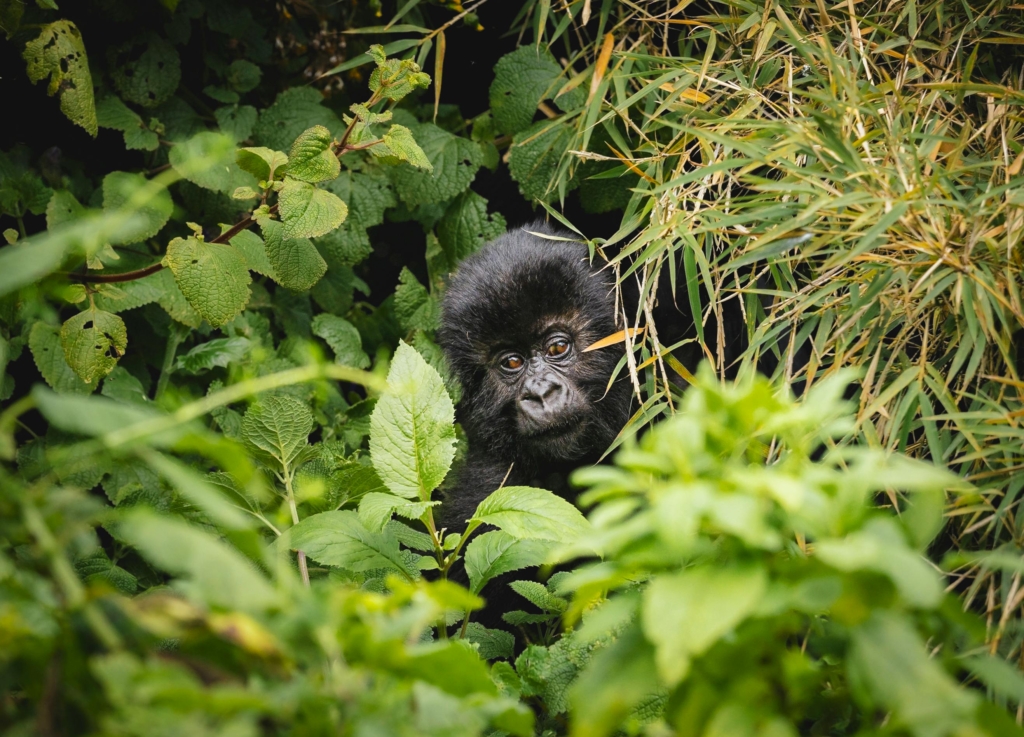
The mist over Volcanoes National Park burns off with a slow, theatrical grace, and then, barely eight meters through the parted bamboo, a 220-kilogram silverback mountain gorilla turns amber eyes on you with an unhurried intelligence that unmakes every expectation you arrived with. This is Rwanda. Compact in geography but staggering in breadth, this Central African nation distils three of the continent’s most extraordinary wildlife encounters into a single seamless journey. Over ten days, your private luxury Land Cruiser carries you from the mist-cloaked Virunga volcanoes in the northwest, south along a thousand rolling green hills past the shores of Lake Kivu, into the cathedral forest of Nyungwe Forest National Park, Africa’s most species-rich montane rainforest, and finally east to the sunlit savannas and papyrus-fringed lakes of Akagera National Park. You sleep at three of Africa’s most celebrated addresses: the Radisson Blu Kigali, One & Only Gorilla’s Nest, One & Only Nyungwe House, and Magashi Camp by Wilderness Safaris. The best season, June through September, delivers dry skies, firm forest trails, and wildlife at peak visibility. The defining moment, your one permitted hour with a habituated gorilla family in the Virungas, is among the rarest experiences remaining on this planet.
10-Day Luxury Rwanda Safari: Gorillas, Chimps & Akagera.
Discover Rwanda's finest wilderness on this exclusive 10-day safari trek: mountain gorillas in Volcanoes NP, tracking chimps in Nyungwe Forest, and exploring Akagera on private game drives.
10-Day Luxury Rwanda Safari: Mountain Gorillas, Chimpanzees & the Big Five
Itinerary Highlights for the 10-Day Luxury Rwanda Safari
| Duration | 10 Days / 10 Nights |
| Destinations | Kigali (1 night) | Volcanoes NP (3 nights) | Nyungwe Forest NP (3 nights) | Akagera NP (3 nights) |
| Accommodation | Radisson Blu Kigali (5-star) | One & Only Gorilla’s Nest (Ultra-Luxury) | One & Only Nyungwe House (Ultra-Luxury) | Magashi Camp by Wilderness Safaris (Exclusive 6-tent camp) |
| Best Time to Visit | June – September (Long Dry Season) | December – February (Short Dry Season) |
| Transport | All transfers by private luxury 4WD Land Cruiser, with no shared vehicles and no rigid schedules |
| Included | Gorilla trekking permits ($1,500 USD/person), All game drives & wildlife treks, all meals (lodge-based), park entry fees, private expert naturalist guide, all ground transfers |
| Not Included | International flights, travel insurance, personal items, gratuities |

Detailed itinerary for the 10-Day Luxury Rwanda Safari: Mountain Gorillas, Chimpanzees & the Big Five (Day by Day)
Day 1: Africa's Most Immaculate Capital, Kigali Arrival
Location: Kigali, Rwanda | Accommodation: Radisson Blu Kigali (5-Star)
Your journey begins at Kigali International Airport (KGL), where an Active African Vacations representative meets you at arrivals with your name on a handwritten card and a chilled bottle of water already opened. Kigali sits at 1,550 meters above sea level, set across a cluster of green hills that justify Rwanda’s enduring title, the Land of a Thousand Hills. The city surprises first-time visitors: streets are spotless (plastic bags have been banned since 2008), traffic flows with unusual order, and the air carries an almost alpine freshness. The 15-minute drive to the Radisson Blu Kigali in the Nyarugenge business district passes glass-fronted towers, open-air markets, and avenues planted with flame trees. Kigali is widely regarded as the safest capital in sub-Saharan Africa for travelers; you can walk freely in the central business district at any hour.
Afternoon: Kigali’s Layers of Resilience
The afternoon is yours. If you carry the emotional readiness, a visit to the Kigali Genocide Memorial in Gisozi is one of the most important cultural experiences in contemporary Africa. It honors the 800,000 lives lost during the 1994 genocide against the Tutsi and tells Rwanda’s story of extraordinary reconstruction with unflinching honesty. Alternatively, the Inema Arts Center in Kacyiru showcases vibrant contemporary Rwandan painting and sculpture. The scale of creative energy in Kigali’s emerging arts scene is genuinely striking. A short walk through the Kimironko Market reveals the city’s working pulse: stalls piled with passion fruit, avocados, and hand-woven agaseke baskets that have been made in Rwanda for more than a thousand years.
Sundowner and Evening at the Radisson Blu

The hotel’s Sky Lounge delivers a 180-degree panorama across Kigali’s ridgeline as the sun descends behind Mount Kigali. Your guide sits with you to outline tomorrow’s drive to the Virungas: gorilla permit procedures, the trekking allocation process, and what to wear in the forest. Dinner at the Taboo Restaurant, widely considered one of Kigali’s best upscale dining venues, presents a menu that blends continental favorites with Rwandan highland produce: slow-cooked goat brochette, freshly caught Nile perch, and ibihaza, pumpkin cooked with coconut milk, that arrives steaming in a terracotta bowl. Sleep comes easily at altitude. Tomorrow requires an early start.
Lodge Spotlight: Radisson Blu Kigali
The Radisson Blu Kigali offers 292 rooms and suites in the heart of the business district. Superior Rooms begin at 34 sq m with floor-to-ceiling windows; business suites at 52 sq m add a separate lounge and walk-in wardrobe. Facilities include a rooftop outdoor pool, a fully equipped fitness center, and free high-speed Wi-Fi throughout a practical luxury you will not take for granted once you move into Rwanda’s deep wilderness. The hotel maintains EDGE environmental certification, using 29% less energy and 35% less water than a standard hotel of comparable size.
Insider Note: Kigali’s Car-Free Day, held on the last Sunday of each month, transforms the main Boulevard de la Révolution into a kilometer-long street festival of food stalls, live music, and craft vendors. If your arrival date falls on that Sunday, ask your guide to route you past it; it is a joyful and deeply local introduction to the city.
Day 2: Into the Virungas; Kigali to Volcanoes National Park
Location: Volcanoes National Park, Musanze District | Accommodation: One & Only Gorilla’s Nest (Ultra-Luxury)
After a breakfast of fresh bread and Rwanda’s acclaimed high-altitude Bourbon Arabica coffee, your Land Cruiser departs northwest on the RN4 highway. The drive covers approximately 100 kilometers and takes around two hours and 30 minutes, a scenic passage through Rwanda’s working agricultural heart. You pass terraced hillsides planted with cassava, sweet potato, and maize; tiny brick-built towns clustered around market crossroads; and eucalyptus plantations casting silver-grey light across the valley floor. As you approach Kinigi, the small town on the park boundary, the landscape transforms with theatrical suddenness: the Virunga Massif rises dead ahead, six volcanic peaks stacked against the equatorial sky. The highest, Mount Karisimbi at 4,507 meters, is often wrapped in clouds. Mount Bisoke’s near-perfect crater becomes a daily silhouette from your veranda for the next three nights.
Afternoon: Arrival at One & Only Gorilla’s Nest
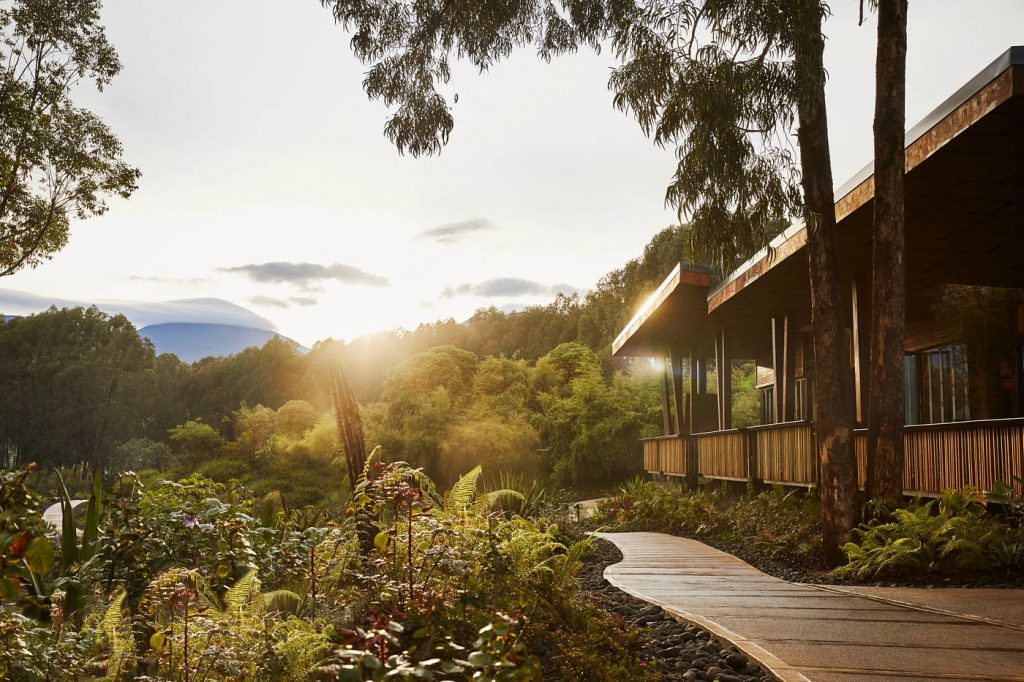
One&Only Gorilla’s Nest
The one & only Gorilla’s Nest sits at 2,200 meters above sea level, set within 12 acres of indigenous coffee and eucalyptus forest just 10 minutes from the Volcanoes National Park gates. After a welcome drink of fresh passion fruit juice, Rwanda’s highland climate produces some of the finest passion fruit in Africa. Your lodge manager outlines the afternoon program. Options include a guided lower-forest walk (a pair of Rwenzori turacos, emerald and crimson, are resident in the lodge gardens year-round), a bicycle ride through Kinigi Village to meet local farming families, or treatments at the lodge’s Rwaza Spa before tomorrow morning’s gorilla briefing. Your trekking group assignment and gorilla family allocation were confirmed by the lodge team this evening.
Sundowner and Evening
As the equatorial sun drops behind Bisoke at approximately 18:15, your guide sets up a private sundowner station on the lodge’s main terrace: a low carved-wood table set with roasted groundnuts, plantain chips, Rwandan Inzora gin distilled from indigenous botanicals including wild juniper and lemongrass, and cold Mutzig beer, with the Virunga silhouette lit in amber behind you. Dinner in the Gorilla’s Nest main dining room is served beside an open fireplace burning fragrant eucalyptus logs against the mountain chill: locally farmed trout from Musanze, slow-roasted pork with cassava mash, and a warm volcanic chocolate pudding served in a miniature cast-iron pot.
Lodge Spotlight: One & Only Gorilla’s Nest
The One & Only Gorilla’s Nest comprises 12 standalone cottages built with locally hewn volcanic stone and sustainably sourced timber, each featuring a cathedral ceiling, king-size bed, stone fireplace, copper soaking tub, and a private terrace looking into the volcanic forest. The Rwaza Spa offers treatments using indigenous ingredients: volcanic mud wraps, coffee-ground body scrubs, and essential oils from native plants. A gorilla researcher resident at the lodge hosts optional evening talks on great ape behavior and conservation; this informal session frequently becomes a highlight guests cite in their post-trip reviews. The lodge holds Gold-level certification from the Rainforest Alliance for its sustainable sourcing and community partnerships.
Insider Note: The lodge team maintains a direct relationship with the Rwanda Development Board (RDB) for gorilla family allocation. Request the Susa family group with 30+ members; it is the largest habituated group in Rwanda, typically found at higher elevations on Karisimbi. The trek is more demanding, but the encounter with a silverback flanked by seven sub-adults and nursing females is unmatched in scale anywhere on earth.
Day 3: Face to Face; Mountain Gorilla Trekking in the Virungas
Location: Volcanoes National Park; Bamboo Forest & High-Altitude Zones | Accommodation: One & Only Gorilla’s Nest
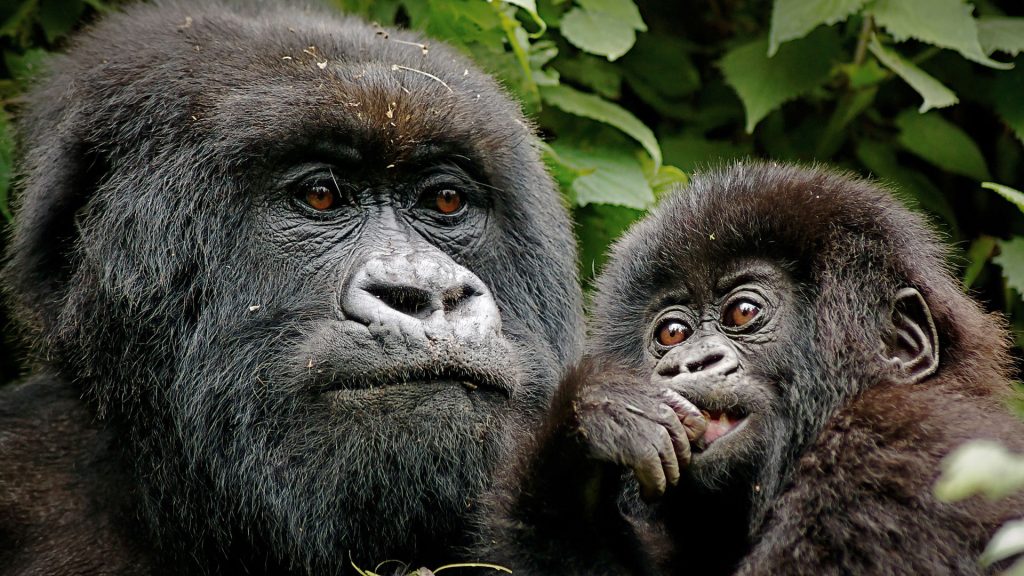
Your alarm sounds at 5:30am. The air at 2,200 meters bites. Step outside, and the forest is dark, damp, and alive with the metallic calls of olive sunbirds and the distant bark of a mountain colobus monkey. Breakfast is a warm spread of eggs, fresh bread, fruit salad, and excellent Rwandan coffee. By 7:00am your Land Cruiser reaches the Kinigi Trekking Headquarters for a mandatory 30-minute ranger briefing. The rules are specific and carry biological weight: remain at least seven meters from the gorillas at all times; crouch if a silverback approaches; switch off all camera flashes; do not eat or drink in their presence; and if you feel any illness symptoms, withdraw immediately. Mountain gorillas (Gorilla beringei beringei) share 98.3% of human DNA and are highly susceptible to respiratory infections. As of the most recent 2018 population census conducted by the Rwanda Development Board, the Wildlife Conservation Society, and the Uganda Wildlife Authority, only 1,063 individual mountain gorillas exist on earth, found exclusively in the Virunga Massif and Uganda’s Bwindi Impenetrable Forest. Rwanda’s Volcanoes National Park hosts approximately 10 habituated families, with a strictly enforced maximum of eight visitors per family group per day. Your permit costs USD 1,500 per person in revenue that directly funds park protection, anti-poaching patrols, and the community revenue-sharing program that gives villages adjacent to the park a direct financial stake in gorilla survival.
Into the Forest
Trekking begins at the park boundary. The terrain rises immediately: the lower slopes are a mosaic of pyrethrum fields and potato patches before the vegetation thickens into native bamboo, wild celery, and the towering Hagenia-Hypericum belt above 2,700 meters. Your lead tracker communicates via radio with advance scouts who left camp before dawn to locate overnight nest sites. The forest floor is soft and constantly surprising. Handsome Francolins slip between tree roots; an African harrier-hawk circles overhead on flat wings. When trackers find fresh spoor, crushed vegetation, stripped bamboo, or warm dung, the group falls silent.
Then you see them. A young female hanging upside-down from a bamboo stem, testing it lazily with one hand. An adolescent male thumping a hollow log. And then the silverback himself, perhaps 220 kilograms of absolute composure, is sitting cross-legged on the forest floor four meters away, stripping bark from a twig with the focused patience of a craftsman. Your one permitted hour passes with the slowness that only the genuinely extraordinary can produce. You do not speak. You do not need to.
Afternoon Recovery
Most guests return to the lodge by early afternoon, physically spent but emotionally elevated in a way that resists description. The lodge recommends the copper soaking tub, a massage at the Rwaza Spa using volcanic clay and wild ginger, and a quiet hour reading on your cottage terrace as the afternoon mist rolls in across the volcanoes. For those with energy remaining, the Musanze Caves, a 13-kilometer lava tube network formed during prehistoric eruptions and used as a refuge during the 1994 genocide, are a 20-minute drive and can be explored with a guide in two hours. The caves carry a weight of human history that deepens every step inside them.
Sundowner and Evening
Tonight’s sundowner is set privately in the lodge garden beneath a stand of giant heather, facing the volcanic skyline. The resident gorilla researcher joins your table for dinner, a three-course celebration named after gorilla family groups, served by firelight. Conversation turns to the future of great ape conservation: the challenges of climate pressure on high-altitude bamboo; the politics of transboundary park management between Rwanda, Uganda, and the DRC; and the extraordinary story of a species whose population was declining as recently as the early 2000s that is now, for the first time in recorded history, growing. That growth is, in small but real part, funded by the permit cost you paid today.
Insider Note: Porter hire is available at the park boundary for approximately USD 20. A community porter not only lightens your pack but also provides direct paid employment to the adjacent Kinigi community, one of the most transparent conservation-economy mechanisms in East Africa. At higher-altitude family groups on Karisimbi, temperatures can fall to 5°C (41°F) even in the dry season; the lodge provides insulated waterproof jackets for all guests.
Day 4: Golden Monkeys & the Legacy of Dian Fossey
Location: Volcanoes National Park; Lower Bamboo Zones & Mount Bisoke Slopes | Accommodation: One & Only Gorilla’s Nest
Morning light on the Virungas arrives as a slow-motion revelation; the peaks emerge one by one from clouds as you finish breakfast on your private terrace, a cup of bourbon Arabica warming your hands. Today opens with golden monkey trekking, a wholly different but equally thrilling primate encounter. The golden monkey (Cercopithecus kandti), with its striking blaze of orange across its back and flanks against a black body, is an Albertine Rift endemic found only in the bamboo forests of the Virungas and Uganda’s adjacent Mgahinga National Park. Only approximately 4,000 golden monkeys are estimated to survive in the wild. The Rwanda population concentrates in the park’s lower bamboo belt between 2,500 and 3,200 meters, a terrain considerably less demanding than the gorilla zones, meaning this trek is accessible to guests of all fitness levels.
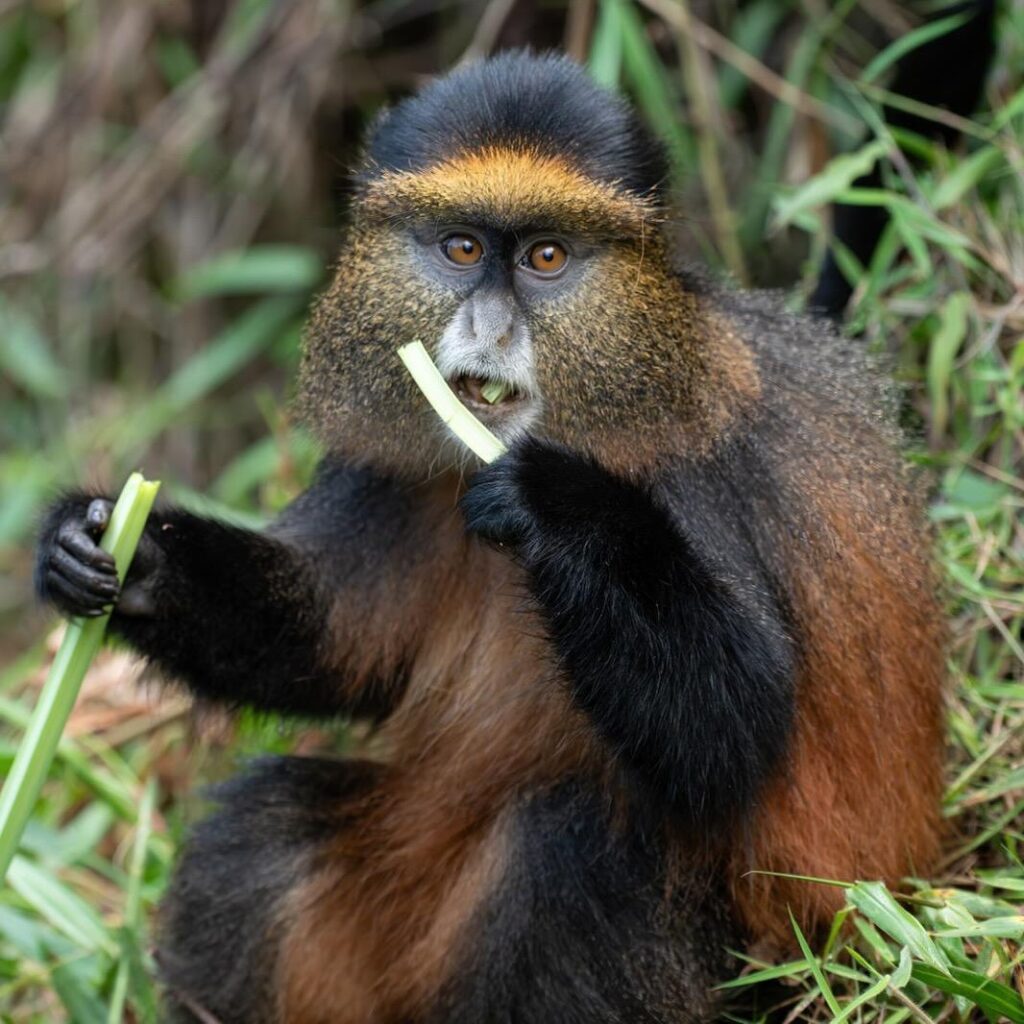
Golden monkey trekking requires a separate permit (approximately USD 100). Groups of 60 to 80 individuals move fast through the bamboo canopy in a cascade of noise and color, bamboo stems bending and springing back as they leap between them at speed. When one descends to the forest floor to investigate, with your guide tilting its head and reaching one small hand toward the camera, the moment is simultaneously comic and deeply moving. The hour passes even faster than with the gorillas.
Afternoon: The Dian Fossey Trail

After lunch, the afternoon offers an experience that is both physically demanding and historically profound: the hike to the Karisoke Research Centre and the grave of Dian Fossey, the American zoologist whose 18 years in these forests between 1967 and her murder in 1985 effectively saved the mountain gorilla from extinction. The trail climbs from the park boundary at 2,400 meters to the original Karisoke research station site at 3,000 meters on the saddle between Karisimbi and Bisoke, a two-hour hike through dense vegetation that Fossey herself walked thousands of times. Her grave, marked by a simple wooden cross beside those of gorillas she named Digit, Macho, and Kweli, sits in a forest clearing of extraordinary quiet. The Dian Fossey Gorilla Fund now manages the site and continues active primate research from a new facility nearby.
Sundowner and Evening
A private butler arrives at your cottage terrace at 17:30 with a tray of local cheese, honey, cassava crackers, and your chosen drink, setting them beside a lit lantern as the volcanic peaks hold the last amber light long after the forest below has gone dark. Dinner is a more intimate affair tonight, just you and your guide over a bottle of Rwandan Virunga red wine, talking through what you carry from these three days before the long drive south begins tomorrow morning.
Insider Note: The Dian Fossey hike permit costs approximately USD 75 in 2024 and must be booked separately through the RDB. The hike is not suitable after heavy rainfall when the trail becomes dangerously slippery above 2,700 meters; your lodge team will advise on conditions the evening before and provide an alternative program if necessary.
Day 5: The Great Drive South; Volcanoes to Nyungwe Forest
Location: En route Musanze → Lake Kivu → Nyungwe | Accommodation: One & Only Nyungwe House (Ultra-Luxury)
After breakfast, your Land Cruiser departs for the most scenically dramatic road journey in Rwanda: approximately 180 kilometers south from Musanze to the edge of Nyungwe Forest National Park, a five-hour drive that serves as one of the most beautiful overland passages in Africa. The RN2 highway traces south through the country’s mountainous spine, descending to the eastern shore of Lake Kivu, one of Africa’s Great Rift Valley lakes, shared with the Democratic Republic of Congo, its waters stretching at 1,460 metres above sea level between cliffs that plunge into deep blue. You pass through the lakeside towns of Rubavu, Karongi (Kibuye), and Rusizi, each one a working Rwandan town where fishing boats are pulled up on the shore alongside market stalls selling smoked tilapia and hand-woven baskets. Your guide provides running commentary on the history and ecology of each landscape you pass through this is not a transfer; it is part of the experience.
As you approach Nyamasheke in the late morning, the road begins to climb into a montane cloud forest that signals the boundary of Nyungwe Forest National Park. At 970 square kilometers, Nyungwe is Rwanda’s largest protected area and one of the oldest and most biodiverse montane rainforests in Africa, spanning altitudes from 1,600 to 2,950 metres. It harbors 13 primate species, 322 recorded bird species (29 of them Albertine Rift endemics found nowhere else on earth), more than 1,000 plant species, and at least 120 mammal species. The air at the park boundary smells different from the Virungas: denser, fungal, and ancient, as though the forest itself remembers a time before humans.
Afternoon: One & Only Nyungwe House
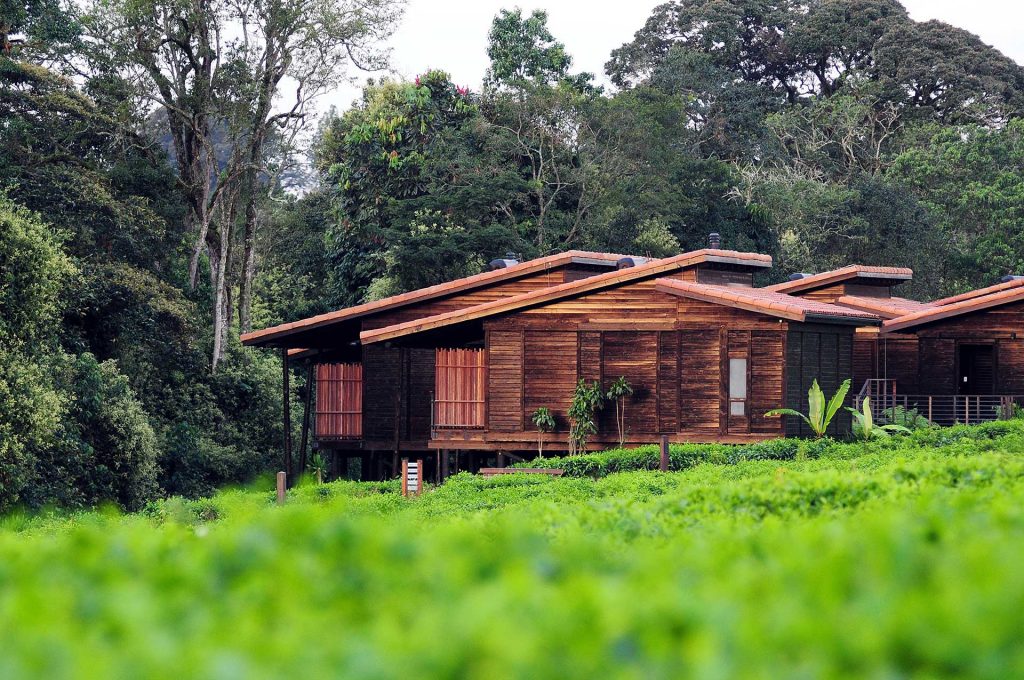
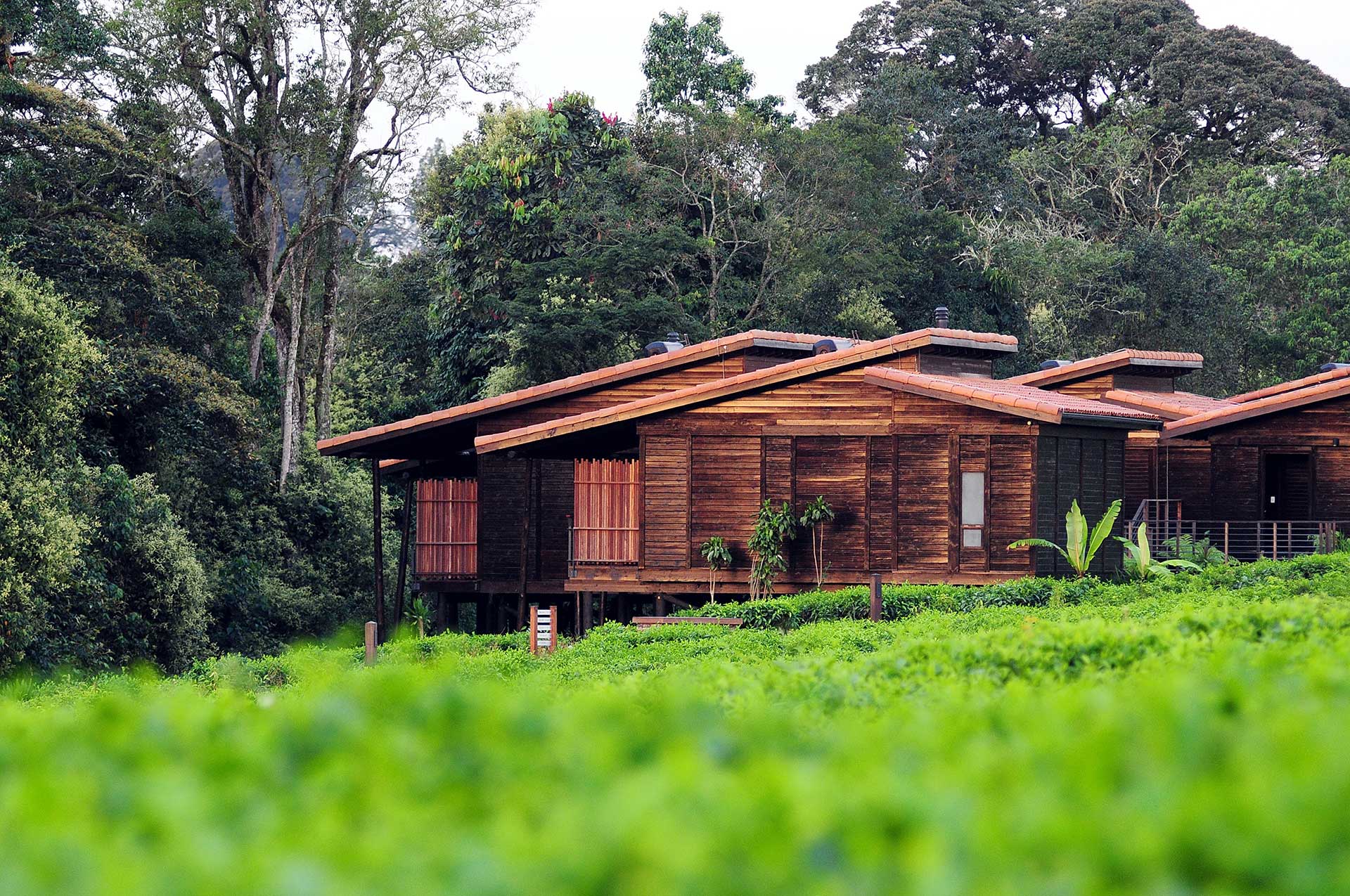
Arrive at the One & Only Nyungwe House by early afternoon. The lodge is perched on the edge of the national park at the heart of the historic Shagasha Tea Estate, a working commercial tea plantation established in the colonial era, its manicured rows rolling in wave-green terraces down to the forest edge. The views from your private terrace include tea slopes that drop to an ocean of ancient forest canopy, stretching 50 kilometers to the Congolese border, and are among the most arresting in East Africa. After check-in and a tea tasting in the main lodge, a guided forest-boundary walk can be arranged for late afternoon, offering your first encounter with Nyungwe’s extraordinary birdlife and the distant, hair-raising sound of chimpanzee pant-hoots echoing across the valley.
Sundowner and Evening
Sundowners on the main terrace as the setting sun transforms the tea estate into copper and jade below you. The lodge’s signature cocktail: fresh pineapple, ginger, lime, and locally distilled Ejo Hezarum arrives in a clay cup chilled with a single large ice cube. Dinner is produce-driven and refined: the tea estate kitchen garden supplies fresh herbs, edible flowers, and salad leaves that appear on every plate. The chef’s signature slow-braised short rib arrives on a wooden board with a cassava gratin and wild mushrooms foraged from the adjacent forest that morning.
Lodge Spotlight: One & Only Nyungwe House
The One & Only Nyungwe House offers 20 suites across three categories: 80 sq m Garden Suites with forest-view verandas; Forest Suites with separate lounges and private plunge pools; and the two-bedroom Nyungwe House Villa with a private pool, dedicated butler service, and a private vehicle. Interiors blend colonial dark-wood furniture with African textiles in tea-green and terracotta. The wellness center uses forest-sourced botanical tea-leaf body wraps, bamboo-essence steam treatments, and the heated outdoor pool overlooks the tea-to-forest horizon. The lodge operates a complete single-use plastic ban and sources more than 70% of its food from the Shagasha estate and local cooperatives.
Insider Note: The drive between Karongi and Rusizi on the western shore of Lake Kivu passes through one of the most visually spectacular stretches of road in East Africa. Ask your guide to stop for 20 minutes at the Kibuye Genocide Memorial Church, a sober and important site, and at the Home Saint Jean viewpoint above Karongi, where the lake below stretches to the DRC horizon in an expanse of impossible blue.
Day 6: Into the Ancient Canopy; Chimpanzee Trekking in Nyungwe
Location: Nyungwe Forest National Park; Cyamudongo Sector / Uwinka Ridge | Accommodation: One & Only Nyungwe House
A pre-dawn mist fills the tea valleys below your terrace as your 5:45am wake-up call arrives. By 6:30 am, your Land Cruiser is at the Uwinka Visitor Centre, the main park headquarters at 2,100 metres, for the chimpanzee trekking briefing. Nyungwe holds the largest single population of eastern chimpanzees (Pan troglodytes schweinfurthii) in any protected area in East and Central Africa, with an estimated 500 to 600 individuals distributed in communities of 50 to 100 across the forest. The Cyamudongo section, a smaller isolated forest patch 15 kilometers from Uwinka, hosts an independent community of approximately 50 individuals that offers some of the most reliable chimp encounters in the park your guide will determine which sector provides the best sighting chances based on tracker reports from that morning.

Unlike mountain gorillas, chimpanzees spend the majority of their time in the mid-to-upper canopy; trekking to find them involves reading fresh knuckle-print trails in the laterite soil, following the unmistakable pant-hoot calls that carry a full kilometer through the forest, and listening for the crash of branches that signals a community on the move. When you locate them, the energy is entirely different from that of gorillas: chimps are loud, fast, and urgent. They chase each other through the canopy at speed, drop to the forest floor to investigate your guide, and vocalize with a conversational range that makes their 98.7% genetic similarity to humans feel suddenly and viscerally real. You watch them for one hour before retreating, leaving the forest as you found it.
Afternoon: Colobus Troops and Forest Bird Walks
Afternoon brings a guided walk along the Bigugu Trail, a four-kilometer path climbing to 2,950 metres Nyungwe’s highest accessible point. Here the black-and-white colobus monkey (Colobus angolensis ruwenzorii) lives in groups that regularly number 350 to 400 individuals, the largest colobus troops recorded anywhere in Africa. When a troop of this scale moves through the canopy overhead, the combined percussion of hundreds of animals crashing through branches produces a sound somewhere between applause and thunder. For birdwatchers, the Bigugu Trail delivers prime territory for the Rwenzori turaco, Grauer’s swamp warbler (endangered, endemic), and the Handsome Francolin, a bird whose name, against this backdrop, seems entirely earned.
Sundowner and Evening
A private sundowner is set on the tea estate’s upper terrace at 17:30 with a clear sight line into the forest canopy where a colobus family roosts. As evening mist creeps up from the valley, night birds begin to sing: the African wood-owl and Fraser’s eagle-owl. The forest edge darkens from green to deep violet. Dinner back at the main lodge features pan-seared lake perch from nearby Lake Kivu, roasted green plantain, and a Rwandan honey-and-ginger pudding with fresh cream that, given the work your body did today, arrives at exactly the right moment.
Insider Note: Nyungwe records 322 bird species with 29 Albertine Rift endemics more than any other single location in Rwanda. If birds are important to you, request a pre-breakfast bird walk along the forest boundary (departing at 5:45am before the chimp trek) with the lodge’s resident birding specialist. In just 90 minutes on the forest edge, 40 or more species are achievable in the peak dry season months of June through September.
Day 7: Canopy Walk, Tea Gardens & the Art of Slow Travel
Location: Nyungwe Forest National Park; Uwinka Canopy Walk & Shagasha Tea Estate | Accommodation: One & Only Nyungwe House
Your third and final morning in Nyungwe opens with Rwanda’s most extraordinary human-made vantage point: the Nyungwe Forest Canopy Walkway at Uwinka, the only canopy walk in Rwanda. Suspended 90 metres above the forest floor at its highest point and stretching 160 metres in total length across several platforms connected by sway bridges, the walkway places you eye-level with the upper forest canopy that covers 970 square kilometers of ancient montane rainforest. The morning is the optimal time: birds are active, mist still clings to the lower valleys, and the silence on the walkway, broken only by wind, birdcall, and the faint distant sound of a chimp, is the kind that reorganizes priorities. At eye level with the canopy, you see what forest means from the inside: an architecture of light and shade, layered across a hundred species of tree, each one supporting its own universe of insects, epiphytes, and small mammals.
Afternoon: Shagasha Tea Estate Walk
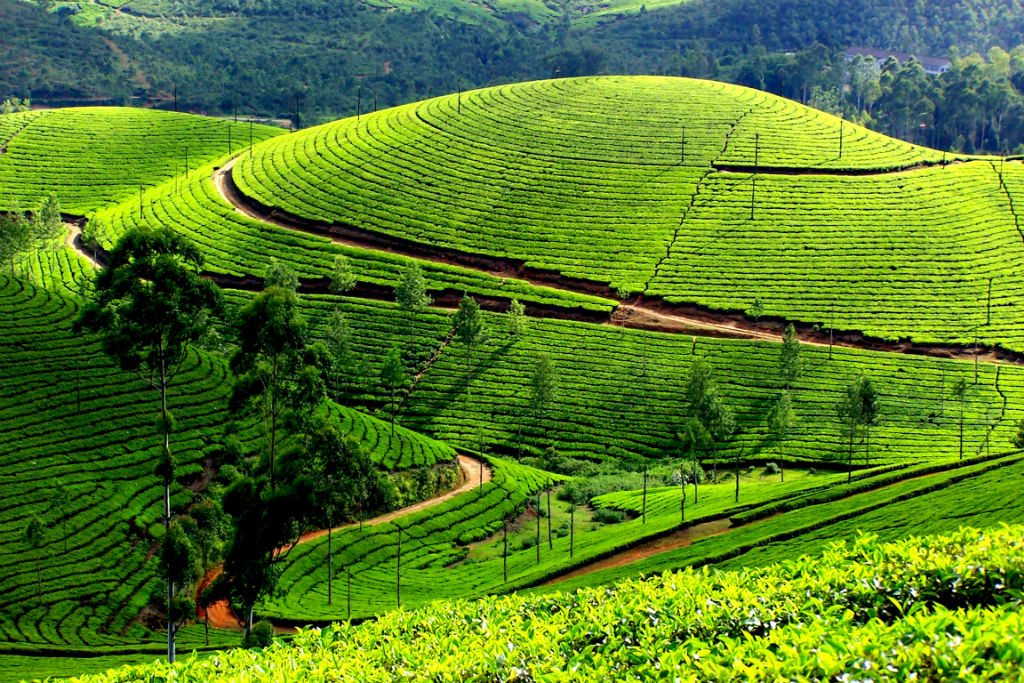
After an early lunch at the lodge, the afternoon belongs to tea. Your guide leads a two-hour walk through the Shagasha Tea Estate, a working commercial tea garden that has been producing high-altitude black and green teas since 1952. Rwanda’s tea is grown between 1,500 and 2,700 metres above sea level, with the high altitude, volcanic soil, and equatorial rainfall producing a distinctively bright, floral cup that fetches premium prices at the London and Mombasa auctions. You walk the terraces with an estate agronomist who explains the plucking cycle (every seven to nine days for quality leaves); the factory processing stages, withering, rolling, fermentation, and drying; and the cooperative structure that means the estate’s 1,400 smallholder tea farmers each own a direct share in its output. This is a conservation economy made visible: the tea estate and the forest beside it are inseparable.
Sundowner and Farewell Dinner at Nyungwe House
Your final sundowner in Nyungwe is a private affair in the Forest Suite garden with a fire pit, woven floor cushions, and a clear sky that, at this altitude and this latitude, delivers a star field that stops conversation. Dinner is a farewell celebration: a five-course degustation built around Nyungwe’s ecology: trout, wild mushroom consommé, tea-smoked duck breast, and a warm dark chocolate tart made with cacao sourced from Rwanda’s Eastern Province. Tomorrow’s drive to Akagera covers roughly 260 kilometers; your Land Cruiser departs by 6:30am.
Insider Note: The canopy walkway at Uwinka charges a separate access fee (approximately USD 60 in 2024) and has a maximum group size of eight. Early morning slots (departing Nyungwe House at 6:00am) are strongly recommended: chimpanzees occasionally use the canopy adjacent to the walkway at dawn, and the light quality for photography at this hour, mist-diffused, directional, and golden, is significantly better than midday. Book the slot through your lodge the evening before.
Day 8: From Forest to Savanna; Nyungwe to Akagera National Park
Location: En route Nyungwe → Kigali → Akagera NP | Accommodation: Magashi Camp by Wilderness Safaris (Exclusive)
An early departure at 6:30am begins the longest ground transfer of the safari: approximately 260 kilometers northeast from the tea-green hills of Nyungwe to the flat, sun-baked savannas of eastern Rwanda, with a comfort stop in Kigali (roughly midway). The contrast is precise and striking: within four hours of leaving montane forest at 1,800 metres, you drop to the low plateau of the Kagera River Basin, where the landscape opens out to acacia woodland, termite mounds, and the glittering lakes of the Akagera National Park system. The park covers 1,122 square kilometers of eastern Rwanda, managed since 2010 under a public-private partnership between the Rwanda Development Board and African Parks, one of the most successful wildlife restoration stories on the continent. Lions, absent from Rwanda since the early 1990s, were reintroduced in 2015. Black and southern white rhinos, poached to local extinction, were reintroduced in 2017. As of 2024, Akagera carries all members of the Big Five.
Afternoon: First Game Drive from Magashi Camp
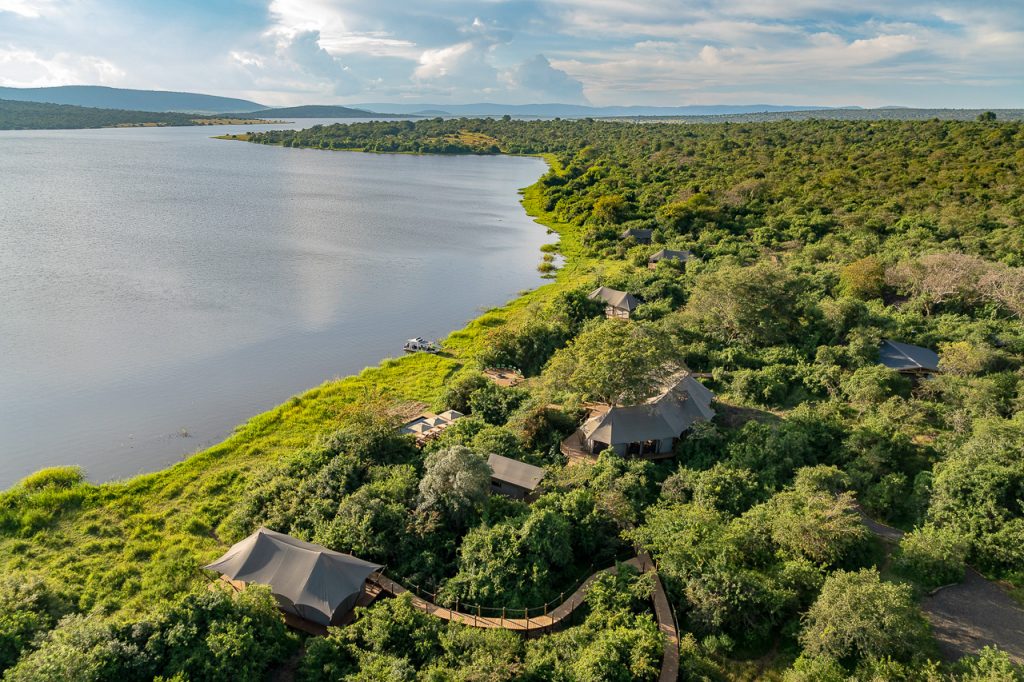
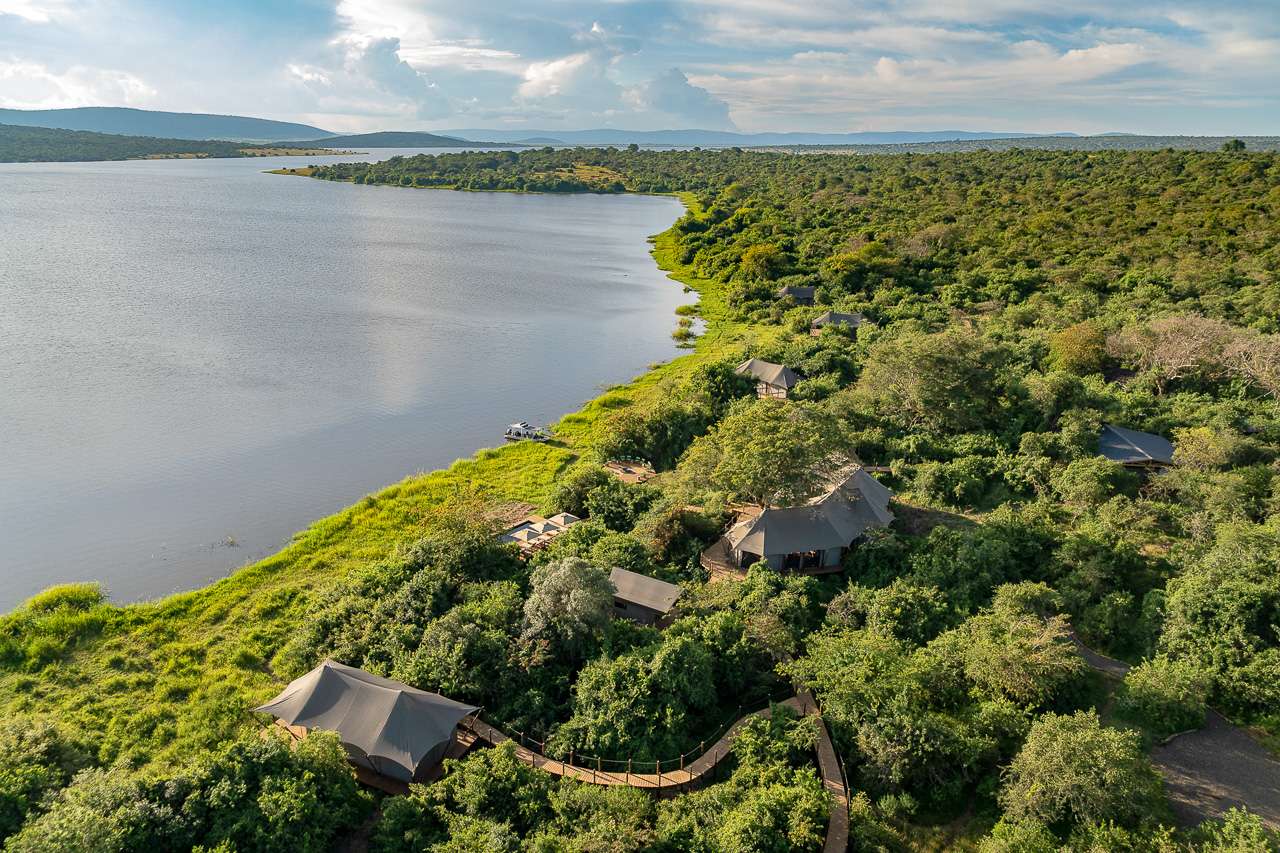
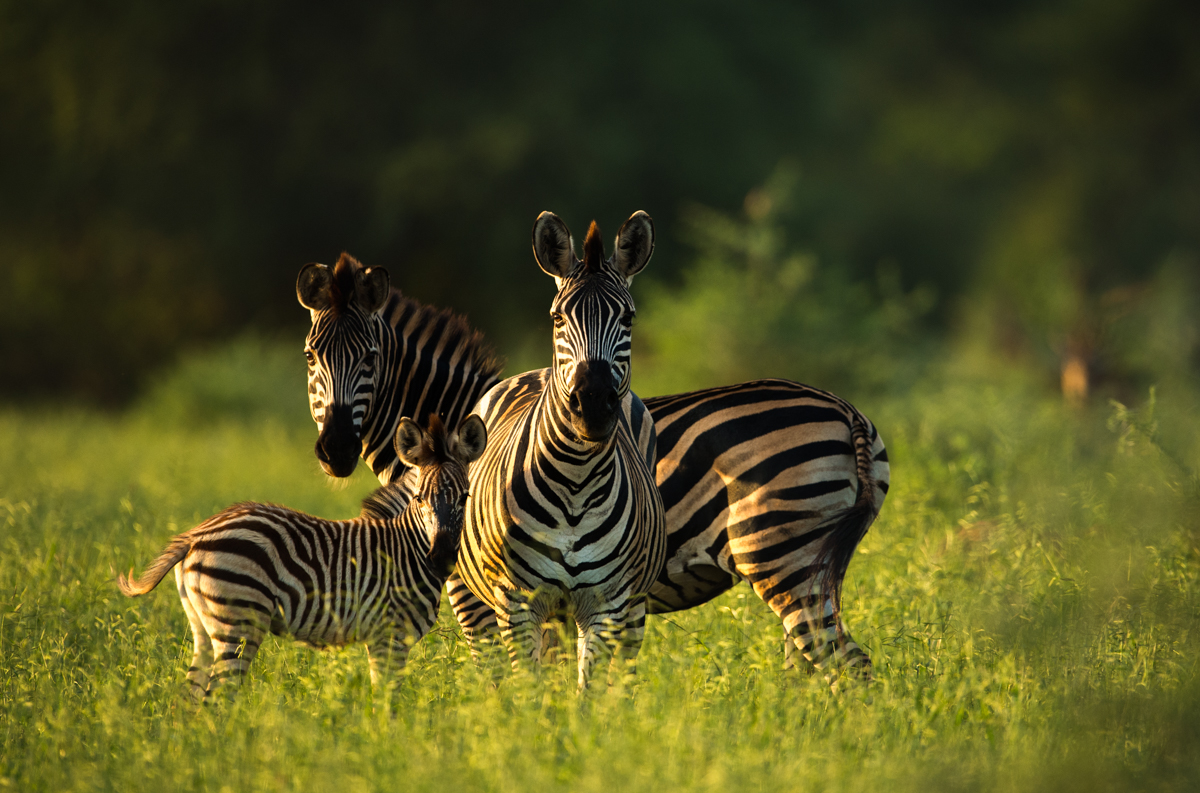
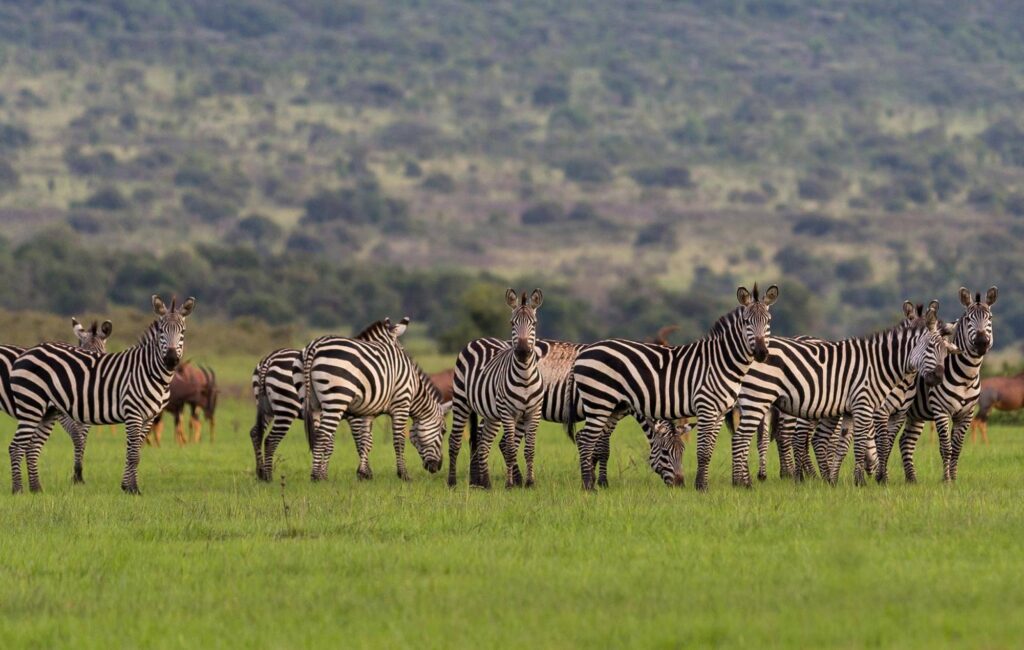
Arrive at Magashi Camp by early afternoon. Wilderness Safaris’ sole East African property sits on the shore of Lake Rwanyakazinga in the remote northern sector of Akagera, the park’s wildest, most rewarding, and least-visited zone. Six luxury tented suites face the lake, each with uninterrupted water views. After a light lunch and a brief rest, your first game drive departs at 15:30 into the northern savanna woodland. The afternoon light at this latitude from 15:00 onward transforms the acacia woodland into a warm gold; elephants are reliably encountered in herds of 10 to 30 near the lakeshore, buffalo graze the open floodplains in groups of 100 or more, and impala, topi, and zebra move across the grassland in continuous, unhurried streams.
Sundowner and Evening
Sundowners tonight are served from a flat-top termite mound on the open savanna, your guide and a camp ranger on alert while you drink gin and tonics from hand-etched crystal glasses as the horizon swallows a sun that, out here in the flat east, takes longer to die than anywhere else in Rwanda. Dinner back at camp is served under canvas at a long communal table lit by lantern and candles: grilled game bird, slow-cooked bean stew, and a salted caramel tart made in a bush kitchen that should, by rights, not produce food this good.
Lodge Spotlight: Magashi Camp by Wilderness Safaris
The Magashi Camp by Wilderness Safaris offers six exclusive tented suites on the shores of Lake Rwanyakazinga in the northern sector of Akagera. Each suite is 72 sq m with a private deck, king-size bed, indoor shower, and open-air bathtub from which hippos can sometimes be heard grunting below. The camp’s philosophy aligns with Wilderness Safaris’ 4Cs mandate: Conservation, Community, Culture, and Commerce. A portion of each guest’s camp fees is directed to Akagera’s anti-poaching unit and to the community of Rwandan rangers who have been trained and employed under the park’s African Parks management agreement. The camp operates on solar power and uses a closed-loop water recycling system.
Insider Note: Akagera’s northern sector, the area around Lake Rwanyakazinga and the Kagera floodplains, delivers Akagera at its most untouched and productive. The vast majority of visitors to the park stay in the central-southern zone near the main entrance; Magashi’s exclusive positioning in the north means you will regularly complete full morning game drives without seeing another vehicle. This is Rwanda’s closest approximation to classic East African safari solitude.
Day 9: Big Five Country: Full Day Game Drives in Akagera
Location: Akagera National Park, Northern & Central Sectors | Accommodation: Magashi Camp by Wilderness Safaris
A 5:30am wake-up, a flask of hot coffee pressed into your hands, and your Land Cruiser rolls out of camp as the first pale light lifts over the Tanzanian border plateau to the east. The northern sector of Akagera in the early morning is a shifting mosaic of acacia and papyrus swamp, open grassland, and woodland track, and the game is extraordinary. Large elephant herds (the park holds approximately 200 individuals, and the population is growing) emerge from woodland to drink at the lakeshore at dawn; buffalo move in dark, slow masses across the floodplains; and if the lions are active, the pride typically ranges across the Mutumba Hills area in the park’s northern zone. Your tracker will position you correctly within 15 minutes of camp departure.
The rhinos require more time and patience. Akagera’s 18 black rhinos and 30 southern white rhinos (as of the 2023 census) are tracked daily by a dedicated rhino monitoring unit using radio telemetry and foot patrols. Your guide maintains communication with the unit and will position the vehicle when a sighting is confirmed. A white rhino at close range, 1,800 kilograms of evolutionary stubbornness moving across open grassland at a slow roll, is a sight that puts every other safari experience in perspective. The white rhino is an animal that was gone from Rwanda for two decades and is now, slowly, reclaiming its ancient territory.
Afternoon: Papyrus Swamps and Shoebill Hunting
After a bush lunch laid out under an acacia tree, your camp team leaves a cold box at a pre-arranged point; your guide selects a spot with maximum shade and maximum view the afternoon drive moves south through the papyrus swamp margins of Lake Ihema, Rwanda’s second-largest lake at 99 square kilometers. The transition from open savanna to dense papyrus swamp happens within minutes and delivers an entirely different wildlife experience: hippos in groups of 20 to 40 wallow in the shallows; Nile crocodiles up to four metres bask on exposed sandbanks; and the papyrus beds hold the possibility of a shoebill stork (Balaeniceps rex), a prehistoric-looking, 1.4-meter-tall bird with a bill the size and shape of a wooden clog that is one of Africa’s most sought-after bird sightings, found in Akagera at the southernmost extent of its range. Akagera’s 520 recorded bird species make it one of the most productive birding destinations in East Africa.
Sundowner and Evening
Tonight’s sundowner is served directly on the lake. Your guide and a camp ranger paddle you out on a flat-bottomed boat to a quiet bay, where a family of hippos surfaces and submerges 30 metres away while you drink a cold Primus beer and watch the sunset ignite the water. Back at camp, a campfire burns in the central boma. Dinner is a two-course affair of clarity and quality: slow-braised oxtail with a root vegetable mash, followed by a Rwandan queen pineapple carpaccio with passion fruit sorbet. You do not go to sleep easily on a night like this. The hippos are still talking.
Insider Note: The shoebill is an early-morning bird. Its peak activity hours are 6:00 to 9:00 am, when it stands motionless in shallow papyrus margins waiting to ambush lungfish. Ask your guide to include the southeastern shore of Lake Ihema in the dawn drive route; the section between the Akagera River confluence and the Kirehe airstrip track consistently delivers shoebill sightings for guests who ask specifically.
Day 10: Lake Ihema Boat Cruise & Farewell from Rwanda
Location: Akagera National Park Lake Ihema Boat Cruise | Transfer to Kigali International Airport
Your final morning in Rwanda begins at dawn. A last game drive rolls out of Magashi camp at 5:30am through the northern sector as the sun rises flat and orange over the Tanzanian border hills, painting the acacia trees in a color somewhere between copper and fire. Impala are everywhere in the early light; the park holds more than 10,000, and at this hour they stand motionless on the track verges in sculptural groups as your Land Cruiser approaches and passes without triggering flight. A herd of 35 elephants crosses the road at walking pace 200 metres ahead. Your guide cuts the engine, and you wait, watching them move from dark woodland into the open grassland, with the matriarch in front and the smallest calf following its mother’s heels. Rwanda, at this moment, is perfect.
By 9:00am you are at the Lake Ihema boat launch for a two-hour guided boat cruise on Akagera’s largest lake. Lake Ihema stretches over 99 square kilometers at an elevation of 1,340 metres and is accessible via a dedicated park boat from the southern shore. The cruise offers close-range views of Nile hippos in groups of 40 to 60, which is one of the highest hippo densities recorded anywhere in Rwanda, as well as Nile crocodiles, African fish eagles performing their spectacular fishing stoop, yellow-billed storks, and the occasional elephant coming out from the papyrus margin to drink. Water-based wildlife viewing offers a level of proximity and calm that no land vehicle can replicate. Animals on the lake behave as if boats are part of the natural order, often approaching within ten metres.
Departure
Return to Magashi camp for a late breakfast and final packing by 11:30am. Your Land Cruiser departs the park for Kigali International Airport in approximately 2.5 to 3 hours by road, arriving comfortably for evening international departures. The road back passes east of Kigali, through the gentle hills of Bugesera, where the landscape is empty and green and the drive gives you one last hour of Rwandan sky. Your guide, who has driven every kilometer of this journey, will fill the road with stories about the places you are leaving behind and the ones worth returning for.
Rwanda, at the end of ten days, feels both small enough to understand and immeasurably deep. You have trekked with the rarest great ape on earth, tracked 500 chimpanzees through a thousand-year-old forest, and stood at the edge of a savanna that was pronounced functionally dead less than a decade ago and is now, remarkably, full of lions. Not every country in Africa stakes this much on the idea that wild things are worth saving. Rwanda has bet its identity on it. And the evidence, every day of this itinerary, is overwhelming.
Insider Note: If your international flight departs Kigali in the evening, ask your guide to stop for lunch at Repub Lounge near the Kigali Convention Centre, one of the city’s finest restaurants with a terrace view of the parliament building and an excellent selection of Rwandan artisan craft beer. It is the ideal final meal before the airport.
What Makes This Itinerary Truly Luxurious
Most Rwanda gorilla packages compress the experience: two nights at a standard lodge, a gorilla trek, a short transfer, and a flight home. This 10-day itinerary is structured differently, and the differences are not cosmetic.
1. Exclusive Private Ground Transport
Every kilometre of this itinerary is covered in your own private luxury 4WD Land Cruiser custom-fitted with elevated pop-up roofs, USB charging ports, a cool box, and charging adaptors. You travel on no one else’s schedule. You stop where you want, for as long as you want, at any viewpoint, market, or roadside scene that captures your attention. The drive between Nyungwe and Akagera alone, passing through Kigali, takes five to six hours in a shared transfer van; this is an endurance test. In a private Land Cruiser with a guide you trust, it is one of the great scenic drives in East Africa.
2. Master Naturalist Guides
Your guide for the full 10 days is a senior Active African Vacations naturalist with a minimum of 10 years of field experience in Rwanda, proficiency in Kinyarwanda and English, and specialist training in great ape behavior. This is not a driver who doubles as a guide; this is a professional naturalist who knows the Karisoke gorilla family histories by name, can identify all 29 Albertine Rift endemic bird species by call, and understands the conservation economics of Akagera’s African Parks management at a granular level. The continuity of having a single guide for the full journey building trust, vocabulary, and context over 10 days elevates every experience.
3. Ultra-Luxury Lodge Selection
The One & Only properties in Volcanoes and Nyungwe are among the finest wildlife lodges on the continent. Both offer full butler service in each suite, in-suite dining available around the clock, a complimentary minibar replenished daily, in-suite fireplaces in the mountain properties, and spas that source treatments from the immediate ecology. Magashi Camp by Wilderness Safaris is a six-tent exclusive property in the wild north of Akagera; no other commercial camp operates in this zone of the park. Wake-up times at all lodges are suggested, not mandatory; you can start your morning game drive at 5:30am or 7:00am according to your own preference.
4. Conservation Credentials
This itinerary places your spend at the intersection of three of Africa’s most important conservation initiatives. Gorilla trekking permit revenue (USD 1,500 per person) funds the Rwanda Development Board’s gorilla protection programs. The One & Only properties hold Rainforest Alliance and Travelife certifications and contribute directly to community-run cooperatives adjacent to both parks. Magashi Camp’s fees support African Parks‘ management of Akagera, which has overseen the return of lions, rhinos, and a rapidly recovering ecosystem in under 15 years. Traveling here is not passive tourism: it is a direct contribution to the survival of critically endangered species.
5. Schedule Flexibility and Personalisation
This itinerary is a framework, not a timetable. If you want an extra morning in Nyungwe for a second chimp trek, we adjust the Akagera nights accordingly. If you want to spend Day 4 resting at One & Only Gorilla’s Nest rather than hiking to Fossey’s grave, we book a spa day and a private walking trail instead. If your fitness is higher than anticipated and you want the Susa family on the first trekking day rather than the second, your lodge team will request the family reassignment. Luxury, in its truest form, means the experience bends to you, not the other way around.
Best Time to Visit Rwanda on This Safari

June to September: Long Dry Season (Peak Season)
This is Rwanda’s optimal safari season. Rainfall is minimal (typically below 50mm per month across all three park zones); forest trails in both Volcanoes and Nyungwe are firm and navigable; savanna vegetation in Akagera is at its least dense, improving wildlife visibility. Average temperatures in Volcanoes NP: 12–18°C (54–64°F) at night, 18–24°C (64–75°F) by day; Nyungwe: 10–18°C (50–64°F); Akagera: 20–28°C (68–82°F). Gorilla families range across their full altitudinal territories rather than descending to lower elevations as they do during wetter periods. Akagera’s grasses are shorter in August–September, significantly improving big cat and rhino visibility. Gorilla permit availability is tightest in July–August; book six to twelve months in advance for this window.
December to February: Short Dry Season (Excellent Value)
Rwanda’s second dry season delivers similar conditions to the long dry season with one advantage: markedly fewer visitors. Gorilla permit availability is higher, lodge rates at all three properties are typically 15–25% lower, and the landscape in Nyungwe is at its most lush from the preceding November rains, a vivid, saturated green that produces extraordinary photography. Average temperatures are similar to June–September. December and January are particularly reliable: the short rains typically end by late November, and the country has three to four weeks of clear weather before the long rains arrive in March.
March to May: Long Rainy Season (Adventurous Value Travel)
April and May bring Rwanda’s heaviest rainfall. Forest trails in Nyungwe can become dangerously slippery at altitude; gorilla trekking with high-elevation family groups like Susa may be restricted on days of heavy rainfall; and the unpaved tracks in Akagera’s northern sector can become impassable after a sustained downpour. That said, the landscape is at its most spectacular: waterfalls cascade down the Virunga foothills, Nyungwe’s canopy is an impossibly saturated green, and Akagera’s papyrus swamps are alive with breeding waterbirds. Lodge rates are at their lowest; private Land Cruiser travel means you are insulated from many of the practical inconveniences that shared vehicles experience. For adventurous travelers who have visited Rwanda before, the green season offers a genuinely different and often deeply beautiful version of the country.
October and November: Short Rainy Season
October and November are Rwanda’s short rainy season, with afternoon showers most days but typically clear mornings. Gorilla trekking proceeds normally on most days; the Nyungwe canopy walk is temporarily closed during active lightning periods but is available on most mornings. This shoulder season offers good gorilla permit availability and moderate lodge rates. The savanna in Akagera begins to green up in November, and new buffalo calves, a magnet for lions, are visible from late October. A competent guide, a private vehicle, and appropriate waterproof gear make October and November perfectly viable for this itinerary.
For related multi-country itineraries that combine Rwanda with Tanzania’s iconic wildlife corridors, explore our Maasai Mara, Rwanda Gorillas, and Victoria Falls safari or the 16-Day Gorilla Trekking, Wildlife & Beach Safari, which combines Rwanda with Tanzania and Zanzibar, both available as private ground-transport journeys.
Practical Information
Getting There
All international flights arrive at Kigali International Airport (KGL). Direct or single-stop connections operate from the following hubs: London Heathrow (RwandAir direct, approx. 8.5 hours); Brussels (Brussels Airlines via Entebbe, approx. 11 hours); Amsterdam (KLM via Nairobi, approx. 12 hours); New York JFK (multi-stop via London or Brussels, approx. 16–19 hours); Dubai (RwandAir direct, approx. 6 hours). RwandAir, Rwanda’s national carrier, operates the most direct international connections and holds a strong safety record. We recommend booking your international legs well in advance of your safari dates, a minimum of four months before travel for standard seasons and six months for July and August.
Internal Transfers
All transfers on this itinerary are by private luxury 4WD Land Cruiser; no internal flights are required. Road distances and approximate driving times: Kigali to Volcanoes NP (Musanze): 100km, approximately 2.5 hours. Volcanoes NP to Nyungwe House: 180km via Lake Kivu shore road, approximately 5 hours. Nyungwe House to Akagera NP (Magashi Camp): 260km via Kigali, approximately 5.5 hours. Akagera NP to Kigali International Airport: 100km, approximately 2.5 hours. Rwanda’s primary road network, the RN4, RN2, RN3, and RN1 is well-maintained and tarmacked throughout. The Lake Kivu shore drive (Rubavu to Rusizi) on Day 5 is Rwanda’s most scenic road and arguably the finest drive in the country.
Visa and Entry
Most nationalities can obtain a single-entry Rwanda tourist visa on arrival at Kigali International Airport or online via the Rwanda Development Board Irembo portal before traveling. The standard fee is USD 50 for most nationalities for a 30-day single-entry visa. Citizens of most African Union member states enjoy visa-free access. East African Community nationals (Kenya, Uganda, Tanzania, Burundi, South Sudan, and the Democratic Republic of Congo) travel visa-free. Confirm current requirements for your nationality through the Rwanda Development Board.
Health and Vaccinations
No vaccinations are legally required to enter Rwanda unless you are arriving from a yellow fever-endemic country, in which case a yellow fever vaccination certificate is mandatory. We strongly recommend the following as medical best practice: antimalarial prophylaxis (Rwanda has moderate malaria risk in low-altitude areas, including Akagera; prophylaxis is particularly recommended during the rainy season), Hepatitis A and B vaccination, typhoid vaccination, a tetanus/diphtheria booster, and a personal supply of broad-spectrum antibiotics and oral rehydration sachets. Consult your GP or a travel health clinic at least six weeks before departure. All three lodges on this itinerary maintain a first-aid kit and have procedures for medical evacuation to Kigali in the event of a serious incident.
Currency and Tipping
Rwanda’s official currency is the Rwandan Franc (RWF). USD is widely accepted at lodges, restaurants, and tourist services. Credit cards (Visa and Mastercard) are accepted at the Radisson Blu and both One & Only properties; Magashi Camp accepts USD cash and prior payment arrangements. ATMs are available in Kigali, Musanze, and Karongi. Recommended tipping guide: Private guide USD 25–35 per day; lodge housekeeping staff USD 10–15 per day, per room; gorilla/chimp tracker team USD 20–30 per trek (shared across the group). Tipping is not mandatory but is an important part of the income of hospitality staff in Rwanda’s tourism sector.
Packing Essentials
- Neutral/earth-toned clothing for game drives and treks no blue or white (attracts insects in forest)
- Warm insulating layer (fleece or down jacket) for cold morning drives in Volcanoes NP and Nyungwe; temperatures reach 5°C
- Waterproof rain jacket essential for forest treks even in dry season
- Sturdy waterproof hiking boots with ankle support for gorilla and chimp treks
- Quality binoculars minimum 8×42 for forest birding and savanna game viewing
- Camera with telephoto lens (minimum 400mm equivalent for wildlife); headlamp or torch
- UK Type G electrical socket adaptors (Rwanda uses Type G, same as UK); universal travel adaptor recommended
- Polarized sunglasses essential for Akagera boat cruise and savanna drives
- High-factor sunscreen and insect repellent (DEET-based for malaria zones in Akagera)
- Personal medication supply, including antimalarials, oral rehydration sachets, and any prescription medicines








Explore More Rwanda and African Safari Itineraries
3-Day Luxury Rwanda Gorilla Trek & Golden Monkey Trek
Maasai Mara and Zanzibar Beach Safari
Maasai Mara, Rwanda gorillas, and Victoria Falls
16-Day Gorilla Trekking, Tanzania Wildlife & Zanzibar Beach Safari
Frequently Asked Questions about the 10-Day Luxury Rwanda Safari: Gorillas, Chimps & Akagera.
How fit do you need to be for gorilla trekking in Rwanda?
Gorilla trekking requires a reasonable level of cardiovascular fitness and the ability to walk uphill on uneven, often slippery terrain for between one and six hours. The trek duration depends on where the gorilla family has nested overnight some days the group is reached in 45 minutes; on others, particularly at high-altitude families like Susa on Karisimbi, the approach can take four to five hours at elevations between 2,400 and 3,600 metres. Porter hire is available at the park boundary for approximately USD 20 and is strongly recommended for guests who are less confident on steep terrain. Guests with serious mobility impairments should contact us before booking to discuss whether this trek is suitable and to explore the ‘Gorillas on Intimate Terms’ VIP experience operated by the RDB, which provides additional ranger and porter support.
How much does a Rwanda gorilla trekking permit cost in 2026–2027?
A gorilla trekking permit for Rwanda costs USD 1,500 per person for foreign non-residents as of 2026, a price that has been held stable since 2020. The permit covers one trek of up to one hour with a single habituated gorilla family group; it does not include accommodation, guide fees, or additional park activities. Permits are issued by the Rwanda Development Board (RDB) and must be booked in advance. We handle this as part of your booking with Active African Vacations. Rwanda’s permit price is higher than Uganda’s equivalent (USD 800 at Bwindi Impenetrable Forest), but Rwanda offers superior infrastructure, shorter trek durations on average, and a higher density of habituated families in a more accessible landscape.
How many gorilla families can be visited in Volcanoes National Park?
As of 2026, there are 12 habituated gorilla families in Volcanoes National Park available for tourist trekking, accommodating a maximum of 8 tourists per family per day, which gives the park a daily maximum visitor capacity of 96 people across all families. The most frequently requested families include Susa (30+ members, highest on Karisimbi, most demanding trek), Agashya (20+ members, known for active silverback displays), Amahoro (peaceful family with multiple females and young, excellent for first-time trekkers), and Umubano (typically found in dense bamboo, offering very close-range encounters). Your trek assignment is made the day before by the RDB in consultation with your lodge; guest fitness levels and group composition are taken into account.
What is the difference between gorilla trekking and golden monkey trekking?
Gorilla trekking in Volcanoes National Park targets mountain gorillas (Gorilla beringei beringei) at elevations of 2,400 to 3,700 metres in Hagenia-Hypericum forest. It requires a permit costing USD 1,500 and limits visitors to one hour with the gorilla family per day. Golden monkey trekking targets the golden monkey (Cercopithecus kandti), an Albertine Rift endemic with fewer than 4,000 wild individuals in the lower bamboo forest belt at 2,500 to 3,200 metres. The permit for golden monkey trekking costs approximately USD 100 in 2026. The trek to reach golden monkeys is typically shorter and less physically demanding; the experience has a different character golden monkeys are fast-moving and acrobatic in the canopy, whereas gorillas are sedentary, grounded, and intimate.
Is chimpanzee trekking in Nyungwe guaranteed?
Chimpanzee trekking in Nyungwe is not 100% guaranteed because primates are semi-habituated wild animals that move freely across a 970-square-kilometer forest. The park’s tracker teams depart before dawn to locate the chimpanzee community and radio its position to trekking groups; the success rate is high during the dry season (June–September) when chimps are more predictable in their range, but tracking cannot be guaranteed on any individual day. Nyungwe operates two trekking zones, Uwinka and Cyamudongo, and if one fails to produce a sighting, the alternative may be offered depending on group size and ranger availability. Our itinerary builds two consecutive days in Nyungwe precisely to maximize the probability of a successful chimp sighting; very few guests who complete both days leave without an encounter.
What wildlife can be seen in Akagera National Park?
Akagera National Park is home to all members of the Big Five. Lions were reintroduced in 2015 (seven individuals from South Africa and Kenya; the pride has grown significantly since). Black and southern white rhinos were reintroduced in 2017 (a total of 10 black rhinos from European zoos and 18 white rhinos from South Africa), and the population is projected to grow to approximately 48 rhinos by 2026. The park holds one of the largest populations of hippopotamuses in East Africa (estimated 1,500 to 2,000 individuals across its lake system), plus elephants, buffaloes, leopards, zebras, giraffes (reintroduced 2019), topi, eland, impala, waterbuck, and 520 recorded bird species. The shoebill stork is present in the papyrus swamps of Lake Ihema, one of only three accessible shoebill-sighting sites in Rwanda.
Why does this itinerary use ground transport rather than internal flights?
Rwanda is a small country, 26,338 square kilometers, roughly the size of Wales or the state of Maryland, and its road network is among the best-maintained in East Africa. The drives between Kigali, Volcanoes NP, Nyungwe, and Akagera are not merely transfers; they are experiences in their own right. The Lake Kivu shore drive on Day 5, in particular, is one of Africa’s most scenic roads. Ground transport in a private Land Cruiser also allows for spontaneous stops: roadside markets, panoramic viewpoints, cultural encounters, and wildlife sightings that no flight can deliver. It is also significantly more carbon-efficient than domestic flights and allows your guide’s running ecological and historical commentary to be maintained throughout the journey, a context that deepens the experience at every destination.
How is Akagera National Park managed, and is it safe?
Akagera National Park is co-managed by the Rwanda Development Board and African Parks, a South African nonprofit that holds management agreements for 22 parks across 12 African countries as of 2026. Since African Parks took over Akagera’s management in 2010, the park has seen the reintroduction of lions, rhinos, and giraffes; a doubling of wildlife biomass; and the complete elimination of commercial poaching. Anti-poaching operations are funded directly from tourism revenue; a 24-hour ranger patrol system protects all wildlife corridors. Akagera is considered one of the safest national parks in East Africa for visitors, with no incidents of tourist crime reported recently. A dedicated ranger team employed through the African Parks community program patrols the northern sector where Magashi Camp is located.
Can this itinerary be done with children?
Gorilla trekking in Rwanda has a minimum age of 15. Golden monkey trekking has no formal age restriction but requires children to be able to complete a 2–3 hour forest hike. Chimpanzee trekking in Nyungwe has no minimum age requirement but requires reasonable physical ability on uneven forest terrain. Akagera game drives and the Lake Ihema boat cruise are suitable for all ages, including young children. The One & Only properties accommodate children in certain suite categories with connecting rooms; Magashi Camp by Wilderness Safaris has a minimum age policy of 12 years for all guests. For families traveling with children under 12, we recommend a modified itinerary that replaces Akagera with a Kigali cultural tour and extends time in either Volcanoes or Nyungwe contact us for a tailored family version of this program.
What is the best time of year to trek mountain gorillas in Rwanda?
Gorilla trekking is possible year-round in Rwanda; the Volcanoes National Park and its gorilla families do not migrate and do not close for any season. The best conditions occur during the two dry seasons: June to September (long dry season) and December to early February (short dry season). During these periods, forest trails are firmer, vegetation is less dense (slightly improving visibility within the bamboo), and rainfall interruptions during the trek itself are rare. The long rainy season (March to May) produces the most challenging trekking conditions; trails can be extremely muddy, and high-altitude groups like Susa may temporarily relocate to lower terrain, but gorilla sightings remain consistent. Peak season for permit availability pressure is July and August; book 6–12 months ahead for these months.
What should I wear for gorilla trekking and forest treks?
For gorilla and chimpanzee trekking, wear long-sleeved shirts and long trousers in neutral or dark earth tones (such as olive, khaki, brown, or dark grey). Avoid blue and white, as these colors attract insects and can disturb wildlife. Long sleeves and trousers protect against stinging nettles, which are abundant in the bamboo zone of Volcanoes NP. Wear waterproof hiking boots with ankle support; the terrain is uneven, wet, and often steep. Bring a waterproof rain jacket (packable is ideal) even in the dry season, as forest conditions change quickly at altitude. Garden gloves protect hands when pushing through undergrowth. A hat with a brim and insect repellent are strongly recommended. The lodge provides gaiters for guests who need them.
How does Active African Vacations handle the gorilla permit booking process?
Active African Vacations handles all gorilla permit procurement as part of your booking process. Once you confirm your itinerary dates and pay your deposit, we submit permit applications to the Rwanda Development Board on your behalf. We allocate permits approximately 3–6 months in advance for standard periods and up to 12 months in advance for peak season (July–August). Your specific gorilla family assignment is communicated by the lodge team the evening before your trek, based on RDB allocation and your fitness level and preferences as relayed by your guide. We only quote for Rwanda gorilla itineraries if confirmed permit availability is included; your booking is not confirmed until permits are secured.
Ready to Begin? Enquire About This Rwanda Safari
This itinerary represents Rwanda’s safari experience at its absolute pinnacle: three UNESCO-recognized ecosystems, three of the continent’s finest lodge addresses, and the rarest great ape encounter on earth, all connected by a private Land Cruiser across a country whose roads are as beautiful as its parks.
Booking your Rwanda safari with Us is straightforward: submit an inquiry via our contact page or send us your travel dates and preferences directly. One of our Rwanda specialists will reach out within minutes for a consultation call or email exchange. Following the consultation, we prepare a custom-tailored proposal, usually within the first 24 hours, detailing your lodge choices, permit status, day-by-day program, and all-inclusive pricing. A 30% deposit secures your booking and your gorilla permits; the balance is due 60 days before travel. This itinerary can be extended with a Tanzania wildlife circuit and Zanzibar beach finale, shortened to focus on gorillas and Akagera only, or combined with Uganda’s Bwindi Impenetrable Forest for a dual-country primate comparison. Flexibility is at the heart of everything we design.
Alternatively, browse our full range of luxury Rwanda safaris or explore our multi-country combined safari packages that connect Rwanda with Tanzania, Kenya, Uganda, and beyond.