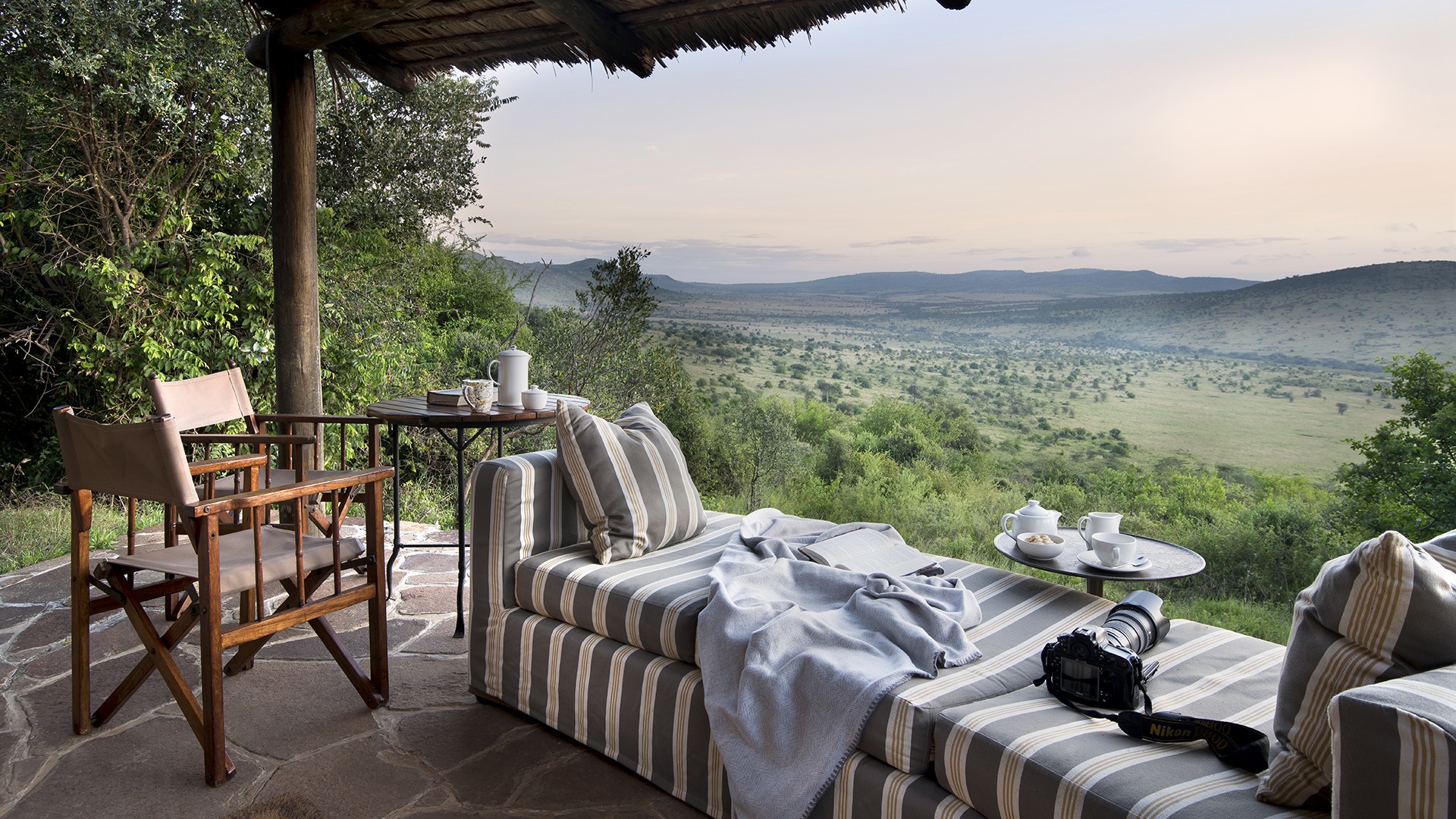
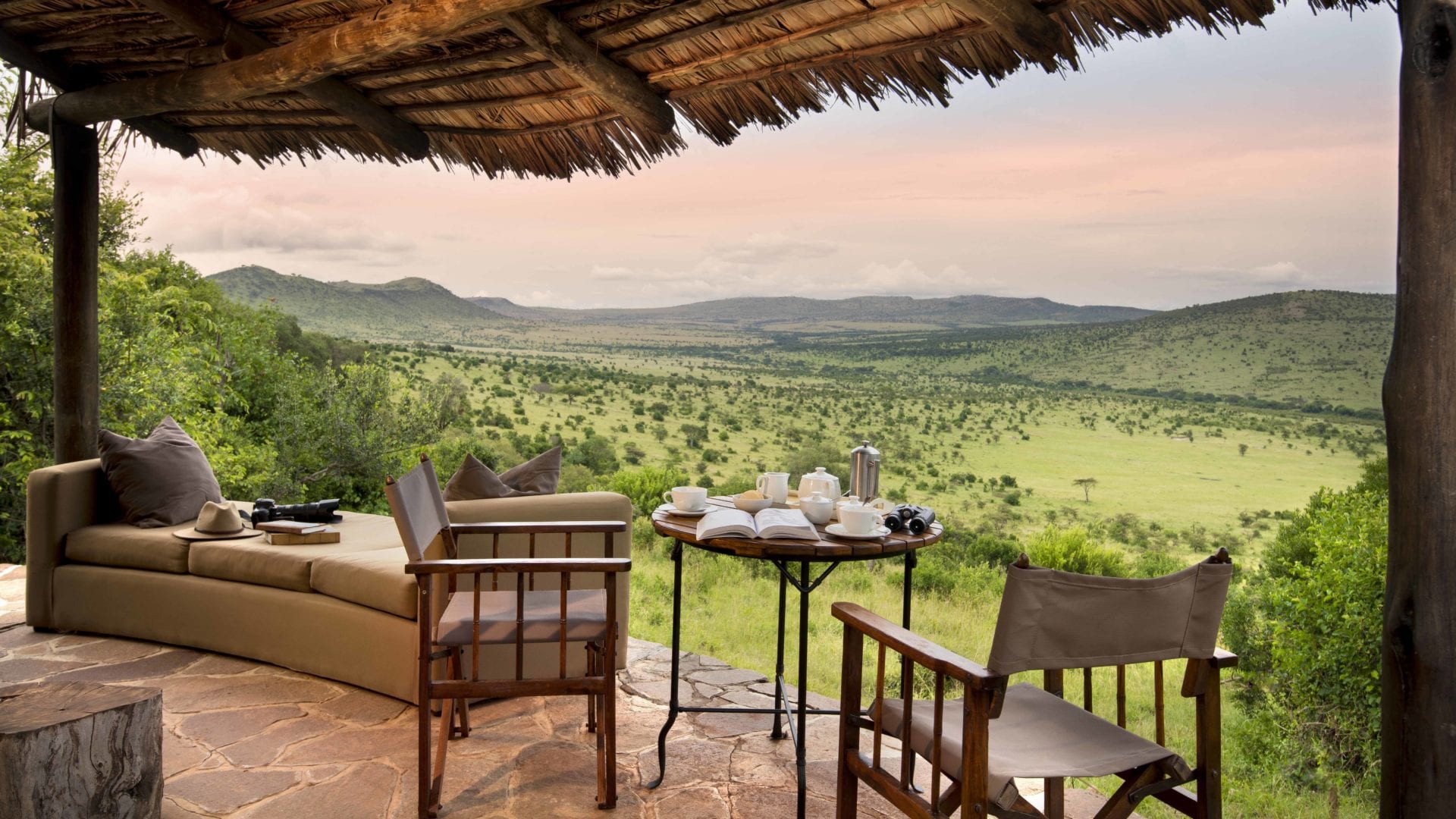
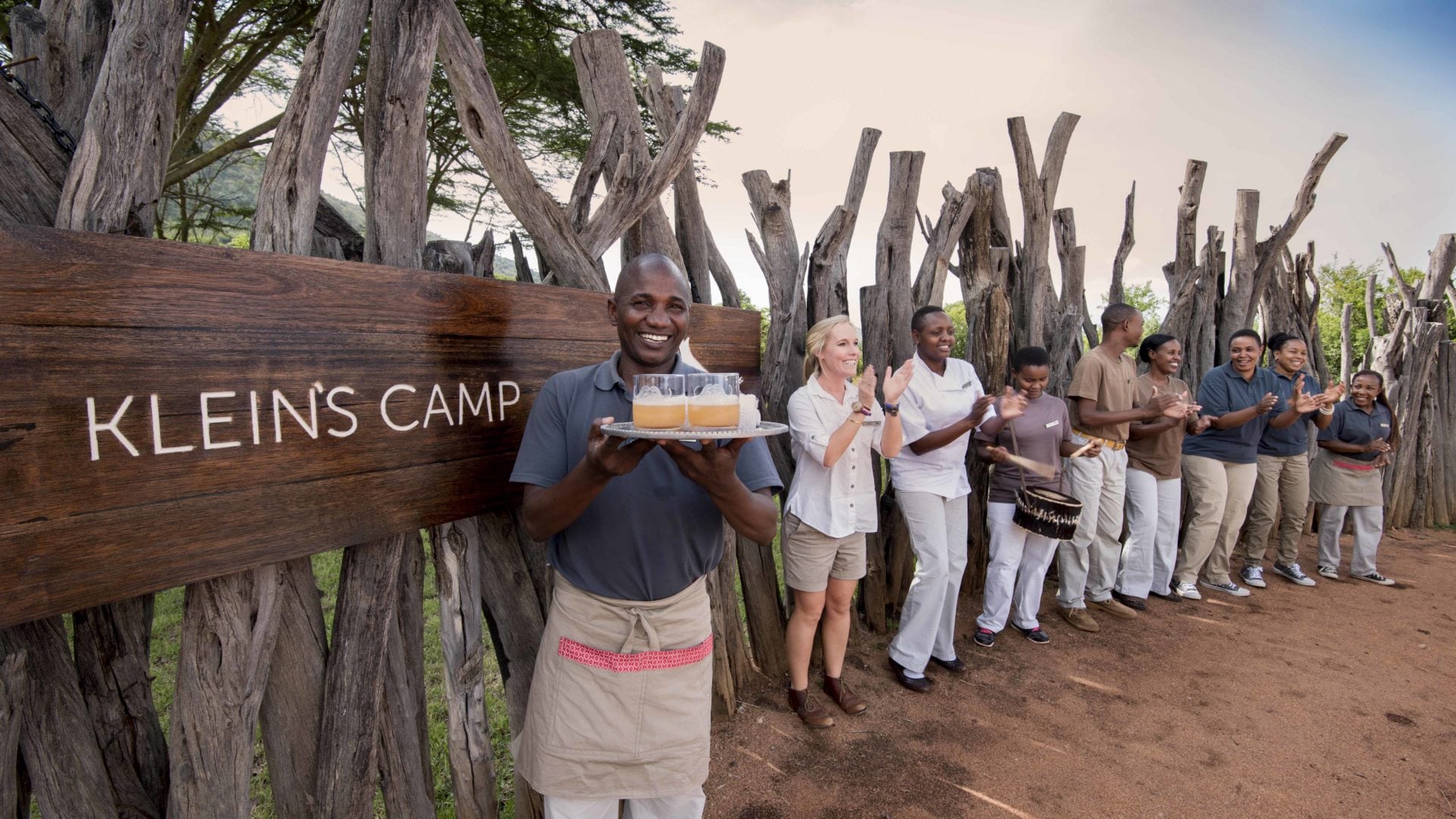
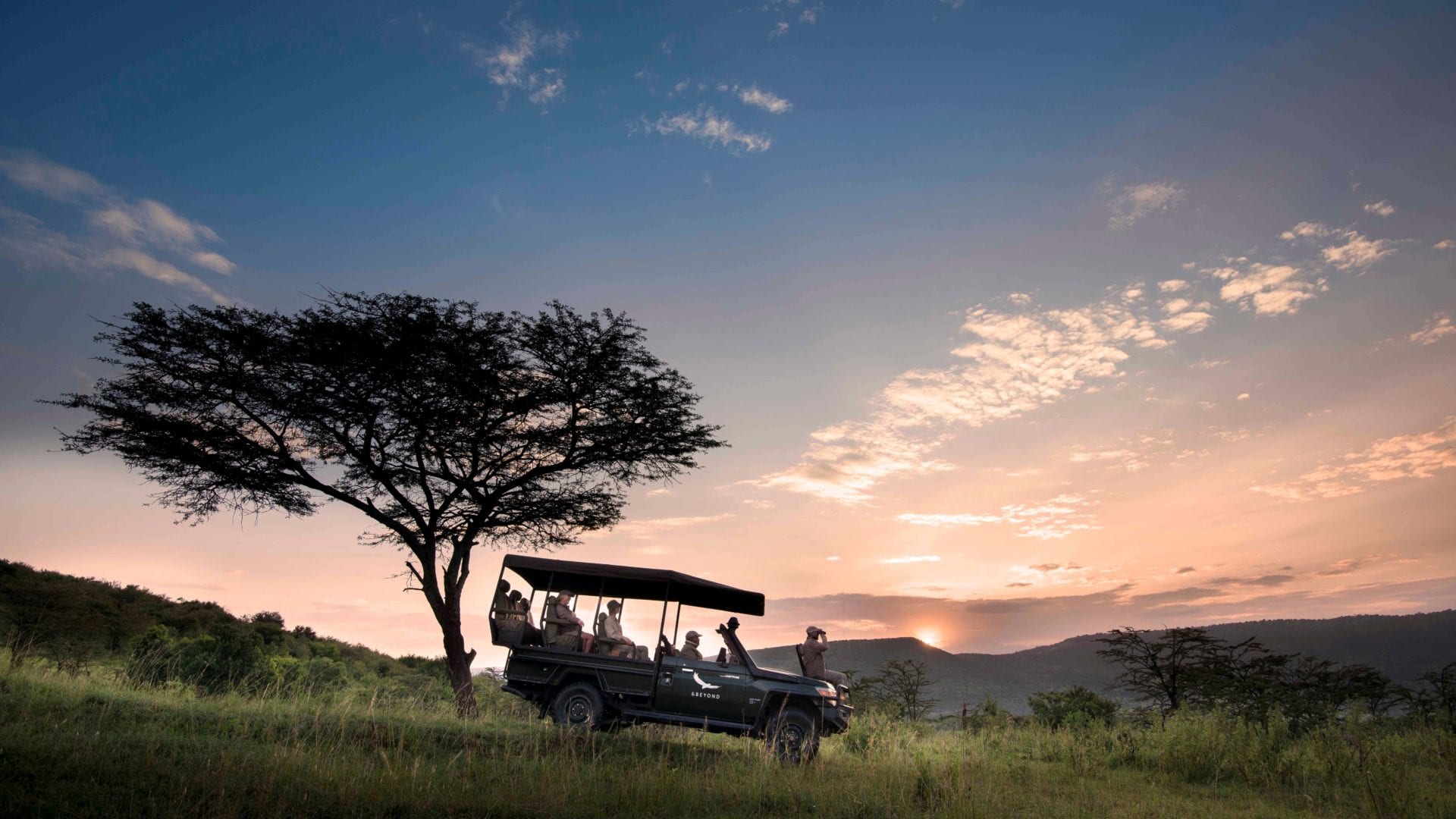
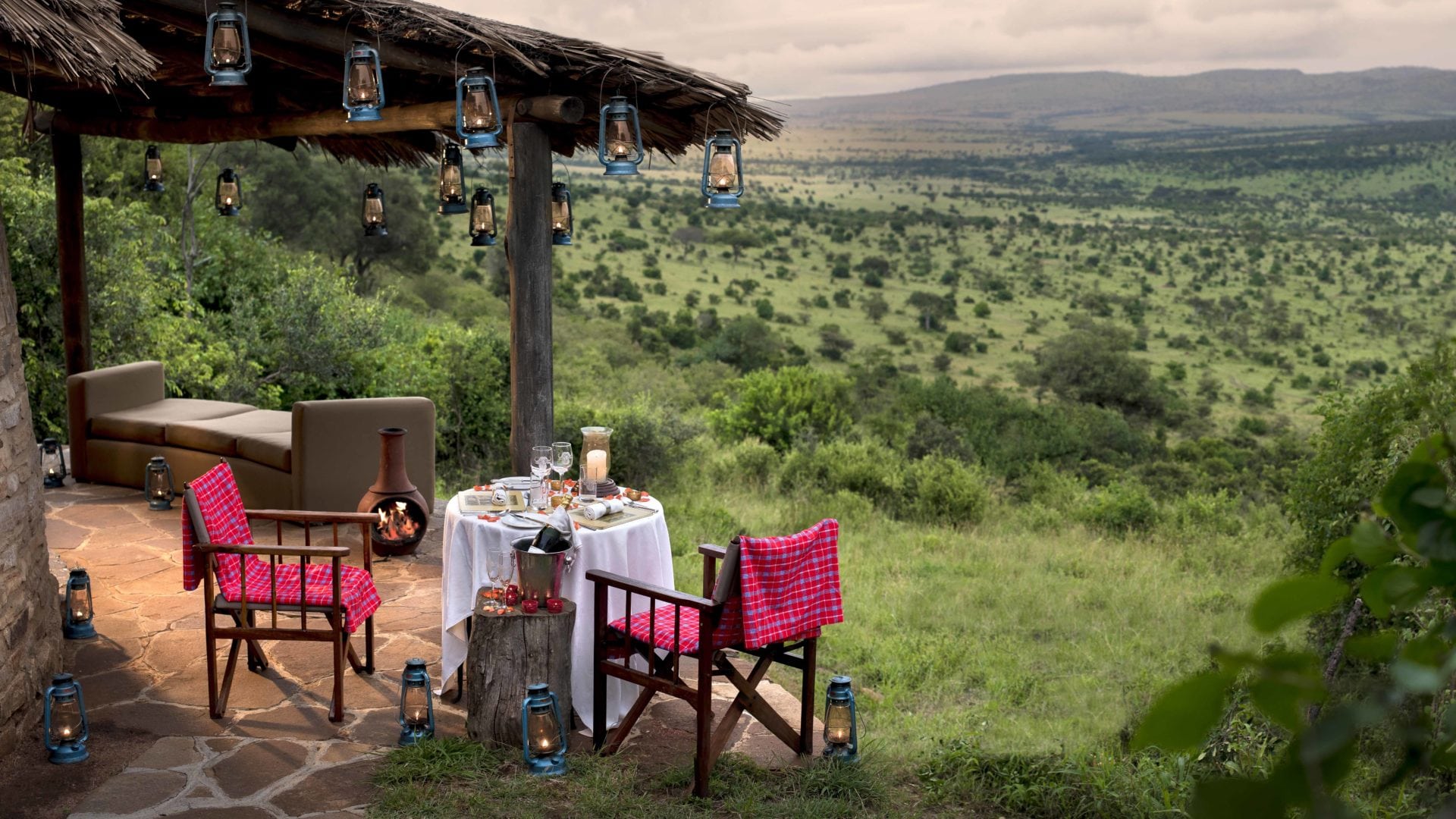
The activity program at &Beyond Klein’s Camp is defined by its northern Serengeti location: this is first and foremost a camp built for witnessing the Great Migration, supplemented by a resident wildlife population that would make any other camp famous. The Kuka Hills concession supports year-round populations of lion, leopard, cheetah, elephant, buffalo, and giraffe, the so-called Big Five, complemented by a density of plains game that keeps the bush perpetually alive.
Game Drives
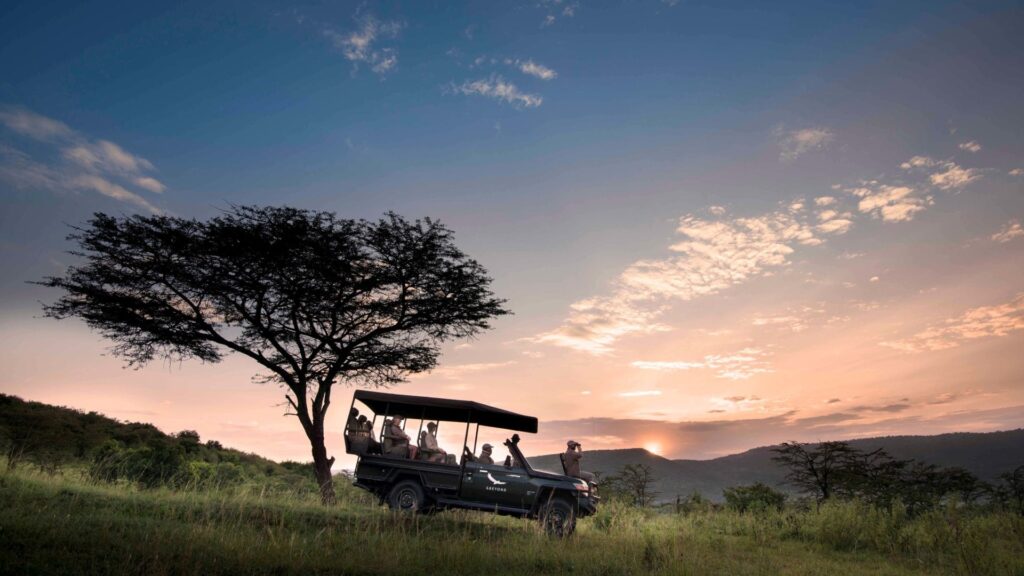
Twice-daily open 4×4 game drives, morning and evening, are the heartbeat of the AndBeyond Klein’s Camp experience. Private vehicles are standard, ensuring that your guide’s focus and the vehicle’s positioning are determined entirely by your group’s interests rather than the least common denominator of a shared departure. Drives in the northern Serengeti concentrate on the Mara River crossings during July–October and on tracking resident predators, elephant herds, and the attendant drama of the kopje ecosystem through the rest of the year.
Mara River Crossing Excursions
During the Great Migration season (broadly July to October), AndBeyond Klein’s Camp guides position vehicles at the Mara River crossing points, gravel banks, and sheer clay ledges above crocodile-dense pools where the wildebeest hesitate, surge, and sometimes tragically fail in their crossing attempt. These are among the most viscerally extraordinary wildlife spectacles on the planet, and proximity to them is the single greatest argument for choosing AndBeyond Klein’s Camp over competing Serengeti lodges.
Walking Safaris
Guided walking safaris depart from the camp and move through the concession on foot, a fundamentally different relationship with the bush than any vehicle affords. At foot level, the Serengeti reveals a world invisible from a Land Cruiser: the dung beetle rolling its ball with improbable determination; the hornbill calling from a branch close enough to examine its absurd casque; and the tracker reading a lion’s spoor in the dust and telling you, with quiet authority, that it passed here two hours ago and was moving south.
Cultural Visits to Maasai Communities
The land around AndBeyond Klein’s Camp is Maasai country, and the lodge maintains a genuine, long-standing relationship with neighboring communities. We offer cultural visits to nearby Maasai bomas, leading them with sensitivity and purpose. This is not performance tourism but an opportunity to understand how the Maasai way of life and wildlife conservation coexist, sometimes uncomfortably, and how programs like the Africa Foundation are working to align their interests. Guests frequently describe these visits as the most intellectually enriching hours of their entire safari.
Fly Camping
For guests who want to deepen their immersion, AndBeyond Klein’s Camp offers fly-camping experiences: nights spent under a minimal canvas in the bush, with a campfire, a guide, and the sounds of the nocturnal Serengeti as your soundtrack. This is adventure distilled.
Guide Quality
&Beyond’s guide training program is among the most rigorous in the safari industry. Guides at AndBeyond Klein’s Camp are educated in ecology, geology, ornithology, and Maasai cultural history, and many hold recognized guiding qualifications from the Tanzania Wildlife Management Authority. The difference between a good guide and an outstanding one is the difference between seeing a lion and understanding it, and this camp consistently produces the latter.
Wildlife Species You Can Expect to See
- Predators: Lion, leopard, cheetah, wild dog, spotted hyena, jackal
- Herbivores: Wildebeest (migration and resident herds), zebra, Thomson’s and Grant’s gazelle, topi, eland, elephant, buffalo, giraffe, hippo (Mara River)
- Primates: Olive baboon, vervet monkey
- Reptiles: Nile crocodile (Mara River), monitor lizard
- Birds: Over 500 species recorded in the broader ecosystem, including lilac-breasted roller, secretary bird, martial eagle, and numerous migrant species.
Who Should Stay at AndBeyond Klein’s Camp
&Beyond Klein’s Camp suits experienced safari travelers and first-timers alike, but it rewards most deeply those who value depth over breadth, guests who would rather spend three nights in one extraordinary place than rush across five. That said, its specific location and character make it a stronger fit for some travelers than others.
Honeymoon and Romantic Couples
The combination of seclusion, beauty, and shared awe that characterizes every day at &Beyond Klein’s Camp makes it one of Africa’s finest honeymoon destinations. The ingredients of romance that no spa or pool architecture can manufacture include the private verandah, the bush dinner under stars, the absence of crowds, and the sense of being somewhere that very few people in the world have ever been. Many couples return for anniversaries.
Families with Children
Children aged 5 and above are welcome at AndBeyond Klein’s Camp, and the camp’s junior-focused game drives and educational approach to guiding give young travelers a genuine introduction to the wild world rather than a simplified version of it. Families should discuss specific requirements, cottage configuration, dietary needs, and activity pacing with their travel consultant in advance.
Wildlife Photographers
For wildlife photographers, particularly those specializing in migration sequences, AndBeyond Klein’s Camp is close to unmatched. The northern Serengeti’s open terrain and exceptional morning and evening light, combined with private vehicle positioning and guides who understand a photographer’s need for patience and angle, make the camp a serious professional tool. The Mara River crossing opportunities during peak season are genuinely unrepeatable, the kind of images that appear on the covers of the publications this lodge’s owner has graced.
Solo Travellers
&Beyond Klein’s Camp welcomes solo travelers and, on the right departure in the low season, can feel like a private camp. Most &Beyond lodges charge a single supplement, which is worth factoring into the budget calculation, but the depth of experience more than justifies it for travelers who prioritize quality of encounter over economy.
First-Time Safari Visitors vs. Repeat Africa Travellers
First-timers will genuinely feel overwhelmed in the best possible way. The game density and guide quality mean the learning curve is steep and joyful, and the all-inclusive structure removes any anxiety about logistics. Repeat visitors, particularly those who have already covered the southern Serengeti and Ngorongoro, come to andBeyond Klein’s Camp for the specific experience of the northern migration corridor, something the central and southern camps simply cannot offer.
Budget Context: Is It Worth the Price?
At USD $1,500–$2,500+ per person per night in high season, &Beyond Klein’s Camp sits firmly in the ultra-luxury tier of Serengeti accommodations. What you are paying for is not thread count; it is exclusivity, expert guiding, conservation impact, and a location that is genuinely finite in its availability. The price-to-experience ratio is entirely defensible for the right traveler who has done their research and understands the significance of northern Serengeti positioning for the migration. If you are price-conscious or do not yet know whether safari resonates with you, consider an entry-level season stay first.
Best Time to Visit AndBeyond Klein’s Camp
The best time to visit &Beyond Klein’s Camp depends entirely on what you want from your safari, but the lodge is exceptional in every season, which is something few Serengeti camps can honestly claim. Its northern position means it catches different parts of the wildlife calendar from lodges in the central and southern Serengeti.

July to October: Great Migration Peak and Dry Season
This is the headlining season. The wildebeest herds, having grazed north through the western corridor, begin their dramatic push across the Mara River from late June onwards, with peak crossing activity typically occurring between late July and September.&Beyond Klein’s Camp’s location makes it the single best Tanzanian address for witnessing these crossings. The dry season also concentrates game around waterholes and river courses, making predator sightings superb. Rates are at their highest; advance booking 12–18 months ahead is strongly advised for this period.
November to December: Short Rains and Green Season
The short rains arrive in November, and the bush transforms: the bleached gold of the dry season gives way to vivid green, the light becomes extraordinary for photography, and the lodge is noticeably quieter. Wildlife remains resident and excellent. Rates typically drop into the mid-range, making this a genuinely compelling value window for photographers and travelers who dislike crowds.
January to March: Calving Season and Resident Predators
While the calving season is primarily a southern Serengeti (Ndutu) phenomenon, the northern Serengeti in these months supports large resident populations and exceptional predator activity. Cheetah and lion hunting on the open plains, leopards in the kopje system, and the tender greens of late rains make January–March an underrated season at AndBeyond Klein’s Camp. Fewer crowds. Strong value rates. Extraordinary, quieter game viewing.
April to June: Long Rains and Lowest Rates
The long rains can render some tracks impassable, and cloud cover can limit photography in the early morning. However, the landscape is at its most lush and atmospheric, rates are at their lowest, and some of the most extraordinary sightings, cat kills, elephant family interactions, and bird activity happen in the rains when the bush is at its most productive. Experienced safari travelers who know what they are looking for often deliberately target this season.
Conservation and Community at AndBeyond Klein’s Camp
AndBeyond Klein’s Camp operates within one of the most rigorously managed conservation frameworks of any luxury safari lodge in Africa, and choosing to stay here is a direct contribution to wildlife survival and community development in one of the continent’s most biodiverse regions.
&Beyond’s Conservation Model
&Beyond’s approach is grounded in the principle that wildlife will only survive if it pays for itself at a level that competes with alternative land uses. The company reinvests a significant proportion of lodge revenue into conservation infrastructure, anti-poaching patrols, veterinary support for injured wildlife, land management, and ecological monitoring within and around its concessions. &Beyond Klein’s Camp’s concession area is actively patrolled, and the lodge works closely with the Tanzania National Parks Authority to maintain the integrity of the broader Serengeti-Mara ecosystem.
The Africa Foundation
&Beyond’s development NGO, the Africa Foundation, operates community programs in the area surrounding &Beyond Klein’s Camp, including support for local schools, women’s enterprise development, and health clinic infrastructure. Guests are invited to visit supported projects during their stay, and a voluntary contribution to the Africa Foundation is built into the lodge’s booking framework.
Community Employment
The lodge recruits most of its staff from communities in the Serengeti District, many of whom come from Maasai families with generations of knowledge of this land. Training programs within the &Beyond structure create career pathways from junior camp positions to senior guiding roles. This initiative is an investment in human capital that the communities notice and that generates local ownership of conservation outcomes that foreign-funded programs alone cannot achieve.
Anti-Poaching Efforts
The northern Serengeti’s proximity to the Kenyan border historically made it vulnerable to poaching pressure. &Beyond Klein’s Camp’s active patrol program, conducted in partnership with relevant authorities, has contributed to a measurable reduction in poaching incidents within the concession [VERIFY specific data]. Guests occasionally hear about these efforts during evening briefings, a reminder that the lions sleeping on the kopjes in front of the lodge are alive, in part, because people chose to stay here.
Planning Your Stay at AndBeyond Klein’s Camp (Practical Travel Tips)
What to Pack
The northern Serengeti climate is warm and sunny by day, with cool to cold mornings and evenings, particularly between May and August. Elevation at the Kuka Hills adds a bite to early-morning departures.
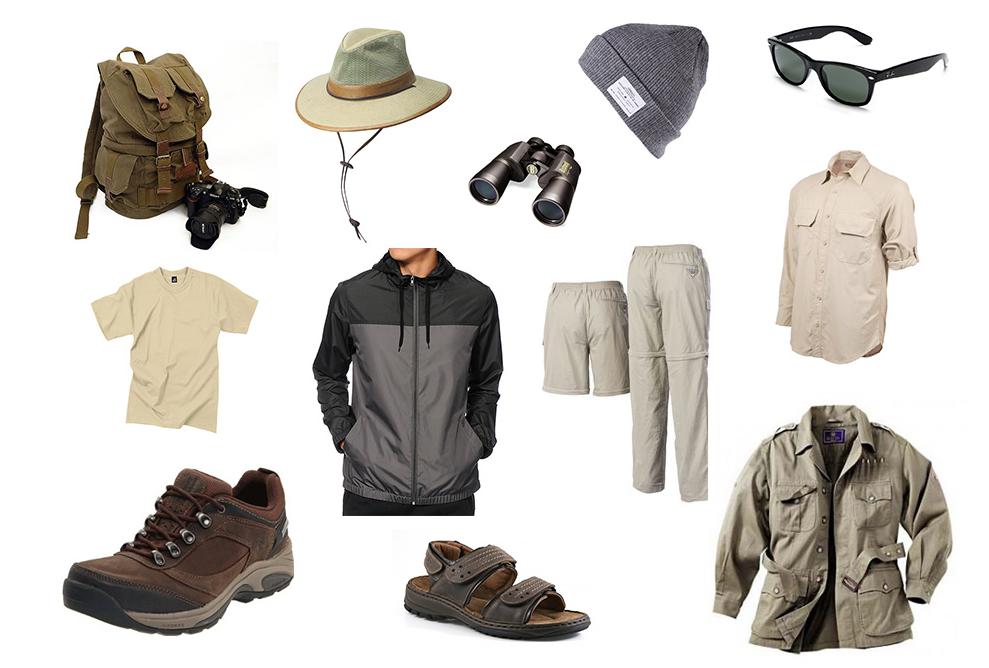
- Clothing: Neutral colors (khaki, tan, olive, and grey; avoid white and bright colors on game drives). A warm fleece or down jacket for morning drives June–August. Light long-sleeved layers for evening. Smart-casual is the dress code for dinner.
- Footwear: Comfortable enclosed shoes or lightweight hiking boots for walking safaris. Flip-flops or sandals for camp.
- Photography gear: Extra memory cards, dust bags for lenses, and a beanbag for vehicle-mounted shooting.
- Essentials: High-SPF sunscreen, insect repellent (DEET-based for optimal protection), personal medications, and quality sunglasses.
Health and Vaccination Notes
Tanzania requires no specific vaccination certificate for entry unless you are arriving from a yellow fever zone; in this case, a yellow fever vaccination certificate is mandatory. However, the following are strongly recommended:
- Malaria prophylaxis is essential; consult your travel health clinic for current recommendations (typically Malarone or Doxycycline).
- Routine vaccines up to date Hepatitis A, typhoid, and tetanus are standard travel health advice for East Africa.
- Altitude at the Kuka Hills is not high enough to cause altitude sickness, but the elevation does mean UV exposure is stronger than at sea level.
Consult a travel health professional at least 6–8 weeks before departure.
Payment, Tipping, and What Is Included
AndBeyond Klein’s Camp operates on a fully all-inclusive rate covering accommodation, all meals, twice-daily game drives, selected beverages (alcoholic and non-alcoholic), laundry, and park fees. Items typically excluded include premium wines and spirits, spa treatments if available, international flights, and travel insurance.
Tipping: A communal tip box is the norm at &Beyond camps, with contributions distributed among all staff, including those unseen in the kitchen and laundry. A typical guideline is USD $15–$25 per person per day for camp staff, with an additional USD $10–$20 per person per day for your specific guide. These are guidelines, not obligations, but staff members welcome them and find them significant to their livelihoods.
You can typically pay for any on-site extras using a major credit card or USD cash.