
Where to stay in Tarangire National Park
Choosing where to stay in Tarangire National Park shapes almost everything about your safari, from the elephant herds you wake up to at dawn to how far you drive before your first coffee. As Tanzania’s sixth-largest national park and the beating heart of the northern safari circuit’s dry-season wildlife drama, Tarangire rewards travelers who choose their accommodation with intention rather than convenience. Below, drawing on 15+ years of designing tailor-made private itineraries across Tanzania, we break down every serious accommodation option inside and around the park, so you can match your lodge or camp to the safari you actually want.
If you need to know where to stay on your luxury holiday in Tanzania, Tarangire National Park has luxury lodges and tented camps both inside and outside the park.
There is a variety of safari lodges and tented camps both inside and outside of Tarangire National Park that can accommodate your holiday needs, either Luxury or mid-range, and some tented camps. No matter how tight your budget is, you will be able to find an affordable option among the many lodges and tented camps that are available in Tarangire National Parks. Luxury and Mid-range lodges occupy prominent locations inside the park and offer breathtaking views from their vantage points.
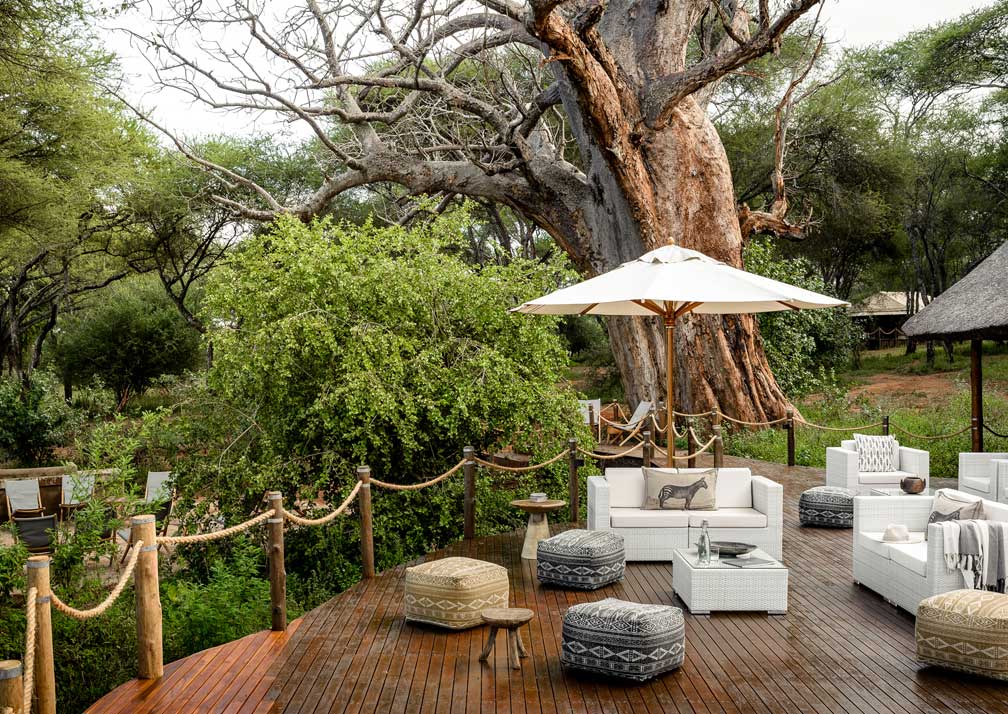
The best accommodations in Tarangire National Park fall into three groups: luxury tented camps inside the park boundaries, such as Sanctuary Swala Camp and Oliver’s Camp; ridge-top permanent lodges within the park, such as Tarangire Safari Lodge and Tarangire Sopa Lodge; and a cluster of excellent-value camps just outside the western boundary near Lake Burunge, which permit night drives and walking safaris that the national park itself restricts. For most first-time travelers, couples, and families, we recommend two to three nights inside the park to maximize early-morning and late-afternoon elephant sightings along the Tarangire River, combined with time in the Serengeti and Ngorongoro Conservation Area as part of a wider northern circuit itinerary.
Quick Facts: Accommodations in Tarangire National Park
| Location | Manyara Region, Northern Tanzania approximately 118–140 km / 2.5–3 hours by road from Arusha |
| Park size | 2,850 km² the sixth-largest national park in Tanzania |
| Accommodation types | Luxury tented camps, ridge-top permanent lodges, mobile camps, and public/special campsites |
| Typical price range | US $250–$1,500+ per person per night, all-inclusive, depending on camp category |
| Best time to stay | June to October (dry season), when elephant concentrations along the river peak |
| Ideal length of stay | 2 to 3 nights, longer for photographers and repeat Africa travelers |
| Known for | The largest elephant herds in Tanzania, ancient baobab trees, and the life-giving Tarangire River |
| Nearest airport | Kilimanjaro International Airport (via Arusha), with charter flights to Tarangire’s airstrips |
What Wildlife You Can Expect to See From Your Tarangire Accommodation
Nearly every Tarangire property is positioned specifically to capture sightings of the park’s signature elephant herds, which gather in numbers rarely matched elsewhere in Tanzania during the dry season. Bulls, matriarchal family groups, and calves move through camp clearings and along the riverbank in full view of guests seated on lodge decks, a genuinely unusual level of proximity compared with most East African parks.
Beyond elephants, Tarangire’s camps sit within striking distance of resident lion prides, which favor the shaded riverine woodland close to several of the properties listed below, and leopards, which are elusive but consistently spotted by experienced guides along the river’s edge. Cheetahs range across the more open plains further from camp, rewarding patient, unhurried game drives rather than quick point-to-point sightings. Guests interested in rarer species should ask their guide about fringe-eared oryx, gerenuk, and lesser kudu, three antelope species that Tarangire supports and that are difficult to find in the Serengeti or Ngorongoro.
Birders staying in Tarangire have access to more than 550 recorded bird species, one of the richest counts of any Tanzanian national park, and several camps run dedicated birding walks with specialist guides during the wetter months when migratory and endemic species are most active. This ecological richness is a major reason we recommend allowing at least two full days in the park rather than treating it as a single-night stop between the Serengeti and Arusha.
Understanding Your Accommodation Options in Tarangire National Park
Tarangire’s accommodations divide primarily into two categories: properties inside the national park boundary and properties just outside it, near the Lake Burunge basin and the park’s northern and western buffer zones. Staying inside the park puts you closer to the action from first light, since your game drive begins the moment you leave your tent rather than after an hour queuing at the gate. Staying just outside typically costs less and often allows activities the park itself restricts within its boundaries, such as guided night drives and off-road walking safaris in adjacent conservation areas.
Within the Tarangire National Park boundary itself, you’ll find a spectrum running from intimate, owner-operated tented camps with fewer than a dozen rooms to larger, more established lodges built for families and groups. Because Tarangire receives a fraction of the visitor volume of the Serengeti National Park or Ngorongoro Conservation Area, even the larger lodges here rarely feel crowded, and traffic at wildlife sightings is noticeably lighter than on the northern circuit’s more famous stages.
As a boutique operator with more than 12 years of experience curating private, tailor-made itineraries for over 10,000 travelers, we match each guest to a Tarangire property based on travel style, budget, and the rest of their itinerary, rather than defaulting to whichever lodge is easiest to book. That distinction matters more in Tarangire than almost anywhere else in Tanzania, because the park’s accommodation options genuinely differ in character, not just price.
|
Ready to decide where to stay in Tarangire? Our safari experts can match a lodge to your travel style. |
Luxury Camps and Lodges Inside Tarangire National Park
The finest accommodations inside Tarangire National Park combine proximity to the Tarangire River’s wildlife corridor with genuinely comfortable, tailor-made-friendly suites. Here are the properties we recommend most often and why.
Sanctuary Swala Camp
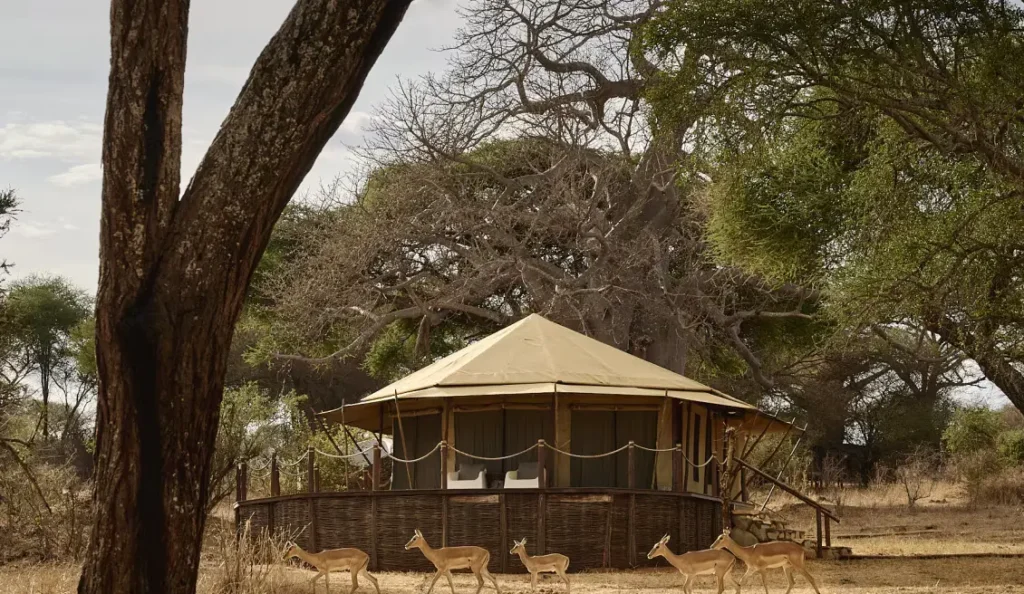
Sanctuary Swala Camp sits in one of the most secluded corners of the park, tucked beneath a canopy of ancient acacia trees on the little-visited western side of Tarangire, far from the busier central circuit. The camp’s twelve canvas tents are fitted with king-size beds, private plunge-pool-adjacent verandas, and en-suite bathrooms, and the central mess tent looks directly onto an open savannah plain where elephants, giraffes, and resident lion prides pass throughout the day. We often recommend Swala to honeymooners and repeat Africa travelers who have already ticked off the busier parks and want genuine remoteness without sacrificing comfort.
Tarangire Safari Lodge
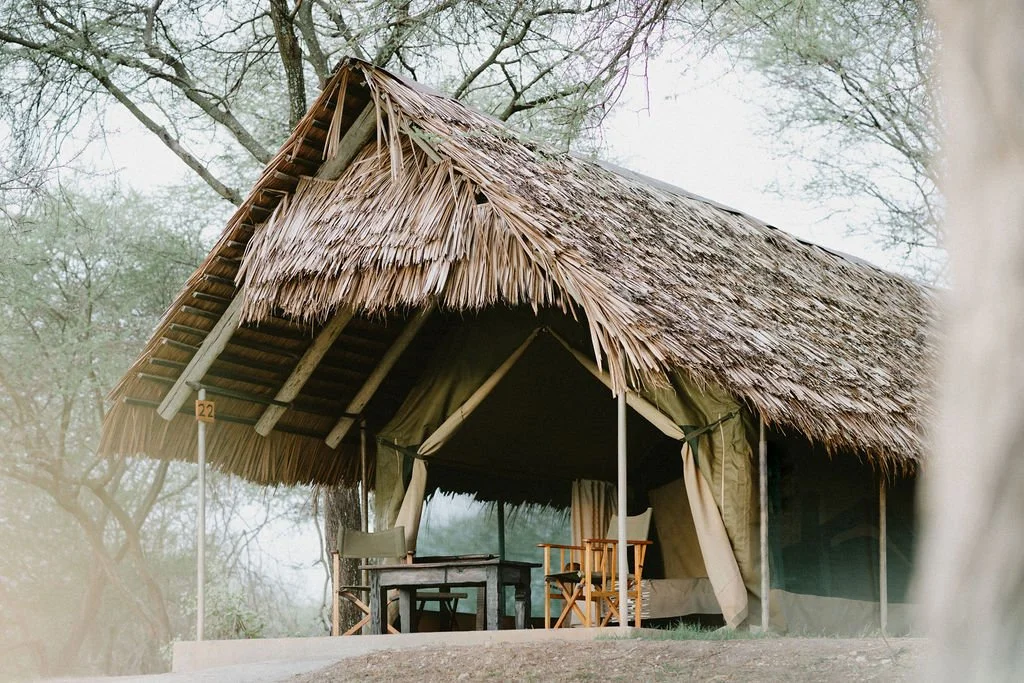
As the oldest permanent lodge in the park, Tarangire Safari Lodge occupies a dramatic natural bluff overlooking a bend in the Tarangire River, and its age shows in the best possible way: mature gardens, an established swimming pool, and a genuine sense of place that newer builds can’t replicate. Accommodation spans a mix of tented rooms and thatched bungalows, and the open-air dining terrace is one of the most scenic sundowner spots on the northern circuit. This lodge suits first-timers who want a classic, unfussy safari base without the higher price tag of the smaller exclusive camps.
Tarangire TreeTops by Elewana
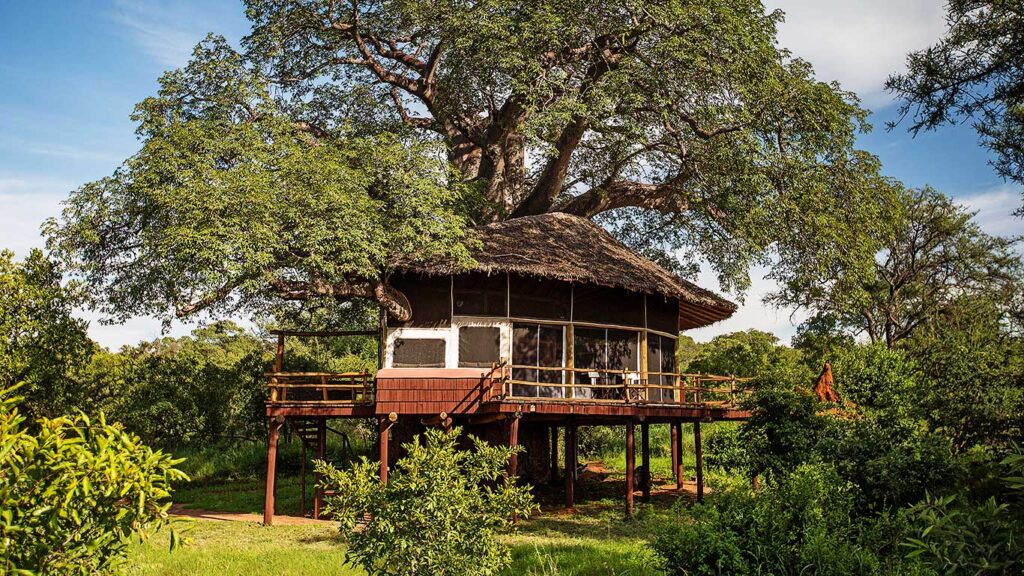
For travelers who want architectural distinction alongside genuine wildlife access, Tarangire TreeTops by Elewana builds its suites into the branches of baobab and marula trees on a private concession bordering the park, giving each room an elevated, treehouse-style vantage point over the surrounding bush. It is one of the few Tarangire properties that regularly appears on our clients’ shortlists, valued for both the design experience and the wildlife, and it pairs particularly well with photography-focused itineraries where guests seek striking accommodation to match striking game drives.
Tarangire Sopa Lodge
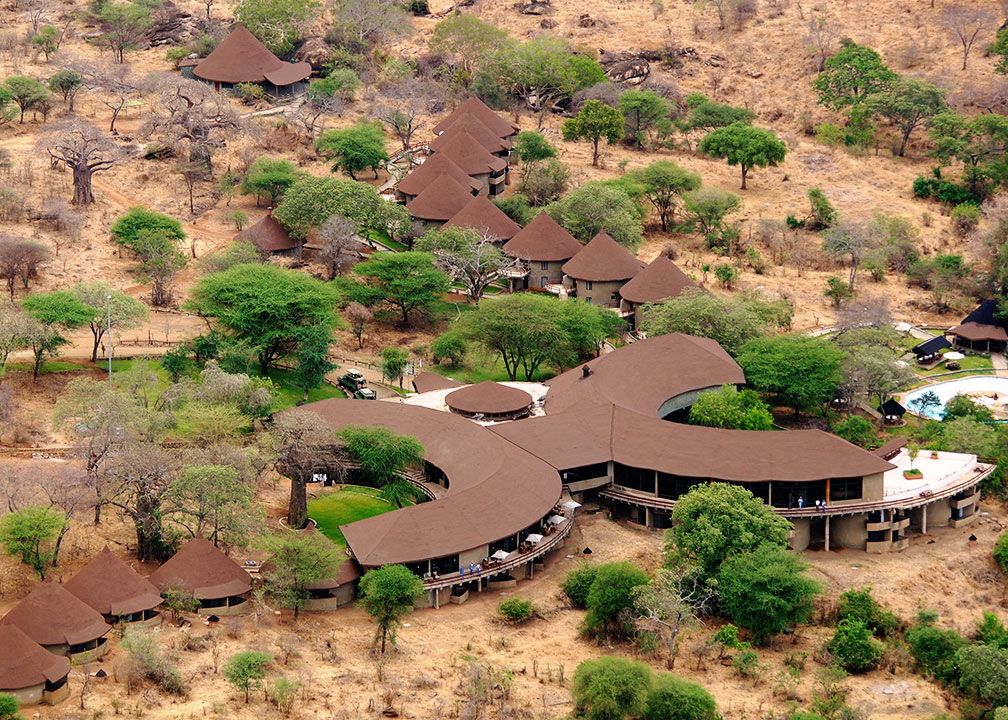
With more than 75 rooms, Tarangire Sopa Lodge is the park’s most family-friendly permanent property and one of the very few in Tarangire genuinely set up to accommodate larger groups and multi-generational families comfortably. Amenities include reliable Wi-Fi, a full-size swimming pool, and a spacious restaurant that can handle dietary requests at scale without losing the personal touch. If you are traveling with children or as an extended family group, this lodge is usually our first recommendation inside the park.
Maweninga Camp
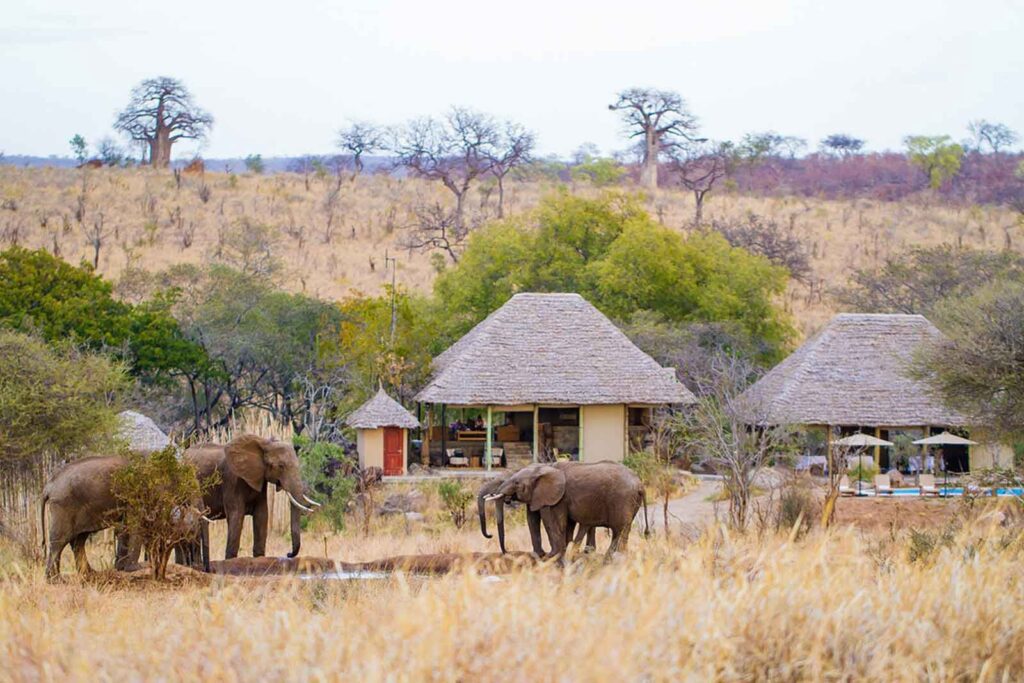
Maweninga Camp is built directly on top of a high granite outcrop overlooking Lake Manyara and Lake Burunge, and on clear days, guests can see the snow-streaked summit of Mount Kilimanjaro in the far distance. Each eco-friendly tent sits on a raised wooden terrace specifically angled to maximize the panoramic view, making this one of the more photogenic camps in the wider Tarangire ecosystem, ideal for guests who value scenery as much as wildlife density.
Oliver’s Camp
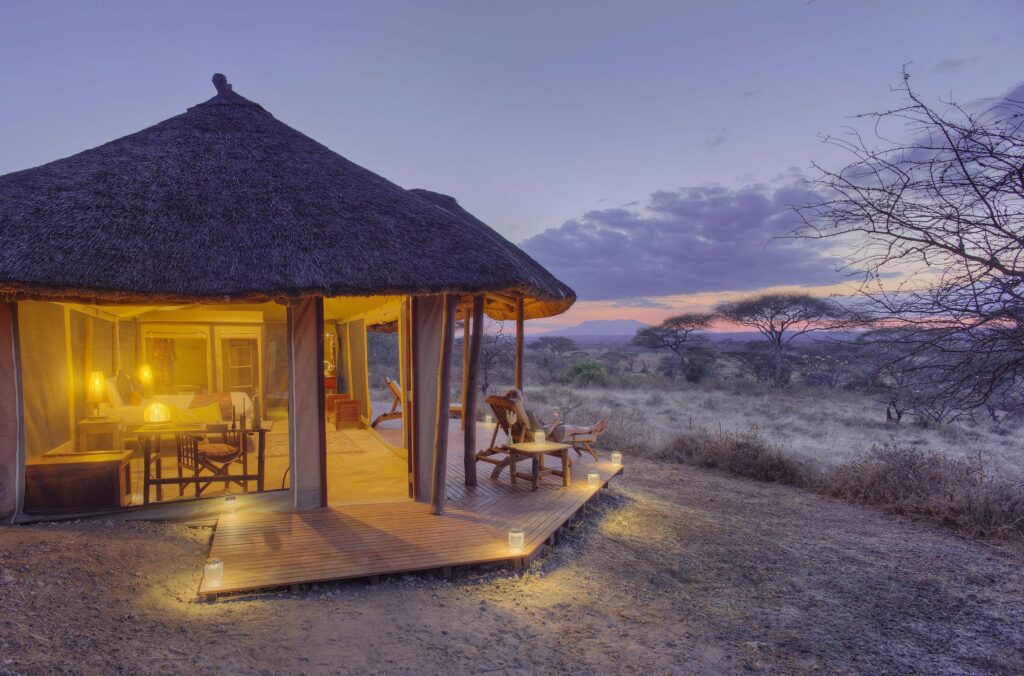
Oliver’s Camp is one of the longest-running owner-operated camps in Tarangire, set beneath fever trees in the park’s southern reaches and known for pioneering walking safaris in the area. Because of its position away from the busier central park roads, guides here have exceptional knowledge of predator movement patterns, and the camp remains a favorite among photographers and guests who have safaried in Tanzania before and want a more immersive, guide-led experience over a purely lodge-based stay.
|
Not sure which Tarangire camp fits your budget and travel style? Let’s build your itinerary together. |
Best Accommodations Just Outside Tarangire National Park
A second, often overlooked accommodation cluster sits just west of the park boundary near Lake Burunge, a seasonal soda lake that draws its resident wildlife independent of the national park. Camps here, including properties like Lake Burunge Tented Lodge and Naitolia Camp, typically cost less per night than comparable in-park properties while still offering game drives inside Tarangire itself during the day.
The main advantage of staying just outside the boundary is activity flexibility. Because these properties operate outside strict national park regulations, many offer guided night drives, bush dinners, and walking safaris with armed rangers, activities that Tanzania National Parks Authority (TANAPA) generally restricts or prohibits inside Tarangire’s core boundary itself. For travelers who want the fullest possible range of safari activities, rather than game drives alone, we sometimes recommend splitting a Tarangire stay between one night inside the park and one or two nights at a Lake Burunge-area property.
The tradeoff is a slightly longer drive to reach the best game-viewing areas each morning, typically 20 to 40 minutes depending on the specific camp and which part of the park you’re targeting that day. For a first Tarangire visit of two nights or fewer, we usually recommend staying inside the park to maximize dawn and dusk wildlife time; for longer stays of three nights or more, splitting your accommodation between inside and outside the boundary can add welcome variety to the experience.
Tarangire vs. Lake Manyara: Which Should You Base Yourself In?
Tarangire and Lake Manyara National Park sit close enough together, roughly 110 km and under three hours apart by road, that travelers frequently ask whether it’s worth staying in both or whether one alone is sufficient. The direct answer is that Tarangire offers considerably higher wildlife density, particularly for elephants, and rewards a two-to-three-night stay, while Lake Manyara is better suited to a single night or even a day trip focused on its tree-climbing lions, flamingo-lined lake shore, and dense groundwater forest.

If your itinerary has room for only one overnight stop between Arusha and the Serengeti, Tarangire’s accommodation options and wildlife concentration make it the stronger choice for most travelers. Photographers and repeat visitors with additional time, however, often add one night at Lake Manyara specifically for its unique habitat diversity, which contrasts sharply with Tarangire’s open baobab-studded plains.
Mobile Camps and Special Campsites for Adventurous Travelers
Beyond permanent lodges and tented camps, Tarangire also permits mobile camping at designated special campsites scattered through the park’s quieter southern and western sections. These sites have no permanent structures; a private mobile safari operator sets up canvas tents, a mess area, and portable washing facilities fresh for each group, then breaks camp down again after departure.
Mobile camping suits experienced, adventurous travelers, particularly repeat visitors to Africa and dedicated photographers who want total flexibility over location and schedule, unconstrained by a fixed lodge’s set driving routes. It is not, generally, what we recommend for first-time visitors or families with young children, since the experience trades creature comforts for exclusivity and closeness to nature. When we do build a mobile-camping component into an itinerary, we typically pair it with at least one or two nights at a full-service property elsewhere on the trip, such as in the Ngorongoro Conservation Area or on Zanzibar’s beaches, to help balance the itinerary.
How to Choose the Right Tarangire Accommodation for Your Trip
Choosing the right Tarangire accommodation involves five practical decisions: your priority (wildlife density, budget, or family comfort), your length of stay, whether to stay inside or outside the park boundary, matching the camp’s character to your travel style, and booking through a specialist who can integrate it into your wider itinerary. Walking through each of these in order removes almost all of the guesswork.
Step 1: Define Your Top Priority
Decide whether wildlife immersion, budget, or family practicality matters most to your group. Guests chasing the densest possible elephant encounters should prioritize camps directly along the Tarangire River corridor, such as Sanctuary Swala Camp or Oliver’s Camp, while budget-conscious travelers or larger families may discover better value at Lake Burunge-area properties or Tarangire Sopa Lodge.
Step 2: Decide How Many Nights You Need
Two nights is the practical minimum to properly experience Tarangire; one night limits you to a single game drive and rarely captures the park’s full character. Photographers and repeat travelers often extend to three or four nights, since Tarangire’s landscape and light change meaningfully between the early dry season (June) and the peak dry season (September–October).
Step 3: Choose Inside or Outside the Boundary
Stay inside the park for the best dawn and dusk game viewing with zero transfer time; stay just outside near Lake Burunge for lower nightly rates and broader activity options, including night drives. Longer stays can comfortably combine both.
Step 4: Match the Camp to Your Travel Style
Couples and honeymooners generally prefer smaller, more intimate camps like Sanctuary Swala Camp or Maweninga Camp; families do best at Tarangire Sopa Lodge or Tarangire Safari Lodge; photographers benefit from Oliver’s Camp or Tarangire TreeTops by Elewana; and first-timers unsure where to start are usually well served by Tarangire Safari Lodge as an easy, classic introduction to the park.
Step 5: Book Through a Specialist Who Can Build the Full Itinerary
Because Tarangire is almost always paired with other parks on a northern circuit safari, the camp you choose here should be selected in the context of your full route, not in isolation. Our guides know which Tarangire properties pair most efficiently with specific Serengeti and Ngorongoro camps in terms of driving distance and flight connections, which is exactly the kind of detail a tailor-made itinerary should handle for you.
|
Let our 15+ years of Tarangire expertise take the guesswork out of your booking. |
Best Time to Visit Tarangire and How It Affects Where You Stay
The dry season, from June to October, is the best time to stay in Tarangire National Park, since falling water levels elsewhere push elephants and other wildlife toward the permanent Tarangire River, concentrating game viewing directly around the camps and lodges positioned along its course. This period is also when camps run at their fullest, so booking your preferred property four to six months in advance is essential for July through September travel.

During the green season (November to May), wildlife disperses more widely across the park, especially during the short rains in November–December and the heavier long rains in April–May, while some properties either reduce rates or close briefly for maintenance. Photographers and repeat travelers often prefer this period specifically for dramatic skies, newborn wildlife, and near-empty camps, even though overall sighting density is lower than the dry season peak. For a full month-by-month breakdown across the whole northern circuit, our guide to the best time to visit Tanzania covers how Tarangire’s seasonality lines up with the Great Wildebeest Migration elsewhere in the Serengeti ecosystem.
Combining Your Tarangire Stay With Other Safari Destinations
Tarangire almost never stands alone on a northern circuit itinerary; it typically opens or closes a longer route through Tanzania’s most celebrated parks. Its position roughly two to three hours from Arusha makes it a natural first or last stop before or after the Serengeti National Park and Ngorongoro Conservation Area, and it connects easily by road to Lake Manyara National Park for travelers building a broader northern loop.
For couples, our Serengeti honeymoon safari itineraries frequently open with two nights in Tarangire before continuing on to more remote, romantic camps further west. Travelers pressed for time can also review our guide to high-end fly-in safari packages in Tanzania, which explains how bush flights can connect a Tarangire stay to the Serengeti or Zanzibar without the overland transfer.
A few of our most popular ready-made itineraries built around Tarangire include: