
Best Time to Visit Serengeti National Park, Tanzania: A Month-by-Month Guide
The best time to visit Serengeti National Park is during the dry season, from late June through October, when wildlife clusters around permanent water sources, grass cover is low, and the northern Serengeti hosts the Mara River crossings the single most dramatic chapter of the Great Wildebeest Migration. If your priority is newborn wildebeest calves and concentrated predator action rather than river drama, the short green season from late January through March, centered on the Ndutu Plains in southern Serengeti, rivals the dry season and, in the view of many of our repeat guests, surpasses it. There is genuinely no bad month to visit the Serengeti. What changes from month to month is not whether you’ll see wildlife, but where the drama unfolds and how you experience it.
We’ve spent 15+ years building tailor-made Tanzania itineraries around exactly this question, and we’ve learned that the ‘best’ time is really a personal calculation involving three variables: what you most want to witness, how you feel about sharing a river crossing with other vehicles, and how flexible your travel dates are. Below, we break the entire year down month by month, region by region, and traveler type by traveler type, so you can time your Serengeti safari with the same precision our 10,000+ travelers have come to expect.

Tanzania is a country of diverse landscapes, and the terrain is widely visited and popular for wildlife viewing, but the Serengeti National Park is an all-year-round national park in Tanzania where its beauty is endless. For the migration, the best time is February. Since this is the perfect timing for wildebeests, their migration is dropping their calves around the Ndutu area, and this keeps them in a specific area.
It also attracts a lot of predators such as lions Cheetahs, hyenas, and leopards, on another hand the best time still would include or depend on your interests, if you’re a beach lover definitely Zanzibar beaches would not leave you the same if you spend at least five days and the island is best to be visited around July-September these are the best time when Europe is experiencing winter, those who really want to experience the last section of the migration, definitely, the Northern circuit spend a few days looking for a better wildlife experience. for example, 3 nights in Tarangire, visit Manyara on your way to Ngorongoro, Serengeti towards the Mara river this question is always answered here we try to bring to you all the necessary information regarding when is the best time to visit Serengeti and Tanzania in general regarding migration, weather, and money.
This iconic place, too, such as Nanyukie, would be great for cats all year round and the wildebeest migration in November-December as the herds move south through the eastern Serengeti. It’s difficult to imagine the scale of the full migration when you consider that this mass of animals may be only at Ndutu.
Serengeti Timing: Quick Facts
| At a Glance | Details |
| Best overall months | June to October (dry season) |
| Best for wildebeest calving | Late January, March, Ndutu Plains & Southern Serengeti |
| Best for river crossings | Late June to October, Western Corridor through to the Mara River |
| Best value / fewest crowds | April – May and November (green season) |
| Wettest months | April and May (‘long rains’) |
| Typical daytime temperature | 24–27°C / 75–81°F, fairly consistent year-round |
| Park size | 14,763 km² (5,700 sq mi) |
| Established | Gazetted in 1951, protected since 1940 |
| UNESCO status | World Heritage Site since 1981 |
Not sure which month fits your priorities? Share your travel dates and top priorities, and one of our Serengeti specialists will recommend the best timing for you. Talk to a Serengeti Expert →
When Should You Visit Serengeti National Park? A Quick Overview
Most first-time visitors ask us for ‘the best month,’ but the more useful question is, what does the Serengeti look like in the season when you’re actually free to travel? The park sits at the heart of the Serengeti-Mara ecosystem, and its rhythm is set by rainfall, not by a calendar of fixed events. The Great Wildebeest Migration moves in a broad clockwise loop through the ecosystem every year, but the exact week it reaches any particular river crossing shifts with the rains, so we build in flexibility rather than betting an entire itinerary on a single date.
Broadly, the year splits into two real seasons dry (June to October) and green (November to May), with the green season itself dividing into a short, spectacular calving window (late January to March) and a wetter, quieter interlude (April and May). We’ll walk through both in detail, then take you month by month, region by region, so that whether you’re chasing the Mara River crossings, hoping to photograph newborn wildebeest calves, or simply want a private, uncrowded safari at a fair price, you’ll know exactly when to book.
Every itinerary we design is tailor-made around this kind of timing logic. We don’t sell fixed-departure group tours, so your dates, your pace, and your camp selections are built around the season that matters most to you.
Serengeti’s Two Real Seasons: Dry vs. Green
Dry Season (June to October): Peak Game Viewing
The dry season is the Serengeti at its most classically dramatic. Rain stops almost entirely from June through October, vegetation thins out, and animals concentrate around the rivers and remaining water sources, which makes game viewing extraordinarily reliable. This period is also the window in which the migration crosses the Grumeti and Mara Rivers, so it’s the season most associated with the iconic images of wildebeest leaping into crocodile-filled water. Skies are clear and dust-blue, mornings are crisp enough for a fleece at sunrise, and the grass across the central and northern Serengeti is cropped low enough that predators are readily visible to spot from a considerable distance.
The tradeoff is popularity: this is peak season, camps in the northern Serengeti and along the Grumeti fill up months in advance, and the most famous crossing points can draw a queue of vehicles when a crossing is imminent. We manage the situation by working with a small, considered list of private camps and mobile tented operations, including seasonal camps that relocate with the herds so our guests are positioned for the action without being funneled into the busiest viewpoints.
Green Season (November to May): Calving, Color, and Quiet
The green season is really two seasons in one. From November through mid-January, the short rains bring brief, usually late-afternoon showers that quickly soak the plains and trigger the herds’ return south. Late January through March is calving season on the Ndutu Plains and in the southern Serengeti, when roughly 500,000 wildebeest calves are born within a few concentrated weeks, drawing extraordinary numbers of lions, cheetahs, and hyenas onto the short-grass plains. April and May are the long rains the wettest, quietest, least expensive stretch of the year, when some camps close for maintenance and roads can turn to thick black-cotton mud, but the landscape turns a saturated, cinematic green that photographers genuinely prize.
For travelers who dislike crowds, want lower rates, or are drawn to newborn wildlife and dramatic predator-prey action rather than river crossings, the green season and calving season in particular are not a compromise. It is, for many of our repeat guests, the preferred time to visit.
| Season | Months | Weather | Wildlife Highlight | Crowds & Rates |
| Dry season | Jun – Oct | Little to no rain, clear skies, cool mornings | River crossings, dense game concentrations | Peak season: book 6–12 months ahead |
| Short rains | Nov–mid-Jan | Brief afternoon showers, plains greening up | Herds moving south; good general game viewing | Moderate-good value |
| Calving season | Late Jan–Mar | Warm, mostly dry with occasional showers | ~500,000 calves born; heavy predator action | Busy in Ndutu specifically, quieter elsewhere |
| Long rains | Apr – May | Heaviest, most consistent rainfall of the year | Lush scenery, birdlife, fewer other travelers | Lowest rates; some camps close |
Whichever season suits your travel window, we’ll pair it with the right region of the park and the right camp. Reach out and we’ll start sketching your itinerary. Start Planning Your Safari →
Serengeti Month-by-Month: The Complete Timing Guide
Because the migration’s exact position shifts year to year with the rains, think of the following as a reliable pattern rather than a fixed schedule one we track closely and factor into every tailor-made Serengeti itinerary we design.
January
The southern Serengeti and Ndutu Plains turn green almost overnight as the short rains taper off, and the migration’s impressive herds gather here ahead of calving. The light is soft, the grass is short enough for excellent visibility, and it’s an outstanding month for big cats. Ndutu is famous for cheetah sightings against an open horizon. Rain is generally light and falls in short bursts, rarely disrupting a full day’s game drive. February is a wonderful, still-uncrowded month to combine with a 4-day Serengeti safari focused on the Ndutu region.
February
This is peak calving month. Roughly 8,000 wildebeest calves can be born on the Ndutu Plains in a single day at the height of the season, and the concentration of vulnerable newborns draws in lions, cheetahs, hyenas, and jackals for some of the most intense predator-prey action anywhere in Africa. The weather is warm and mostly dry with brief showers. In the Ndutu area, camps specifically book up well in advance for this month, even though the wider park remains comparatively quiet.
March
Calving activity continues into early March before tapering as the long rains approach. It’s still an excellent month for predator sightings in the south, and the plains remain a vivid green. By the second half of the month, cloud builds and the first heavier showers signal the shift toward the wet season, so we typically recommend the first half of March for travelers whose main focus is calving-season action.
April
The long rains settle in fully. April is the quietest month in the Serengeti calendar: some camps close for annual refurbishment, roads in remoter areas can become difficult after heavy downpours, and the herds are dispersed and on the move north and west through central Serengeti. In exchange, you’ll find the lowest rates of the year, near-empty camps, birdlife at its most prolific (migratory species are present alongside residents), and a landscape so green it barely resembles the dusty plains of August.
May
Rain begins to ease, particularly toward the end of the month, though showers remain likely. The migration is generally moving through central Serengeti and the Western Corridor toward the Grumeti River during this period. Rates are still low, camps are still quiet, and for travelers comfortable with some unpredictability in the weather, late May can be an excellent transitional month with dramatically improving conditions and few other vehicles on the tracks.
June
The dry season begins in earnest. Grass shortens, skies clear, and the herds are typically concentrated in and around the Western Corridor and the Grumeti River, where the first river crossings of the season can occur toward the end of the month. Mornings turn genuinely cool, and pack a warm layer for early game drives, and this is a superb, still slightly less crowded, entry point into peak season.
July
Crossings at the Grumeti River become more frequent, and the herds continue their push north through central Serengeti toward the Mara River area. This is the start of true peak season: skies are reliably clear, wildlife viewing across the park is excellent, and camps in popular areas fill quickly. It’s also a superb month for a hot air balloon safari over the Serengeti, with the dry-season visibility at its best.
August
The northern Serengeti, around the Kogatende and Lobo areas near the Mara River, becomes the epicenter of the action as the first major Mara River crossings typically begin. This is one of the two most popular months to visit the Serengeti, and for good reason the combination of clear weather, thinned vegetation, and river-crossing drama is difficult to beat. Book camps in the north as early as possible for this month.
September
Mara River crossings continue, often with herds crossing back and forth between the Tanzanian and Kenyan sides of the ecosystem as they search out fresh grazing. The weather remains dry and stable, and game viewing throughout the park, not just in the north, stays exceptional. October remains a high-demand month for northern Serengeti camps.
October
The dry season reaches its final, dustiest stretch. Herds are typically still concentrated in the north through the first half of the month before the first short rains of the new season begin to draw them back south. Late October can be a genuinely excellent window for dry-season game viewing with slightly thinner crowds than the August–September peak, as some travelers assume the season has already ended.
November
The short rains arrive, usually as brief, often spectacular afternoon storms that green the plains quickly. The herds begin their long journey south through eastern and central Serengeti back toward the southern plains. Crowds thin noticeably, rates soften, and the park takes on a fresh, renewed character after months of dust. It’s an underrated month for value-conscious travelers who still want strong game viewing.
December
Short rains continue intermittently, and the migration keeps moving south, drawing closer to the Ndutu Plains and Ngorongoro Conservation Area ahead of the new calving season. December combines pleasant weather, excellent wildlife viewing across a less crowded park, and for those visiting over the festive period a natural, scenic backdrop for a Christmas or New Year safari. Many of our guests pair this month with a few beach days in Zanzibar to round out the holidays.
Best Time to Witness the Great Migration River Crossings.
The best time for river crossings is late June through October, though the two rivers involved have slightly different windows. The Grumeti River crossings in the Western Corridor typically begin in late June and continue through July, while the more famous Mara River crossings in the northern Serengeti generally run from late July through October, peaking in August and September. Because the herds cross and re-cross these rivers multiple times as they search for grazing on both banks, there is no single ‘crossing day’ rather, a multi-week window in which crossings become increasingly likely.
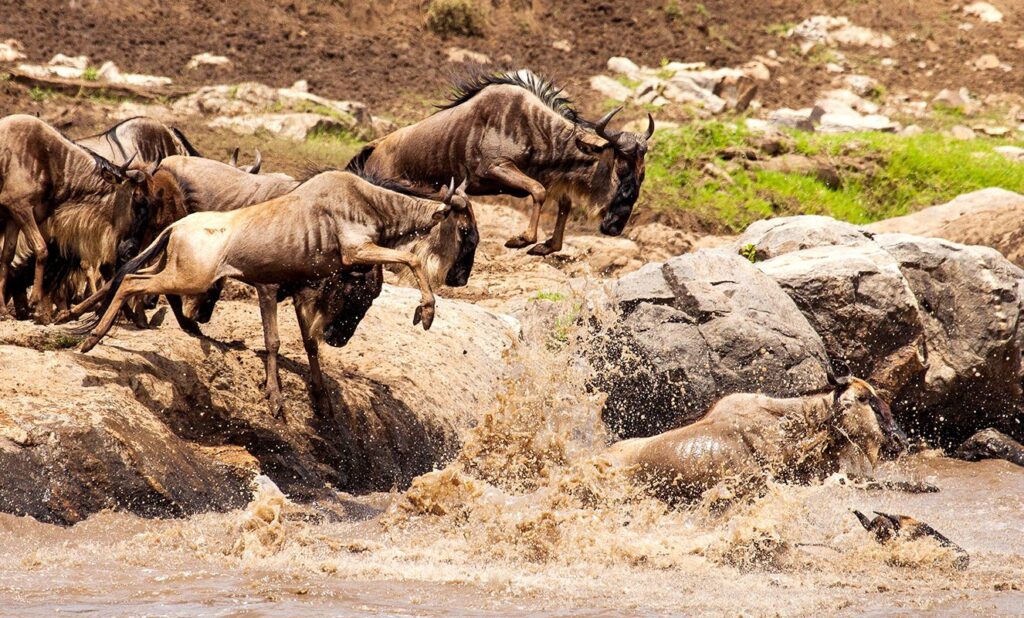
A river crossing is one of nature’s more unpredictable spectacles: wildebeest can gather at a riverbank for hours, or even days, building up courage before a crossing begins, and a crossing that seems imminent can dissolve when the herd simply walks away and tries a different point along the bank. Because of this, we always build in multiple game drives and, where possible, more than one full day near an active crossing point, rather than a single rushed visit.
How we time a river-crossing safari for our guests:
- Step 1: Define your window. We start with your available travel dates and narrow them against the Grumeti (late June–July) or Mara River (late July–October) crossing patterns.
- Step 2: Track the herds. In the weeks before your safari, our guides and camp partners on the ground monitor the migration’s real-time position, since it can shift by weeks from year to year.
- Step 3: Choose the right base. We place you at a camp positioned for the current migration location this might mean a permanlocation;e in the Western Corridor in June, or a camp near the Mara River in August and September.
- Step 4: Build in flexible days. We recommend a minimum of three nights near an active crossing area, giving your guide multiple opportunities to position you for the moment a crossing begins.
- Step 5: Add a mobile camp option. For guests visiting across a longer trip, a seasonal mobile camp that relocates with the herds, such as those offered by andBeyond’s Serengeti Under Canvas camps can follow the migration’s movement through the season.
Best Time to Visit by Serengeti Region
The Serengeti is far larger than most first-time visitors expect, roughly the size of Northern Ireland, and the migration’s movement means different regions peak at different times of year. Where you stay matters as much as when you travel.
Southern Serengeti & Ndutu Plains: Best January to March
The short-grass plains around Ndutu, bordering the Ngorongoro Conservation Area, are calving-season central. Flat, open terrain makes for outstanding visibility, and the concentration of predators here in February can be extraordinary.
Central Serengeti / Seronera Valley: Reliable Year-Round
Seronera sits along a permanent river system, which means resident wildlife, including a healthy population of leopards in the riverine trees, remains in place even when the migratory herds have moved elsewhere. It’s a strong choice for travelers whose dates don’t align with a specific migration phase, and it pairs naturally with a 3-day Serengeti and Ngorongoro Crater safari.
Western Corridor & Grumeti River: Best May to July
As the herds push west and north out of the southern plains, the Western Corridor along the Grumeti River becomes the stage for the season’s first river crossings. It’s a quieter alternative to the northern crossings, with excellent lodges such as Singita Sasakwa Lodge positioned to take advantage of the seasonal action.
Northern Serengeti / Mara River: Best August to October
This remote, less-visited corner of the park hosts the marquee Mara River crossings and, because it requires either a longer drive or a light-aircraft transfer, tends to feel more exclusive than the central park even at the height of the season. &Beyond Klein’s Camp sits directly on the Serengeti-Mara border, putting guests within minutes of the crossing points during peak months.
Every region of the Serengeti has its own season. Tell us what you want to witness, and we’ll match the timing to the right corner of the park.
Best Time to Visit Serengeti for Your Travel Style
Couples & Honeymooners
If privacy and romance matter as much as wildlife, the green season, particularly April, May, and November, delivers a quieter, more intimate Serengeti at a lower cost, with lush scenery that photographs beautifully. For couples who still want peak game viewing with fewer crowds, late October is an excellent compromise: dry-season conditions with a noticeably thinner visitor count than August.
Families
June through September works well for families thanks to reliable weather, shorter transfer times when herds are concentrated, and the predictability that makes planning around school holidays easier. We recommend camps with family tents or connecting rooms and build-in rest days between game drives. Children under six are not permitted on game drives at some properties, a detail we check before booking.
First-Time Africa Travelers
If this is your first safari, the dry season (June–October) offers the most forgiving introduction: concentrated wildlife, dependable weather, and classic, easy-to-photograph scenes. Pairing a Serengeti safari with the Ngorongoro Crater gives first-timers a compact, high-impact overview of Tanzania’s two most famous landscapes.
Repeat Africa Travelers & Photographers
Guests who have already ‘done’ the classic dry-season safari often ask us specifically for calving season or the long rains, the light, the newborn animals, and the absence of other vehicles, which offer a different, arguably richer experience. We frequently place repeat travelers in the Ndutu area in February or in the Western Corridor in June, timed against the migration’s position for that particular year.
Weather and Climate in the Serengeti Year-Round
The Serengeti sits close to the equator, so temperatures stay relatively consistent year-round. What changes most dramatically is rainfall, not heat. Daytime highs typically sit in the mid-to-high 20s°C (mid-70s to low 80s°F), with cooler mornings and evenings, particularly at altitude in the southern and central Serengeti. The figures below are general guidance; we recommend confirming seasonal specifics with your safari specialist closer to travel, since rainfall patterns shift year to year.
| Period | Rainfall Pattern | Typical Feel |
| June – October | Little to no rain | Dry, dusty, cool mornings, warm, clear days |
| November–mid-Jan | Short, often brief afternoon showers | Warm and increasingly green |
| Late Jan–March | Intermittent light showers | Warm, lush short-grass plains |
| April – May | Heaviest, most sustained rainfall | Warm, humid, saturated green landscape |
Crowds, Prices, and Availability: Timing for Value
August and September carry both the highest rates and the highest camp occupancy in the Serengeti, particularly at properties positioned near the Mara River. Because we build tailor-made private itineraries rather than joining you to a fixed group departure, we actively manage crowding at the vehicle level, but crowding at the more famous crossing points themselves is a park-wide phenomenon during peak weeks, not something any single operator controls.
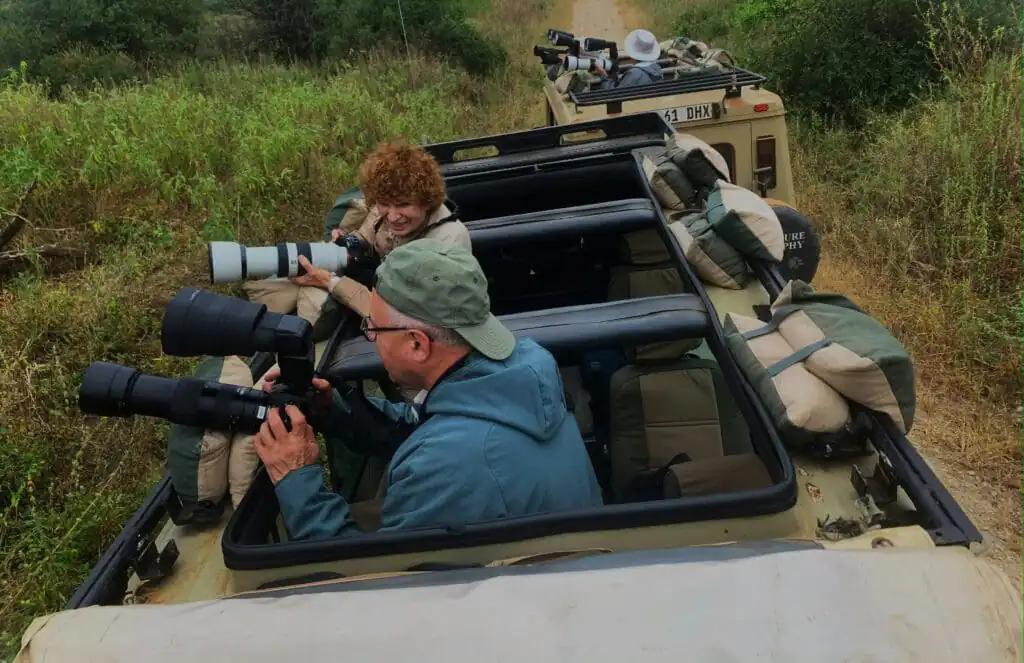
If a quieter, more exclusive-feeling experience matters more to you than guaranteeing a river crossing, April, May, and November offer meaningfully lower rates, readily available premium camps, and a Serengeti that can feel almost private. Every quote we prepare is fully ATOL-protected, so your payments and travel arrangements are financially safeguarded regardless of which season you choose.
How We Help You Time Your Serengeti Safari Perfectly.
- Tell us your priorities. Whether it’s river crossings, calving season, budget, or simply the dates you have available, we start with what matters most to you.
- We check the migration’s likely position. Drawing on our guides’ on-the-ground reports and over a decade of seasonal patterns, we recommend the region of the park most likely to deliver what you’re after.
- We shortlist camps by season, not just by star rating. A beautiful camp in the wrong part of the park during your travel week isn’t the right camp for you; we match location to timing first.
- We build in flexibility. Multi-night stays near key areas, rather than single-night stopovers, give you the best chance of witnessing unpredictable events like a river crossing.
- We confirm and protect your booking. Every itinerary is quoted with transparent pricing and backed by ATOL protection before you pay a deposit.
Where to Stay in the Serengeti by Season
Camp choice and seasonal timing go hand in hand. A handful of properties we return to again and again for their positioning: